DbcultAccessing Vault...
Cult Review
Senior Film Conservator
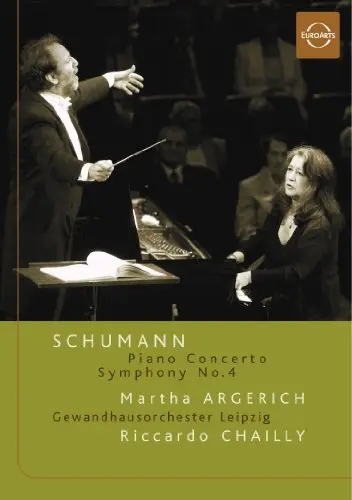
Does this 2006 concert film still hold weight in the modern era of high-definition streaming? Short answer: Yes, but only if you value the lightning-strike intensity of a live performance over the clinical perfection of a studio edit.
This film is for the classical music purist who wants to see the sweat on the brow and the tension in the forearms of a legend. It is not for those seeking a guided documentary or a polished, multi-camera cinematic experience with heavy post-production.
1) This film works because it captures Argerich at a point where her technical facility and emotional maturity were in perfect, terrifying alignment.
2) This film fails because the visual direction is occasionally too static, failing to match the kinetic, almost violent energy of the music being performed.
3) You should watch it if you want to witness how a 150-year-old score can be made to sound like it is being composed on the spot in a fit of passion.
Martha Argerich does not simply play the piano. She inhabits it, often looking like she is trying to escape the very instrument she is dominating. In this 2006 performance, the stakes feel higher than usual.
Commemorating Robert Schumann is no small task. Schumann was a man of dualities—the fiery Florestan and the dreaming Eusebius—and Argerich is perhaps the only living pianist who naturally embodies both temperaments without artifice.
The film captures this duality through long, lingering shots of her face. We see the focus, the occasional flash of frustration, and the ultimate surrender to the rhythm. It is humanizing in a way that most concert films avoid.
Schumann’s music requires a specific type of madness. It is episodic, often jumping from a whisper to a roar in the span of a single measure. Argerich handles these transitions with a speed that borders on the supernatural.
Take, for instance, the way she approaches the chordal jumps. Where other pianists might hesitate to ensure accuracy, Argerich dives in. She prioritizes the emotional truth of the note over the safety of the performance.
This isn't the sterile environment of a film like Time Lock No. 776 where every second is calculated. Here, the time is fluid. Argerich stretches the tempo until it nearly breaks, then snaps it back with a ferocity that leaves the audience breathless.
The visual language of the film is unapologetically simple. There are no sweeping crane shots or flashy transitions. Instead, the director relies on the intimacy of the stage and the natural lighting of the venue.
This minimalism is a double-edged sword. On one hand, it keeps the focus entirely on the music. On the other hand, it can feel somewhat claustrophobic for a modern viewer used to the dynamic editing of 4K concert captures.
However, there is a specific beauty in the way the camera captures Argerich’s hands. The silver hair falling over her eyes, the stark contrast of the black piano—it creates a monochrome aesthetic that feels appropriate for a Romantic tribute.
Yes, this film is essential viewing for anyone who appreciates the intersection of raw talent and historical reverence. It captures a rare moment where a living legend pays tribute to a romantic icon with unparalleled intensity. If you prefer sterile studio recordings, this might be too chaotic for you.
One of the most striking elements of this film isn't the music itself, but the silence between the pieces. The audience is held in a state of collective paralysis. You can hear the air in the room.
This tension is what separates a great concert film from a mere recording. You feel the weight of the performance. It’s a visceral experience that transcends the medium of film.
When she finally finishes a set, the explosion of applause feels like a release valve. It is earned. It is not the polite clapping found in many modern recitals; it is a roar of genuine shock.
While narrative films like The Jay Bird or Snowblind rely on script and structure to build tension, this film finds its drama in the physical act of creation. It is a different kind of storytelling.
There is a narrative arc here, but it is told through the evolution of Schumann’s compositions. We move from the playful innocence of earlier works to the fractured, complex harmonies of his later life. Argerich is our guide through this psychological descent.
In many ways, it is more honest than a scripted drama. There are no retakes. If a note is missed, it stays missed. But Argerich rarely misses. She wins.
The audio engineering is superb, capturing the resonance of the piano without losing the clarity of the higher registers. Argerich’s interpretation is definitive, offering a masterclass in Romantic phrasing.
The film serves as a vital historical document of the 2006 anniversary. It avoids the fluff of typical tributes and focuses entirely on the art. It is pure, unadulterated Schumann.
The lighting is a bit dim in certain sequences, making it hard to see the nuance in Argerich’s expressions. The pacing is relentless, which might be exhausting for some viewers.
There is a lack of variety in camera angles. After an hour, the close-up on the keyboard begins to feel repetitive, regardless of how well she is playing.
The selection of pieces for this program was clearly curated with care. It wasn't just a 'greatest hits' collection. It felt like a journey through Schumann’s mind.
The way Argerich handles the softer, more lyrical sections is where her true genius lies. It is easy to play fast; it is incredibly difficult to play slowly with that much tension. She makes every note feel like a question.
In comparison to films like Ferragus or The Woman in Politics, which deal with societal structures, this film deals with the internal structure of a human soul. It is intimate. It is frightening.
"Argerich doesn't play the piano; she attacks it with a precision that feels like surgery and a passion that feels like a riot."
This 2006 Schumann tribute is a towering achievement in the genre of concert films. While it lacks the narrative bells and whistles of a standard documentary, it compensates with a performance that is nothing short of legendary.
It works. But it’s flawed. The flaws, however, belong to the film’s production, not the artist’s performance. Argerich is a force of nature, and this film is a sturdy enough vessel to carry her storm.
If you want to understand why Schumann matters, and why Argerich is the only one who can truly speak his language, you must watch this. It is a haunting, beautiful, and ultimately triumphant display of musical mastery.

IMDb 6.1
1933
Community
Log in to comment.