DbcultAccessing Vault...
Cult Review
Senior Film Conservator
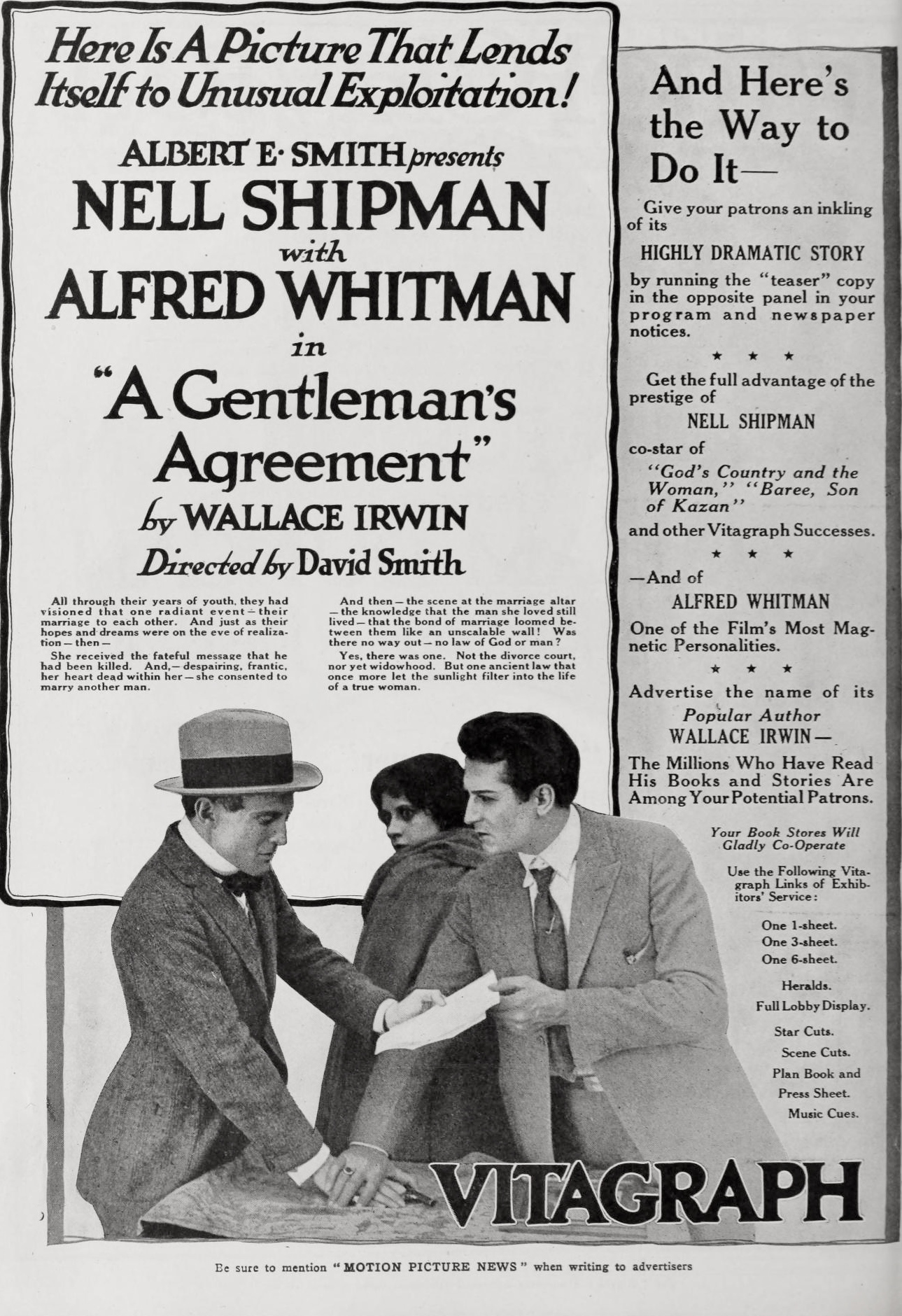
In the grand tapestry of early cinema, few films weave a narrative of such intricate emotional complexity and moral gravitas as A Gentleman's Agreement. Released in 1918, this silent era gem, penned by the insightful duo F.R. Buckley and Wallace Irwin, transcends its time, offering a profound meditation on love, sacrifice, and the often-unforeseen consequences of human folly. It’s a compelling journey into the heart of melodrama, yet it possesses an authenticity that elevates it beyond mere theatricality, inviting audiences to ponder the true cost of fidelity and the redemptive power of an unexpected act of grace. The film, starring Patricia Palmer, Juan de la Cruz, Gayne Whitman, and Nell Shipman, alongside Hattie Buskirk, Jacob Abrams, J. Carlton Wetherby, and Al Ernest Garcia, presents a masterclass in visual storytelling, where every gesture, every lingering gaze, speaks volumes that words alone often fail to capture. It stands as a testament to the potent narrative capabilities of an art form still in its nascent stages, demonstrating how universal themes could resonate deeply without the aid of spoken dialogue.
At its core, A Gentleman's Agreement plunges us into the tumultuous lives of its protagonists, beginning with the steadfast mining engineer, Allen Spargo (Juan de la Cruz). Betrothed to the devoted Theresa Kane (Patricia Palmer), Allen's ambition draws him westward, a common trope of the era, seeking to carve out a fortune that would secure their future. This initial separation, however, becomes the catalyst for a chain of events that spirals tragically out of control. An unfortunate accident leaves Allen grievously injured, rendering him vulnerable and reliant on the kindness of strangers. It is here that Kate Leonard (Nell Shipman) enters the scene, a nurse whose initial compassion subtly morphs into a possessive and destructive infatuation. Her character arc, from caregiver to manipulator, is a chilling portrayal of how unrequited desire can corrupt the soul, echoing the dark undercurrents seen in other films of the period where obsession dictates destiny, perhaps even foreshadowing the psychological complexities explored in later melodramas like The Cheat, though with a different moral calculus.
Kate's machinations are the fulcrum upon which the entire drama pivots. Driven by a desperate jealousy, she intercepts Theresa’s heartfelt letters, severing the lifeline between the lovers. Her ultimate act of perfidy—writing to Theresa that Allen is dead—is a cruel stroke, designed to clear her path to Allen's affections. The ensuing grief that paralyzes Theresa is palpable, masterfully conveyed by Palmer’s nuanced performance, a testament to the power of silent acting to communicate profound emotional states. This period of despair ultimately leads Theresa to accept the hand of Lemuel Antree (Gayne Whitman), her former suitor, a man whose steadfast devotion, though perhaps not sparking the same fiery passion as Allen, offers a semblance of stability in her shattered world. This forced marriage, born of misinformation and heartbreak, shares thematic resonance with films like Married in Name Only, where circumstance, rather than genuine affection, binds two individuals, setting the stage for inevitable conflict and emotional turmoil.
The narrative gains intense momentum with Allen's miraculous return. His unexpected reappearance, after having been presumed dead, shatters the fragile peace Theresa had painstakingly built. The moment of their reunion, fraught with unspoken questions and profound sorrow, is a masterclass in silent film emotionality. Allen, witnessing Theresa’s marital status, misinterprets her situation entirely, assuming she has moved on, that her love for him has waned. This misunderstanding, a classic device in melodramas, yet handled here with surprising depth, drives Allen back to the West, a man twice broken. Juan de la Cruz imbues Allen with a stoic despair that is deeply affecting, conveying the weight of a love lost and a future irrevocably altered. This element of miscommunication and perceived betrayal, leading to dramatic separation and pursuit, finds parallels in the narrative structures of films like His Sweetheart, where the journey to reconciliation is often as arduous as the initial parting.
Theresa, however, is no passive victim of fate. Her determination to follow Allen, to explain, to reclaim their shared future, marks her as a heroine of formidable spirit. Patricia Palmer’s portrayal of Theresa’s resilience and unwavering love is particularly compelling, offering a counterpoint to the more manipulative character of Kate. Her pursuit across the rugged Western landscape imbues the film with an adventurous spirit, reminiscent of other frontier narratives of the era, such as The Heights of Hazard, where the environment itself plays a crucial role in testing the characters' mettle. This pursuit, however, is not a solitary one. Lemuel Antree, realizing the true depth of Theresa’s heart and perhaps feeling the sting of his own misplaced hope, also embarks on a desperate chase. His intention, initially, is one of vengeance, a primal urge to eliminate the man who, through no fault of his own, threatens his newfound marital bliss. This sets the stage for a dramatic confrontation, where lives hang precariously in the balance.
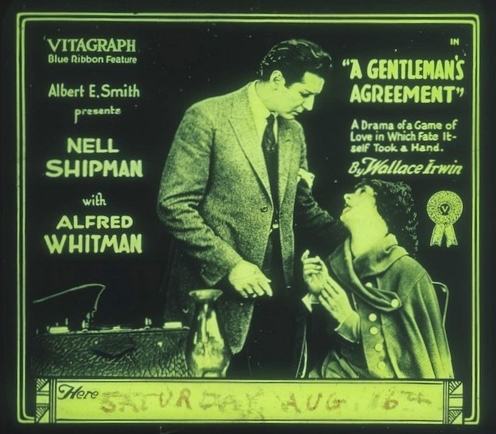
The true genius of A Gentleman's Agreement lies in its breathtaking climax, a moment of profound moral reckoning that elevates the film from a mere melodrama to a powerful exploration of honor and self-sacrifice. As Lemuel confronts Allen, poised to enact his vengeful design, a startling revelation surfaces: Allen had once saved Lemuel's life. This discovery is a seismic shift in the narrative, transforming Lemuel’s motivation from base jealousy to an agonizing ethical dilemma. The concept of a life debt, a theme deeply ingrained in many historical narratives, is here deployed with devastating effect. Lemuel, a man of a certain code, believes that his life, in essence, belongs to Allen. Faced with the impossible choice between his wife and his savior, he chooses the latter, making the ultimate sacrifice by drowning himself. Gayne Whitman's portrayal of Lemuel's internal struggle and his final, resolute act is incredibly powerful, conveying a complex mix of despair, honor, and perhaps even a twisted form of love. This act of self-annihilation, born from an archaic sense of duty and honor, is a dramatic resolution that few films dare to attempt, setting it apart from more conventional romantic dramas and giving it a unique, almost mythic quality.
This climax is not merely a plot device; it is a philosophical statement on the nature of love, obligation, and the ultimate price of redemption. It forces the audience to confront uncomfortable questions about what constitutes true heroism and the boundaries of personal sacrifice. While the resolution is undeniably tragic, it is also deeply moving, allowing Allen and Theresa to unite, their happiness forever tinged with the memory of Lemuel’s extraordinary act. The film’s narrative courage in depicting such a stark, self-sacrificing conclusion is truly commendable, especially for its time. It’s a narrative choice that resonates with the profound emotional stakes often found in stories of destiny and moral struggle, perhaps even reminiscent of the dramatic weight carried by characters in Russian silent epics like Sonka zolotaya ruchka, where fate and personal choices intertwine with tragic grandeur.
The success of A Gentleman's Agreement hinges significantly on the compelling performances of its ensemble cast. Patricia Palmer, as Theresa Kane, embodies the quintessential silent film heroine – virtuous, resilient, and capable of conveying a vast spectrum of emotions through subtle facial expressions and body language. Her grief is palpable, her determination inspiring, and her love unwavering. Juan de la Cruz, as Allen Spargo, delivers a performance marked by earnestness and a quiet strength, allowing his character's internal turmoil to register deeply with the audience. His stoicism in the face of adversity, and his heartbreak upon believing Theresa lost, are rendered with genuine pathos. Nell Shipman, in the role of the antagonist Kate Leonard, is particularly noteworthy. She deftly navigates the treacherous waters of her character’s psychological descent, making Kate’s jealousy and manipulative actions believable, rather than purely villainous. Shipman's ability to portray a complex character, driven by misguided love, adds a crucial layer of depth to the film's moral landscape. And, of course, Gayne Whitman’s Lemuel Antree, whose final act defines the film, is a portrayal of conflicted honor that leaves a lasting impression. The power of these silent performances to communicate such intricate emotional states is a testament to the actors' skill and the directorial vision.
F.R. Buckley and Wallace Irwin, as writers, crafted a narrative rich in dramatic potential, ensuring that each plot twist served to deepen the emotional stakes. The pacing, crucial in silent cinema, is expertly handled, allowing moments of quiet reflection to breathe before propelling the audience into exhilarating action sequences. The direction, though uncredited in the provided details, undoubtedly played a pivotal role in translating this intricate script into a compelling visual experience. The use of intertitles is economical yet effective, providing necessary exposition without interrupting the flow of the visual narrative. Cinematography, even in early silent films, was a key tool for conveying mood and emphasizing character emotions. One can imagine how close-ups would have been used to highlight the anguish on Theresa's face or the determined glint in Lemuel's eye, drawing the audience deeper into their internal worlds. The stark landscapes of the West, where much of the later action unfolds, would have been utilized not just as a backdrop, but as a symbolic representation of the characters’ untamed emotions and the vastness of their struggles, much like the environmental elements in films exploring grand human endeavors.
Beyond its immediate dramatic impact, A Gentleman's Agreement offers a fascinating glimpse into the social and moral fabric of the early 20th century. The emphasis on honor, the sanctity of a promise, and the profound consequences of deception reflect prevailing societal values. The film’s exploration of women's roles, from Theresa's fidelity and resilience to Kate's agency (albeit destructive), provides a nuanced perspective on female characters in an era often stereotyped. It's a film that demands engagement, not just for its historical significance but for its timeless themes. The narrative courage to conclude with Lemuel’s self-sacrifice, rather than a more conventional resolution, speaks to a willingness to challenge audience expectations and deliver a truly memorable, if heartbreaking, ending. This kind of bold storytelling sets it apart and allows it to resonate with modern viewers who appreciate complex character motivations and narratives that don't shy away from tragedy.
The film stands as a testament to the power of silent cinema to convey profound human drama. It reminds us that storytelling, at its most fundamental, relies not on dialogue, but on emotion, action, and visual poetry. For enthusiasts of early American cinema, or those seeking to understand the evolution of narrative filmmaking, A Gentleman's Agreement is an indispensable viewing experience. It’s a powerful exemplar of how a well-crafted plot, combined with compelling performances, can transcend the limitations of its medium and speak directly to the human condition. Its legacy lies not just in its dramatic twists and turns, but in its unwavering commitment to exploring the deepest recesses of the human heart – its capacity for love, its vulnerability to deceit, and its astonishing potential for ultimate, selfless sacrifice. It truly captures the essence of what made the silent era such a fertile ground for grand, sweeping narratives that continue to captivate and provoke thought today.
IMDb 5.9
1926
Community
Log in to comment.