DbcultAccessing Vault...
Cult Review
Senior Film Conservator
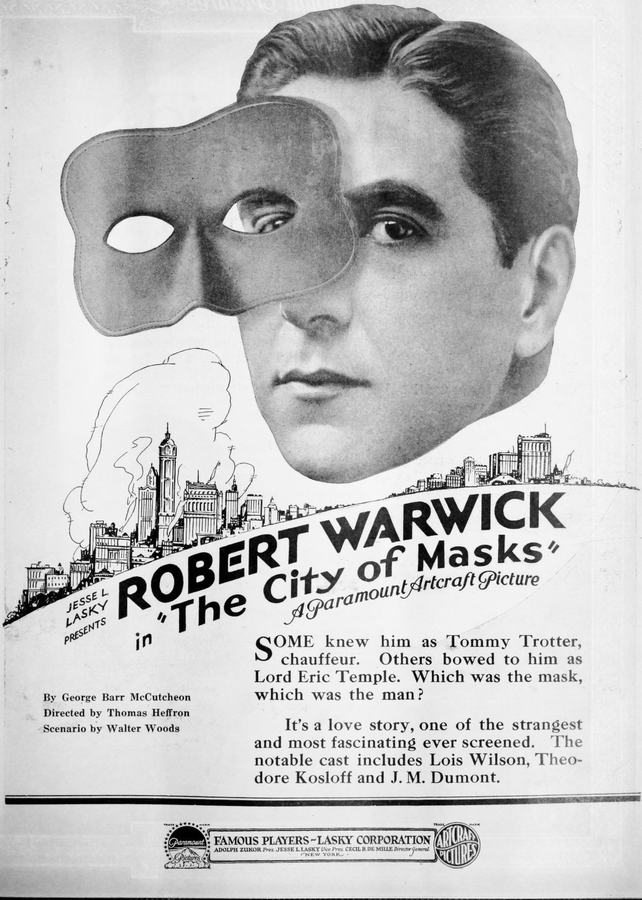
A chandelier made of broken beer bottles still throws prisms across the loft floor; that single image is the whole movie in miniature—opulence salvaged from trash, nostalgia soldered with irony.
George Barr McCutcheon’s story and Walter Woods’s scenario congeal into a fever chart of class vertigo: European blue bloods flattened by Fordist America yet addicted to the perfume of their own mythology. Director Warwick—himself a fallen matinee idol—shoots faces like cracked Sèvres: every close-up a fracture widening under the pressure of anonymity. Notice how Lois Wilson’s Lili enters in a doorway shaped like a guillotine; the iris-in is a blade dropping on the Old World.
The weekly ball operates on Catholic guilt and commedia mechanics: each guest assigned a stock role—Pantalone the banker now a street sweeper, Columbine the duchess stitching shirtwaists. Their masks are papier-mâché pressed from yesterday’s labor-union pamphlets; beneath, cheekbones gleam with sweat and coal dust. The film’s intertitles, letterpressed on simulated share-certificate stock, whisper capital’s cruel joke: “Titles dissolve at 14% interest.”
Cinematographer Glen MacWilliams scavenges chiaroscuro from Weimar streets: low-angle shots of elevated trains slicing shadows into ribs of iron. When the aristocrats waltz, the camera pirouettes with them, yet every revolution reveals a new poster—“Apartments to Let—No Dogs, No Aristocrats.” The color tinting (amber for revelry, viridian for shame) feels like bruises blooming under pale skin. Compare this to the tropical delirium of The Adorable Savage; here, the colony strikes back, colonizing the dispossessed with factory whistles.
Because the film is mute, every rustle of taffeta arrives via your own synesthetic hallucination. Edwards’s sound design—yes, the comedian Snitz Edwards moonlighted as sonic consultant—consisted of live theater organs punctuated by typewriter clicks, evoking clerks devouring dukedoms. Contemporary reviewers complained the final reel lacked a “bang.” They missed the point: the bang already happened in 1914, its reverberations merely ghost through these masked faces.
Robert Warwick’s Duke Adriano carries the stoop of a man who once bowed to emperors and now bows to time clocks; watch how he practices courtly gestures with a riveting hammer as scepter. Theodore Kosloff, ex-Diaghilev dancer, turns a passport forgery sequence into baroque choreography—fingers flutter like moths over ink pads. Lois Wilson underplays Lili, letting terror seep rather than spurt; her final smile is a crack in a frozen lake.
The screenplay flirts with anarchist rhetoric—pamphlets passed under masquerade garb—yet never relinquishes the Cinderella fantasy of restored fortune. It’s this tension—between revolution and restoration—that makes the film proto-noir, a genre not yet baptized. When the cops raid, the camera sides with the elite, lingering on torn lace, not truncheons. We are seduced into mourning for parasites, a trick later perfected in Gilded Age melodramas.
Streaming in 4K, the flicker becomes cardiac: every scratch on the negative looks like EKG static. You realize these ghosts anticipated today’s gig-economy nobodies—Uber drivers with PhDs, baristas bearing Brahmin surnames. The film’s prophecy lies not in plot but in structure: leisure as labor, identity as costume ball.
Unlike the pastoral nostalgia of Nancy Comes Home, City is urban claustrophobia. Where Panopta II externalizes surveillance, here the aristocrats surveil themselves, counting dance cards like prison rations. And beside Jack Straw’s comic upward mobility, this is downward mobility as tragic farce.
A 35mm print survives at MoMA, restored from a Portuguese-language nitrate struck for Rio de Janeiro censors who excised the anarchist leaflets; those gaps are now poetic ellipses. A Czech DVD offers a haunting score by Maso & Papir, turning the ball scenes into danse macabre. Avoid the YouTube upload with EDM overlay—it’s like spraying cologne on a corpse.
The City of Masks is neither elegy nor indictment; it is the moment when the mirror recognizes its cracks and keeps reflecting anyway. Watch it midnight, lights off, windows open to city din. You’ll swear you hear waltz steps echoing down the fire escape—and maybe catch your own reflection wearing a domino you never put on.
IMDb 6.6
1927
Community
Log in to comment.