DbcultAccessing Vault...
Cult Review
Senior Film Conservator
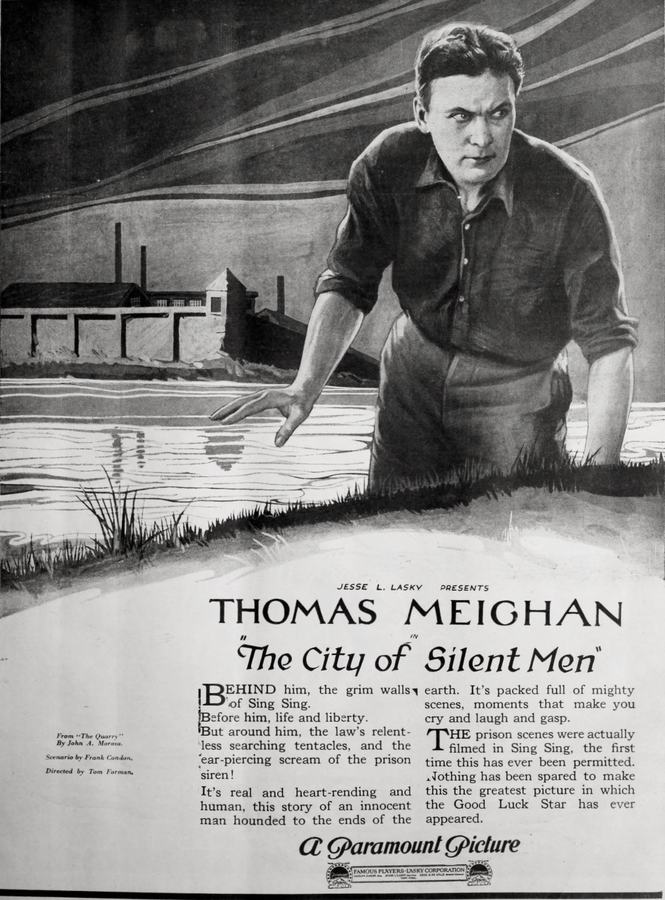
The City of Silent Men, a 1930 pre-code production, occupies an uncanny space in film history—a project that neither conforms to the pulpy excesses of classic noir nor the saccharine moralizing of early Hollywood dramas. It is a film that demands to be watched in the quietest hours, its shadows and silences resonating with the same weight as the dialogue it refuses to overexplain. Jim Montgomery, portrayed with bruised authenticity by Thomas Meighan, is not a hero in the traditional sense; he is a cipher for the viewer’s own discomfort with the machinery of justice. His wrongful life sentence, the catalyst for the narrative, is introduced not with a courtroom’s grandeur but through a series of fragmented vignettes, each more disorienting than the last.
What distinguishes this film is its refusal to sanitize the trauma of imprisonment. The prison scenes, shot in a stark, almost abstract style, resemble a purgatorial state where time is measured in the creak of cell doors and the echo of footsteps. When Montgomery escapes—not for freedom, but to attend his ailing mother’s funeral—the transition from incarceration to the ‘outside world’ is jarring. California, rendered here as a sun-drenched purgatory, becomes a mirror to the prison: both spaces are governed by rules that favor the powerful, indifferent to the individual’s plights.
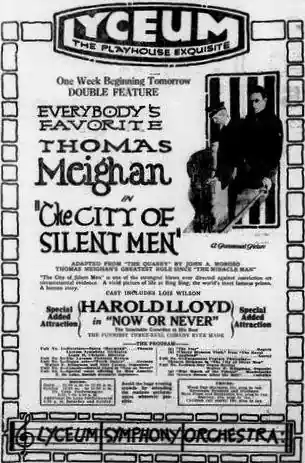
Thomas Meighan’s portrayal of Montgomery is a masterclass in restrained acting. He conveys a man who has internalized the shame of being wrongfully accused, his body language collapsing under the weight of a system that has declared him a monster. Paul Everton’s supporting role as a corrupt official drips with the kind of smug authority that makes the audience recoil, while Lois Wilson, as a woman drawn into Montgomery’s orbit, embodies the quiet resilience of those who survive in a world that denies them agency.
It is in the interplay between these characters that the film’s thematic depth emerges. The mother-son dynamic, though brief, is charged with a grief that transcends the narrative’s limitations. Kate Bruce’s performance in the role is a fleeting but piercing reminder of how familial bonds are often the first casualties of institutional cruelty. The absence of overt sentimentality here is striking; the film trusts the audience to feel the emotional tremors without amplifying them.
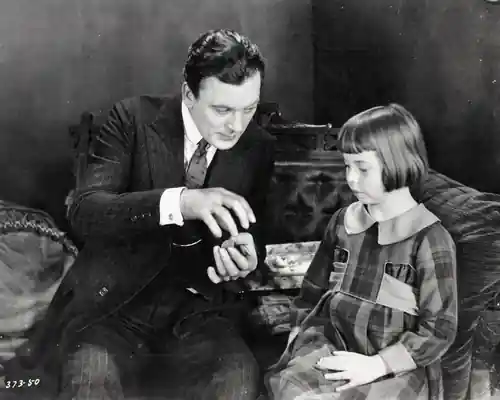
Frank Condon’s direction is marked by an almost documentary-like austerity. The camera lingers on faces in a way that feels intrusive, as though the audience is being forced to confront the humanity of these characters rather than simply observe their stories. John A. Moroso’s screenplay, while occasionally bogged down by the constraints of its era, introduces a narrative structure that rewards patience. The film’s refusal to provide clear resolutions—Montgomery’s fate is left ambiguously open—reflects a distrust of tidy endings, a thematic echo of the unresolved tensions between justice and retribution.
Comparisons to other pre-code films, such as Marriage or John Barleycorn, are instructive but ultimately reductive. Where those films grapple with social mores and personal vices, The City of Silent Men is more interested in the psychological toll of marginalization. Its themes resonate with the later works of Dernier amour, though it lacks the latter’s romantic fatalism. Instead, this film’s power lies in its starkness—a narrative stripped of melodrama, leaving only the raw, unflinching truth of its characters’ struggles.
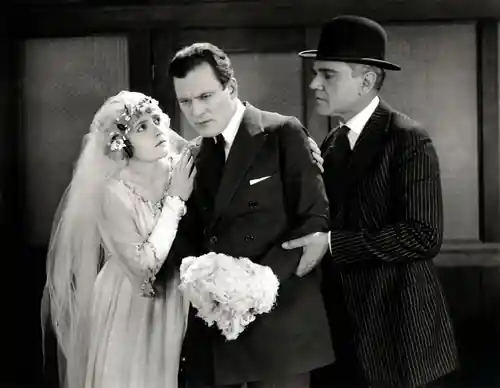
Visually, the film is a study in negative space. The sets—particularly the prison and the California landscapes—function as metaphors for emotional isolation. The muted color palette (a necessity of early sound cinema) enhances the film’s somber tone, while the editing, though occasionally clunky by modern standards, creates a rhythm that mimics the cadence of a man walking through a dream he cannot control. There is a deliberate slowness to the pacing, a cinematic counterpart to Montgomery’s own disorientation as he navigates a world that no longer recognizes him.
The score, sparse yet haunting, underscores the film’s existential undertones. It is not music that comforts but that unsettles, a constant reminder of the unresolved tensions at the film’s core. Even the sound design, in its rudimentary form, contributes to the sense of unease—a telephone’s shrill ring, a door creaking open, a distant train whistle—each sound a punctuation mark in a story that refuses to offer closure.
To watch The City of Silent Men is to witness a forgotten chapter of Hollywood’s early sound era, one that dared to interrogate the very foundations of its industry. The film’s themes of institutional betrayal and personal redemption find echoes in later works like Where Is My Wife?, yet it remains distinct in its refusal to romanticize its protagonist’s journey. This is not a film about triumph; it is about survival, and the quiet dignity of those who persist despite the erasure of their humanity.
For modern viewers, the film offers a stark contrast to the hyper-stylized dramas of today. Its raw, unvarnished approach to storytelling is both a challenge and a revelation, demanding attention to the subtleties of performance and narrative. In an age where every plot twist is telegraphed by a bold visual cue, The City of Silent Men’s reliance on silence—both literal and thematic—is a radical act. It is a film that speaks volumes in its restraint, a testament to the power of understatement in an era of excess.
IMDb 5.9
1911
Community
Log in to comment.