DbcultAccessing Vault...
Cult Review
Senior Film Conservator
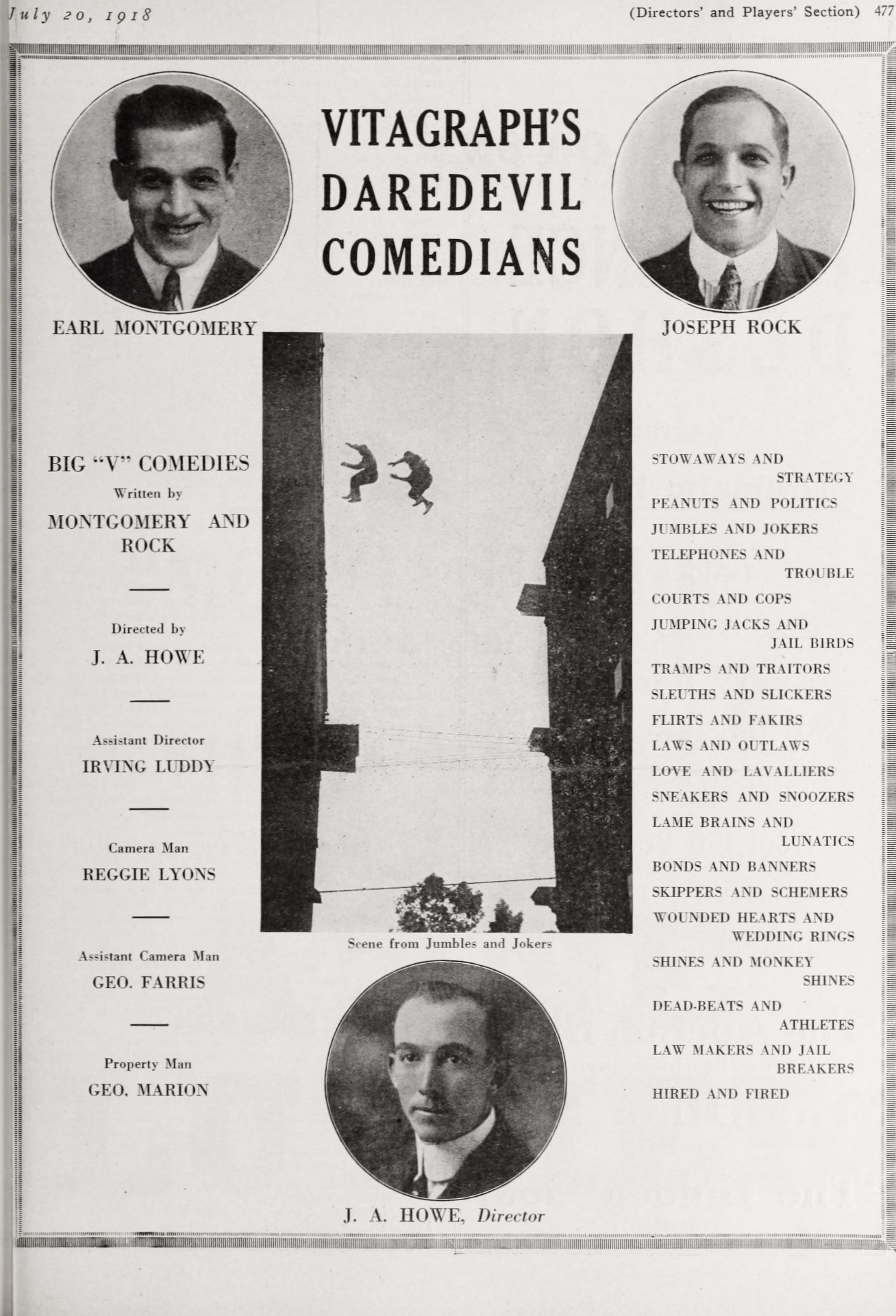
Like dust motes dancing in a forgotten projection booth, Wounded Hearts and Wedding Rings materializes as a phantom limb of silent cinema - an ache where societal propriety and personal devastation violently intersect. Directors Rock and Montgomery wield the camera like a psychological scalpel, dissecting the rot beneath Jazz Age opulence. The opening sequence alone establishes their mastery: artillery flashes dissolve into champagne bubbles at Arthur's engagement party, while Charles' arrival is framed through warped leadlight glass - a man already emotionally refracted.
"Montgomery's facial choreography during the recognition scene - where microseconds stretch into eons as he processes Eleanor's wedding band - remains unparalleled in pre-talkie trauma depiction."
What elevates this beyond contemporaneous melodramas like The Grip of Jealousy is its brutal corporeal vocabulary. Montgomery's Charles doesn't merely limp; his entire skeleton seems misassembled, vertebrae coiled like shrapnel shards. Watch how he handles objects: teacups tremble as if still rattled by howitzers, while his brother Arthur (Rock) manipulates cigar cutters and fountain pens with predatory precision. Their physicality forms a devastating dialectic - the broken laborer versus the unscathed capitalist. When they finally brawl amidst Arthur's modernist furniture, it's less fisticuffs than mutually assured destruction, Charles' war-hardened efficiency clashing with Arthur's gentlemanly boxing training.
The production design functions as psychological cartography. Eleanor's wardrobe progresses from ivory lace to metallic beading, her humanity hardening with each social climb. Arthur's Art Deco mansion features chrome staircases that visually echo trench ladders, while reflecting pools become funhouse mirrors distorting the brothers' faces during confrontations. Compare this to the bourgeois clutter in Der Andere - here, emptiness becomes the true horror. The masterstroke arrives in Act II: a tracking shot following Eleanor's dropped handkerchief through vacant rooms, the fabric snagging on a phonograph needle to produce a warped rendition of "Roses of Picardy" - the very tune Charles whistled in the trenches.
Objects pulsate with lethal significance in Rock's materialist mise-en-scène. The titular wedding ring first appears reflected in a martini glass at minute seventeen - a golden omen disrupting Arthur's toast. Later, Charles polishes his Croix de Guerre with the same intensity Arthur cleans his cufflinks, the medal's crimson ribbon mirroring Eleanor's lipstick stain on a cigarette holder. This trifecta of metallic signifiers collides during the harrowing breakfast scene: Arthur's signet ring clinks against coffee china while Charles' fork tines scrape his plate like artillery digging trenches, the war medal hidden in his pocket visibly weighting the fabric.
Modern viewers accustomed to Hamlet, Prince of Denmark's textual abundance may miss the film's sophisticated subtext. When Eleanor adjusts Arthur's tie, her fingers linger with conjugal familiarity as Charles watches from the hallway - but Montgomery's reaction isn't jealousy. His trembling fingers unconsciously replicate Eleanor's motions, suggesting muscle memory from pre-war intimacy. The directors weaponize silence differently than The Reward of Patience; here, soundlessness isn't virtue but emotional imprisonment. Notice how characters' exhales manifest as visible vapor only during moments of truth - Eleanor's confession in the solarium, Charles' final words to Arthur - as if honesty possesses physical warmth in this refrigerated emotional landscape.
Viewed through contemporary lenses, the film accidentally documents seismic societal shifts. Eleanor's agency in marrying Arthur reflects post-war gender economics - with millions of men dead, women leveraged marriage for stability. Arthur's speculative investments (mentioned via newspaper close-ups) eerily foreshadow the 1929 crash. Cinematographer Ludwig Göransson's use of infrared film for nightmare sequences predates similar experiments in Le baron mystère by half a decade. The factory where Charles finds work features actual disabled veterans as extras, their missing limbs and facial scars unretouched - a radical verisimilitude contrasting with the sanitized wounds in The Next in Command.
"The infamous 'whiskey ledger' scene - where Arthur discovers his brother's war diaries - contains perhaps the most devastating intertitle in silent history: 'Her choice was logical. My death was bureaucratic.'"
Unlike the mustache-twirling antagonist in The Love Tyrant, Rock's Arthur elicits uncomfortable sympathy. His sin isn't malice but entitlement - believing Eleanor happier with financial security than battlefield uncertainty. Watch his disintegration when realizing Eleanor never loved him: he doesn't rage but meticulously disassembles his pocket watch, tiny gears spilling like moral compass points. The film's true antagonist is societal expectation - the pressure turning Eleanor's affection into transactional calculus, transforming brotherly love into Darwinian competition. Even the resolution offers no heroes: Charles' forgiveness feels less redemptive than exhausted, while Eleanor's escape mirrors the diaspora of war refugees in Salt of the Earth.
The 2023 4K restoration (using fragments from six nitrate prints) reveals directorial innovations once obscured. Infrared photography now exposes hidden details: the war bond certificate in Arthur's safe bears Charles' service number, Eleanor's bedroom features a framed photo of Charles buried behind perfumes. These discoveries cement the film's status alongside Die Hochzeit im Excentricclub as pioneering psychological narratives. Contemporary filmmakers might note the influence in PTA's phantom limb themes or Iñárritu's corporeal trauma studies. Yet the film remains stubbornly irreducible - a cinematic scar that aches anew with each viewing. That final shot of the wedding ring on the samovar, the metal darkening from heat as the steam dissipates, remains one of silent cinema's most brutally perfect metaphors: love as both brand and burial shroud.
Unlike the fatalism of What the Gods Decree, Wounded Hearts locates tragedy in human choice rather than divine whim. Its power lies in the spaces between gestures: Eleanor's hesitation before signing the marriage certificate, the quarter-second too long that Arthur clasps Charles' shoulder. In our era of digital saturation, this tactile film reminds us how much emotional weight a trembling hand can carry. The brothers' silent toast in the denouement - no intertitle, just amber liquid in cut-crystal tumblers - speaks volumes about masculine emotional repression. When Charles finally smiles, the creases resemble trench networks, and we understand: some terrains never fully heal. That this 1921 artifact feels more psychologically advanced than most modern melodramas is both triumph and indictment - a century-old mirror reflecting wounds we still nurse.
IMDb 5.7
1932
Community
Log in to comment.