DbcultAccessing Vault...
Cult Review
Senior Film Conservator
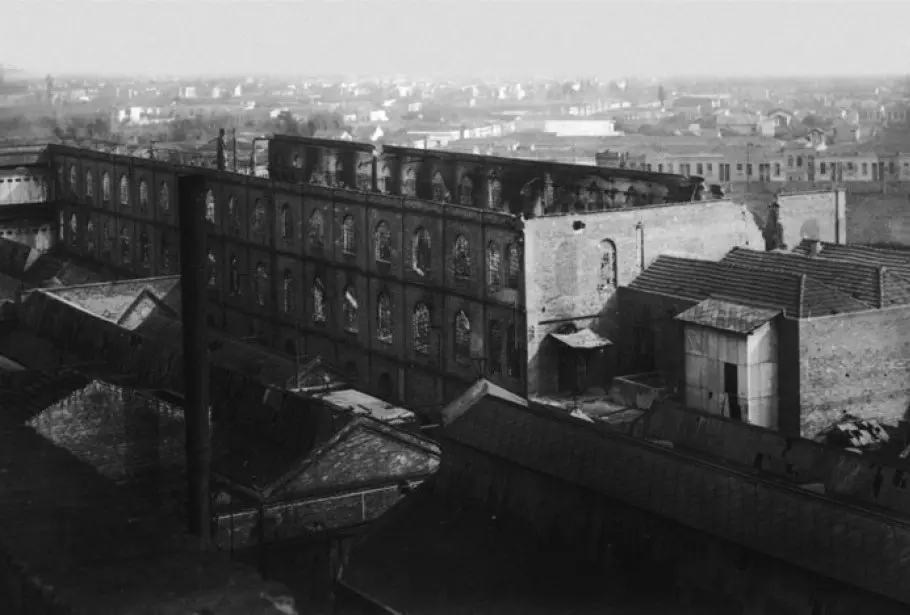
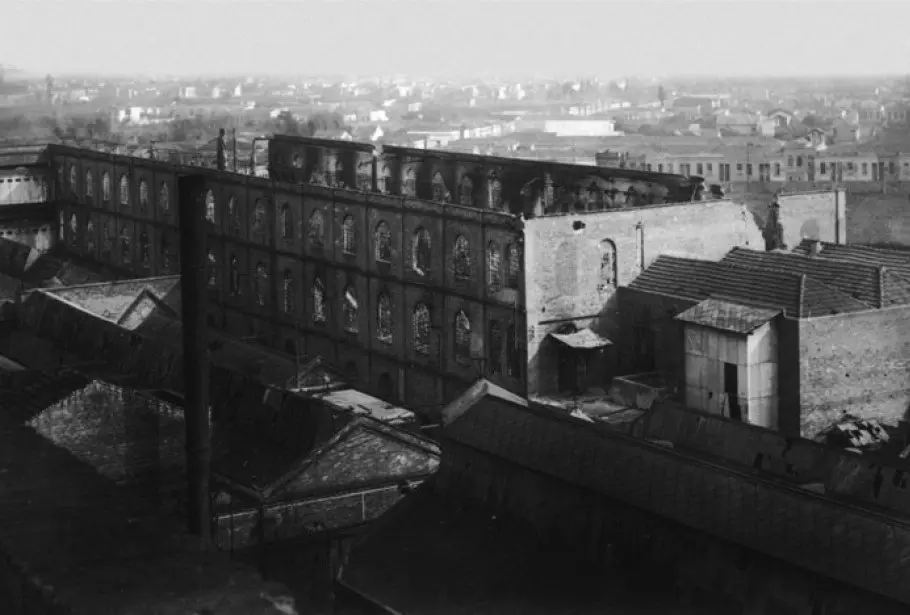
There is a particular, unsettling quality to the grain of 1924 nitrate film when it captures the dissolution of a civilization. In A Revolução de 1924 em São Paulo, we are not treated to the curated artifice of a Hollywood production like The Little Minister; instead, we are confronted with the raw, jagged edges of a reality that the history books often relegate to a mere footnote. This documentary short is a visceral transmission from a time when the sky over South America first rained fire, courtesy of the federal government's decision to bomb its own economic heart.
Watching this footage, one is struck by the sheer audacity of the destruction. We see the once-proud facades of São Paulo's industrial districts rendered into heaps of masonry and twisted rebar. Unlike the staged battles of historical epics such as Ashes of Vengeance, where the violence feels choreographed for maximum aesthetic impact, the carnage here is chaotic, indifferent, and profoundly lonely. The camera lingers on the hollowed-out shells of homes, inviting the viewer to contemplate the lives that were extinguished between the frames.
The presence of General Eduardo Sócrates looms over the narrative, not as a protagonist in the traditional sense, but as the architect of a specific brand of order achieved through obliteration. The film documents the aftermath of his campaign, showing the efficiency with which federal artillery and the nascent Brazilian Air Force dismantled the rebel positions. There is a chilling contrast between the military precision implied by the wreckage and the human suffering that leaks through the edges of the frame.
While films like The Mutiny of the Elsinore explore the internal dynamics of rebellion on a micro-scale, A Revolução de 1924 em São Paulo captures the macro-consequences of defiance. The 'Tenentes' sought to challenge the agrarian oligarchy, but the visual record shows that the price of their ambition was paid in the currency of urban ruin. The documentary serves as a grim ledger, counting the cost of political instability in the form of shattered glass and unburied casualties.
From a technical standpoint, the documentary is a fascinating relic. The cinematography is utilitarian, yet it possesses an accidental brilliance. The cameraman—whose name is often lost to the annals of history—doesn't have the luxury of the stylized sets found in The Marionettes. Instead, the lighting is provided by the harsh Brazilian sun, casting long, unforgiving shadows across the craters left by aerial bombs.
There is a rhythmic quality to the way the film moves through different sectors of the city. It functions almost like a travelogue of despair. We see the Brás neighborhood, a hub of immigrant life, reduced to a landscape that looks more like the Western Front of the Great War than a South American metropolis. This shift from urban vitality to wasteland is more jarring than any plot twist in New York Luck. The film forces us to acknowledge that the 'progress' of the early 20th century was inextricably linked to the technology of destruction.
To understand the impact of this documentary, one must look at what else was playing in theaters at the time. While audiences might have been seeking escapism in the lightheartedness of Her Tender Feet or the exoticism of An Eskimotion Picture, the citizens of São Paulo were living through a nightmare that no scriptwriter could fully capture.
The documentary acts as a necessary counterweight to the theatricality of the era. If Diane of the Follies represents the glamorized aspirations of the 1920s, this film represents the dark underbelly of the 'Modernist' dream. It reminds us that behind the jazz and the flappers, there was a world of internecine conflict and brutal state power. Even the rural charm of Bawbs O' Blue Ridge feels like a distant fantasy when compared to the smoke-choked streets of the Paulista capital.
What is most striking about A Revolução de 1924 em São Paulo is the occasional glimpse of a human face. These are not actors like those in Um eines Weibes Ehre or Prinzessin Tatjanah, performing for a paycheck. These are survivors with the thousand-yard stare of the shell-shocked. Their presence in the film transforms it from a mere historical record into a profound act of witness.
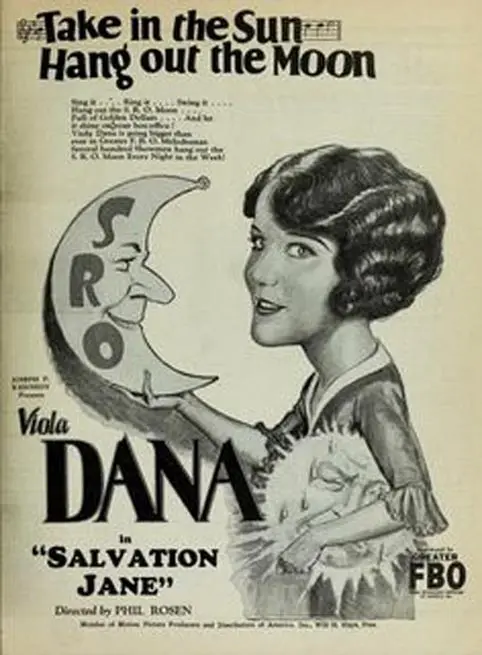
We see people sifting through the remains of their shops, a scene that evokes the same sense of urban struggle found in Salvation Nell, but without the comfort of a moralizing resolution. In the reality of 1924, there was no guaranteed salvation; there was only the slow, painful process of rebuilding. The film captures the resilience of the population, but it doesn't sugarcoat the trauma. It is as stark and unapologetic as Outlawed, yet grounded in a tragedy that actually occurred.
Ultimately, this documentary is a meditation on the fragility of the social contract. It shows how quickly the veneer of civilization can be stripped away when political discourse fails. The images of bombed-out churches and schools are a haunting reminder that nothing is sacred in the pursuit of power. The film's depiction of the federal government's heavy-handedness serves as a precursor to the authoritarianism that would later define much of 20th-century Brazilian history.
In contrast to the light social commentaries of So sind die Männer, A Revolução de 1924 em São Paulo offers a grim thesis on the nature of masculinity and power. It isn't about the foibles of men, but the lethal consequences of their pride. When we hear the metaphorical The Knocking on the Door in this context, it isn't a visitor; it's the sound of artillery shells landing in a residential courtyard.
To watch A Revolução de 1924 em São Paulo today is to engage in a form of cinematic archaeology. It is a difficult, often painful experience, but it is an essential one for anyone who wishes to understand the foundations of modern Brazil. The film does not offer easy answers or a neat conclusion. It simply presents the evidence of a catastrophe and leaves the viewer to grapple with the implications.
In an age of digital perfection and hyper-saturated war reporting, there is something uniquely powerful about these flickering, monochrome images of a city in agony. They remind us that history is not just a collection of dates and names, but a series of lived experiences, often characterized by immense loss. This documentary stands as a monument to those who lived through the smoke and the fire, a testament to a São Paulo that was broken but not defeated. It is a masterpiece of historical documentation, a silent scream that still echoes a century later.

IMDb 7.9
1928
Community
Log in to comment.