DbcultAccessing Vault...
Cult Review
Senior Film Conservator
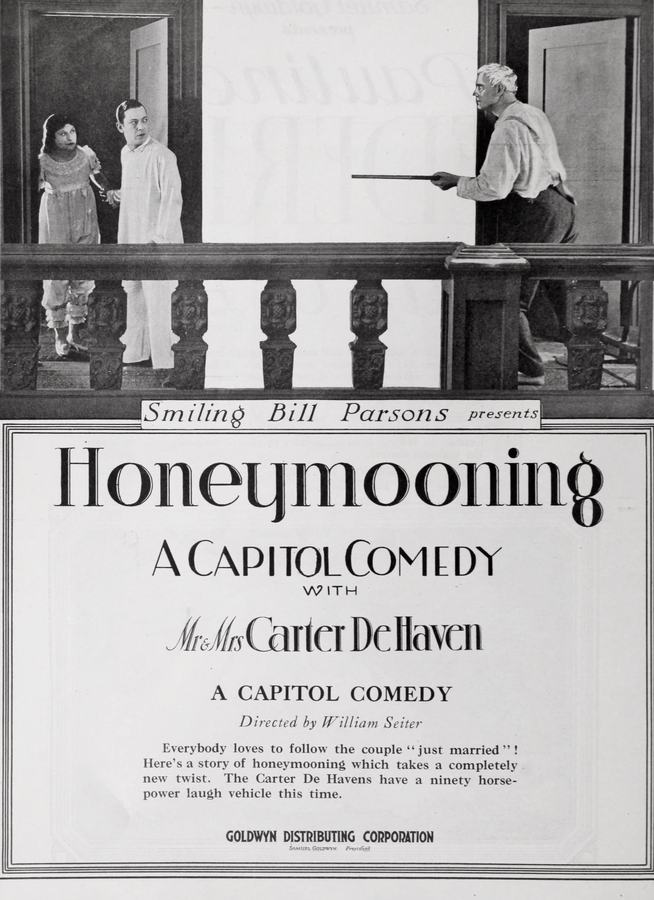
When the reel spins and the title card flashes "Honeymooning," audiences of the Roaring Twenties were greeted with a promise of light‑hearted escapism. The film, anchored by the magnetic chemistry of Carter DeHaven and his real‑life partner Flora Parker DeHaven, transcends the conventional slapstick of its time, weaving a tapestry of situational irony that feels remarkably contemporary. The narrative thrust—an earnest couple thrust into a maelstrom of misunderstandings—serves as a canvas upon which each performer paints a distinct hue of comedy.
Carter DeHaven, already celebrated for his work in "The Devil's Wheel" and "Daring Danger," brings an understated poise to Jack. His facial diction, a study in restrained exaggeration, conveys a bewildered dignity that resonates even without dialogue. When the cantankerous conductor (Harry L. Rattenberry) interrogates the couple about a non‑existent contraband, DeHaven’s dead‑pan stare becomes a silent punchline, echoing the subtle wit found in The Clarion’s more dialogue‑heavy moments.
Flora’s portrayal of Mary is a masterclass in kinetic energy. She darts across the frame with a vivacity that recalls the spirited heroine of Fighting for Love, yet she injects a uniquely modern sensibility: a refusal to be a passive passenger in her own story. Her improvisational gestures—most notably the impromptu waltz with a bewildered bellboy—transform the film’s set pieces into stages for spontaneous choreography.
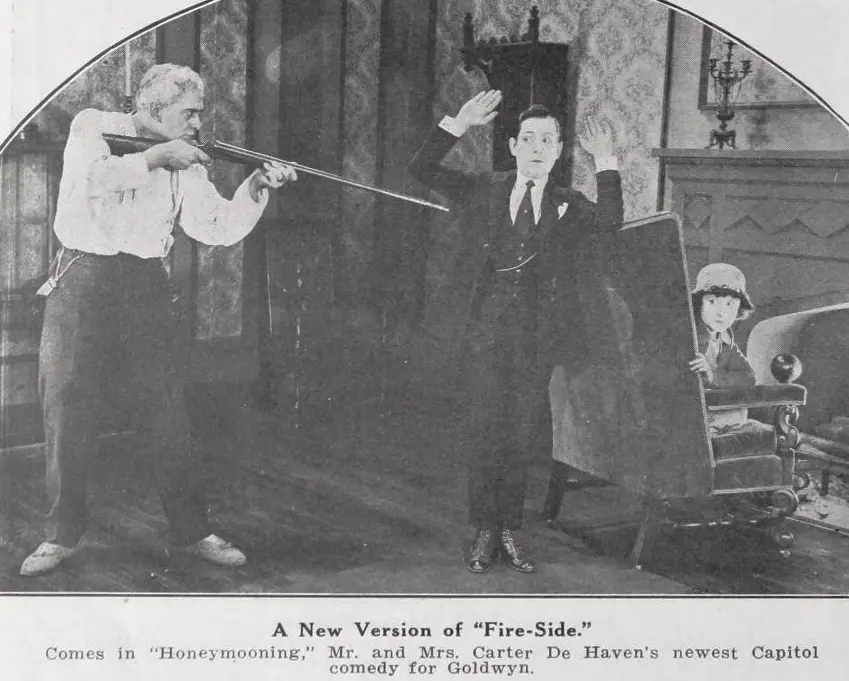
Rattenberry, a veteran of the silent era’s melodramas, dons the role of the train conductor with a gravitas that borders on parody. His exaggerated moustache twitches in sync with each accusation, a visual cue that amplifies the absurdity of the situation. The conductor’s relentless pursuit of “order” mirrors the bureaucratic absurdities explored in The Isle of the Dead, albeit through a comedic lens.
Frona Hale’s Frona is the film’s catalyst, a mischievous maid whose cryptic advice propels the narrative into ever‑wilder territory. Her delivery—a blend of coy smiles and conspiratorial whispers—evokes the enigmatic allure of the titular character in An Innocent Magdalene. When she hands Mary a seemingly innocuous key that unlocks the ballroom’s hidden pantry, the resulting chaos becomes a visual symphony of slapstick timing.
The production design of "Honeymooning" deserves particular commendation. The train interiors, rendered in stark chiaroscuro, juxtapose the bright, sun‑drenched resort scenes, creating a visual metaphor for the couple’s emotional transition from confinement to liberation. Cinematographer James A. Smith employs a series of long takes that allow the actors’ physical comedy to breathe, reminiscent of the fluid camera work seen in Richelieu. The editing, paced with a metronomic precision, ensures each gag lands with maximal impact while preserving narrative coherence.
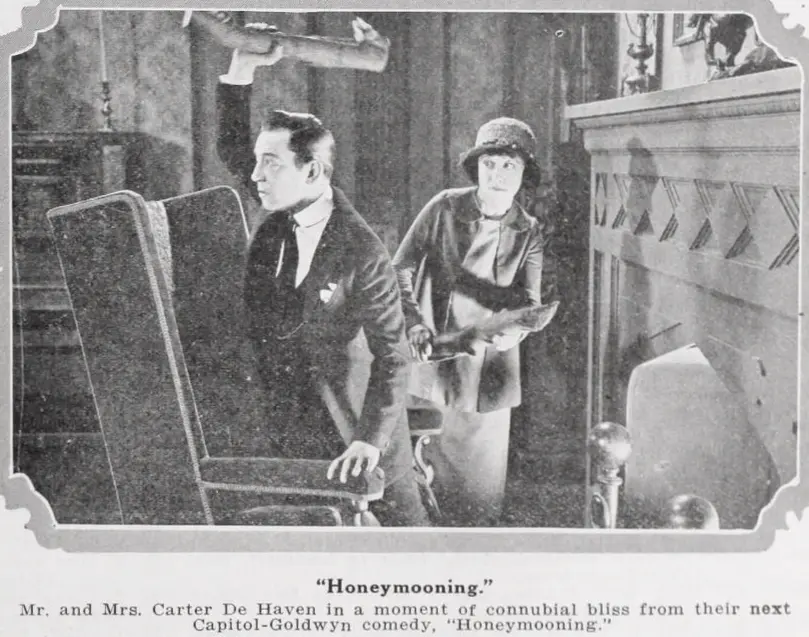
"The film’s brilliance lies not merely in its jokes, but in its ability to reflect the anxieties of a generation eager to embrace love amidst societal turbulence."
Beyond its comedic veneer, "Honeymooning" interrogates the construction of identity within marriage. Jack and Mary’s repeated misidentifications—first as aristocrats, then as performers—underscore the fluidity of self when viewed through the prism of societal expectation. This thematic thread aligns with the existential inquiries present in Das Spiel von Liebe und Tod, albeit expressed through humor rather than tragedy.
When placed beside contemporaneous works such as In the Good Old Days or the more melodramatic Mr. Wu, "Honeymooning" distinguishes itself through its deft balance of narrative propulsion and comedic timing. While "In the Good Old Days" leans heavily on nostalgic sentimentality, "Honeymooning" embraces the chaos of modernity, making it a more resonant artifact for present‑day scholars of early cinema.
Although "Honeymooning" never achieved the box‑office heights of some of its peers, its influence ripples through later screwball comedies of the 1930s. The film’s structural reliance on mistaken identity and rapid‑fire physical comedy can be traced to the works of the Marx Brothers and later to the romantic capers of Cary Grant. Moreover, the DeHavens’ on‑screen partnership set a precedent for real‑life couples collaborating in front of the camera, a practice that would later be echoed by the likes of Spencer Tracy and Katharine Hepburn.
In sum, "Honeymooning" stands as a testament to the silent era’s capacity for narrative sophistication. Its blend of visual wit, character nuance, and thematic depth renders it a film that rewards repeated viewings. For aficionados of early cinema, the film offers a rich case study in how comedy can serve as a conduit for exploring deeper societal currents. Whether you are a scholar, a casual viewer, or a lover of vintage romance, the film’s spirited energy and polished craftsmanship make it an essential addition to any classic film repertoire.
IMDb 7.3
1936
Community
Log in to comment.