DbcultAccessing Vault...
Cult Review
Senior Film Conservator
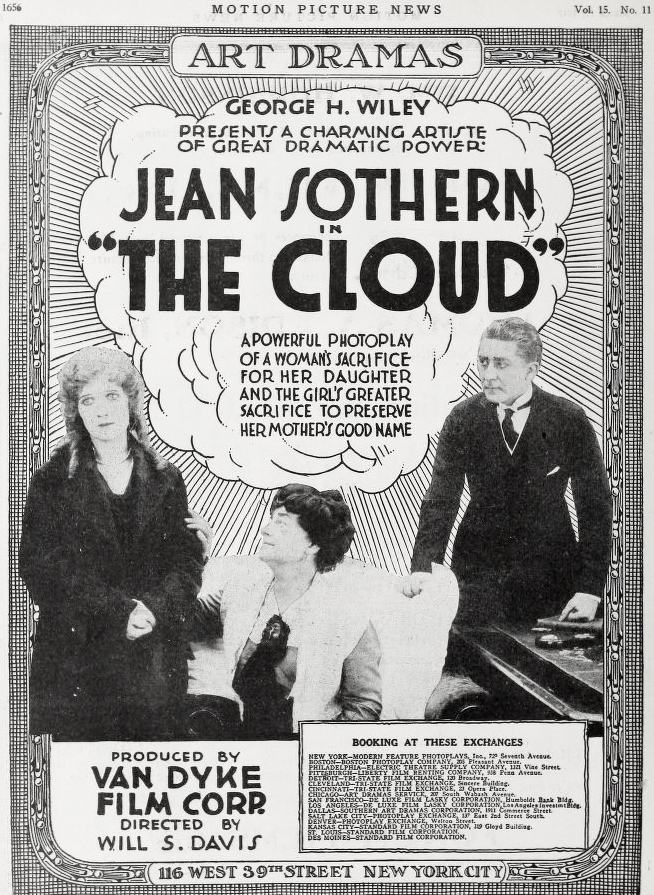
There are films that merely tell a story, and then there are those that etch themselves onto the very fabric of our collective consciousness, serving as profound reflections on the human condition. Joseph F. Poland’s masterful creation, The Cloud, stands firmly in the latter category, a cinematic experience that, despite its vintage, resonates with an enduring power. It’s a narrative not just of a man wrongly accused, but of the insidious nature of reputation, the fragility of trust, and the unwavering strength found in genuine human connection. The film, a silent era triumph, manages to convey an astonishing depth of emotion and complex thematic interplay without uttering a single spoken word, relying instead on the universal language of performance and visual storytelling. It beckons us to consider how quickly a life can be undone by malicious intent and how arduously truth must fight to emerge from obfuscation.
At its heart lies Walter Miller's compelling portrayal of John Thornton, a character drawn with admirable integrity and a quiet dignity that makes his eventual plight all the more agonizing. Thornton is introduced as the epitome of the upright citizen: a successful industrialist, a benevolent employer, a man whose philanthropic endeavors are as well-known as his business acumen. Miller imbues Thornton with a gentle earnestness, a man whose very nature is incapable of deceit, making the accusations leveled against him feel like an unbearable assault on his soul. His initial disbelief, followed by a crushing realization of his predicament, is depicted with a nuanced performance that speaks volumes through subtle gestures and expressive eyes. It is this foundational portrayal of inherent goodness that makes the 'cloud' of suspicion so utterly devastating, not just for the character, but for the empathetic viewer. We see a good man systematically targeted, and the injustice stings with a palpable force.
Opposite Miller’s virtuous Thornton, Franklyn Hanna delivers a truly chilling performance as Arthur Vance, the treacherous business partner whose avarice knows no bounds. Hanna crafts Vance not as a caricature of evil, but as a man whose calculated malevolence is frighteningly plausible. His smiles are too wide, his assurances too eager, hinting at the rot beneath the polished exterior. Vance is the embodiment of the titular 'cloud' itself – a dark, pervasive force that seeks to obscure truth and cast shadows over light. His meticulous planning of the embezzlement, the careful framing of Thornton, and his subsequent efforts to silence any potential witnesses reveal a mind utterly devoid of conscience. Hanna’s ability to convey this deep-seated corruption through non-verbal cues is a testament to his skill and the power of silent cinema. The audience is made to feel the oppressive weight of Vance’s machinations, a constant threat hanging over Thornton’s head, much like the ominous The Heights of Hazard, where environmental and human threats loom large over the protagonists.
No less crucial to the film’s emotional landscape is Jean Sothern as Eleanor Thornton, John’s devoted wife. Sothern’s performance is a masterclass in quiet fortitude. Her initial shock gives way to a fierce, unwavering loyalty that becomes the bedrock of John’s survival. Eleanor faces not only the impending financial ruin and her husband’s potential imprisonment but also the harsh judgment of society, which often condemns the innocent by association. Sothern communicates Eleanor’s anguish, her determination, and her profound love through poignant expressions and resolute stances. She is the anchor in the storm, a beacon of hope when all else seems lost. Her portrayal elevates the film beyond a simple legal drama into a profound exploration of marital devotion under extreme duress, echoing the steadfastness seen in films like The Piper's Price, where characters often face immense personal sacrifices for love.
The supporting cast in The Cloud is exceptionally strong, each member contributing significantly to the narrative’s intricate tapestry. Mae Melvin, as the young factory worker Lillian, delivers a performance that is both delicate and ultimately powerful. Lillian represents the vulnerable underbelly of society, a recipient of Thornton’s charity, now caught in the crossfire. Her fear of Vance is palpable, making her eventual act of courage all the more impactful. Her journey from intimidated silence to heroic testimony is a pivotal arc, demonstrating that even the seemingly weakest among us can possess extraordinary strength when confronted with injustice. It’s a narrative thread that could easily be compared to the moral dilemmas faced by characters in The Banker's Daughter, where individual choices profoundly affect broader outcomes.
Mrs. Charles Willard, as the formidable Aunt Agatha, initially embodies the societal skepticism that Thornton faces. Her stern demeanor and initial reluctance to believe in her nephew’s innocence are a realistic depiction of how easily public opinion can be swayed. However, as the evidence slowly begins to unravel, her transformation from a figure of judgment to one of staunch support is subtly and effectively portrayed. Her eventual embrace of Thornton signifies a crucial turning point, a crack in the 'cloud' of doubt that allows a sliver of light to penetrate. This dynamic mirrors the evolution of community perception in films like Common Sense Brackett, where a character's true nature is slowly revealed through adversity.
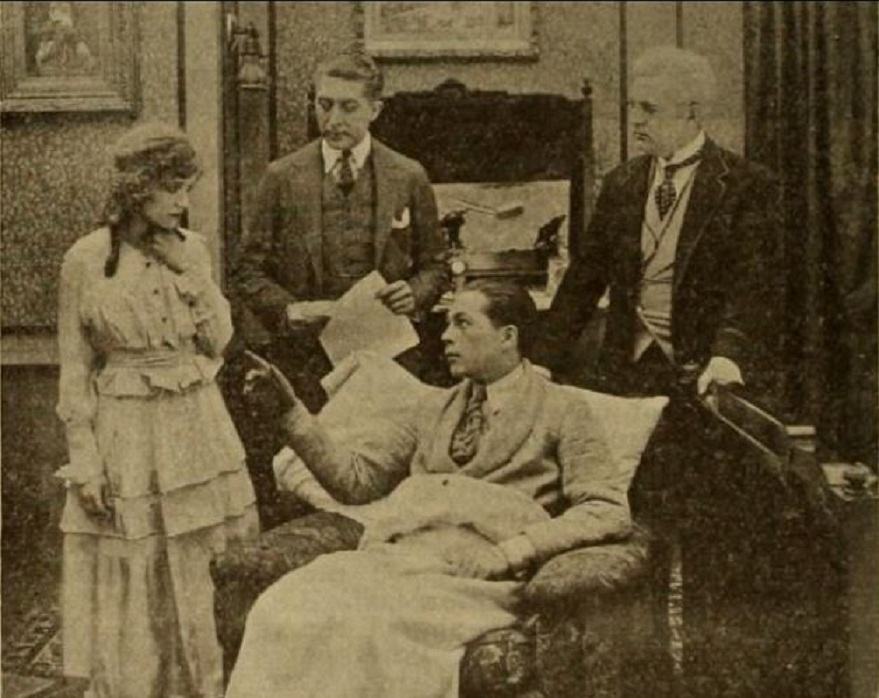
Arthur Housman, as Detective O'Malley, navigates the complexities of the investigation with a compelling blend of professional duty and growing personal conviction. Initially misled by Vance’s carefully constructed lies, O'Malley’s gradual realization of the truth is a slow burn, adding another layer of suspense to the narrative. His methodical pursuit of justice, even when it means admitting initial error, speaks to the film’s commitment to a realistic portrayal of legal processes. Richard Tucker’s Prosecutor Sterling is equally compelling, a man dedicated to his craft, meticulously building a case that, from his perspective, appears irrefutable. The tension between Sterling’s legal precision and O'Malley’s evolving understanding of the facts creates a gripping courtroom drama. And then there is Ogden Crane, as Vance’s shadowy accomplice, a presence that adds an unsettling layer of clandestine menace, reinforcing the pervasive reach of the 'cloud' of corruption.
Joseph F. Poland’s screenplay for The Cloud is a masterclass in narrative construction. The plot unfolds with a relentless pace, each scene building upon the last, tightening the noose around Thornton while simultaneously laying subtle groundwork for Vance’s eventual downfall. Poland understands the power of visual storytelling inherent in silent film, allowing the actors’ expressions and the director’s framing to convey intricate emotional landscapes. The thematic depth is remarkable; beyond the immediate drama of false accusation, the film delves into the corrosive effects of greed, the resilience of the human spirit, and the essential triumph of truth over fabrication. It’s a sophisticated exploration of societal judgment and the arduous path to redemption, themes that are as relevant today as they were in the era of its creation. The way the plot unravels, with carefully placed clues and red herrings, is reminiscent of the intricate narrative structures found in After Death, where mysteries are slowly peeled back to reveal deeper truths.
The cinematography, though we can only imagine its full impact from a modern perspective, clearly played a crucial role in establishing the film’s mood. One can envision stark contrasts between the warmth of Thornton’s home and the cold, austere environment of the courtroom, or the shadowy alleys where Vance and his accomplice conduct their nefarious dealings. The use of light and shadow would have been paramount in conveying the 'cloud' metaphor, depicting Thornton’s world growing progressively darker under the weight of accusation, only to be gradually illuminated as truth begins to emerge. The director’s choices in framing and editing would have guided the audience’s emotional journey, emphasizing the isolation of Thornton, the calculating nature of Vance, and the growing hope as Lillian finds her voice. This careful balance of visual cues and dramatic pacing is what elevates The Cloud to a work of profound artistic merit.
The Cloud is more than just a historical artifact; it is a vibrant, compelling piece of storytelling that speaks to timeless human experiences. Its exploration of injustice and the fight for one’s reputation resonates deeply, reminding us that the integrity of an individual can be a fragile thing, easily tarnished by rumor and malice. Yet, it also celebrates the indomitable spirit of those who stand by the accused, the quiet heroism of those who speak truth to power, and the ultimate triumph of justice, however hard-won. The film’s ability to evoke such powerful emotions without dialogue underscores the universal language of human expression and the enduring power of classic cinema.
In an era where narratives often rely on explicit exposition, The Cloud serves as a powerful reminder of the art of implication, suggestion, and the profound impact of well-executed visual drama. The performances, particularly those of Miller, Sothern, and Hanna, are masterclasses in conveying complex character arcs and emotional states through subtle physicalities and expressive faces. It is a film that challenges us to look beyond the surface, to question easy judgments, and to believe in the eventual emergence of truth. Its legacy is not just in its captivating plot, but in its eloquent articulation of the human struggle against adversity, a struggle that, even a century later, remains profoundly moving. Much like the enduring appeal of Romeo and Juliet, which transcends its period setting, The Cloud speaks to universal themes that resonate across generations.
The film’s resolution, with Lillian’s courageous testimony finally shattering the 'cloud' of false accusation, is deeply satisfying. It’s not just a happy ending, but a vindication, a testament to the idea that even in the darkest of times, light can pierce through. It underscores the film’s central message: that integrity, when fiercely defended and truthfully revealed, will ultimately prevail. The Cloud is a vital piece of cinematic history, a profound narrative, and an unforgettable journey into the heart of human resilience. It is a film that deserves to be rediscovered and celebrated for its timeless themes and its exceptional artistry.
IMDb —
1925
Community
Log in to comment.