DbcultAccessing Vault...
Cult Review
Senior Film Conservator
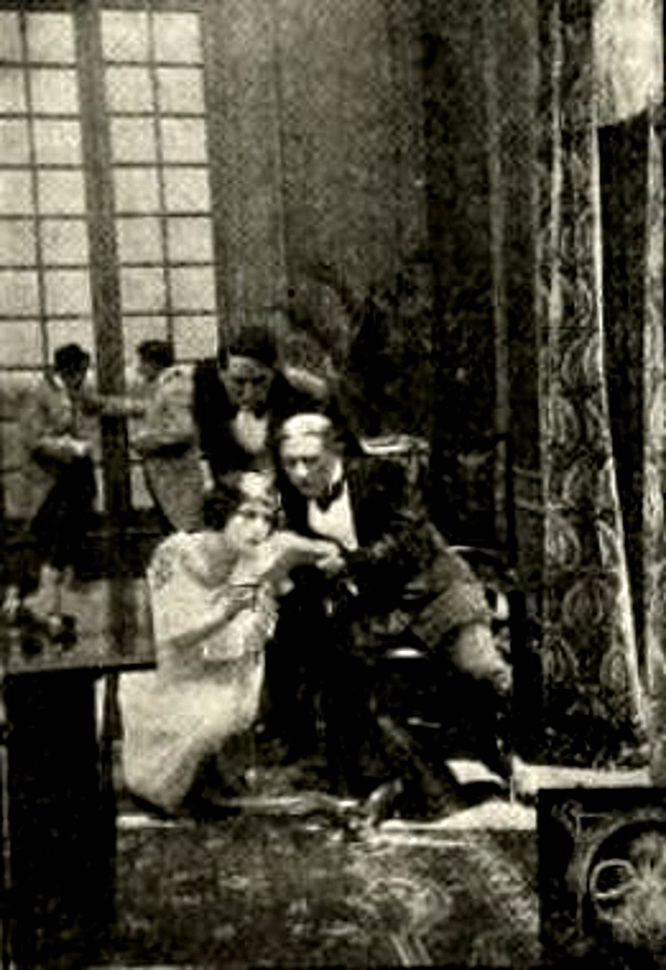
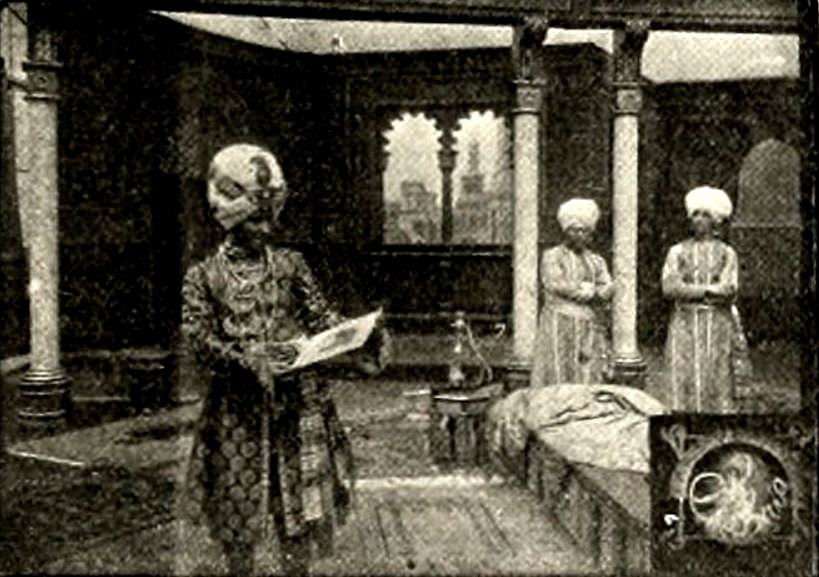
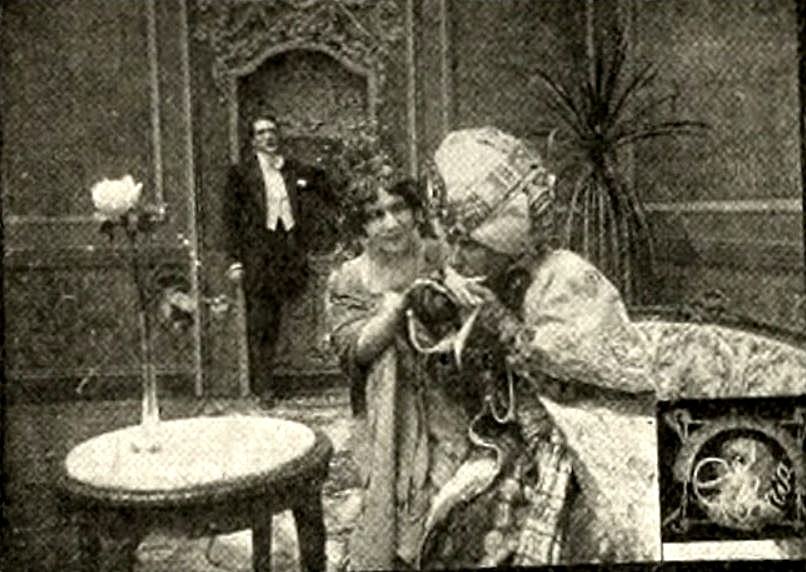
There is a moment—halfway through Mario Bonnard’s The Club of the Black Mask—when the camera lingers on a Persian rug so lush it seems to exhale opium. That textile becomes the film’s vertebra: every character is woven, trapped, or smothered by its pattern. Rudolph Morton thinks he is building a railway; in truth he is stitching track across Nadir’s private tapestry, and the Rajah—whose very name means “rare” in Urdu—responds by unraveling the engineer’s life thread by thread. The theft of railway plans is never about industrial espionage; it is a courtship ritual performed with paper instead of peacock feathers.
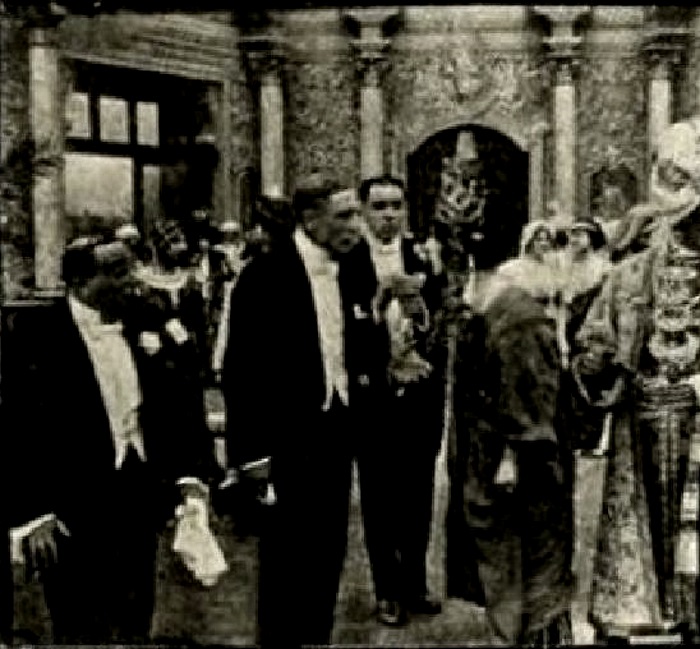
Shot in the autumn of 1912 on the brittle orthochromatic stock that turns every sky into tungsten, the film reverses the travelogue gaze: Europe becomes the exotic colony, a continent of fog, gaslight, and carnivalesque excess. Venice’s carnival, Paris’s apache cellars, and a Baltic spa town are spliced into a single nocturnal continent where passports dissolve like cigarette smoke. Nadir arrives not as the subaltern “other” but as the mobile sovereign, his tiger-coat collars replacing the shabby top hats of decaying European aristocrats. The Ghost Club is thus less a criminal syndicate than a finishing school for the displaced powerful, teaching how to weaponize modern anonymity.
Elsie Dexter’s portrait—an oval cameo no larger than a playing card—functions like the Maltese Falcon of this universe: everyone reads into it what they most fear to lack. For Nadir it is legitimacy; for Morton, permanence; for Ali, the servant, it is a mirror reflecting his own servitude. Bonnard cuts from the photograph’s glassy surface to Elsie’s live face with a match-cut so precise it feels like necromancy. The image is not merely desired; it supplants the woman, turning flesh into sequel. When Elsie finally writes her cable requesting “some old rugs,” she unknowingly authors her own abduction, the words becoming the trapdoor beneath her cosmopolitan innocence.
Intertitles are sparse, almost embarrassed, as if language itself were a colonial imposition. Instead we get sonic voids filled by Giovanni D’Anzi’s orchestra cues—timpani for train wheels, glass harmonicas for morphine haze. The absence of spoken dialogue makes every gesture operatic: Nadir’s fingers drumming on a tiger skull; Morton’s engineer’s compass snapping shut like a guillotine. The silence is not lack but atmosphere, a negative pressure that sucks the viewer into complicity. We become eavesdroppers at séances where vows are written in disappearing ink.
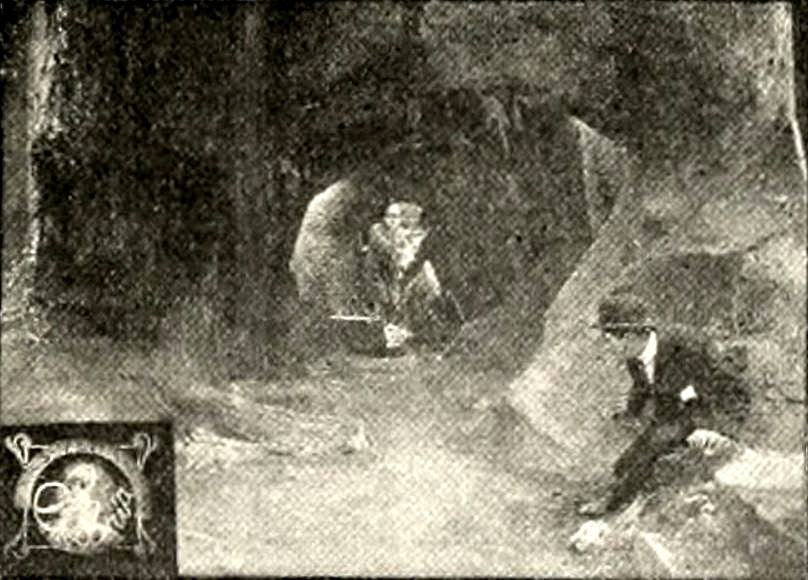
Mid-film, Rudolph is shown spreading blueprints across a mahogany table; seconds later Ali overlays them with Ghost Club sigils. The montage suggests that jealousy itself is a form of cartography—each resentful thought redraws borders, reroutes destinies. When Morton is forced to fake his suicide, the staging literalizes the social death that colonial masculinity fears more than physical demise: to be gossiped about, to become rumor’s raw material. The bullet Ali fires into the parquet is surplus; the pistol’s placement beside Rudolph’s limp hand is the signature, the body merely the canvas.
If cinema was born with the Lumières’ train entering La Ciotat, Black Mask stages its funeral: the final express becomes a linear guillotine whose blade is speed itself. Bonnard intercuts three axes of motion—parallel tracking shots of the locomotive, perpendicular views of the sabotaged trestle, and a vertiginous 45-degree tilt as lovers jump—creating a triptych where destination, destruction, and desire converge. The crash is never shown; instead we get a single discarded mask rolling along the ties, its empty eyeholes reflecting the audience in a metacinematic taunt. Death is off-screen, but spectatorship is the real casualty.
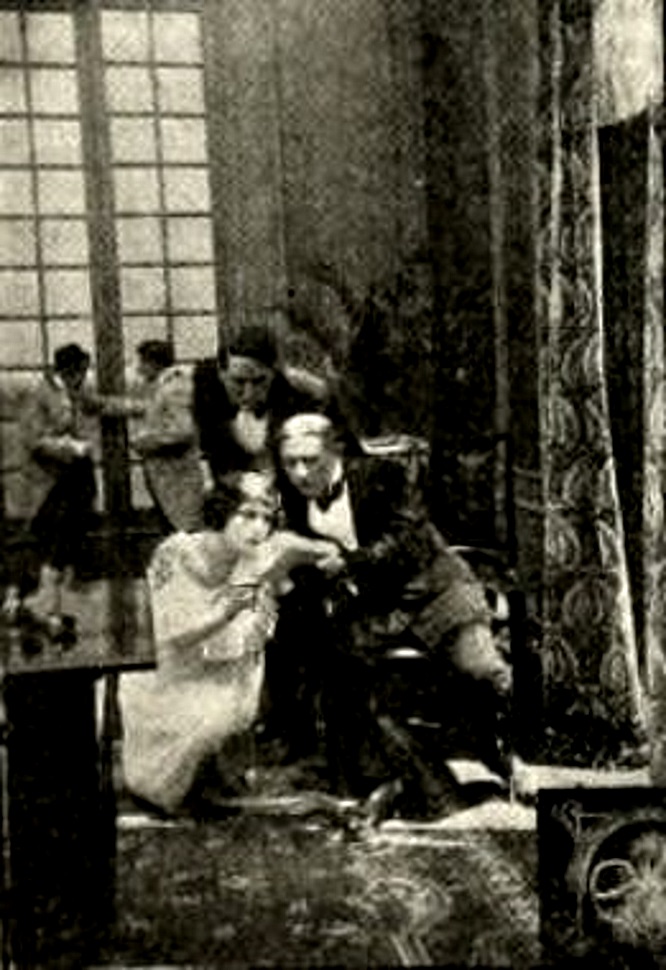
Historians dismiss Elsie as another marble-skinned damsel, yet Benetti’s micro-gestures subvert the stereotype. Watch her pupils when Nadir declares love: they dilate not with reciprocity but with the predatory calculation of someone who realizes commodity value has shifted. In the masquerade scene she selects a Pierrot costume—traditionally male—hinting at gendered masquerade itself. Her final leap is not surrender but refusal to be exchanged between men, a suicidal veto that anticipates the femme fatale of 1940s noir. The film punishes her for that agency, yet for a heartbeat she is the author of her own ellipsis.
Played by Carlo Benetti (Olga’s real-life sibling), Nadir oscillates between Orientalist cliché and proto-Lacanian subject. His rugs are not wealth but archives—each knot a data point of tribal memory. When he unfurls them in a Viennese ballroom, the gesture is both gift and invasion: he carpets Europe with its own colonial loot, forcing aristocrats to tread on stolen heritage. The performance is calibrated: pupils narrowed to pinpricks when negotiating, widened to moonlets when courting, a physiological Morse that speaks louder than subtitle cards.
Place Black Mask beside Fantômas: In the Shadow of the Guillotine and you see two opposing nightmares: Feuillade’s villain is entropy incarnate, whereas Nadir is over-determined history—colonizer colonized. Against Les Misérables the film refracts Hugo’s moral cosmos into moral twilight: no Jean Valjean emerges, only competing vampires of conscience. Pair it with The Black Chancellor and notice how both exploit the trope of the forged letter, yet Bonnard weaponizes it as erotic bait rather than political sabotage. Together these films form a triptych of institutional rot—church, court, club—each more venal than the last.
Surviving prints feature hand-tinted sequences: the rugs ooze carmine, Elsie’s gown drips sulfuric yellow, the Ghost Club’s seal glows arsenic green. Color is not decorative but diagnostic—characters who handle red textiles are marked for blood, those touched by yellow for betrayal. The tinting was executed by Romano’s lab in Turin, where workers used camel-hair brushes once employed for Sacred Heart relics, turning the filmstrip into a reliquary of venal sins.
American exchanges excised the opium den initiation, reducing the runtime from 1,800 to 1,450 meters; the British Board demanded a alternate ending where Nadir repents and enters a monastery. Only the Buenos Aires print—discovered in 1998 beneath a tango palace—retains the fatal leap intact, its nitrate scars resembling claw marks. Restoration required digital grafting of the Argentine footage onto a Czech archive negative, producing a textual Frankenstein that mirrors the film’s own theme of fragmented identity.
A century on, Nadir’s strategy of seduction-through-image anticipates deepfake erotica; the Ghost Club’s treasury theft prefigures crypto-wallet hijacks. Replace railway with fiber-optic cable, rugs with NFTs, and you have a Silicon Valley thriller. The film whispers that every technological corridor we carve across foreign soil will eventually loop back, strangling us in cables of our own hubris—a prophecy more potent than any Intertitle could articulate.
Viewed today, The Club of the Black Mask is less entertainment than forensic evidence: of how empire disguised its appetite as romance, of how cinema itself became both mask and mirror. Bonnard never moralizes; he stages, and in that staging exposes the venality humming beneath white gloves and kid slippers. The film survives only in tatters, yet those tatters are enough to stitch a shroud for the fantasy of benign colonialism. Approach it not as a relic but as a wound that refuses to scab—every flicker of silver nitrate a fresh incision reminding us that tracks, once laid, demand their pound of flesh in interest.
IMDb 5.9
1932
Community
Log in to comment.