DbcultAccessing Vault...
Cult Review
Senior Film Conservator
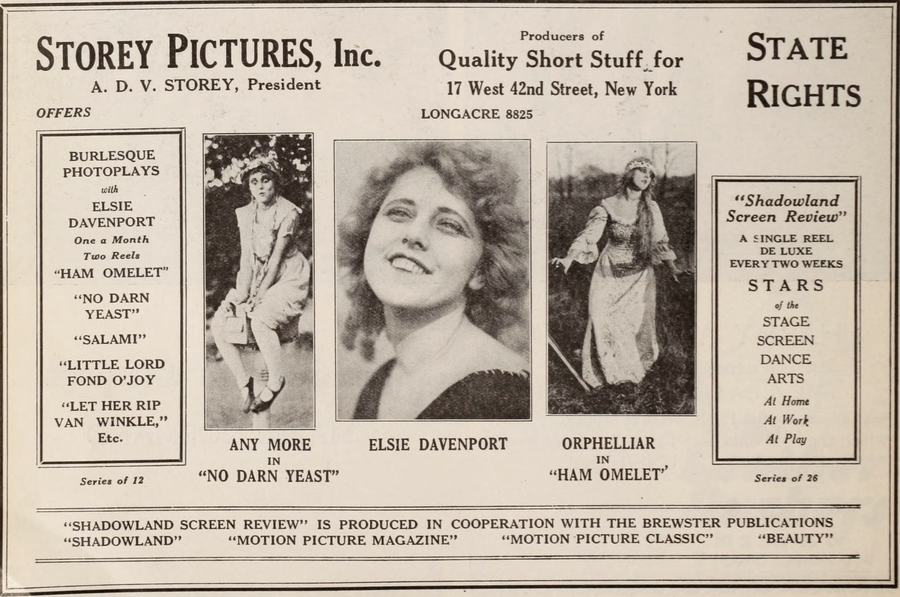
The cinematic landscape of the early twentieth century was frequently inundated with a stifling reverence for the agrarian ideal. Films often sought to canonize the rural experience, painting the homestead as a sanctuary of unblemished morality. However, The Cold Homestead emerges as a defiant iconoclast, a celluloid travesty that freezes the burgeoning sentimentality of the era in its tracks. By positioning itself as a direct burlesque of the venerable stage play The Old Homestead, this production engages in a sophisticated dialogue with its audience, assuming a level of cultural literacy that allows it to puncture the balloons of Victorian melodrama with surgical precision.
At the heart of this satirical whirlwind stands Elsie Davenport. Her performance is not merely a comedic turn but an exercise in semiotic deconstruction. Davenport understands that the power of the burlesque lies in the tension between the familiar and the absurd. Where a film like No Woman Knows might lean into the heavy emotional gravity of domestic struggle, Davenport’s work in The Cold Homestead operates with a buoyant cynicism. She navigates the set—a deliberate exaggeration of the rustic farmhouse—with a theatricality that reminds the viewer of the artifice inherent in the 'natural' life.
The set design itself deserves a scholarly mention. In contrast to the lush, albeit dangerous, environments seen in Nan of Music Mountain, the homestead here is rendered with a stark, almost skeletal quality. It is 'cold' not just in temperature, but in its refusal to provide the visual comfort expected of the genre. This aesthetic choice mirrors the film's narrative intent: to strip away the layers of cozy myth-making and reveal the performative bones beneath. The juxtaposition of Davenport’s expressive, often hyperbolic gestures against this austere backdrop creates a dissonant harmony that is the hallmark of high-tier burlesque.
To fully appreciate the subversive nature of this film, one must view it within the broader context of its contemporaries. While The Copperhead sought to solidify national identity through historical solemnity, The Cold Homestead seeks to liquefy it through laughter. It shares a certain spiritual kinship with the absurdity of William Hohenzollern Sausage Maker, yet it maintains a tighter focus on the domestic sphere. The film mocks the very concept of the 'sturdy yeoman,' suggesting that the agrarian dream is as much a construction as the painted backdrops of a theater.
Consider the treatment of the 'prodigal' trope. In most dramas of the time, the return of a lost soul to the family farm was a moment of tear-soaked redemption. Here, the return is met with a comedic apathy that borders on the nihilistic. It is a sharp departure from the earnestness of Cynthia of the Minute, where every second is laden with plot-driven urgency. In the 'cold' world of this homestead, time is a loop of repetitive, mocked gestures, denying the characters the catharsis they—and the audience—have been conditioned to expect.
Technically, the film utilizes cinematography that emphasizes the flatness of the proscenium. This is a deliberate choice, rejecting the immersive depth found in works like The Midnight Stage. By keeping the action primarily on a horizontal plane, the director forces the viewer to remain an observer of the parody rather than a participant in the drama. The lighting, too, avoids the chiaroscuro intensity of A szentjóbi erdö titka, opting instead for a bright, unforgiving clarity that leaves no room for the shadows of mystery or romance.
There is a sequence involving a mock-pastoral dance that serves as a microcosm for the film's entire philosophy. The choreography is intentionally clumsy, a direct jab at the idealized folk dances that populated the stage version of the story. In this moment, the film transcends mere parody and enters the realm of social critique. It asks: why do we crave these sanitized versions of ourselves? Why is the 'homestead' such a sacred cow? By turning the cow into a comedic prop, The Cold Homestead provides an answer through the medium of pure, unadulterated ridicule.
The film’s handling of 'fate' and 'luck' also stands in stark contrast to its peers. Where Tenderfoot Luck treats the whims of fortune as a narrative engine, The Cold Homestead treats them as a punchline. The characters are not victims of circumstance but willing participants in a farce. This lack of agency is not a flaw but a feature, highlighting the absurdity of the 'heroic' rural protagonist. Even the concept of 'honor,' so central to A Woman's Honor, is treated with a playful irreverence. In this film, honor is less about moral fortitude and more about maintaining the facade of the homestead despite the obvious crumbling of its foundations.
The inclusion of elements reminiscent of Caves and Coquettes—the flirtatious, almost slapstick interactions between the farmhands and the visiting 'city folk'—adds a layer of kinetic energy that prevents the film from becoming too didactic. It is, first and foremost, an entertainment. However, like the best satires, it leaves a lingering aftertaste of skepticism. It makes the viewer question the next 'serious' rural drama they encounter, whether it be the gritty realism of Sundown Slim or the exoticism of Zigeunerprinsessen.
In the final analysis, The Cold Homestead is a vital artifact of cinematic subversion. It represents a moment where the medium began to look inward, mocking its own tropes and the theatrical traditions from which it sprang. Elsie Davenport’s contribution cannot be overstated; her ability to anchor such a chaotic, biting parody with a performance of such controlled absurdity is a testament to her skill. The film stands alongside other unique experiments of the era, such as His Concrete Dome or the polished artifice of Pretty Smooth, as a reminder that early cinema was not just a tool for storytelling, but a weapon for satire.
Even when compared to the more sophisticated comedies like His Hansom Butler, this film retains a raw, biting edge that is uniquely its own. It does not seek to charm the audience; it seeks to wake them up. The 'coldness' of the homestead is ultimately its greatest strength, providing a clear-eyed, albeit hilarious, perspective on the myths we build around our origins. It is a film that refuses to go home again, primarily because it has realized that the home was a stage set all along. In the grand tapestry of early film, this burlesque remains a vibrant, clashing thread, reminding us that sometimes the best way to honor a tradition is to laugh it into the ground.
The enduring appeal of the film lies in its refusal to compromise. It doesn't offer a 'warm' moment at the end to appease the sentimentalists. It remains committed to its frigid premise until the final frame. In doing so, it achieves a level of artistic integrity that many of its more 'serious' contemporaries lacked. It is a masterclass in the burlesque, a genre that, when executed with this level of wit and visual cohesion, proves to be one of the most intellectually stimulating forms of cinema. The Cold Homestead is not just a parody of a play; it is a parody of a world-view, and that is what makes it timeless.
IMDb —
1932
Community
Log in to comment.