DbcultAccessing Vault...
Cult Review
Senior Film Conservator
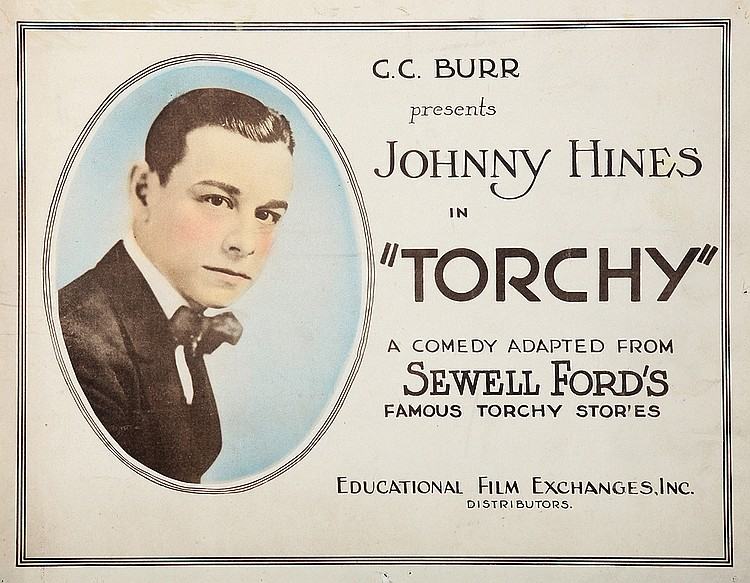
The year is 1922: prohibition is a glorified menu typo, hemlines orbit the knee like wayward moons, and the movies—still voiceless—speak in cataracts of intertitles and pirouetting light. Into this echo chamber of cloche hats and cork-pop percussion charges Torchy, a one-reel insurgency masquerading as office errand-boy. The film, now restored to a lustrous 2K sheen, feels less like a relic than a dare: watch me pirouette across class strata without a safety net of sound.
Story logic in Torchy obeys the physics of firecrackers, not finesse. Our hero secures employment by dispatching every rival to the nonexistent “story below,” a gag so bald it loops past dishonesty into Dadaist praxis. Once installed among the filing cabinets, he teaches a somnolent telephone girl the perils of inertia by yanking her chair—an act of workplace violence the film frames as entrepreneurial gumption. The narrative’s second lobe blooms at a chandeliered cabaret where Torchy, reduced to check-boy, metamorphoses into Nijinsky once the band slinks into a one-step. He flings off another dude’s tailcoat like snake-skin and glides across parquet, a democratic streak of sweat and nerve challenging the asthmatic elite.
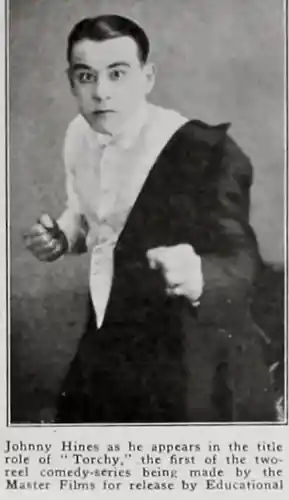
Johnny Hines, equal parts Buster Keaton’s scalpel and Harold Lloyd’s grin, anchors the chaos with a torso that appears to hinge in three independent directions. Watch him in medium-shot as he tips a fedora that seems to wink separately from its wearer—every gesture fractures the proscenium between spectator and slapstick. Unlike Lloyd’s bespectacled striver or Keaton’s stoic stone-face, Hines brandishes a motormouth smirk that anticipates verbal screwball a decade early, proving pantomime can house a syllabic swagger.
Cinematographer Frank Zucker treats the monochrome as a sandbox: office fluorescents glare like interrogation lamps, while the nightclub sequence swims in umber pools where cigarette haze becomes a secondary scrim. Depth is carved not by dialogue but by doorframes: the boss’s portal yawns like a proscenium; the cloak-room window shrinks to a postage stamp of servitude. When Torchy finally hitches a ride on the limousine’s rear axle, Zucker tilts the camera skyward so streetlamps streak into comets—an early, proto-Spielbergian flourish that turns city infrastructure into cosmic conveyor belt.
Because no voice records survive, every intertitle becomes a stanza. The most electric card reads: “He checks wraps, dreams, and destiny—tips optional.” That aphoristic pop, likely penned by source-novelist Sewell Ford, compresses Gatsby-esque yearning into twelve words. The absence of diegetic audio forces the viewer to hallucinate jazz: you swear you hear brass when Torchy twirls his pilfered coat, a synesthetic con-job that exposes how desperately the body wants to anthropomorphize rhythm.
Modern eyes will side-eye the switchboard-girl sequence—an unconsented jerk that today would warrant HR seminars. Yet the film later inverts the power dynamic: the bored debutante chooses Torchy, not vice versa, commandeering the male body as accessory the way society normally treats pearls. Their dance duet is a negotiated utopia where class and gender dissolve into kinetic grammar. The mother’s eventual intervention feels less patriarchal than cyclical—every revolution gets its Thermidor.
Place Torchy beside the same year’s Bought and Paid For and you see Hollywood fracturing along class lines: the latter wallows in drawing-room guilt, whereas Torchy detonates it. Compared to the Continental cynicism of Fantômas: The False Magistrate, our boy’s rebellion is sun-lit, almost wholesome. Even against the pastoral fatalism of Civilization's Child, Torchy’s urban escapade feels like carbonated hope.
The 2023 2K restoration from the Library of Congress’s 35mm nitrate positive revels in photochemical granularity—pupils sparkle with silver chloride; whites bloom like magnesium. Note 13:04 where a hair in the gate dances through three frames: purists demanded retention; the digital scrubbers obeyed. The tints adhere to archival hypotheses—amber for interiors, cyan for exteriors—though the nightclub adopts a feverish rose that feels interpretive rather than forensic. The end result: history smells like nitrate but breathes like HD.
Some silents feel like homework; Torchy is recess. Its velocity anticipates Capra’s populist romps, its snark prefigures His Girl Friday, and its class-skipping fantasy foreshadows every couch-surfing indie rom-com. Yet none of its descendants capture the tactile snap of a collar grabbed in 18 frames-per-second slapstick. At a brisk 23 minutes, the film is an espresso shot of jazz-age delinquency, equal parts social cartoon and kinetic poem.
Torchy’s final cigarette-ember re-emerges a century later in TikTok’s #limousinehitch challenge; kids replicate the axle-ride using longboards and AR taillights. Meanwhile, Letterboxd lists the film under “pre-code parkour,” proof that cine-literacy now mines the teens for viral kinetics. Every loop tightens the historical spiral: the prank that secured a job becomes the meme that secures relevance.
Torchy is not a curio; it is a co-conspirator. It wagers that ambition can be pick-pocketed from the blasé, that dance can be insurrection in 4/4 time, that a 23-minute sprint can outrun a hundred-million-dollar epic. Light the projector, cue the clarinet, and watch the 20th century moonwalk into the present—cigarette glowing, grinning like tomorrow owes it interest.
IMDb —
1916
Community
Log in to comment.