DbcultAccessing Vault...
Cult Review
Senior Film Conservator
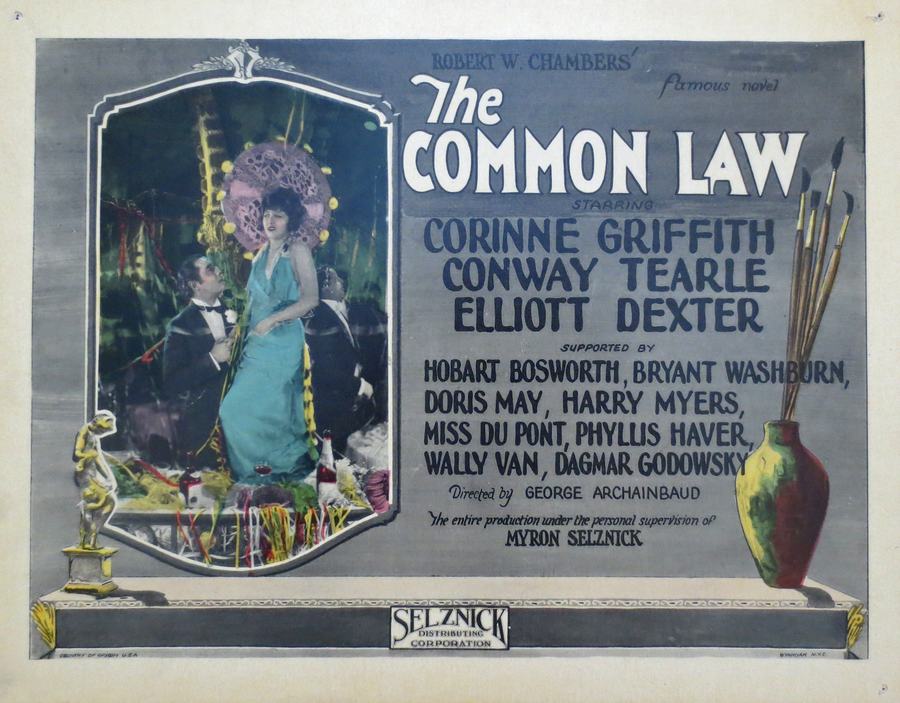
The 1923 silent drama *The Common Law* unfolds against a backdrop of opulent salons and gritty studio spaces, juxtaposing the gilded aspirations of the Neville family with the raw, unfiltered world of an artist’s muse. Valerie West, portrayed with a magnetic blend of vulnerability and defiance, becomes the axis upon which the film’s emotional tensions rotate. Her relationship with Louis Neville, a wealthy and celebrated painter, is a love story that is as much about societal structures as it is about personal longing. The film’s narrative arc is driven by a promise Valerie makes—a promise that, rather than surrendering her heart, she uses to challenge the classist expectations imposed upon her by the Nevilles’ aristocratic lineage.
From the opening title card, the cinematography employs a restrained palette that mirrors the film’s thematic restraint. The director’s use of chiaroscuro lighting—particularly in the scenes where Valerie and Louis share a clandestine moment in a dimly lit studio—creates a visual metaphor for the duality of their relationship: the allure of forbidden intimacy against the harsh glare of societal judgment. The film’s editing, a hallmark of the silent era, relies on rhythmic cuts to accentuate the emotional beats. In particular, the sequence where Valerie confronts the Neville family is punctuated by rapid intercutting, a technique that heightens the sense of claustrophobia and urgency.
Dagmar Godowsky’s portrayal of Valerie West is a masterclass in expressive nuance. Her facial expressions—subtle shifts of the brow, the tightening of the jaw—communicate a spectrum of emotions without a single spoken line. In contrast, Conway Tearle’s Louis Neville is rendered with a dignified composure that belies the turmoil beneath. The actor’s controlled gestures and deliberate pacing underscore the character’s internal conflict between affection for Valerie and loyalty to the family’s expectations. Supporting actors such as Wally Van and Bryant Washburn provide a textured backdrop, their performances adding layers of complexity to the social dynamics at play.
The film’s structure is deceptively linear, yet it is interwoven with recurring motifs that reinforce its central themes. The recurring motif of the unfinished canvas—a visual representation of an incomplete life—serves as a metaphor for Valerie’s and Louis’s unfulfilled desires. Moreover, the film’s dialogue intertitles are crafted with poetic precision, imbuing the narrative with lyrical quality while preserving the urgency of the plot. The promise Valerie makes—a promise that she will become Louis’s common‑law wife on a specific summer date—acts as a narrative fulcrum, turning the story from a simple romantic drama into a commentary on the evolving nature of marriage and partnership in the early twentieth century.
Set during the Roaring Twenties, *The Common Law* is a window into a society in flux. The film captures the tension between tradition and modernity, especially as it relates to the institution of marriage. By juxtaposing the Neville family’s insistence on aristocratic propriety with Valerie’s desire for autonomy, the film interrogates the very definition of “law” in the context of love and commitment. This dialogue between old and new is further amplified by the film’s visual style; the stark contrast between the opulent Nevilles’ drawing room and the humble studio space underscores the social chasm that both characters navigate.
When placed alongside contemporaries such as Pardon Me or Safety Last!, *The Common Law* distinguishes itself through its nuanced character development and thematic sophistication. While *Pardon Me* leans heavily into comedic misunderstandings, *The Common Law* opts for a more sober, introspective exploration of love’s constraints. Similarly, the film’s focus on the legalistic aspects of marriage sets it apart from the slapstick humor of *Safety Last!*, providing a richer, more contemplative viewing experience.
The director’s use of mise‑en‑scène is meticulous. In the pivotal scene where Valerie is confronted by her family, the composition of the frame—placing the family in the foreground while Valerie is positioned slightly off-center—creates a visual tension that mirrors the narrative conflict. Additionally, the film’s use of close‑ups during emotional exchanges allows the audience to feel the intensity of the characters’ internal states. The careful layering of shadows in the studio scenes also hints at the hidden depths of Valerie’s aspirations, subtly foreshadowing the eventual resolution of her promise.
Although silent, *The Common Law* benefits from a score that complements its visual storytelling. The orchestration—rich in brass and strings—mirrors the film’s emotional peaks, particularly during the climactic summer scene where Valerie finally claims her place beside Louis. The music’s ebb and flow echo the narrative’s oscillation between hope and despair, providing an auditory counterpoint to the visual drama. This integration of score and imagery exemplifies how silent cinema can still convey profound emotional resonance.
The themes explored in *The Common Law*—the clash between societal expectations and personal desire—continue to resonate in contemporary cinema. Modern filmmakers, such as those behind You Never Can Tell, often revisit the trope of forbidden romance within rigid social structures, echoing the narrative tension found in this early 20th‑century masterpiece. The film’s exploration of alternative marital arrangements prefigures later cinematic explorations of non‑traditional relationships, positioning it as a precursor to modern discussions on partnership and autonomy.
*The Common Law* remains a compelling testament to the silent era’s capacity for deep emotional and thematic exploration. Its layered narrative, coupled with nuanced performances and sophisticated visual storytelling, offers an enduring study of love’s capacity to transcend societal boundaries. For modern audiences, the film’s dialogue between tradition and modernity serves as a mirror reflecting contemporary debates on the nature of partnership and the evolving definition of commitment. As such, it stands as a pivotal work in the canon of silent cinema, inviting viewers to reflect on the intricate dance between personal desire and collective expectation.
IMDb —
1925
Community
Log in to comment.