DbcultAccessing Vault...
Cult Review
Senior Film Conservator
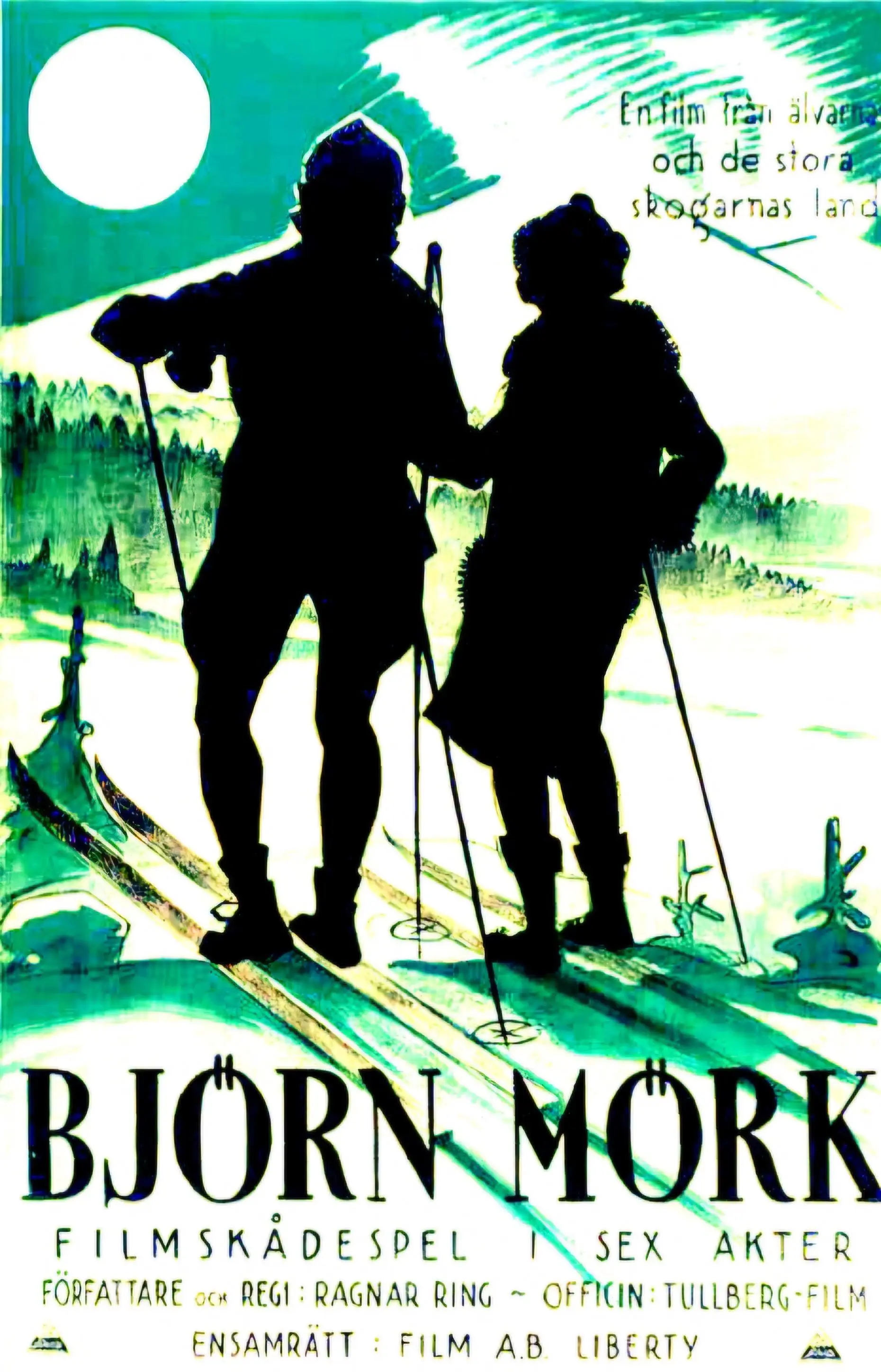
There are films that merely tell a story, and then there are those that breathe, that pulse with an undeniable, almost elemental life force, drawing you into their very marrow. Lasse Ring’s Björn Mörk is unequivocally the latter. It is a cinematic experience less about dramatic external conflict and more about the profound, often agonizing internal landscapes of its characters, particularly the eponymous Björn and his stoic, duty-bound father. From the very first frame, the film establishes a mood of quiet contemplation, a visual poetry that speaks volumes without uttering a single word, setting the stage for a narrative steeped in the timeless clash between expectation and ambition, tradition and innovation, nature and intellect.
The premise, deceptively simple, belies a tapestry of complex human emotion. We are introduced to Björn Mörk, portrayed with an exquisite, understated intensity by Elias Ljungqvist, a young man whose spirit rebels against the destiny seemingly carved out for him. His father, the venerable forest guard, brought to life with gruff authenticity by Tore Carlson, is a man forged by the very wilderness he protects. His hands are calloused, his gaze steady, his life a testament to the unforgiving demands of the land. He embodies a legacy, a lineage of stewardship over the ancient, whispering pines and the rugged terrain. The expectation is clear, unspoken but palpable: Björn will follow in his footsteps, learning the intricate dance of survival and preservation that defines their existence.
But Björn’s world is not one of axe and timber, but of ink and parchment. His true sanctuary lies within the pages of books, where narratives unfold with a richness and complexity that the stark realities of the forest often deny him. This intellectual curiosity, a burgeoning hunger for knowledge and abstract thought, creates an almost insurmountable chasm between father and son. It’s not an active rebellion fueled by adolescent angst, but a profound, almost tragic divergence of souls. The father sees disinterest, perhaps even weakness, where Björn finds solace and purpose. This central conflict is handled with a delicate hand by Ring, avoiding histrionics in favor of a more nuanced exploration of two individuals, both inherently good, yet tragically misaligned in their fundamental understanding of what constitutes a meaningful life.
Elias Ljungqvist’s portrayal of Björn is a masterclass in internal performance. His eyes, often downcast or lost in thought, convey a universe of unspoken longing and quiet defiance. He carries the weight of his father’s expectations like an invisible burden, yet his moments of intellectual absorption are depicted with a rare luminosity. We see the struggle, the yearning for connection, but also the unyielding pull of his own intellectual current. Similarly, Tore Carlson as the father delivers a performance of profound depth. His silence is not empty; it's pregnant with generations of tradition, with the weight of responsibility, and with a deep, though often clumsy, love for his son. His frustration is born not of malice, but of a genuine inability to comprehend a path so divergent from his own. The supporting cast, including Herr Malmsten (Carl Nissen) and Fru Malmsten (Vera Olsson), along with the brief but impactful appearances of Brita Thordeman and Kerstin Thordeman, serve to flesh out the small, insular community, reflecting the societal pressures and expectations that further constrain Björn’s choices.
Lasse Ring, as both writer and director, demonstrates an extraordinary command of his craft. The screenplay is remarkably lean, yet every line, every visual cue, is imbued with meaning. It reminds one of the sparse, yet deeply resonant storytelling found in films like Tao, where philosophical undercurrents are explored through the seemingly mundane struggles of everyday life. Ring understands that true drama often resides in the unsaid, in the subtle shifts of expression, in the heavy atmosphere that hangs between two people who love each other but cannot bridge the gap of understanding. The film’s pacing is deliberate, allowing the audience to truly inhabit Björn’s world, to feel the slow passage of time in the secluded forest, and to witness the quiet unfolding of his inner turmoil.
The cinematography is nothing short of breathtaking. The forest, far from being a mere backdrop, emerges as a character in its own right—majestic, indifferent, demanding. Its towering trees, mist-shrouded clearings, and the raw beauty of its seasonal changes are captured with an almost spiritual reverence. The use of natural light, the stark contrasts between shadow and sun-dappled glades, all contribute to a visual language that mirrors the emotional complexity of the narrative. This visual storytelling is so potent that it often communicates more than dialogue ever could, much like the evocative landscapes in The Lion of the Hills, where the environment is integral to the protagonist's identity and struggle. The desolate beauty underscores Björn’s isolation and the formidable nature of the legacy his father represents.
The ensemble cast, though small, is uniformly excellent. Beyond Ljungqvist and Carlson’s towering performances, figures like Anna Wallin and Märta Thordeman, though given limited screen time, contribute to the tapestry of the community. Karl Krook and Harald Wehlnor, too, add layers to the supporting fabric, portraying the pragmatic, grounded individuals who populate this isolated world. Their presence serves to highlight Björn’s distinctiveness, his 'otherness' within a society that values practicality and tradition above all else. Carl Ström's portrayal of a local elder, perhaps, offers a fleeting glimpse of wisdom or resignation, further enriching the film's texture. Each actor, under Ring's precise direction, understands the importance of their role in painting a complete picture of this microcosm.
The sound design, too, deserves considerable praise. The rustling of leaves, the distant call of a bird, the crunch of snow underfoot – these are not mere atmospheric elements, but integral components of the film’s emotional landscape. They ground the narrative in a palpable reality, emphasizing the raw, untamed nature of the environment that shapes these lives. The quietness, punctuated by these natural sounds, amplifies the internal monologues and unspoken thoughts of the characters, creating an immersive experience that pulls the viewer into their world. This thoughtful use of sound heightens the sense of isolation and the profound connection (or disconnection) to the natural world, a technique used effectively in films that rely on atmosphere, such as Topiel.
At its heart, Björn Mörk is a profoundly human story about the universal struggle to define one's own path. It delves into themes of duty versus desire, the weight of legacy, and the often-painful process of self-discovery. Björn’s journey is not one of grand gestures, but of subtle shifts in perspective, of quiet moments of revelation. His father’s journey, too, is one of internal reckoning, perhaps a slow, grudging acceptance of a future he hadn’t envisioned. The film avoids easy answers or clear-cut resolutions, instead opting for a more truthful, ambiguous portrayal of life’s complexities. It asks us to consider what it means to truly understand another person, especially when their worldviews are so fundamentally different.
The generational divide depicted here is not merely about age, but about an evolution of thought. The father represents a world where physical labor and intimate knowledge of the land are paramount, a world where survival is a daily negotiation with nature. Björn, on the other hand, embodies a burgeoning modern consciousness, one that values abstract thought, intellectual pursuits, and the vastness of human knowledge beyond immediate utility. This tension is not unique to their family; it reflects a broader societal shift, a transition from an agrarian, traditional existence to one increasingly shaped by education and information. One could draw parallels to the protagonists in Meg o' the Mountains or The Fighting Shepherdess, where strong individuals grapple with the expectations of their rugged environments, though Björn's struggle is more internal and intellectual.
In a cinematic landscape often dominated by spectacle and overt drama, Björn Mörk stands as a powerful testament to the enduring appeal of quiet, character-driven storytelling. It is a film that lingers long after the credits roll, prompting introspection and empathy. It’s a testament to the power of cinema to explore the most intimate corners of the human heart, to illuminate the subtle nuances of relationships, and to remind us that some of the most profound struggles occur not on battlefields, but within the confines of a family, within the solitude of one’s own mind.
This is not a film that shouts for attention; it whispers, drawing you in with its authenticity and emotional resonance. It’s a compelling argument for the beauty found in restraint, for the eloquence of silence, and for the universal nature of the desire to forge one’s own identity in the shadow of expectation. Lasse Ring has crafted a truly remarkable piece of cinema that resonates deeply, offering a contemplative, yet profoundly moving, experience. It’s a film that demands your attention, not with flashy sequences or convoluted plots, but with the raw, honest portrayal of a father and son caught between two worlds, each yearning for understanding, each bound by their own truths. If you appreciate cinema that explores the depths of human connection and conflict with grace and intelligence, Björn Mörk is an absolute must-see, a rare gem that shines with understated brilliance.
IMDb —
1914
Community
Log in to comment.