DbcultAccessing Vault...
8.2/10
Senior Film Conservator
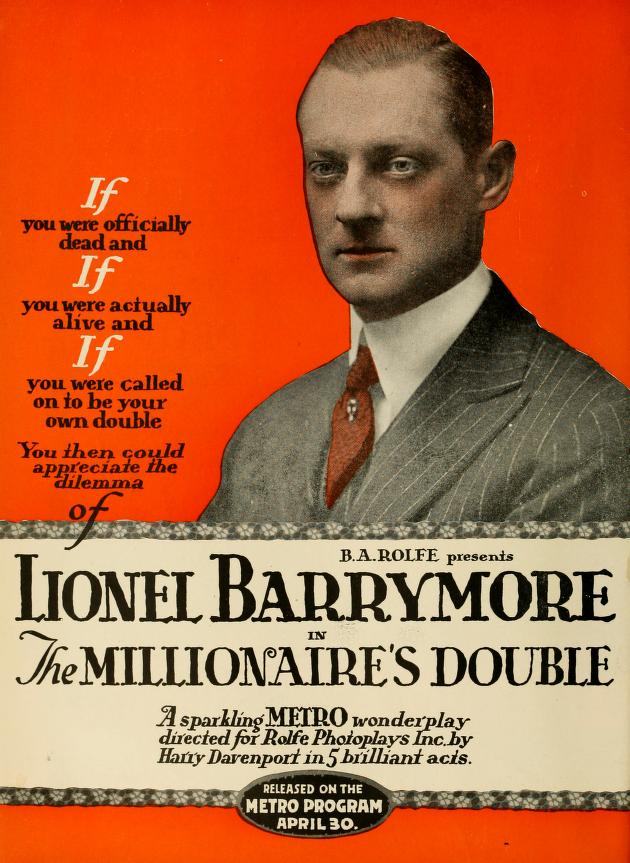
A definitive 8.2/10 rating for a film that redefined the boundaries of cult cinema. The Millionaire's Double remains a cornerstone of transgressive art.
In the annals of silent cinema, some narratives stand out not just for their technical prowess but for their sheer ingenuity in storytelling. The Millionaire's Double, a compelling 1920 production, is precisely one such gem. It's a film that masterfully weaves together threads of mistaken identity, cunning criminal enterprise, and an unexpectedly tender romance, all against the glittering, yet often shadowy, backdrop of post-war American society. Directed with a keen eye for dramatic tension and featuring a stellar ensemble cast, this picture transcends its era, offering a timeless exploration of human nature's complexities, the allure of wealth, and the unpredictable pathways of the heart.
Our story commences with Bide Bennington, a man of considerable fortune but profound personal disillusionment. The news of his estranged, faithless wife's death, rather than plunging him into grief, seems to liberate him from a gilded cage. Returning from abroad to his opulent but desolate New York mansion on Christmas Eve, Bennington finds no solace in his grand surroundings. Instead, a gnawing emptiness propels him back onto the road, embarking on an aimless cross-continental journey, a symbolic quest for meaning in a life suddenly devoid of its accustomed anchors. This initial characterization of Bennington as a melancholic wanderer immediately sets a nuanced tone, suggesting a protagonist far more complex than a mere plot device. His wealth, rather than a source of joy, has been a burden, a testament to a life unfulfilled.
It is during his absence that the gears of fate begin to grind, setting in motion a chain of events that will irrevocably alter his destiny. A petty robber, seizing the opportunity presented by the seemingly vacant Bennington estate, breaks in, making off with a fur coat and a wallet. However, this small-time criminal's triumph is short-lived; he is ambushed by a more formidable gang of thugs, who brutally murder him and dispose of his body in the river. The discovery of Bennington's stolen fur coat near the pier, coupled with the absence of its rightful owner, leads to the chilling, yet utterly erroneous, presumption of his death. The police, the press, and indeed, the world at large, conclude that the millionaire has met a tragic end, likely by his own hand. This pivotal misdirection, a classic trope in narrative, is executed with a brisk efficiency that propels the plot forward, establishing the perfect foundation for the intricate web of deception that is about to unfold.
The vacuum created by Bennington's presumed demise is swiftly filled by Richard Glendon, the nefarious leader of the thugs responsible for the robber's death. Glendon is no ordinary criminal; he possesses an audacious vision and a ruthless pragmatism. Recognizing the immense financial opportunity, he concocts an elaborate scheme to claim Bennington's vast estate. His plan hinges on the coercion of Constance Brent, a young woman burdened by a profound secret: her father is an escapee from an English prison, a fact Glendon holds as a potent weapon. Under the threat of exposing her father, Constance is forced into an impossible choice: impersonate Bennington's widow and claim the inheritance, or condemn her father to a life behind bars. Evelyn Brent's portrayal of Constance is particularly poignant here, conveying a woman trapped between filial loyalty and moral rectitude, her internal struggle palpable even in the silent medium. Her dilemma is reminiscent of characters in films like Fatal orgullo, where personal honor and familial duty often clash with dire consequences.
The narrative takes a deliciously ironic turn when Bennington, alive and well, reads of his own supposed suicide in a distant newspaper. A man presumed dead, he decides to return to New York incognito, driven by a mixture of curiosity, indignation, and a desire to unmask the perpetrators of this macabre charade. What he finds upon his return is a dizzying landscape of pretense, with Constance Brent at its center, playing the grieving widow. The sheer audacity of Glendon's plan, coupled with Bennington's uncanny resemblance to the man presumed dead, leads to an extraordinary twist: Glendon, impressed by Bennington's likeness, unwittingly enlists him in his own scheme to collect the estate. This moment, laden with dramatic irony, is a narrative masterstroke by writer June Mathis, setting the stage for Bennington to dismantle the conspiracy from within. It evokes the kind of intricate, identity-bending plots seen in crime dramas such as The Genet or The Tiger, where the lines between hunter and hunted become deliciously blurred.
Bennington, now a willing participant in the scheme designed to defraud him, embraces his new role with a shrewdness born of necessity. His objective is twofold: to expose Glendon and to understand the predicament of Constance, who, despite her complicity, projects an air of profound reluctance and underlying decency. As he navigates the treacherous waters of Glendon's conspiracy, Bennington begins to observe Constance not as a mere pawn, but as a woman of integrity forced into an impossible situation. The forced proximity and shared secret create an unlikely bond between them. Their interactions are imbued with a subtle tension, a silent understanding that transcends the elaborate charade they are performing. H.H. Pattee, as Bennington, conveys this evolving dynamic with a nuanced performance, his eyes betraying a growing affection beneath his stoic facade.
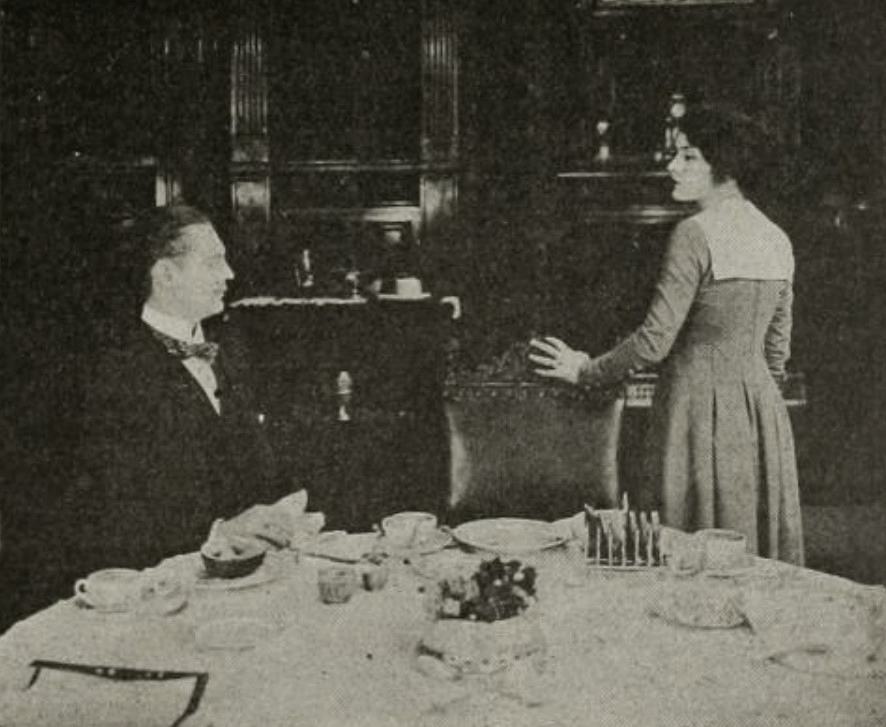
The film excels in portraying the slow burn of their romance, a love blossoming amidst deceit and danger. Constance, initially wary and resentful, gradually perceives Bennington's inherent goodness and his genuine concern for her plight. Their bond is forged not in typical romantic circumstances, but in the crucible of shared adversity and the mutual desire to escape Glendon's clutches. This unconventional courtship lends a refreshing authenticity to their relationship, distinguishing it from more saccharine romantic narratives. It's a love story born from necessity, evolving into a genuine connection, much like the unexpected unions found in films such as Sposa nella morte! or At the Cross Roads, where circumstance often dictates the initial spark but true affection solidifies the bond.
The tension escalates as Bennington gathers evidence, meticulously planning Glendon's downfall. The criminal mastermind, played with chilling effectiveness by John Raymond, remains oblivious to the true identity of his new accomplice, a testament to Bennington's masterful deception. The climax arrives with a series of revelations that bring the intricate plot to a satisfying conclusion. Constance receives word of her father's death, an event that, while tragic, liberates her from Glendon's blackmail. Freed from the impossible choice, she confesses the entirety of the scheme to Bennington. This moment is crucial, cementing their trust and love, and allowing Bennington to finally drop his disguise and fully orchestrate Glendon's arrest.
The ensuing confrontation with Glendon is swift and decisive, bringing justice to the forefront. The criminal enterprise crumbles, and the true millionaire reclaims his identity and his estate. But more importantly, he reclaims a purpose, finding it in his newfound love for Constance. The film culminates in their marriage, a symbolic rebirth for Bennington and a hard-won redemption for Constance. She becomes Mrs. Bide Bennington in reality, not through a deceitful scheme, but through genuine affection and shared experiences. This resolution, while perhaps predictable for the era, feels earned, a testament to the character development and the compelling narrative arc crafted by June Mathis.
The success of The Millionaire's Double owes much to its dedicated cast. H.H. Pattee embodies Bide Bennington with a compelling blend of weariness, intelligence, and burgeoning affection. His silent performance conveys a rich inner life, allowing the audience to empathize with his initial ennui and cheer for his ultimate triumph. Evelyn Brent, as Constance, delivers a nuanced portrayal of vulnerability, strength, and moral conflict. Her expressive eyes and gestures communicate the profound internal struggle of a woman caught between a rock and a hard place, making her eventual liberation and happiness all the more impactful. John Raymond's portrayal of Richard Glendon is suitably menacing, a calculating villain whose ambition ultimately blinds him to the true nature of his adversary. Supporting roles by Harry Northrup, Lionel Barrymore, Louis Wolheim, and John Smiley further enrich the tapestry of characters, each contributing to the film's immersive atmosphere.
June Mathis's screenplay is a marvel of intricate plotting and character development. Her ability to craft a story with so many layers of deception, mistaken identity, and emotional resonance is truly commendable. The pacing is deliberate yet never drags, ensuring that the audience remains fully invested in the unfolding drama. The narrative's clever use of dramatic irony—where the audience is privy to information the characters are not—heightens the suspense and engagement. This intricate dance of identity and deception can be seen as a precursor to later noir narratives, where appearances are often deceiving and trust is a dangerous commodity. The film's exploration of identity, particularly Bennington's willingness to shed his old self and inhabit a new one, albeit temporarily, resonates with themes explored in other works of the period, where social mobility or hidden pasts often dictated one's fate, much like the veiled lives in Der Lumpenbaron, where societal status is often a performance.
The Millionaire's Double stands as a testament to the enduring power of silent film to captivate and entertain. Its blend of crime, romance, and psychological drama ensures its relevance even today. The themes of identity, redemption, and the search for genuine connection remain universally resonant. It's a film that asks profound questions about what truly defines a person – is it their wealth, their name, or the integrity of their character? Bennington's journey from a disillusioned millionaire to a man who finds love and purpose through adversity is a compelling arc that speaks to the transformative power of experience. The film also provides a fascinating glimpse into the social anxieties and criminal underworlds of the early 20th century, offering a window into a bygone era while telling a story that feels remarkably fresh.
For enthusiasts of classic cinema, especially those with an appreciation for the silent era's unique storytelling capabilities, The Millionaire's Double is an essential watch. It showcases the masterful craftsmanship of its creators, from June Mathis's intricate plotting to the nuanced performances of its lead actors. It is a film that rewards close attention, revealing layers of meaning with each viewing. Its clever narrative, compelling characters, and satisfying resolution solidify its place as a standout production, a testament to the creative heights achieved during a pivotal period in cinematic history. It reminds us that sometimes, losing everything, even one's identity, is the only way to truly find oneself and, perhaps, an unexpected love that makes life worth living. Much like the dramatic twists and turns in The Law Decides, where fate and legal intricacies shape destinies, this film underscores how external forces can lead to profound internal change and eventual happiness.
IMDb —
1919
Community
Log in to comment.