DbcultAccessing Vault...
Cult Review
Senior Film Conservator
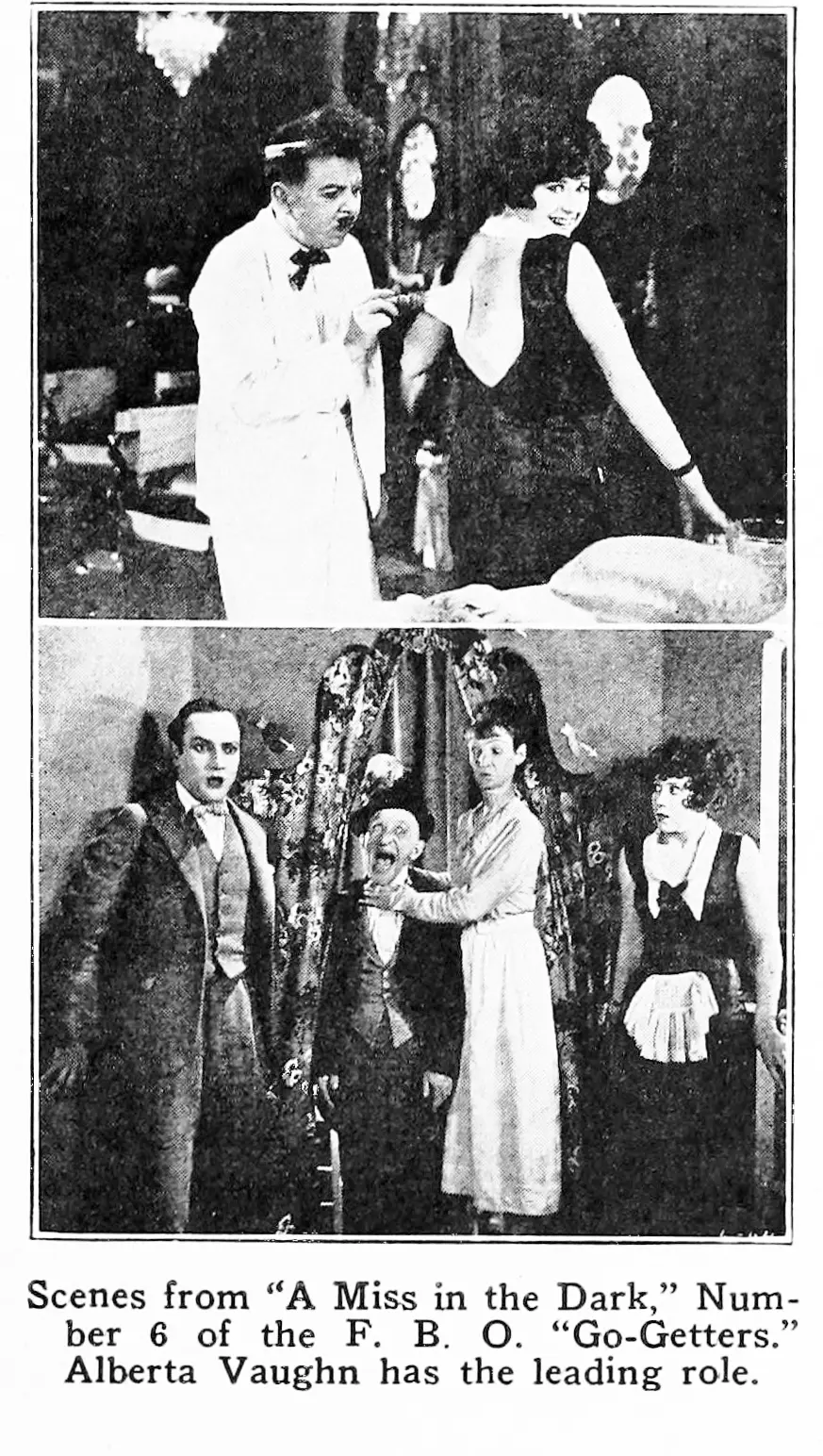
The year 1924 stands as a monumental pillar in the silent era, a period where the grammar of visual storytelling had reached a zenith of expressive clarity before the sonic intrusion of the late twenties. Amidst this flourishing landscape, A Miss in the Dark arrives not merely as a comedic short, but as a vibrant testament to the 'Go-Getters' series' enduring charm. This film, featuring the athletic charisma of George O'Hara and the effervescent Alberta Vaughn, encapsulates a specific American zeitgeist: the relentless pursuit of success amidst a comedy of errors.
To understand the resonance of A Miss in the Dark, one must first acknowledge the structural brilliance of the George Marion Jr. screenplay. Marion, a titan of the intertitle, understood that silent comedy required more than just pratfalls; it required a linguistic skeleton that could support the weight of the physical action. While films like Double Speed focused on the mechanical velocity of the era, Marion’s work here focuses on the social velocity—the frantic, often blind scramble for status.
The plot functions like a Swiss timepiece, where every gear is a character’s ego and every spring is a situational irony. Unlike the more surrealist bent seen in contemporary European imports like Capitan Groog and Other Strange Creatures, this film is firmly rooted in the American tradition of situational farce. The 'darkness' mentioned in the title is both a literal setting and a metaphor for the protagonists' lack of foresight. As they stumble through the night, their errors are magnified by their own social anxieties, creating a feedback loop of hilarity that remains remarkably modern.
"In the silent era, darkness wasn't just a lack of light; it was a canvas for the imagination, a space where the 'Miss' became a hit of comedic genius."
George O'Hara brings a peculiar brand of masculine vulnerability to the screen. He is not the indestructible hero of a Western, such as one might find in Canyon of the Fools, but rather a man perpetually on the verge of a minor catastrophe. His physicality is precise; every stumble is choreographed with the grace of a ballet dancer. When he navigates the 'dark' of the film’s climax, his body language conveys a profound sense of disorientation that transcends the need for dialogue.
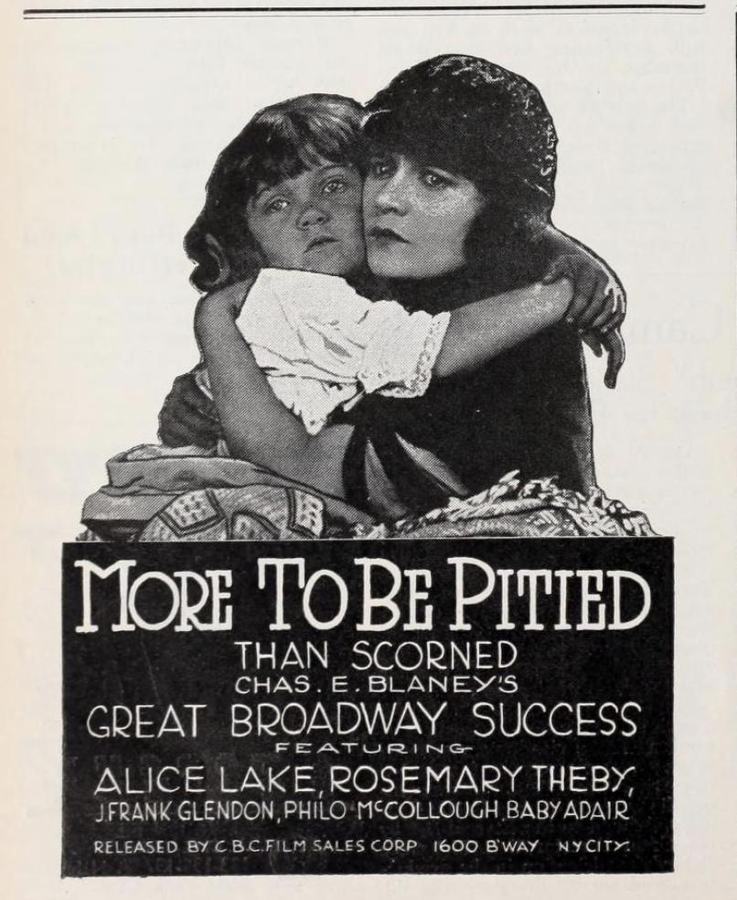
Alberta Vaughn, conversely, provides the film's emotional and comedic anchor. In an era where female roles were often relegated to the suffering heroine—think of the heavy melodrama in The Price of Her Soul or the tragic weight of Tess of the D'Urbervilles—Vaughn is a breath of fresh air. She is proactive, witty, and possesses a facial elasticity that rivals the best comedians of the decade. Her chemistry with O'Hara is palpable, built on a foundation of mutual exasperation and genuine affection.
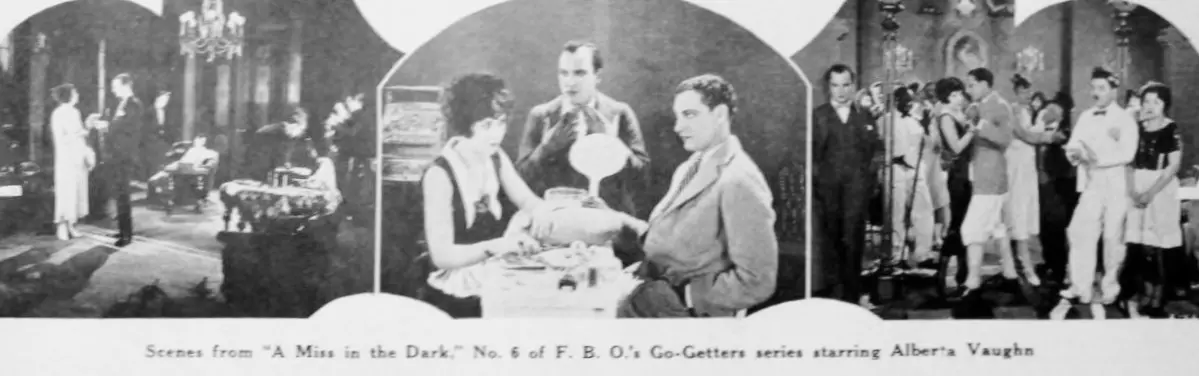
The cinematography in A Miss in the Dark utilizes the limitations of 1920s film stock to its advantage. The high-contrast lighting creates a stark, almost expressionistic world that mirrors the internal confusion of the characters. While it lacks the haunting atmospheric depths of Swedish cinema like Havsgamar, it employs a uniquely American chiaroscuro—one that highlights the glint of a tuxedo button or the sparkle in a confused eye.
The direction manages to maintain a sense of space even when the characters are theoretically 'lost' in the dark. This spatial awareness is crucial for the slapstick to land. If the audience doesn't understand the geography of the room, the joke of someone walking into a wall is lost. Here, the director uses light as a spotlight on the absurdity, ensuring that every 'miss' is seen by the audience even if it is missed by the characters. This dramatic irony is the engine that drives the film's second act.
George Marion Jr. was perhaps the most sought-after title writer in Hollywood for a reason. In A Miss in the Dark, the titles don't just explain the plot; they provide a cynical, worldly commentary that elevates the material. Where a lesser film might use a title to say "They were lost," Marion would write something that skewered the characters' pretensions. This adds a layer of intellectual engagement that distinguishes the 'Go-Getters' series from more juvenile fare like Sleepy Sam, the Sleuth.
The interplay between the visual gag and the verbal punchline creates a rhythmic cadence. It’s a precursor to the screwball comedies of the 1930s. You can see the DNA of future masterpieces in the way O'Hara reacts to a particularly biting title card. It’s a dialogue between the filmmaker and the audience, a shared wink that acknowledges the ridiculousness of the human condition.
When placed alongside Flirting with Terror, the tonal balance of A Miss in the Dark becomes even more apparent. While the former leans into the suspense of the unknown, the latter treats the unknown as a playground for social embarrassment. It shares a certain kinetic DNA with Thrills, yet it maintains a narrative discipline that keeps the 'thrills' subservient to the character development.
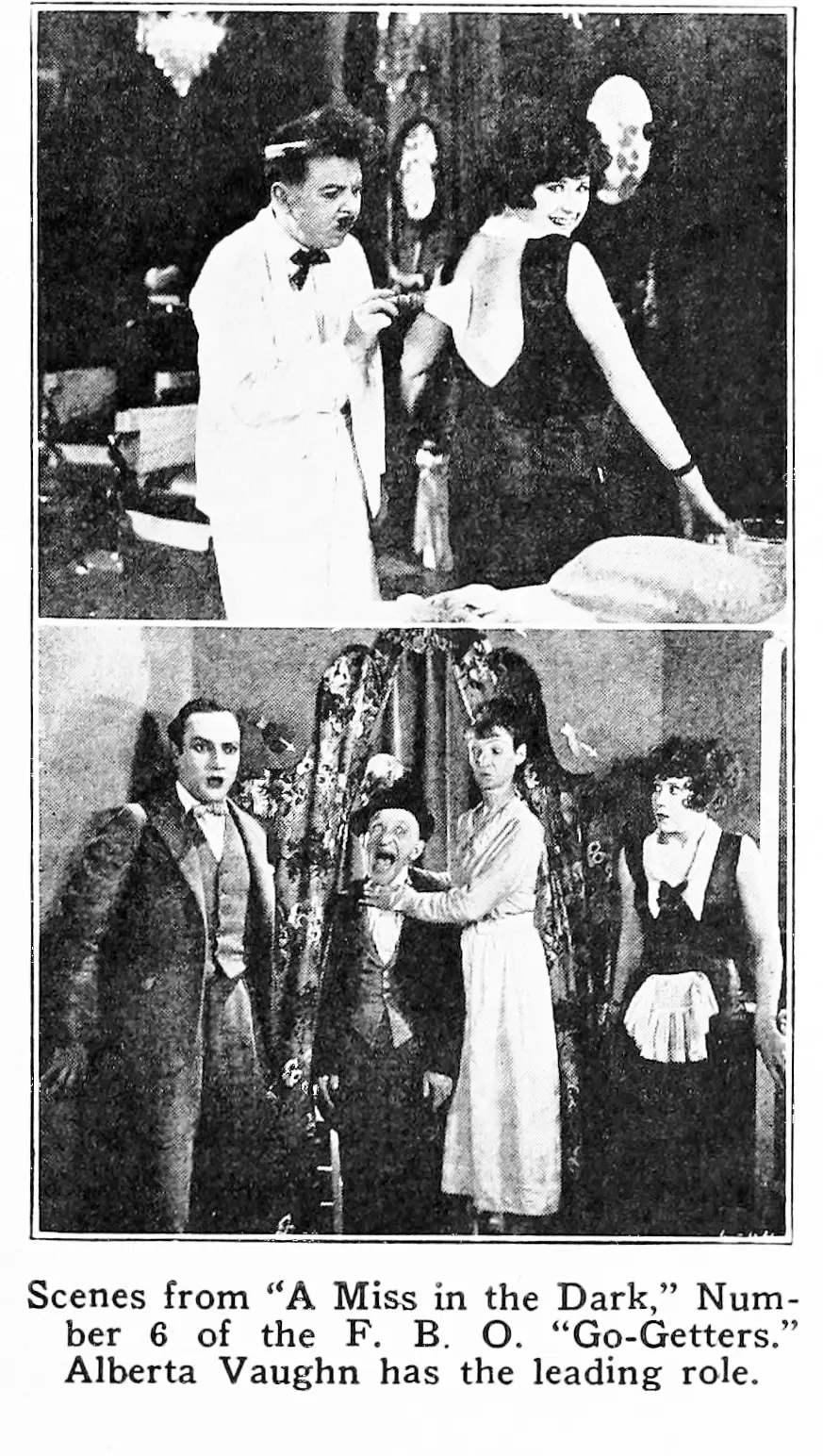
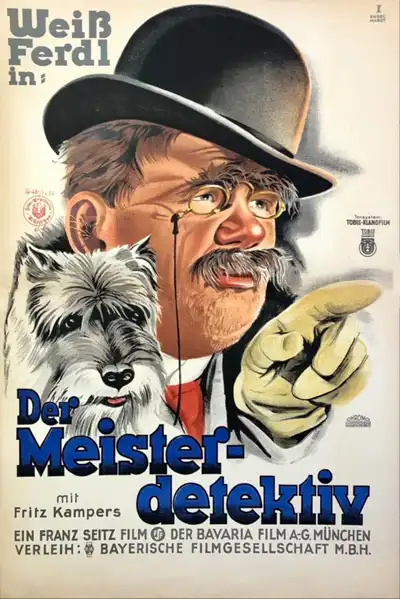
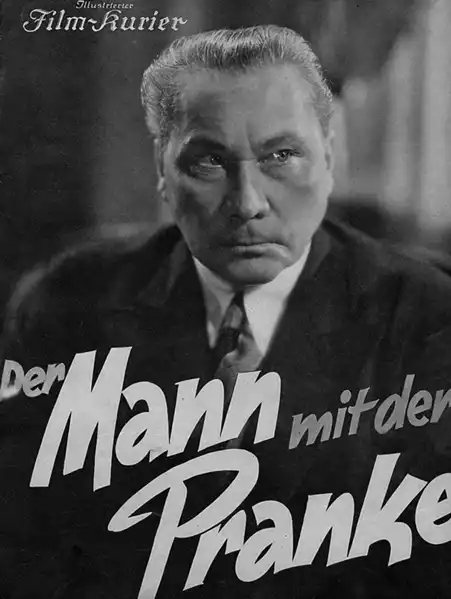
Even when compared to international works like the Italian Lucciola or the German Die Verführten, our film holds its own through its sheer accessibility and relentless pacing. It avoids the heavy-handed moralizing found in Damaged Goods, opting instead for a light touch that nonetheless reveals the fractures in the American Dream. It is less about the 'big' themes and more about the small, human moments that define our lives—the missed connections, the dark rooms, and the hope that we might eventually find the light switch.
The strength of a short film often lies in its peripheral characters, and A Miss in the Dark boasts a formidable supporting cast. Kit Guard and Al Cooke, often paired as a comedic duo, bring a vaudevillian energy that provides a perfect counterpoint to O'Hara’s more 'straight man' approach. Their interactions are reminiscent of the puzzle-like logic found in El rompecabezas de Juanillo, where every movement is a piece of a larger, hilarious picture.
Stanley Taylor rounds out the cast with a performance that, while brief, adds a necessary layer of gravitas. He represents the 'establishment' that our heroes are so desperate to impress, and his presence raises the stakes of every blunder. When the 'darkness' finally lifts, it is Taylor's reaction that determines whether the film ends in a triumph or a further 'miss.' This ensemble dynamic ensures that the film never feels thin; it is a populated, breathing world, much like the vibrant settings of The Ranch Romeo, albeit in a more urbanized context.
In the grand tapestry of film history, A Miss in the Dark might be categorized by some as a mere curiosity, a relic of a bygone era of shorts. However, to the discerning eye, it is a sophisticated exploration of visual comedy. It lacks the predatory intensity of The Tiger, but replaces it with a frantic, delightful energy that is infectious. It reminds us that even in the dark, there is room for laughter, and that the 'misses' in life are often more interesting than the hits.
The film’s legacy is not found in grand technical innovations, but in its mastery of the fundamentals: timing, character, and the eternal comedy of the human ego. As we look back from a century later, the shadows of 1924 remain as sharp and as funny as ever. The 'Go-Getters' may have been pursuing success, but in A Miss in the Dark, they captured something much more enduring: the essence of cinematic joy.
Critic's Rating: 8.4/10
A quintessential example of the silent short form, elevated by Marion's wit and O'Hara's physical precision. A must-watch for historians and comedy aficionados alike.
IMDb 5.8
1923
Community
Log in to comment.