DbcultAccessing Vault...
Cult Review
Senior Film Conservator
In the annals of early cinema, few narratives delve into the psychological torment of a man wrestling with his inner demons quite as profoundly as 'The Conscience of John David.' This cinematic gem, a product of its era yet timeless in its thematic resonance, offers a captivating exploration of wealth, moral decay, mistaken identity, and the arduous path to redemption. It’s a film that resonates with the very core of human fallibility and the relentless pursuit of truth, much like the intricate moral quandaries presented in films such as The Morals of Hilda, where ethical lines are constantly blurred. What begins as a seemingly straightforward tale of a spendthrift socialite quickly transforms into a labyrinthine journey through guilt, hardship, and ultimately, the glorious satisfaction of an unburdened soul.
Our story introduces us to John David, a man whose life is a tapestry woven with threads of boundless affluence and an equally boundless capacity for extravagance. He is, to put it mildly, a creature of comfort and unthinking indulgence, seemingly adrift in a sea of his own making. His impending marriage to the 'Worldly Woman' is less a union of hearts and more a strategic alliance, an arrangement that speaks volumes about the transactional nature of relationships within his gilded cage. David’s proposition of an engagement announcement at a lavish dinner party underscores his predilection for spectacle over substance. This opening tableau immediately establishes a protagonist whose moral compass is, at best, askew, and at worst, entirely absent, setting the stage for the dramatic seismic shifts that are about to rock his complacent world. His initial character arc is a stark reminder of the perils of unchecked privilege, a theme that, while perhaps less overt, can be glimpsed in the societal critiques woven into narratives like The House with the Golden Windows, where material wealth often masks deeper voids.
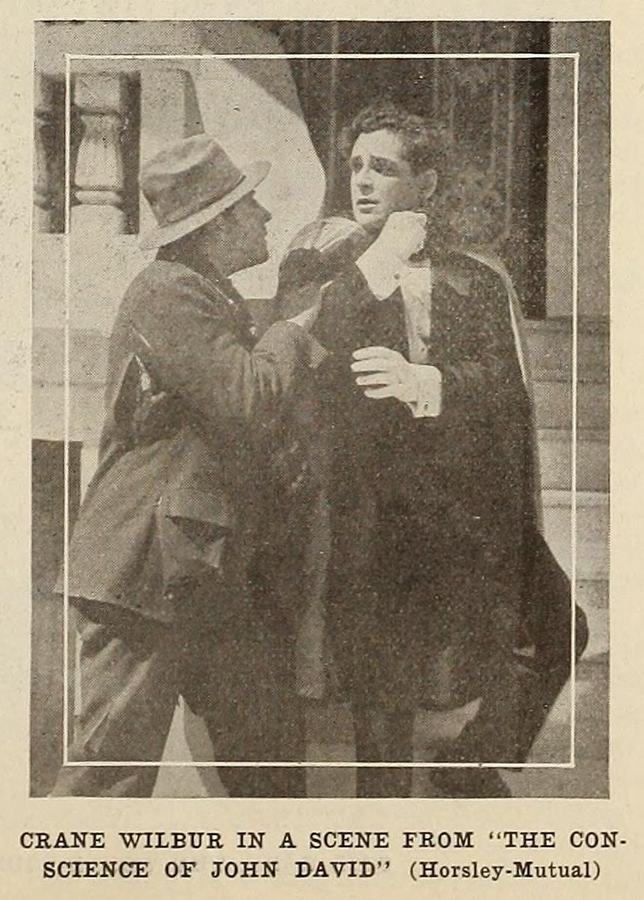
The grand dinner party, intended to be a celebration of John David’s future, inadvertently becomes the catalyst for his undoing. A sudden, superstitious realization — the ominous presence of thirteen guests at the table — propels John out into the night in search of a fourteenth. This seemingly trivial quest leads him to an encounter with the enigmatic Wanderer, a figure he once knew but now fails to recognize. The Wanderer, a harbinger of truth, confronts John with a searing critique of his wasteful existence, painting a vivid picture of the starving families whose lives could be sustained by his squandered fortune. It’s a moment of profound moral reckoning, a direct challenge to John’s oblivious self-absorption. The Wanderer’s words, though initially met with fury, penetrate John’s defenses, leading to a rare moment of humility and acknowledgment of his wrongdoing. This encounter is immediately followed by a telegram, a brutal missive announcing the utter collapse of his financial empire. This one-two punch of moral and material devastation shatters John’s world, stripping him bare of both his wealth and his illusions, and solidifying the Wanderer’s symbolic role: he is, as he later reveals, John’s conscience personified. This dramatic turning point, where an external force brings about a fundamental shift in character, echoes the transformative experiences often seen in films like The Redemption of White Hawk, where adversity becomes the crucible for change.
Parallel to John’s burgeoning crisis, a darker narrative thread concerning the Libertine and Yamato, the Japanese butler, has been quietly spooling. The Libertine, a predatory and contemptuous figure, not only admires the Worldly Woman but brazenly abuses Yamato, and later, attempts to accost Yamato’s wife, the Japanese maid. These acts of callous cruelty ignite a suppressed, yet potent, hatred within Yamato. This simmering rage is a crucial element, setting the stage for a tragic misunderstanding that will haunt John David for much of the film. When John, accompanied by his Conscience, returns to the Worldly Woman’s apartment, he discovers her in the arms of the Libertine. The betrayal is complete, and John, in a furious paroxysm, attacks his rival. In the ensuing struggle, an unseen hand — Yamato’s — emerges from beneath the draperies, plunging a long needle into the Libertine’s neck. The Libertine falls dead, and John, reeling from the intensity of the moment, believes he is the killer. This pivotal scene, fraught with dramatic irony, establishes the central conflict of the film: John’s profound guilt over a crime he did not commit. The film masterfully uses this misdirection to explore the psychological weight of perceived sin, a burden that can be as crushing as actual culpability. The silent, swift act of Yamato, driven by a deep sense of injustice and racial affront, adds a layer of social commentary on the consequences of abuse and the quiet, often overlooked, suffering of the marginalized.
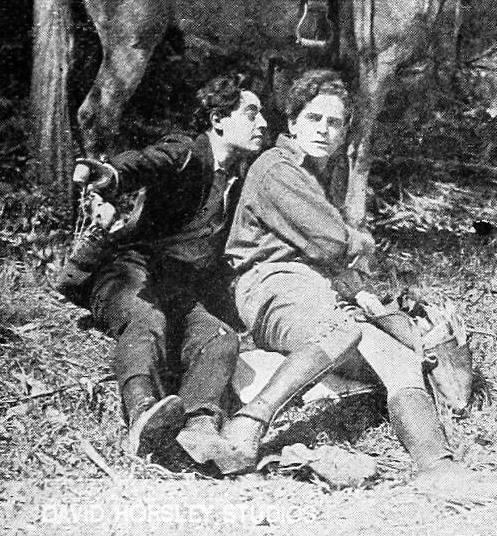
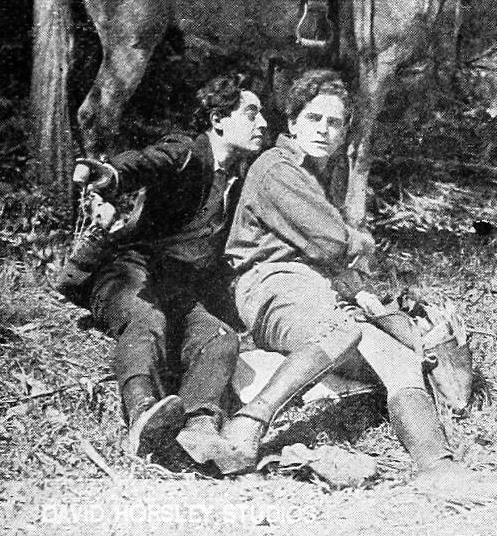
Convinced of his own culpability, John David, with Conscience as his constant, unwelcome companion, flees west. This journey is less a physical escape and more a harrowing descent into psychological purgatory. The presence of Conscience, now a tangible, tormenting entity, constantly reminds him of the Libertine’s death, amplifying his self-recrimination. He tries desperately to escape this internal torment, even leaping from one train to another, a futile attempt to outrun his own mind. The film brilliantly portrays this internal struggle through John’s increasingly haggard appearance and desperate actions. Their flight is not merely a geographical relocation but a stripping away of John’s former identity and privileges. They are reduced to vagabonds, experiencing the harsh realities of life on the margins, including being held up and robbed by tramps in a coal car. This period of intense hardship serves as a crucible, forging a new John David, one who is forced to confront the direct consequences of his perceived actions and the stark realities of a world far removed from his previous life of luxury. This narrative arc of a character on the run, facing unexpected dangers and forced to live under a false pretense, draws parallels with films like The Unknown or Officer 666, where mistaken identity or a hidden past drives much of the tension.
Their journey eventually leads John and Conscience to the small town of Laurel Run, a seemingly idyllic haven where John hopes to build a new life, free from the specter of his past. However, fate, or perhaps his ever-present Conscience, has other plans. Upon entering the town, John, riding a pony that turns out to be the Sheriff’s stolen favorite, is immediately branded a thief by the suspicious villagers. It’s a classic case of mistaken identity and mob mentality, a stark reminder of how easily appearances can condemn. Yet, amidst the clamor, a beacon of hope emerges in the form of the Sheriff’s daughter, the village postmistress. With an intuitive grasp of character, she alone senses John’s innocence, acting as his unlikely advocate and protector against the incited fury of the Gambler and the townspeople. Her unwavering belief in him is the first true kindness John has experienced since his fall, and it lays the foundation for a burgeoning romance. John’s eventual integration into the community, securing a position as a rural free delivery letter carrier, signifies his earnest attempt at rehabilitation and a return to honest labor. This period of relative peace and newfound purpose, however, is a fragile one, constantly threatened by the shadows he carries and the watchful, jealous eyes of the Gambler.
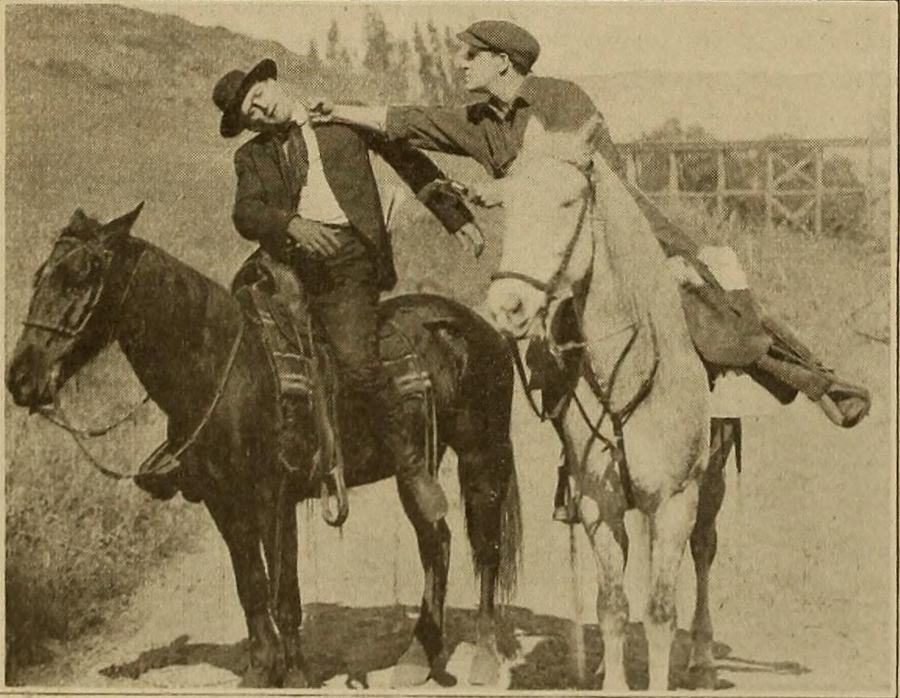
No narrative of redemption is complete without an antagonist, and in Laurel Run, that role is expertly filled by the Gambler. Driven by a potent cocktail of jealousy over John’s growing popularity and his affection for the Sheriff’s daughter, the Gambler becomes an obsessive figure, determined to unearth and expose John’s past. His antipathy is not merely personal but serves as a constant externalization of John’s internal fear of discovery. The peace John has found is constantly under threat, a precarious balance that the Gambler delights in disrupting. The moment arrives when the Gambler spies John intently reading a newspaper, his face etched with agitation. The headline reveals the Worldly Woman’s acquittal in the Libertine murder case and, more ominously, a search instituted for John David, whom she has accused. John’s hurried departure, leaving the incriminating paper behind, provides the Gambler with the ammunition he needs. Piece by piece, the Gambler divines the cause of John’s distress, connecting the dots of his hidden past. Without hesitation, he wires the New York police department, setting in motion the final, inevitable confrontation. This relentless pursuit of truth, albeit for nefarious reasons, highlights the film’s exploration of how one’s past, no matter how distant or misunderstood, can always catch up, a theme echoed in the inescapable consequences faced by characters in films like The Man of Shame.
As John proposes marriage to the Girl and is accepted, a fragile hope blossoms, only to be immediately threatened. A legal-looking envelope addressed to the Sheriff, discovered by John while sorting mail, ignites his deepest fears. Succumbing to temptation, he opens it to find a reward announcement for his capture. This moment of weakness, driven by desperation to protect his nascent happiness, demonstrates the enduring power of his perceived guilt. He resolves to keep his secret, but the walls are closing in. The arrival of a stranger, posing as an automobile salesman but secretly a detective, adds another layer of suspense. The Gambler, ever vigilant, shadows John, eventually cornering him in his cabin, where John meditatively gazes at the reward sheet and a photograph of the Girl. A violent confrontation ensues, a lamp is knocked over, and the cabin is engulfed in flames. John, after overcoming the Gambler, narrowly escapes the inferno, a symbolic cleansing by fire before his ultimate reckoning. The next day, the wedding ceremony begins, a moment of profound joy juxtaposed with John’s internal turmoil. In a dramatic outburst, unable to bear the weight of his secret any longer, John recoils in horror, shouting that the marriage cannot continue, declaring himself a murderer. It is a raw, agonizing confession, a testament to the unbearable burden of his conscience.
At the precipice of despair, with John’s confession hanging heavy in the air, the Stranger steps forward, introducing himself as a detective. From his pocket, he produces a letter from his chief, which he reads aloud, a dramatic unveiling of the truth that shatters John’s long-held illusion of guilt. The letter announces John’s innocence: the Libertine was not killed by John, but by Yamato, who, on his deathbed, confessed to the crime. This revelation is a stunning moment of catharsis, not just for John, but for the audience who has witnessed his agonizing journey. The Conscience of John David, which has tormented him, guided him, and ultimately led him to this truth, is finally satisfied and glorified. The weight lifts, the torment ceases. John, initially turning to leave, is embraced by the Girl, and the Sheriff clasps his hand, gently moving him into her arms. It is a moment of profound reconciliation, of love, forgiveness, and the ultimate triumph of truth. This resolution, where a long-held secret is dramatically exposed, and justice, though delayed, is finally served, shares a narrative kinship with films like What Happened to Mary, where the unraveling of a mystery brings about a resolution for the protagonist.
‘The Conscience of John David’ is far more than a simple melodrama; it is a meticulously crafted morality play that delves deep into universal themes. The personification of Conscience is a brilliant narrative device, giving tangible form to an abstract internal struggle, allowing the audience to witness John’s psychological battle externalized. The film explores the profound weight of guilt, even when based on a misunderstanding, and the arduous, often painful, journey towards self-forgiveness and redemption. It critiques the superficiality of wealth and the corrosive effects of unchecked privilege, presenting John’s fall from grace as a necessary step towards his moral awakening. Furthermore, the subplot involving Yamato subtly introduces themes of racial prejudice and the consequences of social hierarchy, where the silent suffering of the marginalized can lead to unexpected and tragic outcomes. The film’s ultimate message is one of hope and the enduring power of truth. No matter how convoluted the path, how heavy the burden, or how deeply buried the secret, truth, eventually, will out, bringing with it the possibility of genuine peace and liberation. It reminds us that true judgment often comes from within, and the most satisfying absolution is the one granted by our own conscience. The film’s ability to weave such complex ideas into a compelling narrative, without the benefit of spoken dialogue, is a testament to the power of early silent cinema and its visual storytelling prowess.
'The Conscience of John David' stands as a powerful example of early cinematic storytelling, showcasing an intricate plot driven by character development and thematic depth. Fred Montague as the Worldly Woman, Alice Rinaldo, Mae Gaston, Louis Durham, Francis Raymond, John Oaker, and particularly Crane Wilbur (who also penned the script) as John David, deliver performances that transcend the limitations of silent film, conveying a range of emotions through subtle gestures and expressions. The film's narrative structure, moving from opulence to destitution, from perceived crime to ultimate exoneration, maintains a gripping pace that keeps the audience invested in John’s fate. It’s a testament to the era’s ability to craft engaging and thought-provoking cinema without relying on dialogue, instead leveraging visual storytelling, compelling character arcs, and universal human struggles. For those interested in the evolution of cinematic narrative and the enduring power of moral tales, 'The Conscience of John David' remains a compelling and often overlooked masterclass. Its themes of guilt, justice, and the arduous road to self-discovery ensure its continued relevance, echoing the timeless struggles of humanity that resonate just as powerfully today as they did upon its initial release.

IMDb 5.5
1935
Community
Log in to comment.