DbcultAccessing Vault...
Cult Review
Senior Film Conservator
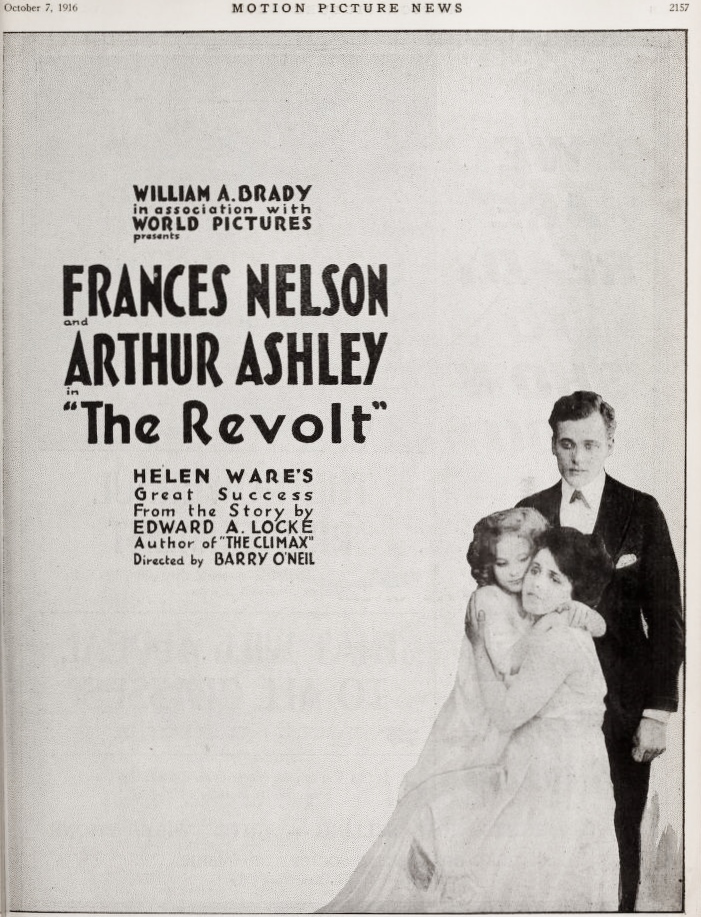
The year 1916 represents a fascinating inflection point in the grammar of American cinema. It was an era where the medium was shedding its nickelodeon skin and donning the sophisticated robes of the feature-length narrative. At the heart of this transformation stands The Revolt, a film that serves as a visceral document of the social anxieties plaguing the early 20th-century urban landscape. Penned by the formidable Frances Marion, a woman whose pen would eventually define the Golden Age of Hollywood, this film is far more than a mere melodrama. It is a searing indictment of the economic pressures placed upon the 'New Woman' and a psychological study of how domestic toxicity can catalyze a descent into the underworld.
As we observe the trajectory of Anna, portrayed with a haunting vulnerability by Frances Nelson, we are forced to confront the meretricious nature of the American Dream as it applied to the working class. Unlike the more whimsical explorations of class found in Amarilly of Clothes-Line Alley, The Revolt refuses to sugarcoat the grit of the shop-girl’s existence. Anna is not merely a protagonist; she is a site of ideological struggle, caught between the Victorian morality of her upbringing and the predatory consumerism of the city.
One cannot discuss The Revolt without addressing the character of Mrs. Biddle. In the hands of Ada Price, Biddle is a masterpiece of domestic villainy. She represents the 'disreputable' elder, a figure who has been so hollowed out by poverty and bitterness that she views her stepdaughter’s virtue as a wasted commodity. Her suggestion that Anna 'liven up' and seek 'favors from rich young fellows' is a chilling echo of the survivalist cynicism found in later noir films. This dynamic creates a claustrophobic atmosphere that rivals the heavy emotional weight of Madame X, where the maternal bond is similarly twisted by social stigma and misfortune.
The film’s portrayal of the workplace is equally harrowing. The department store is depicted as a panopticon of desire and surveillance. Lena Schmidt, played with a sharp, desperate edge by Clara Whipple, serves as the dark mirror to Anna. Her affair with the manager is not framed as a simple moral failure, but as a misguided attempt at agency in a world that offers women few paths to security. When she is discarded upon the discovery of her 'delicate condition,' the film pivots into a revenge tragedy. Lena’s resentment toward Anna is a poignant illustration of how the oppressed often turn on one another rather than the systems that exploit them—a theme explored with similar gravity in The Eye of God.
The transition from the store to the domestic sphere does not offer the respite one might expect. When John Stevens (Arthur Ashley) enters the frame, he brings with him the typical male prejudices of the era. His initial assumption that Anna is 'like Lena' highlights the precariousness of a woman’s reputation; a single association can categorize her as 'fallen.' While their eventual marriage is framed through the lens of romantic redemption, Marion’s script is too intelligent to leave it at a 'happily ever after.' Instead, it delves into the quotidian rot of a marriage under siege by external influences.
The nagging of Mrs. Biddle functions as a psychological wedge, driving John toward 'amusement outside of the home.' This narrative beat feels remarkably modern, prefiguring the suburban ennui that would dominate cinema decades later. The film suggests that the 'revolt' of the title is not just Anna’s eventual defiance of her circumstances, but the collective breaking point of characters pushed to the margins of their own lives. We see echoes of this domestic disintegration in films like Fatherhood or the Swedish masterpiece Vingarne, which also grapple with the fragility of the family unit under the weight of secrets and societal expectations.
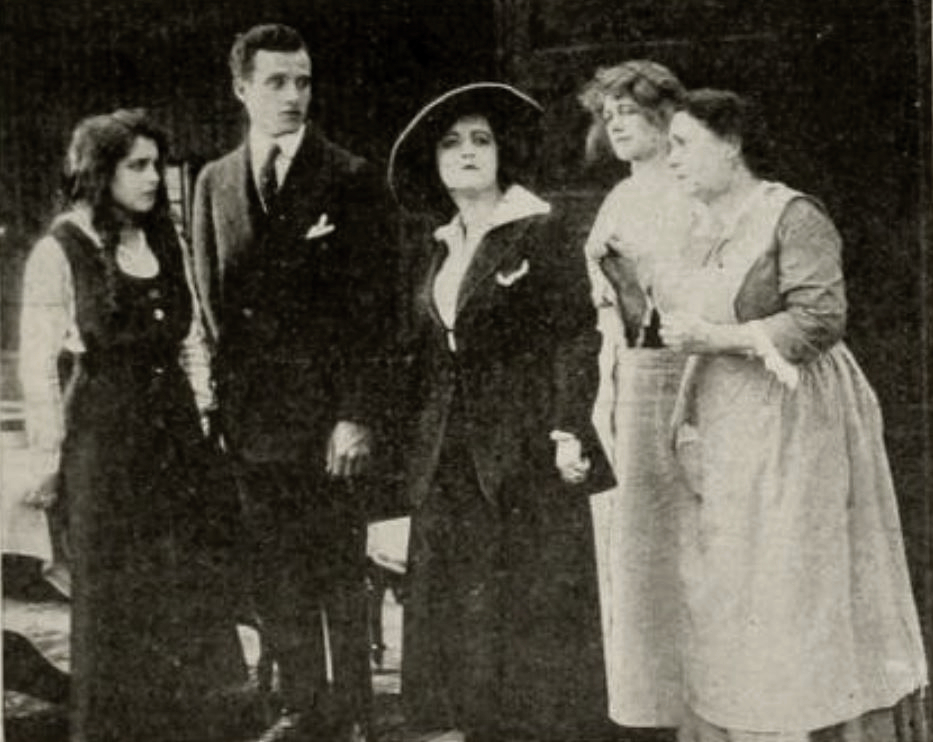
The third act of The Revolt is a descent into a literal and metaphorical underworld. Anna’s decision to attend Lena’s party is born of a profound, soul-crushing loneliness. The party scene is a triumph of silent film atmosphere. The cinematography captures the transition from a seemingly harmless gathering to a 'carouse' where the men 'make free with the girls.' Here, we meet the 'Deacon,' a character whose very name drips with irony. He represents the hypocrisy of a society that preaches piety while indulging in the base exploitation of the vulnerable. The Deacon’s repellent advances represent the ultimate threat to Anna’s autonomy.
This sequence is staged with a tension that rivals the mystery elements of The Mystery of the Double Cross. The sense of entrapment is palpable. When Lena tells Anna there is 'no escape,' it feels like a condemnation of her entire class. The arrival of Dr. Goode (George MacQuarrie) as a deus ex machina might seem convenient to modern audiences, but within the context of 1916, he represents the 'Noble Professional'—a recurring trope used to restore order to a chaotic world. His lingering affection for Anna provides the bridge back to morality, much like the redemptive arcs found in The Chalice of Courage.
Technically, The Revolt showcases the robust production values of the World Film Corporation. The sets are detailed, moving from the cramped, cluttered apartments of the poor to the more expansive, yet sterile, environments of the wealthy. The use of lighting to differentiate between the 'safety' of the home and the 'danger' of the night-time city is sophisticated for its time. While it may not have the avant-garde flourishes of Nászdal or the epic scale of Germania, its strength lies in its intimacy and its refusal to look away from the sordid details of its characters' lives.
The inclusion of Madge Evans as the daughter, Nanny, adds a layer of pathos that is essential to the film’s resolution. The trope of the 'sick child' as a catalyst for parental reconciliation is a staple of the era, seen in everything from Little Pal to The Heart of Nora Flynn. In The Revolt, Nanny represents the future that is at stake. Her illness is a manifestation of the neglect caused by the parents' preoccupation with their own miseries. Her recovery mirrors the recovery of the marriage itself.
In the grand tapestry of silent cinema, The Revolt deserves a more prominent place than it currently occupies in the cultural consciousness. It is a vital example of the 'social problem' film, a genre that sought to use the power of the moving image to provoke thought and perhaps even change. It lacks the exoticism of The Honorable Friend or the high-stakes intrigue of The New Mission of Judex, but it gains its power from its relatability. The struggles of Anna—the pressure to conform, the desire for a better life, the battle against domestic toxicity—are universal.
Frances Marion’s screenplay is the true star here. She understood, even in 1916, that character is destiny. The characters in The Revolt are not mere pawns of the plot; they are driven by complex, often contradictory motivations. Even the 'villains' like Lena or Mrs. Biddle are given a semblance of psychological depth, emerging as products of their environment rather than purely mustache-twirling antagonists. This nuanced approach to characterization is what elevates the film above the standard melodramas of its day, such as La morte che assolve or Melting Millions.
Ultimately, The Revolt is a film about the possibility of starting over. The final image of the couple over their baby’s bed, planning for a 'new and better life,' is a powerful affirmation of the human spirit’s capacity for resilience. It is a reminder that even in the darkest corners of the industrial city, redemption is possible if one has the courage to revolt against the expectations of a cynical world. For any serious student of film history or fan of early 20th-century drama, this film remains an essential, if harrowing, viewing experience.
IMDb 6.5
1915
Community
Log in to comment.