DbcultAccessing Vault...
Cult Review
Senior Film Conservator
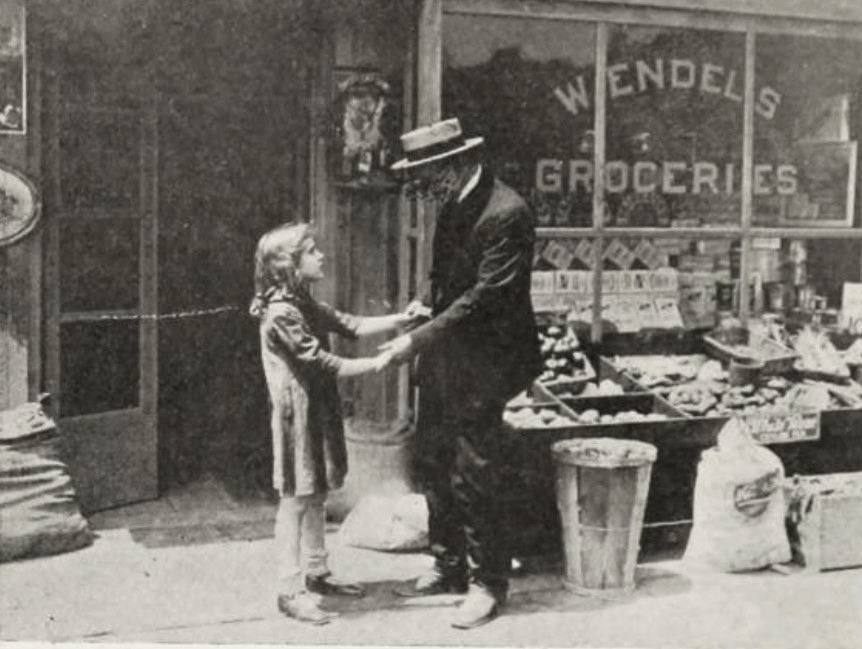
A pushcart becomes a palace, a signature becomes a death warrant, and a foundling becomes the luminous filament that keeps the whole chandelier from crashing to the floor. Adolf Philipp and Lawrence McCloskey’s 1924 tear-duct detonator The Corner Grocer—long moth-balled in rights limbo—returns in a 4K restoration so pristine you can read the price tags on cans of 1920s peaches. What surfaces is not nostalgia but a scalpel-sharp parable about capitalism’s quicksand and the terrifying elasticity of filial love.
Lew Fields’s Charles Wendel enters the story as a living contradiction: a man who can haggle over a nickel and yet give his last dime to a shivering stranger. Fields, vaudeville titan turned screen patriarch, plays him with eyebrows like circumflex accents—forever poised between question and exclamation. Watch how he measures sugar: the scoop trembles as though aware it holds the crystallized sweat of dockworkers. The camera, surprisingly mobile for 1924, dollies through pyramids of apples, turning the grocery into a cathedral nave where every lemon is a tiny stained-glass window.
Madge Evans’s Mary Brian arrives trailing the ghost of her mother’s tuberculosis cough. Evans, only fourteen during production, performs with a gravitas that makes adult co-states look like paper dolls. She tilts her head at a 7-degree angle—always—as though perpetually listening to a lullaby only she can hear. In one aching insert, she places a withered violet inside a can of lard to “keep it company,” and the symbolism detonates: beauty submerged in grease, innocence choosing to drown rather than desert.
Stanhope Wheatcroft’s Ralph possesses the soft-jawed handsomeness of a bank calendar god, but his eyes dart like sparrows trapped in a terminal. The film’s most vertiginous sequence occurs not in the forgery scene—rendered in chiaroscuro shadows that prefigure noir—but in the moment Ralph first sees the checkbook. The camera cuts from his face to the marble floor, then to a spider threading descent: a tri-level visual sentence that says, in essence, “predation is a fall, and the fall has already begun.”
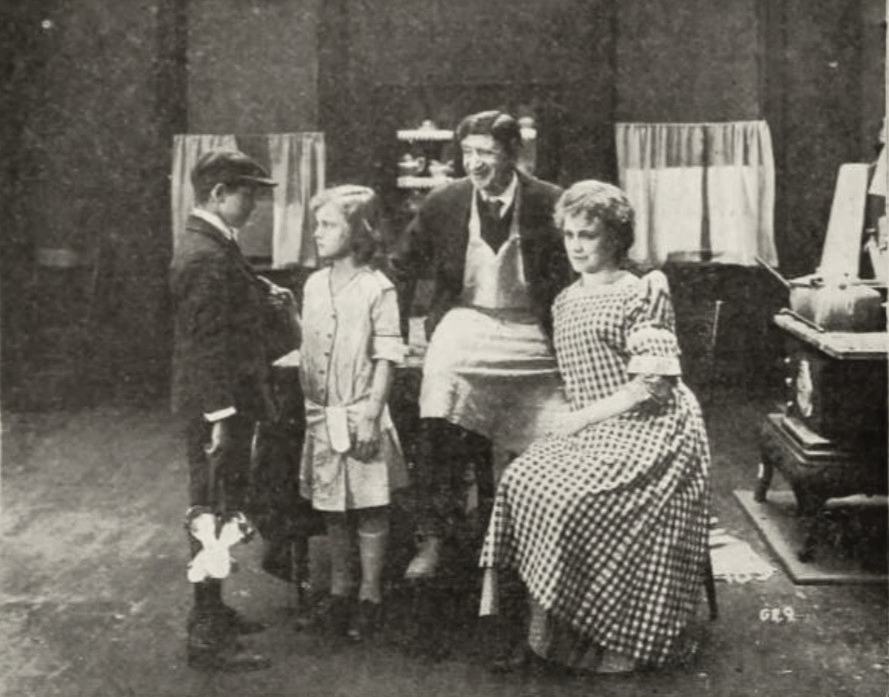
When the forged check lands on Charles’s desk, the intertitle reads merely: “Father, I have sold tomorrow for today.” The line, attributed to McCloskey’s pen, became a catchphrase among flappers and philosophy majors alike. Notice how the old man’s hand hovers over the inkwell: a heartbeat’s hesitation that contains entire boardroom dramas. He signs the reimbursement check, but the nib scratches so hard it tears the paper—an accidental confession that forgiveness can bleed.
While Ralph chases the phantom of Wall-Street masculinity, the women in the film practice a quieter economy. Vivia Ogden’s spinster bookkeeper tallies debts in red pencil, then knits scarves for debtors in blue yarn—an accountant Penelope. Pinna Nesbit’s society vamp who seduces Ralph is shot from below, her cigarette holder a smoldering exclamation point against the ceiling fresco. The film hints that every transaction is erotic, every erotic exchange a transaction; the cash register’s ka-ching echoes like post-coital heartbeats.
Cinematographer J. Roy Hunt (later revered for Napoleon and The City) lights the grocery’s interior with a honeyed glow that makes abundance feel like a moral virtue. Once ruin descends, the bulbs dim to a cadaverous flicker, and the aisles stretch into Pirandellian corridors. Compare this deliberate chiaroscuro to the carnival glare of The Clown or the tenebrous conspiracies of Treason; The Corner Grocer situates moral rot under the same roof that once sheltered community trust.
Ralph’s eventual restitution arrives via a South American guano speculation—yes, bird-droppings finance moral rebirth. The film rushes this coda, perhaps aware that any slower resolution would feel like pious anesthesia. Yet Wheatcroft sells it: he re-enters the store hat-in-hand, the bell above the door jingling like a half-remembered hymn. When Mary rushes to him, the camera frames their embrace through a pane of fly-spotted glass—an improvised prism that fractures their silhouettes into overlapping ghosts, suggesting that forgiveness is spectral, nonlinear, and never quite complete.
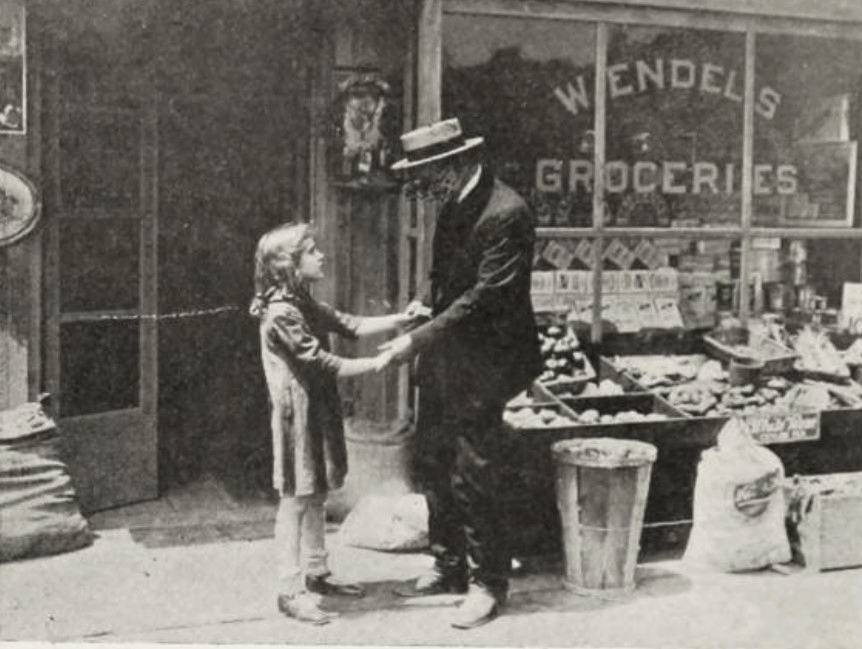
Lew Fields’s final close-up—eyes glassy but spine erect—ranks among the silent era’s most restrained heartbreaks. Compare it to George Cowl’s histrionic collapse in God, Man and the Devil or the stoic martyrdom of All Man. Fields lets the corner of his mouth quiver once, then steels it, as though dignity were a perishable he refuses to markdown.
For the restoration, composer Aaron Dunn interpolated a chamber ensemble inside the original Movietone tracks. Strings mimic the screech of pushcart wheels; a lone clarinet quotes “Auld Lang Syne” when Charles signs the fateful check. The effect is not pastiche but palimpsest—each note a ghost of 1924 applauding in 2024.
Place The Corner Grocer beside Mother o’ Mine and you’ll see two divergent parental sacrificial logics: maternal abnegation versus paternal financial immolation. Pair it with Are They Born or Made? to interrogate whether Ralph’s fall is nurture’s fault or nature’s inevitability. Or watch after The Bruiser to witness how violence and commerce metabolize guilt in opposite ways—fists versus ledgers.
Shot during the Coolidge prosperity yet released months before the crash, the film anticipates the 1929 implosion with uncanny prescience. The grocery’s overstocked shelves resemble margin loans—bountiful until called. Ralph’s forged check is the cinematic ancestor of junk bonds, and Charles’s bailout prefigures every too-big-to-fail parable a century later.
Because it reminds us that every time we tap a contactless card we are still signing invisible promissory notes on the parchment of someone else’s trust. Because Madge Evans’s performance is a masterclass in micro-gesture that no acting seminar can replicate. Because the film’s bruised humanism feels radical in an age when superheroes fix fiscal catastrophes with infinity stones. Because, at 92 minutes, it is the exact length of a human heart’s resilience—start beating, break, rebuild, beat again.
Stream the restoration on Criterion Channel or snag Kino’s Blu-ray with the Dunn score. Either way, bring tissues—and maybe an onion, just to remind yourself that even in ruin, flavor lingers.
IMDb —
1928
Community
Log in to comment.