DbcultAccessing Vault...
Cult Review
Senior Film Conservator
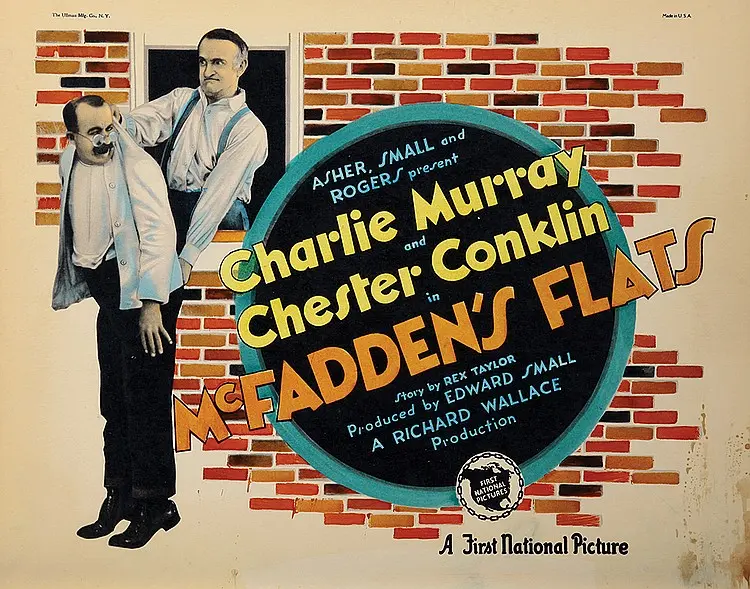
Short answer: Yes, but primarily for those who appreciate the historical evolution of the 'buddy comedy' and the specific charms of silent-era ethnic humor. It is a film that rewards patience with genuine warmth, even if its tropes feel antiquated to a modern eye.
This film is for enthusiasts of 1920s cinema, fans of physical comedy duos like Murray and Conklin, and anyone interested in how early Hollywood portrayed the immigrant experience. It is NOT for viewers who demand fast-paced action or those who are easily offended by the broad, stereotypical characterizations common in Vaudeville-era storytelling.
1) This film works because: The chemistry between Charles Murray and Chester Conklin transforms a standard script into a masterclass of reactive performance.
2) This film fails because: The middle act leans too heavily on the 'finishing school' subplot, which slows the comedic momentum to a crawl.
3) You should watch it if: You want to see the DNA of modern sitcom rivalries in their earliest, most raw form.
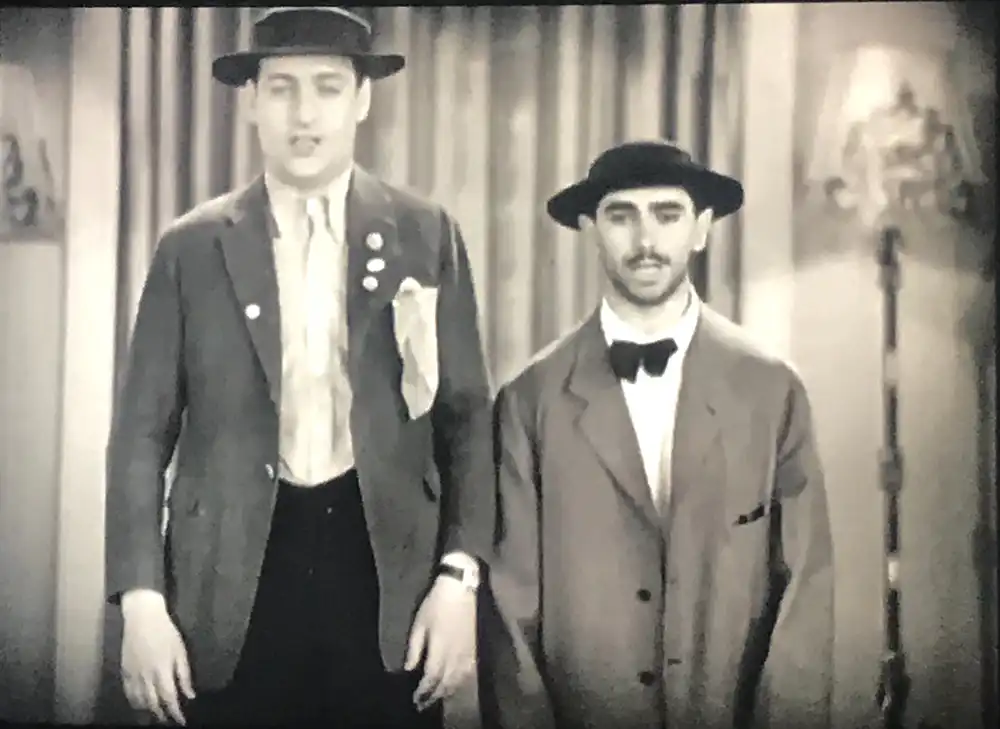
At the heart of McFadden's Flats lies the legendary pairing of Charles Murray and Chester Conklin. In 1927, these two were the gold standard for contrasting comedic energy. Murray, as McFadden, brings a blustering, expansive Irish warmth that fills every frame. He is the 'loud' presence in a silent medium. Conversely, Conklin’s McTavish is a miracle of minimalist twitching and repressed Scottish stoicism. Their interactions are not just funny; they are a rhythmic dance of personality types.
Take, for instance, the scene in the barber shop where McFadden’s booming presence seems to physically shrink the space around the meticulous McTavish. The way Conklin handles his tools with a mix of professional pride and annoyance at his friend’s interruptions is a specific kind of physical comedy that has largely been lost. It isn't just about the 'gag'; it’s about the history of two men who have likely annoyed each other for twenty years but wouldn't know how to exist without the other.
This film feels much like Bowled Over in its reliance on physical stakes to drive the narrative forward. While the plot is ostensibly about a building project, the real architecture is the friendship between these two men. It is loud for a silent film. You can almost hear the shouting through the intertitles.
One of my strongest, and perhaps most debatable, opinions on McFadden's Flats is that the 'social climbing' subplot is actually the most sophisticated part of the movie. While many critics dismiss the Mary Ellen finishing school arc as fluff, it serves as a biting critique of the American Dream's tendency to erase cultural identity. When McFadden sends his daughter away to be 'finished,' he is effectively trying to polish away the very grit that made him successful.
The moment Mary Ellen returns, looking and acting like a stranger to her own father, is played for drama, but it carries a weight of tragedy. It is a theme we see explored with more gravitas in films like The Return of Peter Grimm, where the legacy of the father is at odds with the happiness of the child. In McFadden's Flats, this tension is eventually resolved through comedy, but the underlying anxiety about losing one's roots to the 'flats' of high society remains palpable.

It works. But it’s flawed. The pacing in these sequences feels disconnected from the lively bickering of the fathers. It’s as if the movie is trying to be two things at once: a ribald comedy and a moralistic melodrama. It doesn't always succeed in bridging that gap.
Technically, the film is a standard product of the late silent era, but it benefits from surprisingly fluid cinematography during the construction site scenes. The 'flats' themselves become a character. The scaffolding and the rising brickwork serve as a visual metaphor for McFadden’s ego. As the building goes up, his humility goes down.
The editing is sharp, particularly during the frequent 'outbursts' from McTavish. The film utilizes quick cuts to capture the Scottish barber’s exasperation, contrasting sharply with the long, lingering shots of McFadden’s self-satisfied grins. This visual language is much more effective than the dialogue-heavy intertitles. It reminds me of the pacing in Keep Smiling, where the visual gag is always prioritized over the verbal explanation.
However, the film suffers from a bloated second act. The financial straits McFadden finds himself in are telegraphed so far in advance that the 'surprise' of his ruin feels more like an inevitability we’ve been waiting too long to witness. A tighter edit could have made this a lean 60-minute masterpiece; at its current length, it occasionally feels like it’s treading water.
The physical comedy is top-tier. Watching Conklin and Murray navigate a scene is like watching two jazz musicians improvise. They know each other's timing perfectly. Additionally, the film offers a fascinating look at 1920s urban development and the 'construction boom' of the era.
The ethnic stereotypes, while meant to be affectionate, can feel wearing over a long runtime. The romance between Jock and Mary Ellen is also remarkably thin, serving more as a plot device than a relatable human connection. It lacks the emotional depth found in The Right of Way.
McFadden's Flats is a foundational text for the 'frenemy' trope. While it may not have the poetic resonance of the era's greatest dramas, its influence on the structure of the American sitcom is undeniable. It is a film that understands that the strongest bonds are often those tested by constant, low-level irritation.
McFadden's Flats is a charming, if slightly overlong, relic of a bygone era. It succeeds on the backs of its two lead performers, who elevate a simple 'rich man, poor man' story into something memorable. While the melodrama of the daughter's education feels dated, the central friendship remains timeless. It’s a loud, messy, and ultimately sweet look at how we build our lives—and who we let help us when the walls start tumbling down. It is a solid recommendation for anyone looking to understand the roots of Hollywood comedy.
IMDb —
1916
Community
Log in to comment.