DbcultAccessing Vault...
5/10
Senior Film Conservator
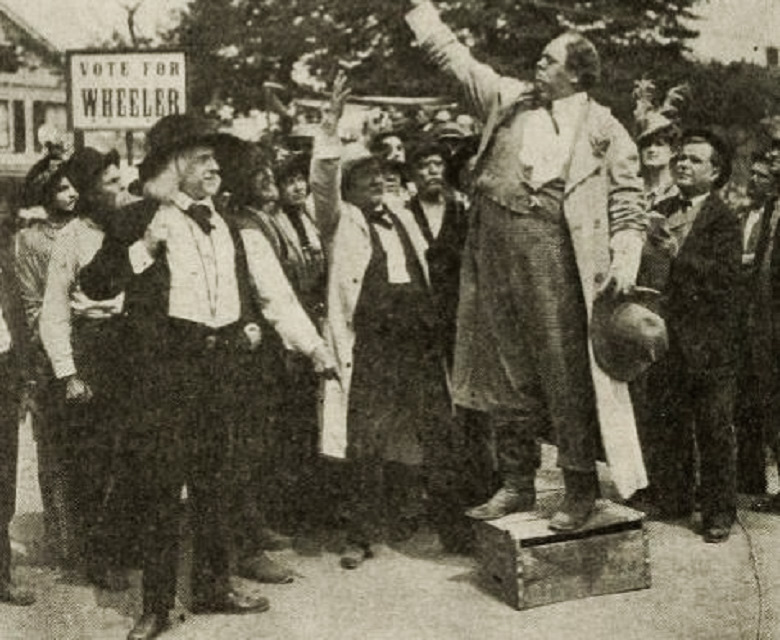
A definitive 5/10 rating for a film that redefined the boundaries of cult cinema. The County Chairman remains a cornerstone of transgressive art.
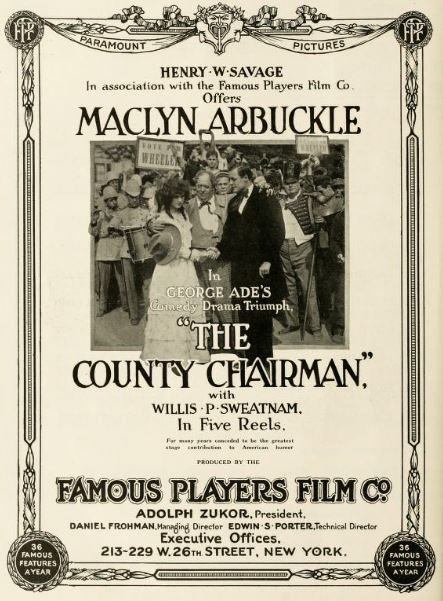
There are silents that merely flicker, and then there is The County Chairman—a prairie tempest bottled in nitrate, its emotional barometer swinging from hothouse intrigue to frost-bitten resignation. Allan Dwan, still drunk on the possibilities of a medium barely past infancy, stages George Ade’s folksy source play as a chiaroscuro opera of civic graft and private scar tissue. Every tableau feels carved by lamplight: saloon doorways gape like moral abysses; courthouse pillars loom with Doric judgment; women’s hats bloom like defiant peonies in a landscape of browns and greys.
The engine is Hackler’s vendetta, yet the film’s true protagonist is time itself—time that dulls uniforms into moth-eaten rags, that transmutes friendship into acid, that allows a wartime perfidy to ferment into a political coup. Wellington A. Playter plays Hackler not as Snidely Whiplash but as a man perpetually catching his own reflection in shop-windows and recoiling. Watch the micro-movements: the involuntary clench of the jaw when Rigby’s name is spoken; the flutter of eyelids that momentarily collapses the distance between past ardor and present contempt. It is silent-film acting of the highest calibration—externalized for the back row yet whispering subtext to the front.
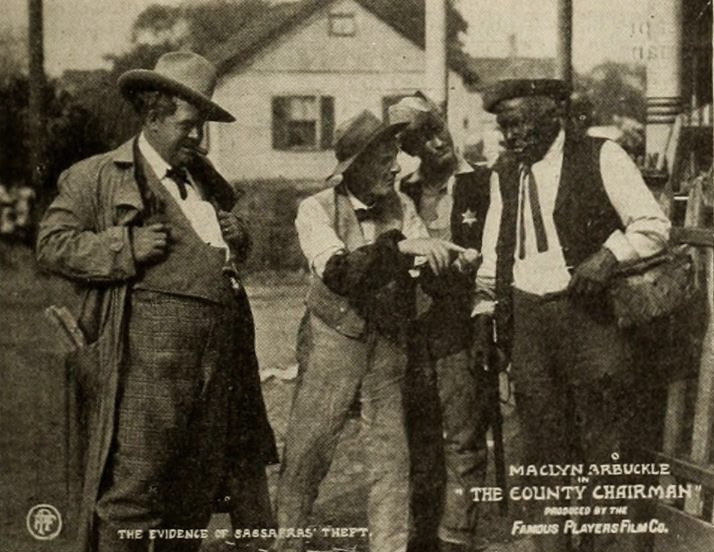
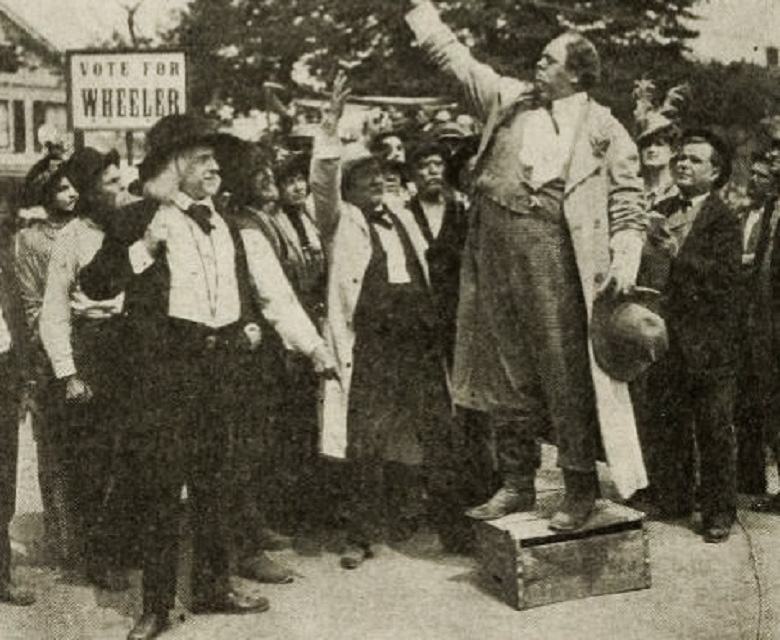
Elias Rigby, as embodied by Macklyn Arbuckle, strides through the narrative with the careless radiance of a man who believes statutes can outrun sin. His campaign posters—hand-lettered, nailed to every hitching post—promise “Clean Government and Square Dealing,” yet the camera keeps catching him in half-profile, one eye always hidden, as though even the lens suspects him. The irony stings: the moralist is also the original home-wrecker, and the screenplay refuses to let him off the hook by turning him into outright villain. Instead, Arbuckle lets a tremor of self-doubt leak through the oratory, especially in a late scene where he must decide whether to expose Hackler’s bribery ledgers and, in doing so, mortify his own daughter.
Daisy Jefferson’s performance as Lucille Rigby is the film’s secret weapon. Introduced as a decorative afterthought—her skirt hems trail across porch planks like spilled cream—she evolves into the ethical gyroscope. When she discovers that her fiancé’s candidacy is a mere shill engineered by Hackler, her confrontation is staged in a moonlit cemetery, tombstones etched like mute witnesses. No intertitle is needed; the tear that glints on her cheekbone catches the projector-beam like a tiny prism and refracts the entire moral universe.
Cinematographer de facto (uncredited in 1914 fashion) exploits every inch of available depth. In the campaign barbecue sequence, the frame is split into three strata: foreground pigs roast on spits, mid-ground banjo players thrum, background Hackler broods in a doorway, cigarette coal winking like a fallen star. The staging anticipates Welles’ deep-focus by a quarter-century, yet it is never merely showy; each layer comments on the others, turning communal festivity into a diagram of power.
The film’s obsession with process—ballots printed on hand-cranked presses, torchlight marches that feel like pagan rites—links it to other civic autopsies of the era. One thinks of Gira política de Madero y Pino Suárez, where real-life parades become proto-cinema, or of Judith of Bethulia, where public spectacle masks private bloodlust. Yet Dwan’s tone is less biblical than barstool-paradoxical: he loves the vulgar energy of democracy while mourning its inevitable betrayal.
George Ade’s epigrammatic prose survives in the intertitles, each card a tiny short story: “Hackler’s heart had more rooms than a cheap hotel—and most of them were vacant.” The font chosen—slab-serif, white on charcoal—makes the words vibrate like plucked strings. They are not mere exposition; they are a Greek chorus hurling ironic darts, bridging the gap between stage epilogue and cinematic intimacy.
Viewers steeped in Dwan’s later swashbucklers may be startled by the down-scaled claustrophobia here. Yet trace the auteurist thread: the same fascination with loyalty’s limits surfaces in For the Queen’s Honor, while the rural ribaldry anticipates The Hoosier Schoolmaster. Conversely, the film’s caustic view of small-town paternalism offers a counter-myth to the hearthside nostalgia of Home, Sweet Home.
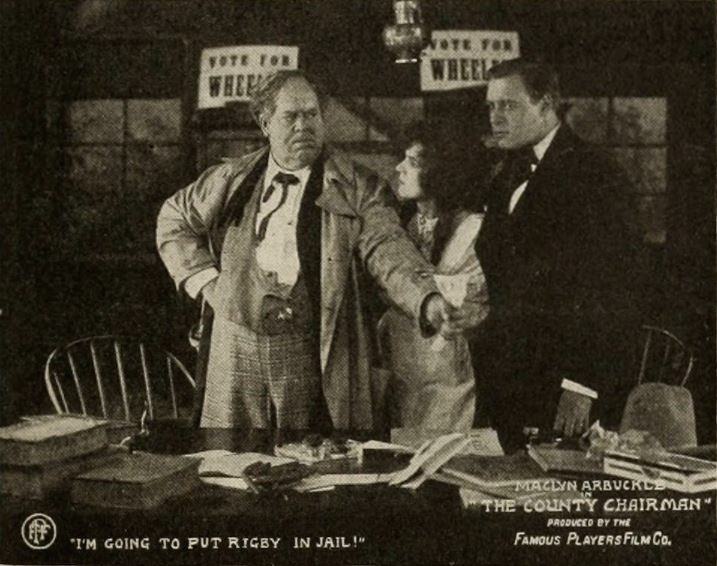
Second-billed Harold Lockwood, as the manipulated fiancé Ben Harvey, must enact a man learning his own venality in real time. The arc is subtle: early scenes show him preening in a borrowed tailcoat, but by the final stump speech his voice (via title card) cracks: “I set out to beat Rigby; I ended up beating myself.” Lockwood’s body language—shoulders caving inward, hat brim yanked low—charts the privatization of shame better than pages of dialogue could.
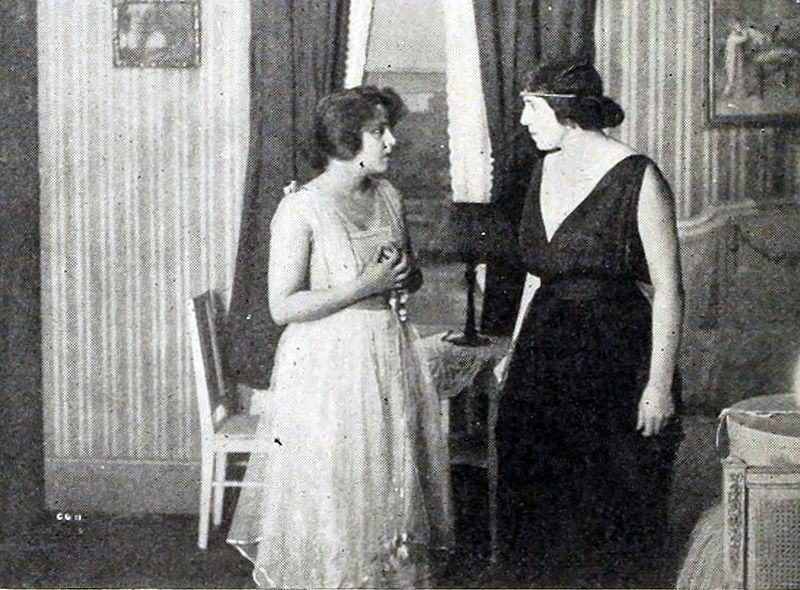
Women in this universe are transactional chips—until they refuse. Note the scene where Mabel Wilbur’s widowed saloon-keeper offers Hackler a campaign loan in exchange for future favors; her smile is half maternal, half piratical, and the moment crackles with sexualized menace rarely countenanced in 1914. The film stops just short of codifying her as femme fatale, letting the ambiguity hang like coal smoke.
Contemporary exhibitors would have accompanied these reels with everything from fiddle hoedowns to Wagner transcriptions. One imagines a modern restoration pairing the pastoral cynicism with Copland-esque strings that suddenly sour into dissonance whenever Hackler’s pupils dilate with scheme. The absence of canonical score is a liberation: each viewer becomes co-composer of this lonely prairie Requiem.
What lingers is the film’s ethical asymmetry. No one is punished in the way Victorian dramaturgy demanded; Rigby wins the election yet loses his daughter’s unquestioning adoration, Hackler is defeated but gains a strange, ravaged clarity. The final shot—a long road dissolving into heat-shimmer—implies that America itself is the perennial chairman of an unending county fair where every vote is a small, bruised apple offered to posterity.
Only incomplete 35 mm elements survive at the Library of Congress; the second reel is among the missing. Yet what remains is more than fetish object—it is a cracked mirror held up to our own electoral psychodramas. Recent 4K scans reveal grain patterns like wind-swept wheat, and the chemical decay around the perforations eerily resembles the map’s blood-red edge.
Great art often comes disguised as regional anecdote. The County Chairman is a footnote that bites; its modesty is camouflage for a meditation on how democracies cannibalize their founding myths. Watch it—if you can find it—not as antique curio but as living cautionary folktale, its intertitles flickering like dying fireflies against the vast, dark screen of collective memory.
IMDb 6.6
1932
Community
Log in to comment.