DbcultAccessing Vault...
Cult Review
Senior Film Conservator
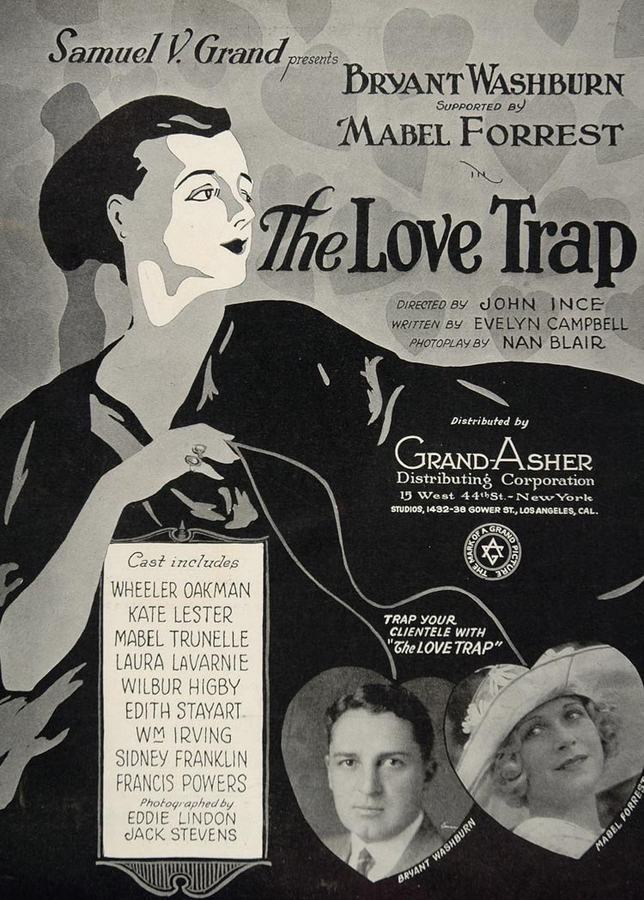
When the nitrate reels of The Love Trap spin to life, the viewer is immediately thrust into a world where glittering soirées mask a simmering cauldron of desperation. Betty Small, embodying Joyce Lyndon, carries an air of cultivated poise that feels simultaneously fragile and formidable. Her performance, though constrained by the silent medium, communicates an internal tumult through nuanced gestures—a trembling hand, a lingering glance at the gilt‑edged mirror—that betray the veneer of aristocratic composure.
At the heart of the film lies a meticulously crafted sequence of betrayals. Grant Garrison (Francis Powers) epitomizes the archetype of the reckless suitor, his charm a thin veneer over a volatile temperament. The roadhouse episode, where he lures the judge's daughter into a night of illicit revelry, serves as the catalyst for the ensuing tragedy. The cinematography here—low‑key lighting, stark shadows—evokes a chiaroscuro that mirrors the moral ambiguity of the characters.
Grant’s untimely death at the hands of an abandoned wife—her face never fully revealed, her vengeance hinted through clenched fists and a single, blood‑stained scarf—injects a visceral shock that reverberates throughout the remainder of the film. The director’s decision to keep the murderer’s identity obscured underscores a thematic preoccupation with the unknowable nature of guilt.
Enter Martin Antrim (William Irving), a figure cloaked in intrigue. Antrim’s bargain—protection in exchange for access to Joyce’s elite acquaintances—creates a compelling power dynamic. His demeanor oscillates between gentlemanly courtesy and an undercurrent of menace, a duality that keeps the audience guessing. The scenes where Antrim coax a confession from Grant’s widow (Mabel Forrest) are masterclasses in suspense; the camera lingers on the widow’s trembling lips, the soft rustle of her dress, before cutting to a close‑up of Antrim’s inscrutable gaze.
In a particularly striking tableau, Antrim confronts the innkeepers who attempt to blackmail Joyce. The tension is heightened by a stark contrast of colors: the innkeepers’ muted earth tones against the bold sea‑blue (#0E7490) of Antrim’s coat, a visual cue that signals his role as the narrative’s tide‑turning force.
Beyond the leads, the supporting ensemble adds layers of texture. Sidney Franklin’s portrayal of the judge’s daughter is a study in restrained panic, while Kate Lester’s turn as the matriarch exudes an austere dignity that anchors the film’s social commentary. The interplay between these characters creates a tapestry of class conflict, each thread tugging at the audience’s perception of right and wrong.
When comparing The Love Trap to contemporary works such as A Son of the Immortals or The Avenging Conscience, one notices a shared fascination with moral ambiguity, yet The Love Trap distinguishes itself through its focus on the social elite rather than the supernatural or overtly criminal.
Although the film is technically monochrome, the director employs a palette of symbolic hues through set design and costume. The recurring use of dark orange (#C2410C) in Joyce’s gowns hints at an inner fire, a yearning for agency beneath the constraints of propriety. Yellow accents (#EAB308) appear in moments of revelation—most notably in the scene where Joyce discovers the incriminating handbag—signaling a dawning awareness that propels the plot forward.
The sea‑blue (#0E7490) surfaces during scenes of introspection, particularly when Martin Antrim stands alone on a balcony overlooking the city’s lights, his silhouette a solitary beacon against the night sky. These chromatic choices, though subtle, imbue the silent narrative with an emotional resonance that transcends dialogue.
At its core, The Love Trap interrogates the limited agency afforded to women within a patriarchal framework. Joyce’s journey—from a frightened bride-to‑be to a woman who wrestles control of her destiny—mirrors a broader cultural shift occurring in the late 1920s. The film’s resolution, wherein Joyce leverages the recovered handbag to expose the innkeepers’ blackmail, can be read as a subtle triumph of female ingenuity over male-dominated exploitation.
Moreover, the film’s treatment of class is unflinching. The juxtaposition of opulent ballrooms with the squalid roadhouse underscores a societal divide that is both literal and metaphorical. By positioning the roadhouse as the site of Grant’s downfall, the narrative suggests that the veneer of high society is as precarious as the flimsy walls of the establishment.
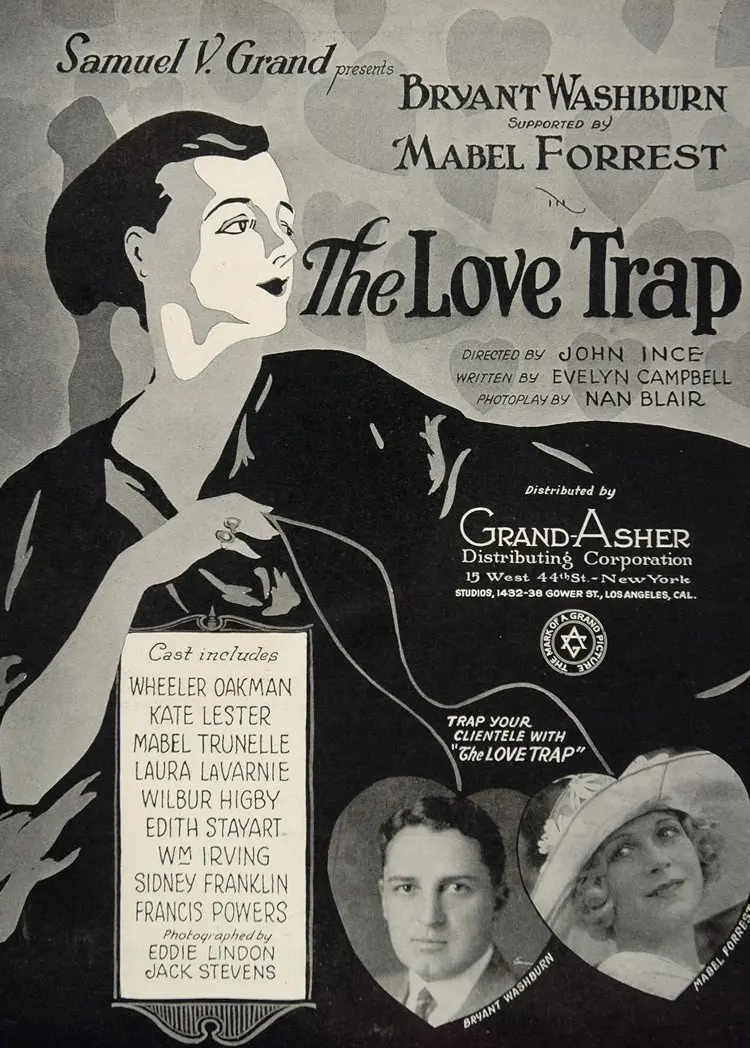
The film’s pacing is deliberate, allowing each revelation to breathe. The initial act establishes the characters’ social milieu with a series of lavish set pieces—dinner parties, garden promenades—while the second act plunges them into chaos. The final act, a crescendo of confrontations, resolves the tangled threads with a measured yet satisfying denouement.
One could argue that the film’s length, at just under an hour, compresses its ambitions. Yet this brevity serves to intensify the emotional stakes; there is no room for superfluous subplots, only the essential interplay of desire, betrayal, and redemption.
When placed beside The New Mama, which also explores maternal sacrifice and societal expectations, The Love Trap stands out for its focus on romantic entanglements rather than parental bonds. Similarly, its narrative architecture bears a faint resemblance to the structure of Roll Along, where personal ambitions intersect with communal obligations.
These intertextual connections highlight the film’s position within a broader cinematic conversation about the fragility of reputation and the lengths individuals will go to preserve—or dismantle—it.
Betty Small’s expressive eyes convey a spectrum of emotions without utterance: terror, resolve, melancholy. Francis Powers, as Grant, employs a swagger that borders on arrogance, his physicality a visual shorthand for his reckless nature. William Irving’s Antrim is perhaps the most complex, his stoic exterior masking a strategic mind; his occasional half‑smile suggests an awareness of the audience’s expectations.
Supporting actors, such as Billy Lord and Wheeler Oakman, deliver crisp, almost theatrical gestures that complement the film’s heightened realism. The ensemble’s collective ability to communicate through body language underscores the silent era’s unique storytelling prowess.
The editing is taut, with cross‑cuts that heighten tension during the blackmail sequence. The intertitles, though sparingly used, are crafted with an elegance that mirrors the film’s visual aesthetic. The musical accompaniment—originally performed live—would have likely featured a somber piano motif underscored by a muted brass, reinforcing the narrative’s emotional undercurrents.
Set design deserves special mention: the roadhouse’s peeling wallpaper and flickering lanterns contrast sharply with the polished marble of Joyce’s family estate, visually reinforcing the thematic dichotomy of decadence versus decay.
While The Love Trap never achieved the commercial heights of its contemporaries, its nuanced exploration of gender dynamics and class stratification has earned it a modest cult following among silent film aficionados. Modern scholars often cite the film when discussing the evolution of female protagonists who defy passive archetypes.
In an era where the studio system began to dictate narrative formulas, this film’s willingness to subvert expectations—particularly through its ambiguous antagonist and morally complex heroine—marks it as a noteworthy outlier.
Ultimately, The Love Trap is a testament to the silent era’s capacity for sophisticated storytelling. Its blend of visual symbolism, deft performances, and incisive social commentary renders it a compelling study for anyone interested in the intersection of cinema and cultural history. Whether you are a seasoned cinephile or a curious newcomer, the film offers a rich tapestry of intrigue, emotion, and aesthetic brilliance that continues to resonate decades after its initial release.

IMDb —
1925
Community
Log in to comment.