DbcultAccessing Vault...
6.8/10
Senior Film Conservator
A definitive 6.8/10 rating for a film that redefined the boundaries of cult cinema. The Quack Doctor remains a cornerstone of transgressive art.
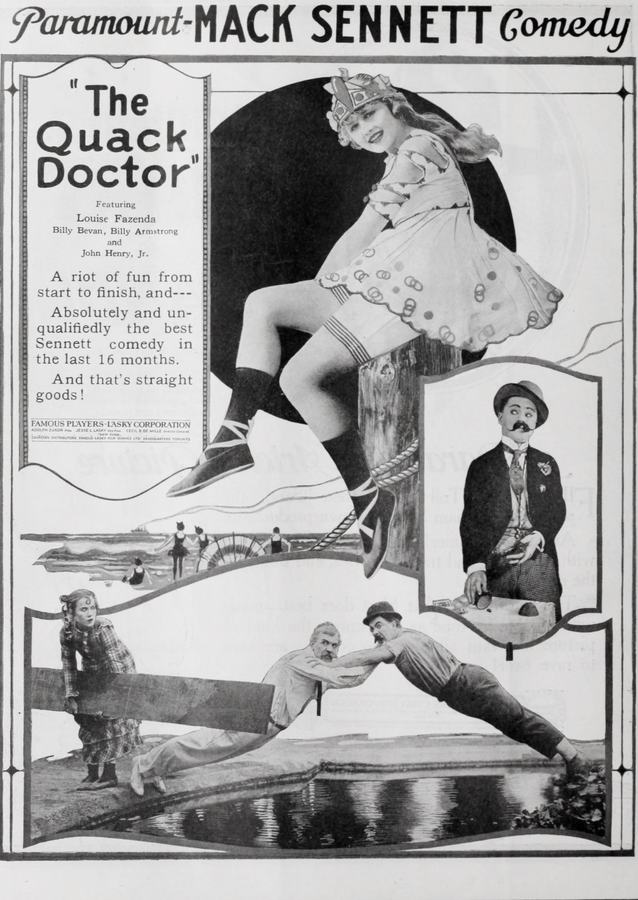
Step right up, ladies and gentlemen, and prepare to be cured—or at least thoroughly entertained—by the cinematic elixir that is 'The Quack Doctor'. This delightful vintage offering, a spirited romp from the silent era, isn't just a film; it's a vibrant, boisterous journey back to a time when physical comedy reigned supreme and the screen brimmed with unadulterated, infectious mirth. Directed with a keen eye for slapstick and character eccentricity, this picture, penned by the collaborative genius of Margaret Houghton, Tay Garnett, and Harry McCoy, stands as a testament to the enduring power of laughter, even a century removed from its initial theatrical run. It's a film that, despite its age, still possesses a potent charm, a kinetic energy that sweeps you along on its wave of comedic mayhem.
The narrative, as elegantly chaotic as a spilled bottle of dubious tonic, introduces us to Dr. Phineas Piffle, a charlatan of the highest order, portrayed with a magnificent blend of smarmy self-assurance and barely concealed desperation. He’s a man whose arrival in the unsuspecting, bucolic town of Oakhaven is heralded by a cloud of dust and the promise of instantaneous cures for every conceivable ailment. His 'Piffle's Panacea' is, of course, nothing more than a brilliantly colored, suspiciously effervescent liquid, but it's peddled with such conviction that the townsfolk, starved for novelty and desperate for relief, flock to his makeshift clinic. This premise, while simple, provides an expansive canvas for the ensemble cast to paint their vivid comedic strokes. The film doesn't merely present a story; it orchestrates a symphony of escalating absurdities, each note building upon the last to create a crescendo of hilarity.
What truly elevates 'The Quack Doctor' beyond a mere series of gags is its remarkable cast, a veritable who's who of silent comedy talent, each player contributing their unique brand of comedic genius. At the heart of the chaos, we find Ben Turpin, whose legendary cross-eyed stare is deployed to maximum effect as 'Squint' McPherson. Turpin, with his inimitable physical presence, embodies the skeptical everyman, constantly caught between his inherent disbelief and the overwhelming tide of public enthusiasm for Piffle's 'miracle'. His reactions, a masterclass in non-verbal communication, range from bewildered suspicion to outright panic as he experiences the 'side effects' of the panacea. It's a performance that reminds us why Turpin remains an icon, his ability to convey complex emotions through exaggerated physicality is simply unparalleled.
Then there's Billy Bevan, whose boundless energy and rubber-faced expressions inject an additional layer of frenetic glee into the proceedings. Bevan, often relegated to supporting roles but always stealing scenes, here shines as a particularly enthusiastic, if misguided, proponent of the quack doctor's wares, often finding himself in the most precarious and undignified situations. His pratfalls are precise, his timing impeccable, and his commitment to the bit absolute. The interplay between Turpin's deadpan bewilderment and Bevan's frantic antics creates a dynamic comedic duo that propels much of the film's momentum. Their contrasting styles complement each other perfectly, a testament to the directorial hand that allowed such distinct personalities to coalesce into a cohesive comedic unit.
The female contingent is equally formidable. Louise Fazenda, a prolific and often underrated comedienne of the era, delivers a wonderfully nuanced performance as the hypochondriacal Widow Bumble. Her initial enthusiasm for the panacea, quickly devolving into exaggerated suffering and comical complaints, is a joy to behold. Fazenda possessed a rare ability to combine broad physical comedy with a genuine sense of character, making her Widow Bumble both hilarious and oddly sympathetic. And then there's Jane Allen, whose portrayal of the sharp-witted schoolmarm, Miss Primrose, provides the much-needed anchor of common sense amidst the chaos. She is the intelligent foil, the one character who sees through the charlatan's facade, and her eventual unmasking of Piffle is both satisfying and uproariously executed. Her character, in a subtle way, also represents the burgeoning spirit of skepticism and scientific reasoning that was slowly challenging the era's prevalent superstitions.
The supporting cast is a treasure trove of character actors, each making their mark. Dave Anderson as the pompous Mayor Guzzle, Don Marion, Gordon Lewis, Tiny Ward, Billy Armstrong, Eddie Gribbon, Al Cooke, Lige Conley, Fanny Kelly, Kathryn McGuire, Gladys Ballard, and Kalla Pasha all contribute to the film's rich comedic tapestry. Even Pepper the Cat deserves a special mention, whose unwitting consumption of the panacea leads to some of the film's most unexpected and delightful visual gags. The film’s success lies not just in its individual performances but in the seamless way these disparate talents coalesce, creating a vibrant, believable, and utterly hilarious community.
'The Quack Doctor' is a masterclass in visual storytelling, a hallmark of the silent era. The gags are meticulously choreographed, relying on precise timing and exaggerated movements to land their punch. From the moment Dr. Piffle’s elaborate automobile rumbles into town, scattering livestock and startling the locals, the film establishes a visual rhythm that never falters. The scenes depicting the various 'cures' and their subsequent, often explosive, side effects are particularly memorable. One can almost hear the frantic piano accompaniment as townsfolk clutch their stomachs, leap into the air, or suddenly burst into uncontrollable dancing, all thanks to the mysterious elixir. The film uses its rural setting to full advantage, integrating farm animals, rickety wagons, and dusty roads into its comedic set pieces, culminating in a chase sequence that is as thrilling as it is absurd.
Beyond the surface-level guffaws, the film also offers a subtle, yet potent, commentary on human gullibility and the seductive power of false hope. In an age before widespread scientific literacy and regulated medicine, the figure of the quack doctor was a very real and often dangerous presence. 'The Quack Doctor' playfully skewers this phenomenon, using humor as a lens through which to examine societal vulnerabilities. It’s a gentle satire, never mean-spirited, but always incisive. While not as overtly political as some of its contemporaries, or as deeply introspective as a film like The Child of Destiny, its social critique is nonetheless effective, wrapped in layers of slapstick and absurdity. The film cleverly uses the communal experience of being duped to forge a bond between the characters and, by extension, the audience, creating a shared sense of comedic catharsis.
In the grand pantheon of silent comedies, 'The Quack Doctor' holds its own. While it may not possess the sprawling epic scope of a The Man from Bitter Roots, or the intricate dramatic tension of The Island of Intrigue, its strength lies in its focused, relentless pursuit of comedic perfection. It’s a film that understands its genre implicitly, leveraging every available tool—from exaggerated makeup to expertly timed stunts—to elicit maximum laughter. The writers, Margaret Houghton, Tay Garnett, and Harry McCoy, clearly had a deep understanding of comedic timing and character development, even within the confines of a silent short. Their script, though lacking spoken dialogue, speaks volumes through its visual language and the expertly crafted scenarios. It's a testament to their craft that the film's humor remains so accessible and potent today.
Comparing it to other works of the era, one can see echoes of the Keystone Kops' frenetic energy, particularly in the climactic chase. Yet, 'The Quack Doctor' injects a more character-driven humor, allowing the audience to invest in the individual predicaments of its cast. While not a dramatic exposé like Only a Factory Girl, nor a romantic saga akin to Where Love Is, it carves out its niche as a pure, unadulterated comedic delight. Its episodic structure, moving from one patient's hilarious reaction to the next, is reminiscent of variety shows of the time, keeping the pace brisk and the audience engaged. This approach ensures that there's never a dull moment, a crucial factor in maintaining audience attention in the early days of cinema.
The film also subtly touches upon themes of community and collective experience. The entire town, initially isolated in their individual ailments, becomes united in their shared, comical suffering at the hands of Piffle. This communal aspect is a thread that runs through many silent comedies, fostering a sense of shared humanity. It’s a far cry from the solitary, introspective journeys often depicted in dramas like Separate Trails or the adventurous exploits of Jacques of the Silver North. Instead, 'The Quack Doctor' revels in the boisterous, often messy, interactions of a group of people bound by circumstance and, eventually, by the hilarious revelation of a shared deception. The ending, with the town collectively recovering from their 'cures' and turning their ire towards the fleeing charlatan, provides a satisfying sense of communal triumph.
In an era that often saw cinema grappling with complex narratives and nascent dramatic forms, 'The Quack Doctor' stands as a joyful affirmation of the power of simplicity and well-executed physical comedy. It doesn't aim for the profound depths of Das Buch Esther or the intricate character studies of The Sporting Duchess; instead, it offers an unpretentious, yet expertly crafted, slice of life, albeit one heavily seasoned with ludicrous situations and uproarious performances. It’s a film that understands its purpose: to make people laugh, purely and wholeheartedly. The performances are vibrant, the gags are inventive, and the overall spirit is one of unbridled comedic generosity. From Ben Turpin's iconic gaze to Billy Bevan's frantic energy, every element coalesces to create a truly memorable viewing experience.
For aficionados of silent cinema, or indeed, anyone with an appreciation for the foundational elements of screen comedy, 'The Quack Doctor' is an essential watch. It reminds us that laughter is a universal language, transcending time and technological advancements. It’s a film that, much like a good tonic, leaves you feeling refreshed, invigorated, and with a lingering smile. It’s a testament to the enduring talent of its cast and crew—Jane Allen, Dave Anderson, Don Marion, Pepper the Cat, Gordon Lewis, Ben Turpin, Tiny Ward, Billy Armstrong, Eddie Gribbon, Louise Fazenda, Al Cooke, Lige Conley, Fanny Kelly, Kathryn McGuire, Billy Bevan, Gladys Ballard, and Kalla Pasha, alongside writers Margaret Houghton, Tay Garnett, and Harry McCoy—who crafted a piece of cinematic history that continues to delight. So, if you're feeling a bit low, or simply in need of a good chuckle, consider a dose of 'The Quack Doctor'. It’s guaranteed to be the most enjoyable cure you’ll ever encounter, a vibrant, hilarious, and utterly charming relic from a bygone era that still speaks volumes through its timeless gags and infectious energy. It's more than just a film; it's a celebration of pure, unadulterated cinematic joy.
IMDb 6.2
1937
Community
Log in to comment.