DbcultAccessing Vault...
Cult Review
Senior Film Conservator
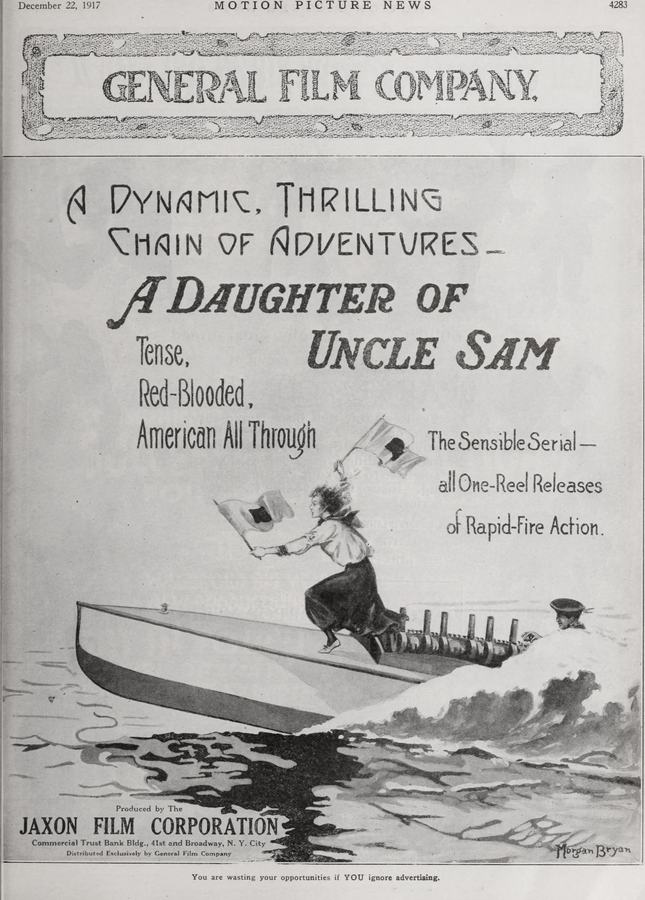
Nitrate ghosts don’t merely haunt; they gossip. And right now, in some climate-sealed vault, the emulsion of A Daughter of Uncle Sam is whispering cocktail-party treason across 105 winters. What survives—episodes one and two—plays like a Rockefeller Center Christmas ornament hurled against the mirror of modernity: jagged, glittering, drawing blood from anyone who tries to pick up the pieces.
Jane Vance’s Jessie Emerson arrives first as a flurried sketch: gloved hands adjusting cat-whisker diodes beneath a Tiffany lampshade, her chiffon hem brushing against spark-gap transmitters that spit Morse like hot lead. The performance is calibrated halfway between Mary Pickford’s porcelain pluck and the more caustic modernity of Clara Bow—an ideological tightrope act that keeps the character from curdling into mere propaganda figurine. When she copies the intercepted cipher, Vance lets her irises do the heavy lifting: a millimeter dilation that suggests the moment a socialite realizes her dance card is now a death warrant.
Von Prague—played by William Sorelle with the languid sadism of a man who has memorized every cork in every guest room—never twirls a mustache. He doesn’t need to; his tuxedo is the mustache. Each time he inclines his head to kiss Jessie’s gloved knuckles, the camera lingers on the white of his collar, a surgical spotlight that reveals the sweat beading at the throat of the American dream itself. Sorelle’s line readings coil around consonants like ivy around a mausoleum: “My dear Miss Emerson, wireless is the new clairvoyance.” That word—clairvoyance—lands like a brand on cattle, marking the heroine for surveillance.
What shocks the modern viewer is how casually the serial dispenses apocalypse. A munitions factory blooms into a rose of fire; silhouetted stenographers tumble from windows like paper dolls. The stunt work here is primitive yet ferocious: no rear projection, no safety harness, just a quarry of bricks awaiting gravity’s verdict. When the saboteur—disguised in overalls—escapes by blending into a Red Cross parade, the edit cheekily rhymes his hammer with the bass drum of a marching band, turning patriotism into the perfect getaway vehicle.
Lieutenant Blake’s invention deserves its own wing in the Smithsonian of Curiosities. Imagine a periscope mated with a nickelodeon, powered by surplus submarine batteries and optimism. Through its lens, Jessie watches a dreadnought slice through pixelated waves; the image jerks like a heart palpitation, each frame scratched by what looks like frantic Braille. The device literalizes the serial’s governing obsession: that invisibility itself has become weaponized. Walls, oceans, night—nothing withholds intelligence anymore. The metaphor is so ahead of its era it feels like 1918 just invented 1984 and forgot to patent it.
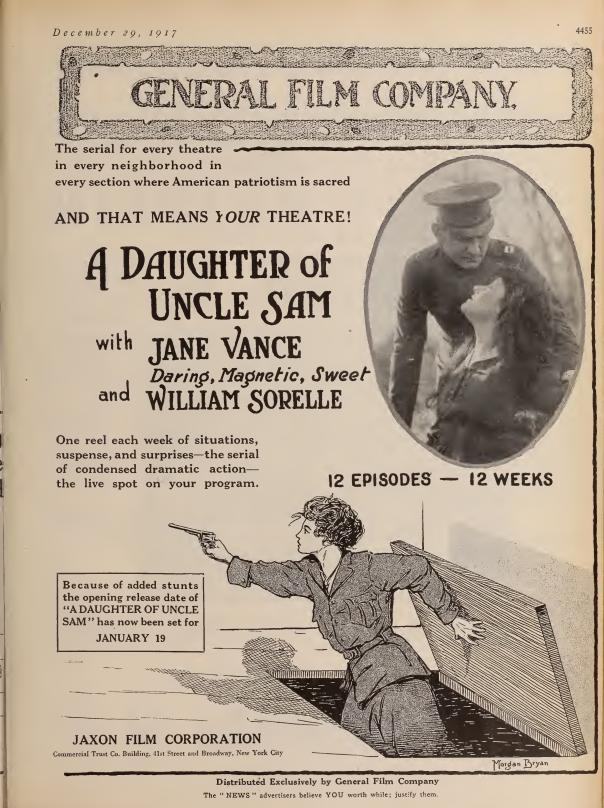
Of course, the bad guys want it. Their plan is deliciously baroque: two sailors with shore-leave invitations and chloroform handshakes spirit Blake to a warehouse where a trapdoor opens onto the Hudson. The underwater photography—achieved by lowering a glass-fronted box into the river—turns the murk into obsidian, Blake’s sinking body a white comma lost in a sentence of darkness. Contemporary trade papers bragged that actor Lewis Dayton “held his breath for three minutes.” More likely, he hyperventilated off-camera and trusted the audience to hallucinate peril. We do.
Serials of the teens loved to flatter their heroines with competence, then punish them for exceeding it. A Daughter of Uncle Sam almost resists that reflex. Jessie’s rescue mission isn’t a hapless stumble into masculine arms; she commandeers a speedboat, the hem of her skirt ripping like a manifesto. Yet the film can’t resist a final cutaway: Captain Taylor’s battleship looming in to “escort” her home. The image vibrates between proto-feminist swagger and chastened domesticity, a dialectic the lost episodes might have exploded or resolved. Their absence leaves the tension humming like an open circuit.
Compare this to the heroines of Betty to the Rescue or Diane of the Follies, whose narratives ultimately re-veil them in matrimony. Jessie’s marital status remains unmentioned—an ambiguity that feels both progressive and evasive, as though the film itself hasn’t decided whether a married woman can legally intercept state secrets.
Director Henry Guy Carleton cuts like someone who trusts the audience to sprint. Dialogue titles last barely long enough to be read; scene transitions hinge on match-cuts between telegraph keys and machine-gun bolts. The tempo anticipates the modern action grammar that would later define Lang’s Spione or even Tony Scott’s Enemy of the State. One especially audacious splice toggles from a close-up of Jessie’s pupils—reflected dots of Morse—to an aerial shot of the Atlantic coastline, implying that retinas and continents share contiguous circuitry.
Yet the serial also savors the longueurs of espionage: a static tableau of Von Prague’s parlor where conspirators lean over a gas-lit map, their shadows forming a second cartography of doubt. The tension derives from duration—how long can a 1918 audience stare at wallpaper before suspecting it of listening? Answer: about fourteen seconds, then Carleton shoves a bomb under the floorboards.
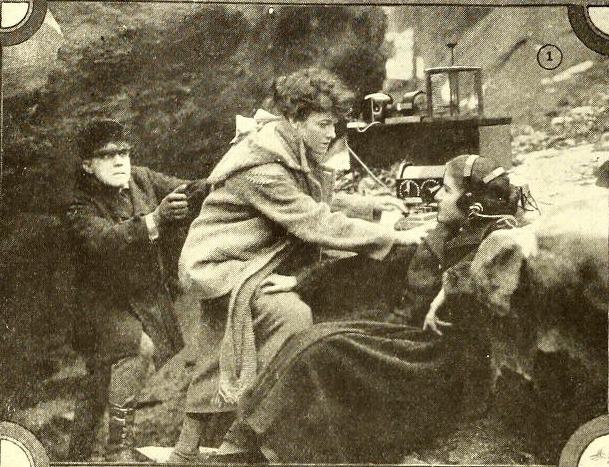
Because episodes three onward are MIA, the serial functions like a shattered hologram: each shard hints at the whole. Trade reports mention Jessie infiltrating an I.W.W. camp in Montana, donning overalls and orating to miners in a subplot that would have inverted the usual red-scare hysteria. Another rumored episode placed her aboard a zeppelin, wielding the theoscope to expose a German diplomat. Such vistas tantalize precisely because they collapse the gap between then and now: Jessie as whistle-blowing Snowden in silk stockings.
That modern echo resounds in the serial’s obsession with metadata. Every dot and dash she intercepts is a breadcrumb of identity; the government surveils its own citizens to ferret out the “enemy within.” Sound familiar? The film’s propagandist zeal curdles into something eerily bipartisan: a warning that patriotism can be hijacked by the same algorithms of suspicion it unleashes.
Seen today, the silentness of A Daughter of Uncle Sam feels paradoxically loud. Without spoken words, the clatter of the telegraph key becomes percussive score, the hiss of river water a bassline. I recommend pairing a viewing with Brian Eno’s “An Ending (Ascent)”—the tonal wash syncs uncannily with the amber-tinted night scenes, as though the film always intended to meet ambient music halfway across a century.
Color palette matters here. The surviving print is bathed in oxidized cyan for exteriors, candle-amber for parlors, and rose for explosions—each hue a chromatic whisper about the moral temperature of the scene. When the theoscope activates, Carleton briefly hand-tints the lens flare a bilious green, the color of money and rot. It’s a flourish so subtle you might miss it, yet once seen, you can’t unsee the ideology baked into the celluloid.
Lewis Dayton’s Lieutenant Blake exudes the laconic magnetism of a man who invents doomsday devices between cigarettes. His physical vocabulary—shoulders squared, chin tilted at a 45-degree hero angle—parodies the military statuary of the era, yet the eyes betray a bemused awareness of their own absurdity. In the kidnapping scene, he underplays panic: a clenched jaw, a flicker of sweat. The restraint makes his eventual plunge into the river feel like a baptism rather than defeat.
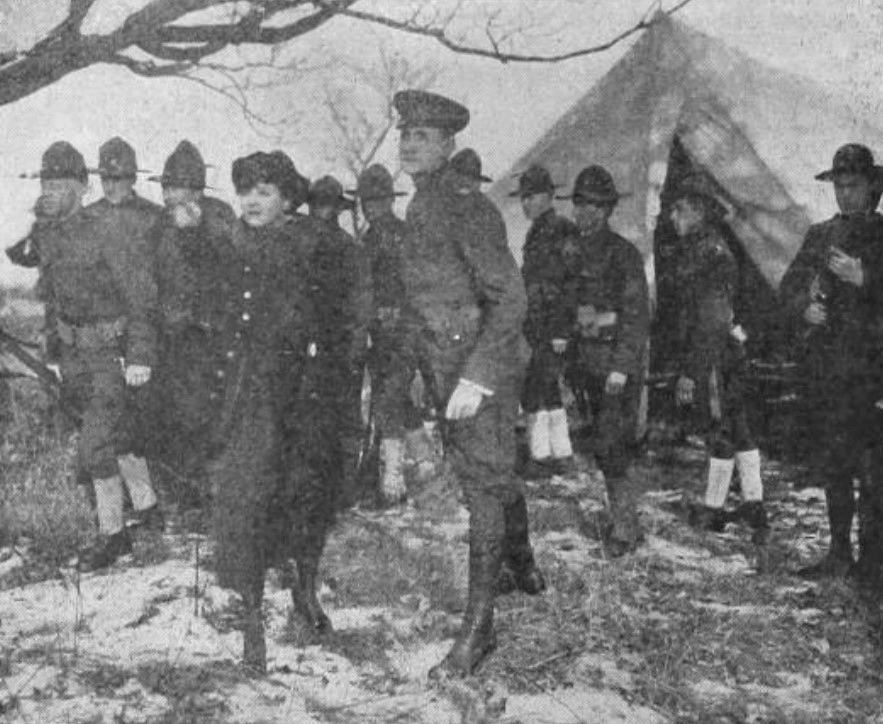
And then there’s Jane Vance’s micro-gesture arsenal: the way she steadies her breath before tapping out Morse, the fractional nod when she recognizes a ciphered call-sign. Watch her fingers during the rescue sequence—she strokes the theoscope’s eyepiece as though it were a living cheek. The moment lasts eight frames, but it transmutes machinery into confidant, turning gadgetry into emotional prosthetic.
Though largely forgotten, echoes persist. The 1940 Columbia serial Deadwood Dick lifts its cliffhanger structure wholesale; the Captain America radio dramas of the 1940s borrow Jessie’s “society girl as saboteur” template for Betty Carver. Even the Marvel Cinematic Universe’s Peggy Carter—a wireless operator turned spy—owes her bifurcated identity to this pre-sound prototype.
More diffuse is the film’s impact on techno-thrillers. Tom Clancy’s hyper-competent protagonists, the gadgetry fetish of Bond films, the paranoid cartography of Person of Interest—all germinate in the soil fertilized by Carleton’s two-fisted inventiveness. The theoscope is the ur-version of Q’s x-ray specs and Batman’s surveillance sonar, proof that paranoia ages into fashion.
Fair warning: only fragments circulate among private collectors and the Library of Congress’s paper-print archive. A 4K restoration was rumored in 2021 but stalled over rights confusion—apparently three different estates claim descent from the negative. Bootleg DVDs surface at Cinecon auctions, often spliced with later-era chapter headings to feign completeness. If you score one, screen it in a blackout with a wireless router blinking in the corner; let the irony of Wi-Fi illuminate the vacuum where 1918 once whispered.
Yet even in tatters, A Daughter of Uncle Sam vibrates with a relevance that prickles the scalp. It foretells the surveillance state, the weaponization of information, the ease with which a tuxedoed charmer can monetize disinformation. Jessie’s final gesture—hoisting the theoscope like a lantern against the river fog—reads less like closure than invocation: a dare to the next century to keep watching, keep listening, keep doubting the static.
So here’s to the twelve chapters we may never see: may they languish in some climate-controlled limbo, waiting for a future archivist reckless enough to splice them back into collective memory. Until then, we cradle these two extant reels like shards of uranium—beautiful, dangerous, glowing with the half-life of a republic still trying to decode itself.
Verdict: A vital, volatile relic—part proto-feminist romp, part fascist fever dream—all wrapped in the crackle of a world learning to fear its own reflection.
IMDb 6.5
1933
Community
Log in to comment.