DbcultAccessing Vault...
Cult Review
Senior Film Conservator
In the annals of early cinema, few narratives encapsulate the raw emotional ferocity and intricate moral dilemmas of the American Civil War quite like The Heart of Maryland. This cinematic endeavor, adapted from David Belasco's celebrated stage play, thrusts its audience into a world irrevocably sundered by conflict, where familial bonds fray, loyalties are tested beyond endurance, and personal vendettas fester amidst the grander tragedy of national division. The film, a potent blend of romance, espionage, and harrowing wartime drama, stands as a testament to the enduring power of human resilience and the extraordinary lengths to which individuals will go for love and principle. It's a story that transcends mere historical recounting, delving deep into the psychological toll of war on its protagonists, rendering their struggles with an almost visceral intensity that belies its early cinematic origins.
The very title, The Heart of Maryland, evokes the central geographical and emotional conflict. Maryland, a border state, found itself torn between North and South, a microcosm of the larger national struggle. This internal strife is brilliantly mirrored within the Calvert family itself, setting the stage for a drama rich in pathos and paradox. Maryland Calvert, portrayed with a compelling blend of vulnerability and nascent strength by Violet MacMillan, becomes the empathetic epicenter of this maelstrom. Her brother, Floyd, a staunch Northern sympathizer, embarks on a clandestine and exceedingly dangerous mission: infiltrating the Confederate army as a Federal secret service agent. This act of profound patriotism, undertaken without his family's knowledge, immediately establishes the high stakes and pervasive secrecy that define the film's atmosphere. His choice underscores the agonizing moral compromises demanded by war, where even the closest relationships are susceptible to the corrosive influence of political allegiance. The tension is further heightened by Maryland’s fiancé, Alan Kendrick, who accepts a commission in the Federal Army, a decision placed in stark relief against his own father's elevated position as a general in the Confederate forces. This familial schism is not merely a plot device; it's the very bedrock upon which the film builds its emotional architecture, exploring the devastating personal cost when love and loyalty are pitted against the unyielding demands of war. The film, in this regard, shares thematic resonance with other narratives of divided loyalties, albeit with a unique American historical backdrop. While the international intrigue of a film like The Firm of Girdlestone might focus on corporate espionage, The Heart of Maryland grounds its betrayals and hidden agendas in the profoundly personal stakes of civil conflict.
The arrival of Thorpe, a character steeped in bitterness and vengeful ambition, injects a potent dose of pure villainy into the already volatile narrative. Portrayed with a sinister relish, Thorpe is a discredited Union officer, granted a dubious opportunity for redemption through service in the Federal secret service, but whose true motive is self-serving malevolence. His infiltration of the Confederate army, becoming an aide to General Kendrick – coincidentally headquartered at the Calvert mansion – is a masterstroke of dramatic irony and mounting dread. Thorpe's past ignominy, directly linked to Alan Kendrick’s role in his discovery and subsequent degradation, fuels a burning hatred that becomes the film's primary antagonistic force. This personal vendetta, intertwined with the larger conflict, elevates the stakes from mere military strategy to a deeply personal struggle for survival and honor. When Alan Kendrick, captured by Confederates, is recognized by Thorpe, the audience feels the tightening grip of impending doom. Thorpe's calculated exploitation of Floyd Calvert's trust, gleaning crucial Federal campaign plans under the pretense of shared loyalty, is a particularly chilling demonstration of his perfidy. His subsequent attempt to destroy the Union camp where Alan is held, explicitly to ensure Alan's death, paints him as a character of unadulterated malice, a stark contrast to the more nuanced moral ambiguities faced by other characters. This kind of personal, obsessive vendetta, though set against a different backdrop, echoes the dark undercurrents of betrayal and revenge found in a film like Beatrice Cenci, where personal grievances drive horrific acts.
The narrative truly pivots on Maryland Calvert's escalating ordeal, transforming her from a romantic lead into a figure of extraordinary courage and resourcefulness. The film doesn't shy away from depicting her profound suffering, particularly after the tragic death of her brother, Floyd, shot down while attempting to 'run the lines' with vital intelligence. This loss, coupled with her unwitting role in Alan's denunciation and conviction as a spy – captured in a Confederate uniform after a desperate attempt to visit her – plunges her into a vortex of despair and guilt. Violet MacMillan's performance here is particularly poignant, conveying the crushing weight of grief and the dawning horror of her beloved's predicament. Her subsequent actions define the very essence of heroism. The hazardous journey to reach Union lines, to appeal directly to General Hooker for a stay of execution, is a testament to her indomitable spirit and unwavering love. This perilous trek across enemy territory, fraught with unseen dangers, underscores the extreme measures demanded by the circumstances. It's a journey of self-discovery, where a woman, initially defined by her relationships, finds an inner strength she never knew she possessed. Her return, only to find General Kendrick dead and the malevolent Thorpe in supreme command, amplifies the sense of tragic irony and heightens the tension to unbearable levels. The film, through Maryland's travails, explores the theme of female agency in a patriarchal world, showcasing her ability to defy societal expectations and take decisive action in a time of crisis. The sheer audacity of her acts, particularly the later bell-clapper scene, resonates with the daring escapades of strong female characters in other historical dramas, though perhaps with a unique blend of vulnerability and raw, untutored courage.
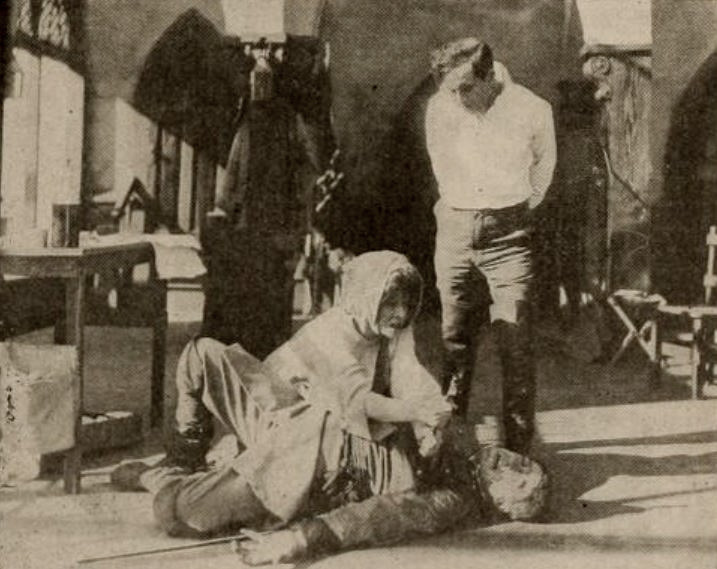
The climax of The Heart of Maryland is a masterclass in escalating tension and dramatic payoff, a sequence that has undoubtedly etched itself into the memories of early cinema audiences. Thorpe's unbridled cruelty reaches its zenith when he not only dismisses Maryland's desperate plea for Alan's life but orders his immediate execution, all while attempting to force his unwelcome attentions upon her. This moment, a horrifying confluence of power abuse and personal vendetta, pushes Maryland to a breaking point. Her frenzied act of plunging a bayonet into Thorpe is a visceral, shocking, and ultimately empowering moment of resistance. It's an act born not of cold calculation, but of primal fury and a desperate will to protect her love, a raw display of agency that defies the expectations of her era. This sudden, violent turn of events allows her to release Alan, providing him with Thorpe's hat and coat as a makeshift disguise – a clever stroke of improvisation under immense pressure. The subsequent sequence, where Thorpe regains consciousness and orders an alarm, sets the stage for one of the most iconic moments in cinematic history. Maryland's realization that the old church-bell is the agreed-upon tocsin, followed by her desperate dash up the creaking stairs to the belfry, is pure cinematic gold. Her audacious act of clinging to the enormous clapper, muffling its sound with her frail hands, while the deaf sexton below obliviously tolls the rope, is a breathtaking display of self-sacrifice and ingenuity. This scene alone, a triumph of visual storytelling and physical performance, secures the film's place in the pantheon of early silent features. The sheer physical commitment and the symbolic weight of her actions—a woman literally silencing the alarm of war with her own body—is profoundly moving. It’s a moment that, in its unique blend of suspense and visual poetry, even surpasses some of the more elaborate action sequences of its contemporaries, offering a unique feminine twist on wartime heroism. While other films like Robbery Under Arms might focus on external, grand-scale acts of defiance, Maryland's heroism is intensely personal and physically demanding, a testament to her singular will.
The final act of The Heart of Maryland brings the narrative to a satisfying, if dramatically intense, resolution. Maryland, now a prisoner and facing execution in her own home, is on the brink of despair when salvation arrives in the form of Alan Kendrick, leading Union troops. This dramatic entrance, a classic cavalry-to-the-rescue scenario, is imbued with heightened emotional resonance due to the lovers' harrowing journey. Thorpe, ever the villain, attempts one final, cowardly act: using Maryland as a human shield, believing he can compel Alan to abandon the attack or fire upon his beloved. However, his perfidy is finally exposed and punished. General Lee, having learned of Thorpe's treachery, orders his immediate removal from command, a swift and just retribution that restores a sense of moral order to the chaos of war. This intervention by a historical figure adds a layer of authenticity and gravitas to the resolution, underscoring the idea that even amidst the brutality of war, justice can prevail. Alan Kendrick, embodying chivalry and strategic acumen, grants the Confederates a truce to cover their retreat, a final act of magnanimity that speaks to the film's underlying message of reconciliation and the possibility of peace. The drama concludes with a blissful reunion of the lovers, a hard-won peace after enduring unimaginable trials. Their embrace, symbolic of hope rekindled amidst the ashes of conflict, leaves the audience with a profound sense of catharsis. The film, through its intricate plot and compelling characters, ultimately posits that love, loyalty, and personal courage are forces capable of transcending even the most devastating of conflicts. The performances, particularly from J. Farrell MacDonald and Matt Snyder in their respective roles, contribute significantly to the emotional weight and authenticity of this period piece. MacDonald, as the sinister Thorpe, brings a theatrical menace that perfectly suits the silent era's need for overt villainy. Snyder, as Alan Kendrick, embodies the heroic ideal, his stoicism and unwavering affection providing a strong anchor for the narrative. The direction, by Herbert Brenon, skillfully navigates the complex emotional landscape and orchestrates the dramatic set pieces with a keen eye for visual impact, ensuring that the film's powerful story is conveyed with maximum effect. The use of location, particularly the Calvert mansion and the church, adds a tangible sense of place and history, grounding the melodrama in a believable reality. The film's enduring legacy lies not just in its historical setting or its thrilling plot, but in its profound exploration of the human spirit under duress, a theme as relevant today as it was over a century ago. Its narrative complexity and emotional depth perhaps even foreshadow the intricate storytelling found in later European films like Marionetten, which also explored the tangled webs of human relationships and fate, albeit in a different cultural context. The Heart of Maryland is more than just a historical drama; it's a timeless tale of love, sacrifice, and the unwavering conviction of the human heart.
IMDb 4.8
1933
Community
Log in to comment.