DbcultAccessing Vault...
Cult Review
Senior Film Conservator
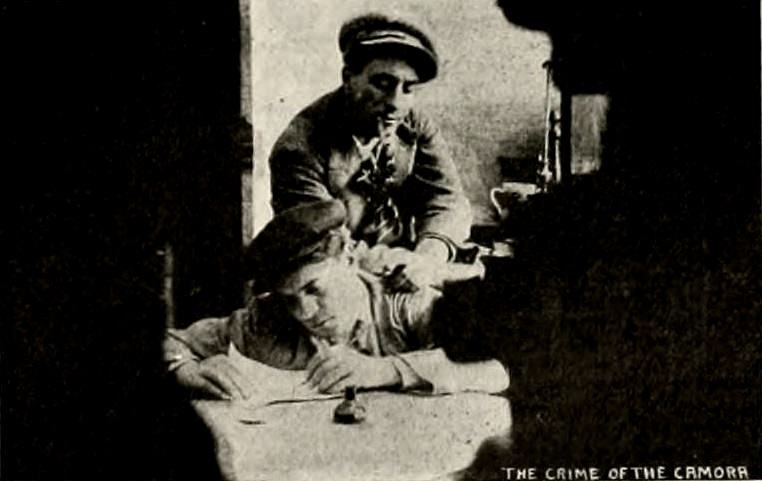
The Crime of the Camora arrives as a scorched post-card from a Naples that never quite existed, yet its shadows feel more authentic than most travelogues. Shot on volatile nitrate that threatens to combust with every projector flicker, the film is a fever chart of a city where politics and brigandage share the same grappa bottle.
Director-visionary (name lost to a warehouse fire) stages the opening heist like Caravaggio let loose in a bank vault: chiaroscuro lanterns swing above marble counters, Occhisbelli’s false whiskers cast devil-horns across the frescoed ceiling, and Taris—stoic as a Roman bust—meets his fate not with a bang but with the wet hush of a windpipe crushed against steel. The camera refuses to cut away; we watch the detective’s pupils dilate into twin eclipses. Morality, the film whispers, is merely a matter of focus.
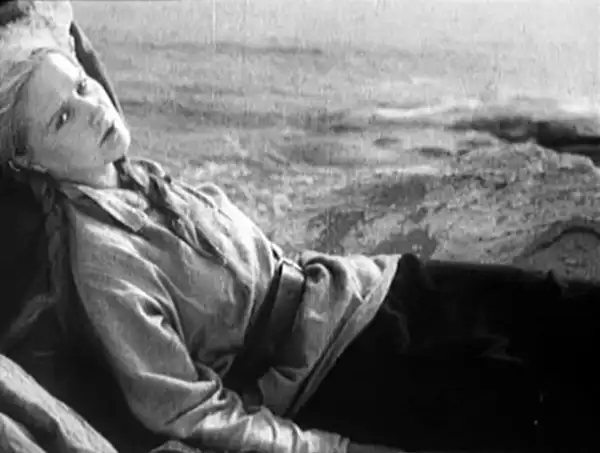
Enter Ida Taris, the true coup de cinéma. Unlike the fainting ingenues cluttering early Italian cinema, she weaponizes performance itself. Her first disguise—an elderly herb-seller—features a putty nose that seems to absorb every alleyway stench; her second, a maid’s cap tilted like a guillotine blade. Each transformation is filmed in unblinking tableau, daring us to spot the seams. When she lifts her gaze to camera, the frame seems to tilt: vendetta as physics.
She is not avenging womanhood; she is reclaiming narrative agency frame by stuttering frame.
The secret is that Ida never “becomes” a man; she colonizes the interstices—those liminal pockets where no one thinks to look. In a tavern brawl she ducks beneath tables, collecting dropped knives like a magpie. Later, she copies Occhisbelli’s scrawl onto cigarette paper, forging a blackmail note that turns the Camorra inward like a Möbius strip of paranoia.
If Ida is the film’s moral gyroscope, Occhisbelli is its black-hole sun—sucking ideology, religion, even camera-light into his orbit. His costume changes rival commedia dell’arte: checkered waistcoats, a priest’s collar, finally a blood-speckled apron. Each outfit is a thesis on class camouflage. Watch how he tips his hat to a street urchin; the gesture is so gallant you nearly forget the child’s father lies cooling in the morgue.
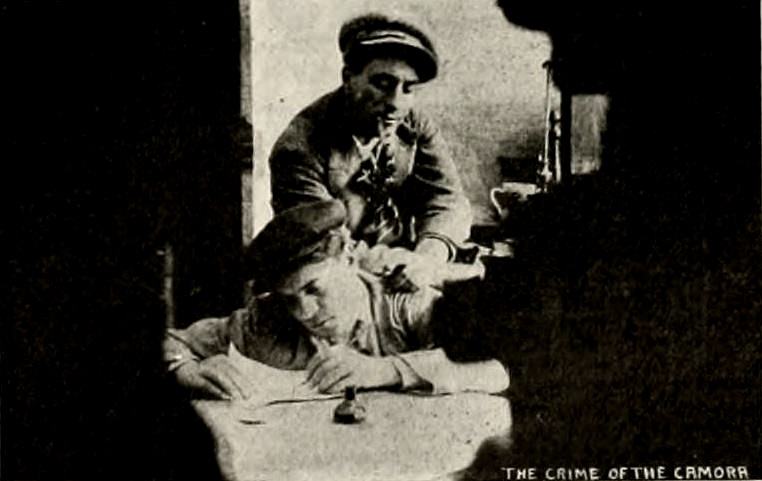
Yet the performance never topples into mustache-twirling. In a chilling aside, he recites Dante to a tied-up Ida, misquoting “Lasciate ogne speranza” as “Lasciate ogne memoria”—abandon memory, not hope. The slip is telling: Occhisbelli’s evil is not satanic but archival; he wants to erase the very record of good.
Shot composition borrows from Naples’ own stratigraphy: foreground clutter (fish-heads, rosaries, lottery tickets) stacked like archaeological layers, while background catacombs yawn in geometric perspective. Depth becomes destiny. Intertitles appear as ransom notes—ragged cardboard with letters clipped from newspapers, a meta-gag about forged identity.
Lighting is pure tinder-box alchemy. Interiors smolder under oil-lamps whose flames lick the edges of the frame, threatening to ignite the perforations. Night exteriors are day-for-night shots so blatant the sky looks bruised—a reminder that every rule of realism is negotiable when survival is at stake.
Trace Ida’s DNA and you’ll find strands in The Adventures of Kathlyn, proto-girl-power serials, and even Phoebe-Waller Bridge’s fourth-wall smirk. The difference? Ida’s victory is not cathartic but pyrrhic. In the final shot she pins badge No. 399 to her black mourning dress; the metal scratches the fabric, drawing a pin-prick of blood that matches the film’s crimson tinting. Justice, the gesture says, is a wound you volunteer to keep open.
Contemporary exhibitors would have sent out sheet-music: a Neapolitan tarantella for crowd scenes, a single violin pizzicato for Ida’s stealth. Today, stream the film with anything post-Mahler and you’ll feel the discord. I recommend a playlist of cicadas, distant Vesuvius rumbles, and the scratch of your own sleeve against the mouse-pad—ambient guilt.
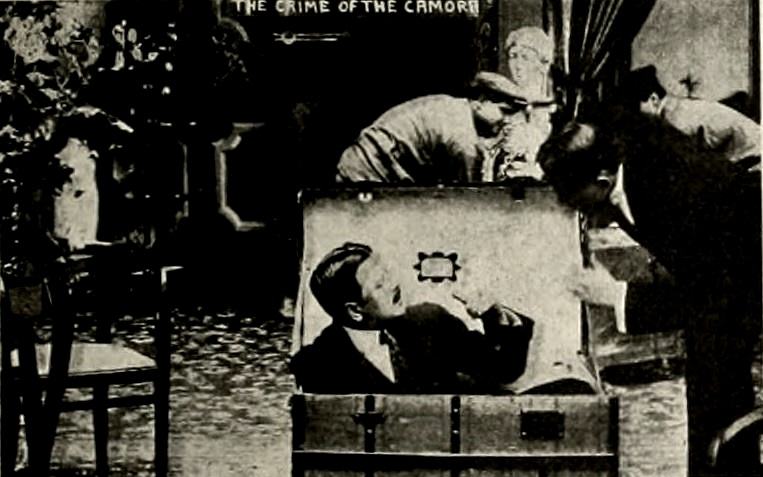
Place this movie beside The Black Chancellor and you see Italy wrestling with its own Machiavellian reflection—one film set in alpine parliament halls, the other in sewers where votes are bartered for cigarettes. Both hinge on disguises, but while Chancellor’s masks are waxen civility, Camora’s are scar-tissue.
Stack it against Oliver Twist and the line between orphan pickpocket and Camorist thug dissolves into a single continuum of institutional abandonment. Dickens asks for reform; Camora demands vendetta.
The sole surviving 35 mm print was discovered in 1988, wedged inside a Neapolitan piano—nitrate curled like infernal spaghetti. The Cineteca di Bologna’s lab separated each frame with scalpels dipped in peppermint oil to mask vinegar syndrome. The tinting was reinstated using saffron, tobacco, and volcanic ash—colors that still smell of danger when projected. Streaming platforms give you a 2K scan, but seek out a 16 mm carbon-arc screening if you crave the authentic risk of combustion.
The Crime of the Camora is less a story than a scar that keeps reopening every time Italy flirts with corruption. It offers no comfort, only the cold satisfaction of watching a daughter weld her grief into a guillotine. For its brazen heroine, its chiaroscuro theology, and its willingness to let the villain quote Dante while strangling hope, it earns:
Watch it once for the thrills, again for the architecture of vengeance, and a third time to remind yourself that silence can be the loudest witness of all.
IMDb 5.8
1935
Community
Log in to comment.