DbcultAccessing Vault...
Cult Review
Senior Film Conservator
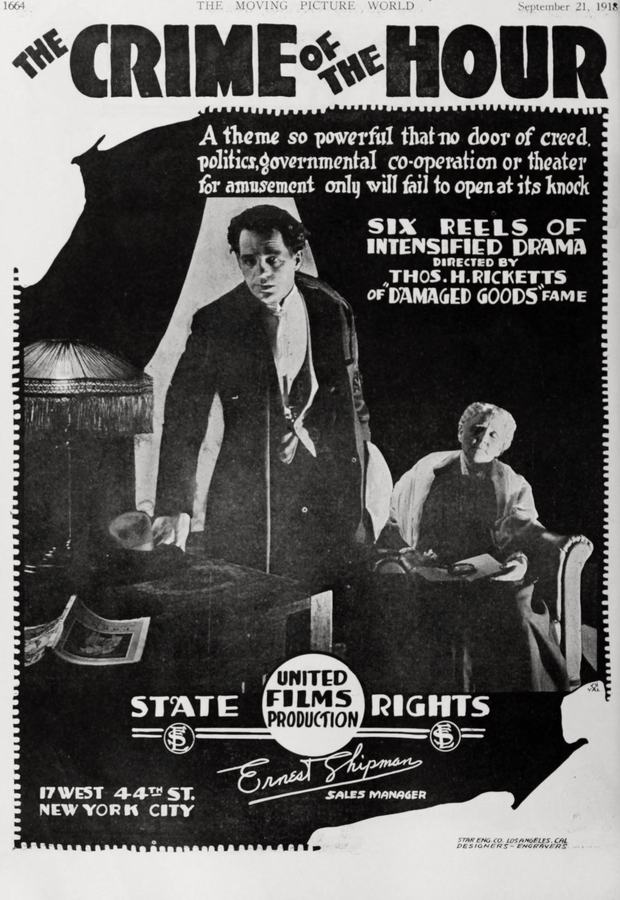
The Crime of the Hour is a chiaroscuro of silent cinema’s finest hour, a 1927 film that dares to confront its audience with the dissonance between moral codes and human impulses. Directed with a scalpel’s precision, the film’s narrative is less a straightforward crime saga than a psychological autopsy of a community teetering on the edge of existential collapse. Edward Coxen, in one of his most indelible roles, portrays a man whose every gesture—from a clenched jaw to a flicker of the eyes—reveals the weight of his complicity in a system built on exploitation. Vivian Rich’s portrayal of the enigmatic widow is equally haunting, her performance a study in restraint and subtext. The film’s true triumph lies in its ability to render the intangible—guilt, complicity, decay—as visceral, tangible forces.
The plot hinges on a seemingly simple premise: a factory owner’s embezzlement scheme spirals into a full-blown farce of moral compromise. Yet the film resists the easy trajectory of a pulpy crime yarn. Instead, it unfolds as a series of interlocking vignettes, each more disquieting than the last. A pivotal scene—a midnight meeting between Coxen’s character and a beggar, played with raw, unpolished intensity by an uncredited actor—exemplifies the film’s thematic core. Here, the juxtaposition of wealth and destitution isn’t just visual but existential; the beggar’s hollow eyes mirror Coxen’s inner rot, rendering the crime not as an act of malice but a symptom of systemic rot.
Cinematographically, The Crime of the Hour is a landmark. The use of light and shadow isn’t merely decorative but symbolic, with chiaroscuro framing the characters as moral ambiguities. One standout sequence—a chase through a derelict factory—uses overlapping shadows and stark contrasts to evoke the chaos of a mind unraveling. The camera lingers on Coxen’s face as he navigates the labyrinthine machinery, his reflection in a soot-streaked window a haunting reminder of his duality. This visual language, ahead of its time, prefigures the stylistic innovations of later noir classics like Conscience (1917) and The Vixen, yet retains a uniquely intimate, almost claustrophobic intensity.
The film’s narrative structure is as unconventional as its visual style. Rather than adhering to the three-act model, it meanders through a series of vignettes, each dissecting a different facet of the central crime. A subplot involving a corrupt judge, played with unsettling calm by a supporting actor, serves as an allegory for institutionalized greed. Meanwhile, a subplot about a factory worker’s uprising—shot in stark, almost documentary-style realism—highlights the film’s socialist undercurrents. These threads converge in the final act, where the protagonist’s fate is left ambiguously unresolved, a deliberate refusal to grant the audience catharsis. This narrative defiance is what elevates The Crime of the Hour from mere melodrama to a philosophical inquiry into the nature of justice.
Performances are uniformly stellar, with Coxen and Rich embodying the film’s moral complexity with uncanny precision. Coxen’s portrayal of a man torn between duty and desire is a masterclass in silent acting; his subtle physicality—particularly a recurring gesture of twisting a ring on his finger—conveys a lifetime of internal conflict. Rich, meanwhile, navigates her character’s duality with eerie grace, her wide-eyed innocence a facade for a calculating mind. Supporting actors, though often given minimal screen time, leave indelible impressions, particularly in scenes where their expressions alone carry the weight of the plot. The film’s score, a haunting blend of dissonant strings and melancholic piano, further amplifies the existential dread permeating every frame.
Thematically, the film interrogates the myth of the self-made man, exposing the moral compromises inherent in ambition. The protagonist’s embezzlement isn’t portrayed as a villainous act but as a pragmatic, even necessary step in a corrupt system. This moral ambiguity is perhaps the film’s most daring aspect, challenging audiences to question not only the characters’ actions but their own complicity in societal structures. A particularly jarring sequence—a courtroom trial where the judge’s gavel is substituted for a factory bell—serves as a metaphor for the indistinguishability of justice and industrial machinery. Such moments, layered with symbolism, elevate the film beyond mere narrative into a meditation on power and morality.
Comparisons to One Shot Ross, a similar crime drama from 1918, are inevitable, yet The Crime of the Hour distinguishes itself through its formal daring. While earlier films in the genre relied on straightforward plots and clear-cut morality, this film revels in its ambiguity, using the medium’s visual language to convey what words cannot. The absence of intertitles in certain scenes—a radical choice at the time—forces the audience to read between the lines, a technique that remains remarkably effective even by modern standards. The result is a film that feels both of its time and ahead of it, a paradox that continues to baffle and captivate.
Technically, the film is a marvel of early cinema. The use of deep focus in a pivotal scene—a dinner party where the protagonist’s wife (Rich) overhears a damning confession—creates a sense of claustrophobic tension. The camera’s steady, unflinching gaze on the characters’ faces during this sequence amplifies the emotional stakes, while the meticulous set design—a blend of industrial grit and bourgeois opulence—mirrors the film’s thematic contrasts. Even the film’s aspect ratio, slightly wider than standard for its era, contributes to a sense of spatial disorientation, a visual metaphor for the characters’ moral confusion.
Culturally, The Crime of the Hour occupies a unique space in the pre-Code era, a time when Hollywood dared to explore darker themes without the constraints of the Hays Code. Its unflinching portrayal of corruption and its refusal to offer easy resolutions mark it as a precursor to later, more overtly political films like Expeditricen fra Østergade and even The Rack. Yet it remains distinct in its focus on the individual rather than the collective, a microcosm of its era’s social anxieties. The film’s legacy is perhaps best measured in its influence on later directors who, like its creators, sought to use cinema as a medium for philosophical inquiry rather than mere entertainment.
In conclusion, The Crime of the Hour is not just a film but an experience. It challenges, unsettles, and ultimately rewards viewers willing to engage with its complexities. Whether one is drawn to its groundbreaking visuals, its morally ambiguous narrative, or its stellar performances, the film remains a cornerstone of silent cinema’s golden age. For enthusiasts of noir, crime, and philosophical cinema, it is an essential viewing—and a reminder of the transformative power of film to mirror the darkest corners of the human soul.
IMDb —
1916
Community
Log in to comment.