DbcultAccessing Vault...
2.1/10
Senior Film Conservator
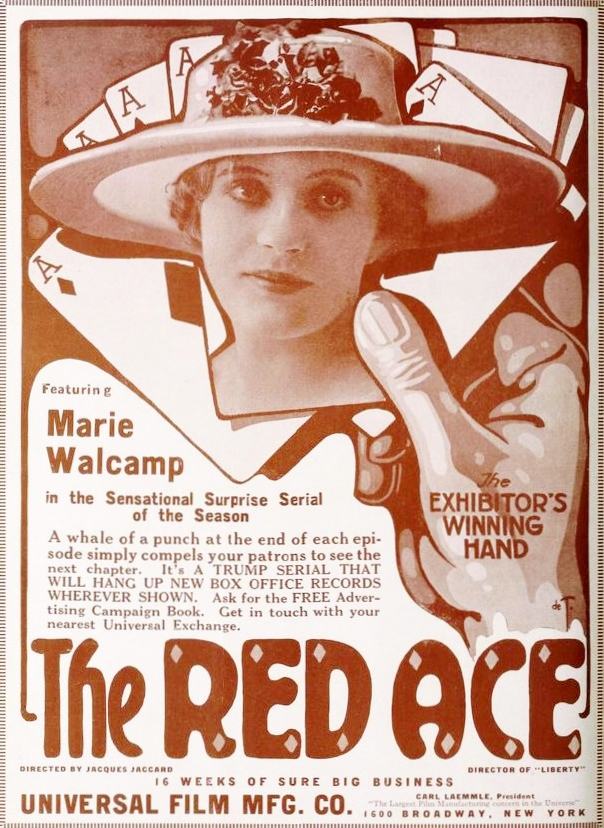
A definitive 2.1/10 rating for a film that redefined the boundaries of cult cinema. The Red Ace remains a cornerstone of transgressive art.
When we peer through the dusty apertures of silent cinema, we often expect to find static tableaux or melodramatic posturing. However, The Red Ace (1917), directed by the prolific Jacques Jaccard, shatters these preconceptions with the force of a landslide in the Canadian Rockies. This sixteen-episode serial, produced by Universal, represents a pivotal moment in the evolution of the action genre, anchored by the indomitable presence of Marie Walcamp. To watch this film today is to witness the birth of the modern blockbuster, albeit one rendered in the grainy, high-contrast chiaroscuro of the early 20th century.
The casting of Marie Walcamp was a stroke of genius. Unlike the fragile portrayals found in contemporary dramas such as Hedda Gabler, Walcamp’s Virginia Rose is a whirlwind of physical agency. She performs her own stunts with a reckless abandon that would make modern CGI-augmented actors blush. Whether she is leaping across treacherous ravines or steering a canoe through churning white water, Walcamp commands the screen with a physicality that was revolutionary for the time. Her performance isn't just about movement; it's about a fierce, unyielding gaze that challenges the patriarchal structures of the 1910s.
While many films of this era, like Abraham Lincoln's Clemency, focused on historical reverence and slow-paced moralizing, The Red Ace prioritizes the visceral. Jaccard understands that the serial format demands a constant escalation of stakes. Each chapter ends on a literal cliffhanger, a technique that was being perfected during this decade. The chemistry between Walcamp and Lawrence Peyton provides a grounded emotional core amidst the chaos, but it is Walcamp who remains the undisputed gravitational center of the narrative.
The setting of the Canadian Northwest serves as more than just a backdrop; it is a thematic crucible. The plot revolves around the discovery of platinum—a resource of immense value during the First World War. This industrial espionage angle gives the film a contemporary relevance that distinguished it from the more fantastical elements of European serials like Fantômas: In the Shadow of the Guillotine. While Fantômas dealt in the gothic shadows of Paris, The Red Ace thrives in the harsh sunlight of the frontier.
The cinematography, though limited by the technology of 1917, captures the vastness of the wilderness with a sense of awe. Jaccard utilizes deep focus and wide shots to emphasize the isolation of the characters. This isn't the claustrophobic world of The Golem and the Dancing Girl; this is a world where nature is a formidable antagonist. The struggle for the platinum mine becomes a microcosm of the global conflict occurring simultaneously, making the film a fascinating piece of wartime propaganda disguised as populist entertainment.
Jacques Jaccard’s writing (and direction) avoids the pitfalls of repetitive plotting that plagued many early serials. While there is an inevitable cycle of capture and escape, the introduction of the 'Red Ace'—a mysterious figure whose identity remains a tantalizing enigma—adds a layer of psychological intrigue. This use of a masked or hidden identity was a popular trope, also seen in works like Die Doppelnatur, but here it is tethered to a more grounded sense of political stakes.
The supporting cast, including L.M. Wells and the versatile Noble Johnson, provide a rich tapestry of archetypes. Johnson, in particular, brings a screen presence that often outshines the technical limitations of the production. The film’s pacing is relentless, yet it finds time for moments of quiet tension. Unlike the maritime rebellion of The Mutiny of the Bounty, which focuses on a singular event, The Red Ace is a sprawling odyssey of endurance.
To appreciate The Red Ace, one must understand the landscape of 1917 cinema. This was the year that saw the release of Tsar Ivan Vasilevich Groznyy in Russia, a film of immense historical weight. In contrast, the American serial was about the democratization of thrills. Universal was targeting a demographic that craved excitement, and Jaccard delivered it with a sophisticated understanding of visual storytelling. The film lacks the high-art pretensions of La Gioconda, but it possesses a raw, unvarnished energy that is arguably more influential on the future of cinema.
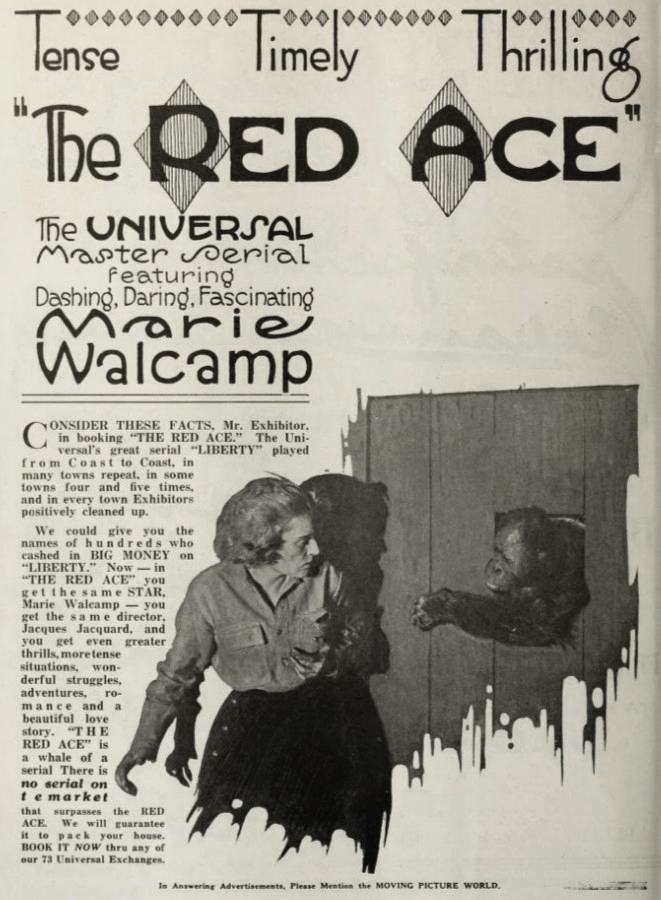
The editing of the film, handled with a surprisingly modern sensibility, ensures that the action sequences remain coherent even during the most chaotic moments. In an era where films like De forældreløse were exploring the pathos of the human condition, The Red Ace was exploring the limits of the human body. It is a testament to the durability of the serial format that many of the tropes established here—the hidden lair, the secret formula, the recurring villain—became staples of the Bond franchise and the Indiana Jones series decades later.
The lighting in The Red Ace is particularly noteworthy. Jaccard utilizes natural light to create a sense of realism that was often missing from the stage-bound productions of the time. The way the shadows fall across the rugged terrain creates a sense of foreboding that mirrors the internal conflicts of the characters. This aesthetic choice places it in a different category than the more melodramatic The Heart of Nora Flynn, which relied heavily on traditional theatrical lighting.
Furthermore, the film's use of location shooting was a logistical nightmare that paid off in spades. The authenticity of the Canadian setting (likely filmed in the more accessible mountains of the American West, but effectively doubling for the North) adds a layer of grit that studio sets could never replicate. The physical toll on the actors is evident, and it adds an unintentional but welcome layer of realism to the performance. This wasn't just acting; it was survival. It shares a certain spiritual kinship with the later Body and Soul in its raw depiction of human struggle, though the contexts are vastly different.
One cannot discuss The Red Ace without acknowledging the tragedy of film preservation. Like so many works from the silent era—such as The Next in Command or The Fixer—portions of this serial have been lost to the ravages of nitrate decay. However, the fragments that remain, along with the extensive promotional material and synopses from the time, allow us to reconstruct a vision of its grandeur. The loss of these frames is a loss to our cultural heritage, yet the myth of the film only grows in their absence.
The narrative of The Red Ace is also a fascinating study in early 20th-century nationalism. Virginia Rose is a quintessentially American (or North American) hero—resourceful, brave, and morally upright. She stands in contrast to the more cynical European characters found in La Destinée de Jean Morénas. Her quest is not just for personal gain, but for the protection of her country’s interests. This patriotic fervor was a common theme during the war years, but Jaccard manages to weave it into the action without it becoming overly didactic.
In the final analysis, The Red Ace is a masterclass in silent action. It possesses a rhythmic vitality that is often missing from the more 'serious' dramas of 1917, like The Price of Fame. Jacques Jaccard proved himself to be a director of immense vision, capable of orchestrating complex sequences with a limited toolkit. But the film ultimately belongs to Marie Walcamp. Her performance is a bridge between the Victorian era and the modern age, a declaration that a woman could be the hero of her own story, capable of facing any danger with a steady hand and a sharp mind.
For those interested in the history of cinema, The Red Ace is an essential touchstone. it reminds us that the desire for thrill, adventure, and heroism is a universal constant. While the technology has changed, the fundamental mechanics of suspense that Jaccard and Walcamp pioneered remain as effective today as they were over a century ago. It is a film that deserves to be rediscovered, restored, and celebrated as a foundational pillar of the action-adventure genre.
Critical Rating: 8.5/10
"A high-octane relic of the silent era that proves Marie Walcamp was the original action superstar. Jacques Jaccard's direction is a masterclass in sustained tension and frontier grit."
IMDb 6.4
1931
Community
Log in to comment.