DbcultAccessing Vault...
Cult Review
Senior Film Conservator
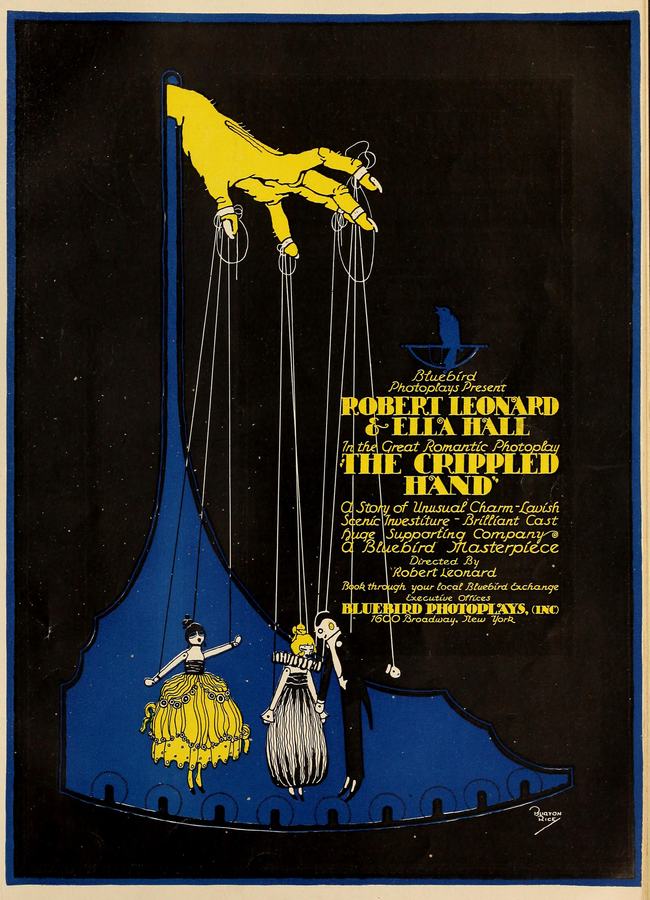
Stepping into the ethereal realm of early cinema, one often encounters narratives that, despite their age, resonate with an astonishingly modern emotional depth. Such is the case with The Crippled Hand, a cinematic artifact that, much like a carefully preserved antique, reveals layers of intricate craftsmanship upon closer inspection. Released in an era when storytelling relied almost entirely on visual eloquence and the evocative power of intertitles, this film transcends its technical limitations to deliver a compelling tapestry of aspiration, vengeance, and the enduring complexity of human emotion. It’s a remarkable piece, not merely for its historical significance, but for its audacious blend of fairytale romance and raw, visceral melodrama, a juxtaposition that keeps the viewer utterly captivated from its opening frames to its poignant denouement.
At its heart, The Crippled Hand masterfully reinterprets the timeless Cinderella myth, not as a simple children's fable, but as a crucible for adult desires and societal expectations. The film opens with an intriguing premise: a wealthy theatrical producer, enamored with the prospect of an innovative stage rendition of Cinderella, declares a casting call unlike any other. The coveted lead role, a gateway to stardom and a dramatically altered life, will be bestowed upon the woman whose foot perfectly fits a singular, minuscule slipper. This seemingly whimsical challenge immediately establishes a sense of magical realism, a palpable tension as hopefuls parade before the discerning producer, each failing to meet the exacting standard. It’s a scene rich with implied social commentary, highlighting the often-futile pursuit of unattainable dreams.
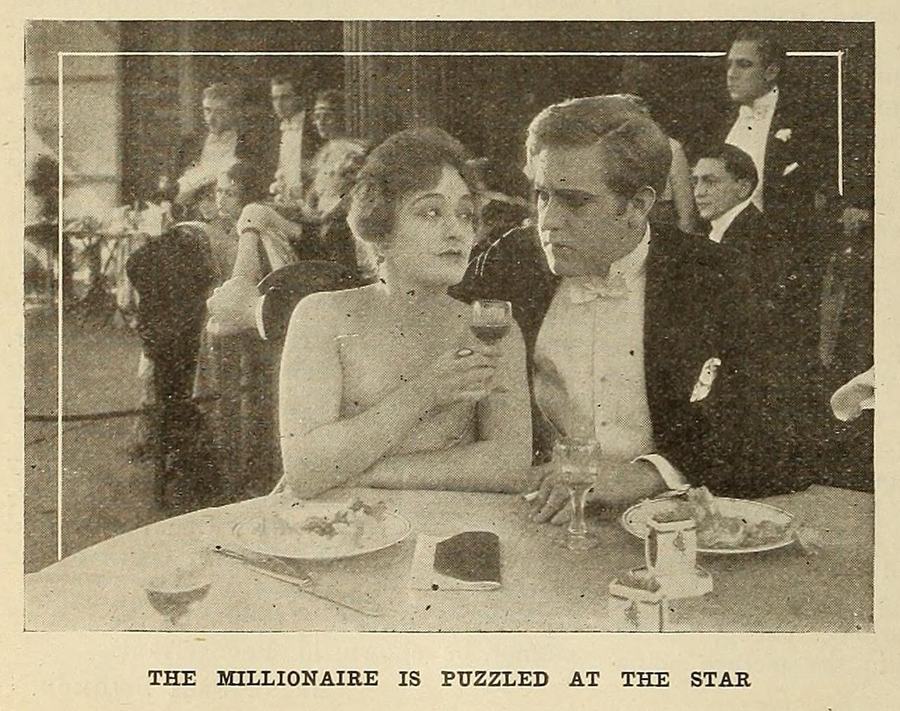
Enter our protagonist, a humble, unassuming young woman, portrayed with delicate vulnerability by Ella Hall. Her entire existence, we infer, has been colored by the romantic narratives of storybooks, a yearning for a life beyond her constrained circumstances. When she, against all odds, slips her foot effortlessly into the tiny shoe, the moment is imbued with an almost divine grace, a testament to the power of pure aspiration. This act of serendipitous triumph isn't merely a casting coup; it's the catalyst for a profound personal transformation. The producer, initially an arbiter of talent, finds himself captivated not just by her perfect fit, but by the genuine innocence and fervent hope she embodies. Their burgeoning affection, depicted with a tender earnestness characteristic of the era, mirrors the very romantic fantasy she has always cherished, blurring the lines between stagecraft and genuine emotion. It's a love story that feels both inevitable and miraculously earned, a testament to the film's ability to weave enchantment into its narrative fabric. The simplicity of their falling in love, devoid of the cynical complexities often seen in modern cinema, provides a refreshing counterpoint to the darker currents running through the film.
Yet, as the romantic narrative unfolds with idyllic grace, a menacing shadow lengthens across the stage, threatening to engulf the burgeoning happiness. The film introduces a starkly contrasting subplot, one steeped in the bitterest forms of personal vendetta. The reigning prima donna of the production, a figure of established glamour and perhaps a touch of theatrical hauteur, finds her past violently reasserting itself. Her former lover, a musician whose career was tragically curtailed by a violent quarrel in which she, in a fit of passionate rage, severed his hand, resurfaces. This act, both symbolic and literal, has branded him, leaving him with a deep-seated desire for retribution. His reappearance is not for reconciliation but for a final, devastating reckoning, a life for a career, a limb for a limb. The film handles this darker narrative with an unflinching directness, a hallmark of silent era melodramas that often explored the extremes of human suffering and moral failing.
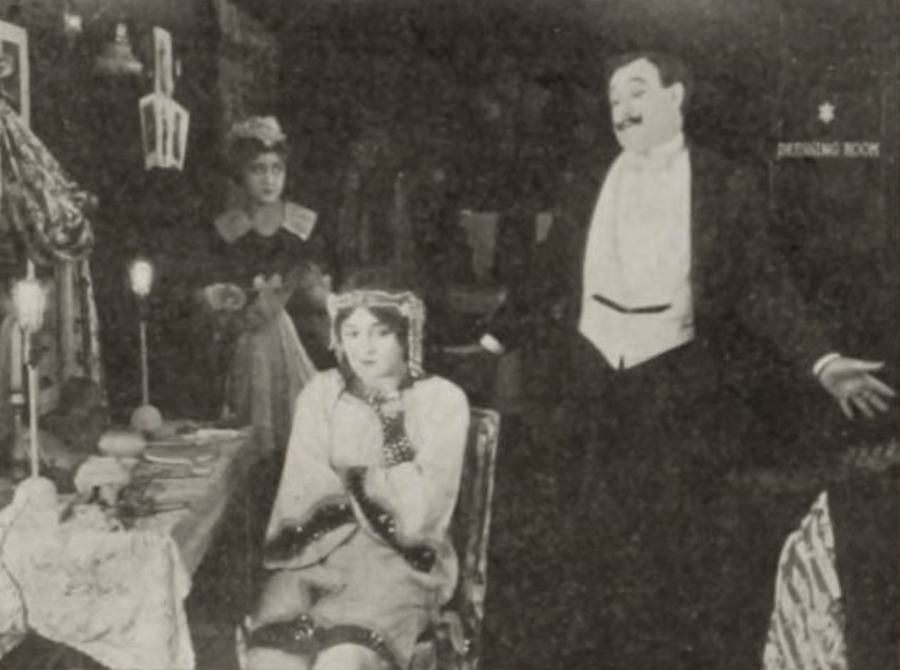
The tension ratchets palpably as the musician, consumed by his long-nurtured grievance, stalks the prima donna, his every move fueled by a singular, destructive purpose. His plan culminates in a desperate attempt to end her life, a moment of raw, unbridled fury that threatens to shatter the delicate world built around the Cinderella production. This narrative strand provides the film with its titular weight, highlighting the profound and lasting consequences of past actions. It’s a powerful exploration of how trauma, whether physical or emotional, can fester into a consuming obsession. The character of the crippled musician, though driven by a dark impulse, evokes a complex sympathy, a testament to the film’s nuanced portrayal of its antagonists. In this regard, it shares a certain thematic intensity with films like La Broyeuse de Coeur, where the destructive power of human emotions, particularly those rooted in betrayal or intense passion, often drives the plot to its most dramatic conclusions.
The narrative genius of The Crippled Hand lies in the dramatic collision of these two seemingly disparate storylines. Just as the musician prepares to unleash his final act of vengeance, the innocent Cinderella figure, whose dreams have just begun to materialize, intervenes with remarkable courage and quick thinking. Her deflection of the bullet is a pivotal moment, a stark reminder that even the most beautiful fantasies can be shattered by the harsh realities of the world, yet also that courage can emerge from unexpected quarters. This act of selfless bravery not only saves a life but also serves as a profound catalyst for change, disrupting the cycle of hatred and offering a glimmer of hope for redemption.
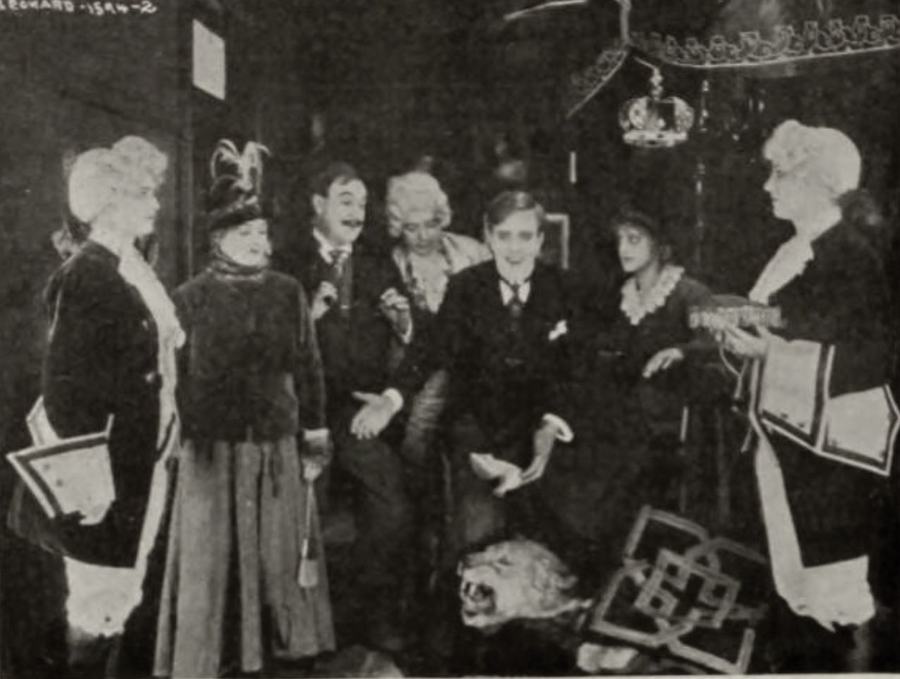
What follows is perhaps the most surprising and emotionally resonant turn in the film. From the brink of tragedy, a path to reconciliation unexpectedly unfolds. The prima donna, having faced her mortality and the consequences of her past actions, and her former sweetheart, his thirst for revenge momentarily quenched by the near-catastrophe, are forced to confront the enduring remnants of their shared history. In the aftermath of the foiled assassination, a powerful realization dawns upon them: despite the scars, the bitterness, and the years of separation, their love for one another has not entirely extinguished. It’s a testament to the enduring power of human connection, a theme that resonates deeply within the silent film tradition, where heightened emotions often spoke louder than words. Their rekindled affection, born from the crucible of near-death and profound introspection, offers a poignant resolution, suggesting that forgiveness, even for the most egregious of past hurts, is always within reach. This kind of complex emotional resolution, where love triumphs over deep-seated animosity, can be seen in other dramatic works of the era, such as Akit ketten szeretnek, which often explored the intricate and sometimes torturous paths of romantic relationships and eventual understanding.
Directed by Robert Z. Leonard, who also contributed to the screenplay, The Crippled Hand exemplifies the distinct aesthetic and storytelling techniques of the silent era. The performances, particularly those of Ella Hall, Gladys Brockwell, and Robert Z. Leonard himself (who also acts), are characterized by exaggerated gestures, expressive facial contortions, and a reliance on physicality to convey complex emotional states. This style, though perhaps unfamiliar to modern audiences accustomed to subtle realism, was the very language of silent cinema, demanding a heightened sense of theatricality to bridge the gap left by the absence of spoken dialogue. The actors become living tableaux, their movements and expressions meticulously choreographed to communicate narrative nuances and character motivations. One can only imagine the orchestral scores that would have accompanied such a film, enhancing its dramatic peaks and troughs, guiding the audience's emotional journey.
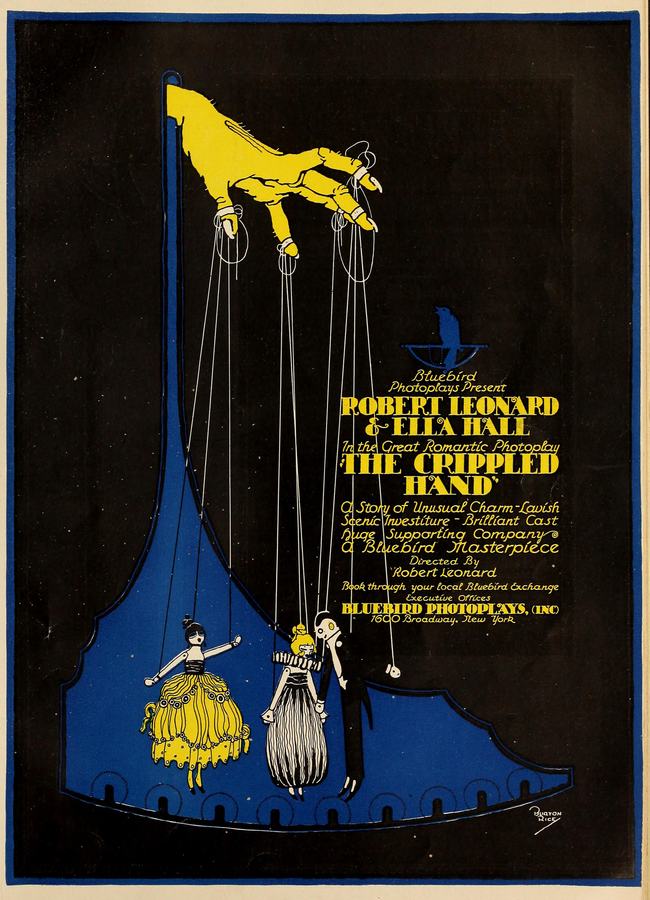
The film’s cinematography, while perhaps not groundbreaking for its time, effectively utilizes lighting and camera angles to heighten the dramatic impact. Close-ups emphasize emotional intensity, drawing the viewer into the characters' inner turmoil, while wider shots establish the grandeur of the theatrical world or the tension of the chase. The pacing, a crucial element in silent film, is expertly managed, allowing moments of quiet introspection to breathe before accelerating into thrilling sequences of conflict and resolution. It avoids the sometimes plodding nature of other films from the period, maintaining a brisk, engaging rhythm that propels the story forward. Even without the benefit of sound, the narrative flows with a captivating logic, a testament to the skill of writers Calder Johnstone and Robert Z. Leonard in crafting a coherent and emotionally resonant plot.
The Crippled Hand, despite its age, grapples with themes that remain perennially relevant. It explores the intoxicating allure of fantasy and the sometimes-harsh collision with reality. It delves into the destructive cycle of revenge and the profound, transformative power of forgiveness. It questions whether love can truly conquer all, even the deepest wounds inflicted by betrayal and violence. The film’s ability to weave these complex moral and emotional dilemmas into an entertaining and engaging narrative is a testament to its enduring quality. The Cinderella motif, a universal symbol of hope and transformation, is deftly utilized to underscore the film's message about second chances and the potential for new beginnings, not just for the ingenue, but for the prima donna and her former lover as well. This multi-layered storytelling elevates it beyond a simple melodrama, imbuing it with a depth that invites contemplation.
In the grand tapestry of silent cinema, The Crippled Hand stands as a compelling example of its era's storytelling prowess. It reminds us that even without the convenience of spoken dialogue or the sophistication of modern special effects, a powerful narrative, compelling characters, and universal themes can captivate and move an audience. It serves as a valuable historical document, offering insight into the cinematic tastes and moral sensibilities of the early 20th century, while simultaneously delivering a timeless tale of love, loss, and ultimately, redemption. For enthusiasts of silent film, or indeed anyone interested in the evolution of cinematic storytelling, this film offers a rich and rewarding viewing experience, a vibrant echo from a bygone era that continues to speak volumes.
IMDb —
1920
Community
Log in to comment.