DbcultAccessing Vault...
Cult Review
Senior Film Conservator
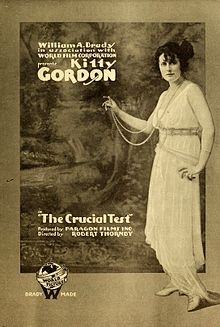
In the annals of silent cinema, few works capture the jarring transition from imperial decadence to revolutionary fervor with as much melodramatic poignancy as The Crucial Test. Released in 1916, a year before the world was forever altered by the Bolshevik uprising, this film serves as a fascinating cultural artifact. It is a narrative of two halves, bridging the gap between the oppressive grandeur of the Russian Capital and the starving artistry of Parisian garrets. Directed with a keen eye for social stratification, it features a screenplay by the legendary Frances Marion, whose ability to imbue female protagonists with agency—even within the confines of a patriarchal moral framework—remains unparalleled.
The film opens with a masterclass in atmospheric tension. We are introduced to Thanya (played with a haunting, statuesque grace by Kitty Gordon), a woman whose social standing seems as precarious as it is prestigious. The cinematography utilizes the burgeoning techniques of the era to contrast the bright, opulent ballrooms of the Grand Duke Bagroff with the murky, low-light dens of the revolutionaries. Unlike the more visceral depictions of political struggle found in Barbarous Mexico, this film filters its politics through the lens of individual sacrifice.
The sequence involving the 'marked coin' is a highlight of silent suspense. As Boris, Thanya’s brother, draws the token that mandates he assassinate the Grand Duke, the camera lingers on the psychological fallout. Thanya is not merely a witness; she is an accomplice by blood and a martyr by choice. Her decision to assist Boris by leveraging Bagroff’s infatuation with her introduces a layer of 'femme fatale' subversion that we often see in films like La Belle Russe. However, Thanya’s motives are never selfish; they are rooted in a desperate, familial piety.
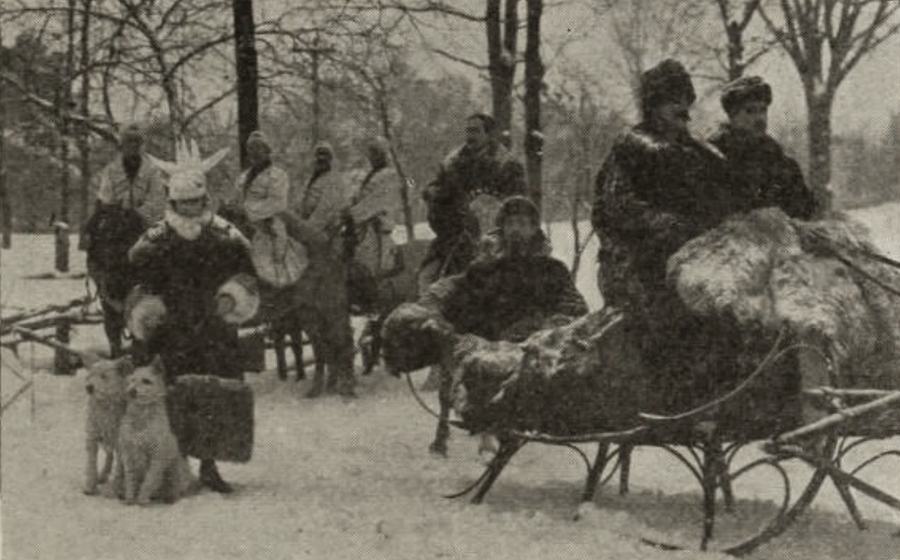
The transition from the failed assassination to the Siberian exile provides a stark visual shift. The 'Russian pronged whip' and the subsequent lashing of Boris are depicted with a grit that anticipates the darker social dramas of the 1920s. When Thanya confesses her 'treason' to save her brother, the film shifts from a political thriller into a transcendental romance. Their escape during a snowstorm is a triumph of set design and practical effects, evoking a sense of hopelessness that is only relieved when the setting shifts to the sun-drenched, yet equally unforgiving, streets of Paris.
It is in Paris that the film explores the 'Artist’s Struggle,' a theme common to the era but rarely executed with such existential weight. Vance Holden, the American artist (portrayed by Niles Welch), represents the idealistic westerner caught in the crossfire of European trauma. His inability to sell his paintings creates a domestic pressure cooker that mirrors the themes found in The Price of Her Soul. The arrival of the villainous Bagroff in Paris—now a predator in a new playground—sets the stage for the film’s titular 'Crucial Test.'
The second act of the film is where Frances Marion’s writing truly shines. The dilemma presented to Thanya is harrowing: to save her husband from the slow death of poverty and failure, she must surrender her body to the man who represents the very tyranny she once fought. This narrative beat echoes the high-stakes moral bargaining seen in Schuldig or Ipnosi, where the female body becomes the ultimate currency in a male-dominated economy.
The character of the Parisian doctor, who acts as the unwitting (or perhaps cynical) conduit for Bagroff, adds a layer of modern realism. He brings a 'client' who can make Vance famous overnight, but the price is hidden in the shadows. The scenes where Thanya prepares for her 'ordeal' are filmed with a funereal solemnity. There is no titillation here; only the crushing weight of a woman who has already survived Siberia and is now asked to survive a different kind of violation.
Kitty Gordon’s performance is a revelation. Known for her 'most beautiful back in the world,' she utilizes her physical presence to convey a stoicism that feels entirely modern. Whether she is being lashed in Russia or disrobing in a Parisian apartment, her eyes convey a weary intelligence. She is supported by J. Herbert Frank as Bagroff, who plays the villain with a 'lustiness' that avoids caricature, making him genuinely menacing. It’s worth noting that a young Adolphe Menjou appears here, showing early flashes of the sophistication that would define his later career.
The pacing of the film is remarkably tight for 1916. While many contemporary films like Polly of the Circus or A Dream or Two Ago relied on episodic whimsy, The Crucial Test maintains a driving narrative momentum. Every scene serves the central conflict, leading toward the explosive climax where Boris returns from America—a literal 'deus ex machina'—to enact the justice that the Russian state failed to provide.
At its core, the film is an interrogation of the 'Great Man' theory of history. Bagroff believes his power and wealth entitle him to the bodies and souls of those beneath him. Boris and Thanya, through their respective paths of violence and sacrifice, prove that the human spirit cannot be so easily commodified. The resolution—Boris shooting Bagroff and fleeing back to the 'land of the free'—is a quintessential early American cinematic trope, reinforcing the idea of the United States as a sanctuary from Old World corruption, a theme also explored in One of Our Girls.
The final shot of the film, where Thanya and Vance open the window to let the sunlight pour in, is a classic piece of visual symbolism. It suggests a purging of the secrets and the 'night's experience' that Thanya has promised to keep from her husband. It is a bittersweet ending; the happiness is 'uninterrupted,' yet it is built on a foundation of silence and trauma. This complexity elevates the film above standard melodrama, placing it in the company of more nuanced works like Behind Closed Doors.
When compared to other films of the era, The Crucial Test holds a unique position. It lacks the pastoral charm of Algie's Romance or the rugged frontier spirit of Ben Blair. Instead, it leans into a cosmopolitan darkness. It shares the tragic undertones of The Lion's Bride and the spiritual weight of The Crimson Dove. However, its specific focus on the intersection of political revolution and domestic sacrifice gives it a sharper edge. Unlike Behind the Lines, which focuses more on the mechanics of war, this film focuses on the emotional casualties of social upheaval.
The craftsmanship of the screenplay also brings to mind the intricate plotting of Hungarian gems like A szentjóbi erdö titka, where secrets drive the narrative toward an inevitable, often violent, conclusion. In The Crucial Test, the 'secret' is the final test of Thanya’s character—her ability to carry the burden of her sacrifice alone to ensure the happiness of the one she loves.
While some modern viewers might find the 'rescue' by Boris to be a bit too convenient, one must view it within the context of 1916 storytelling conventions. The film was intended to provide a cathartic release for audiences who were watching the world tear itself apart in the Great War. The death of the Grand Duke was not just a plot point; it was a symbolic execution of the old, corrupt order.
The Crucial Test is a monumental achievement in early silent drama. It showcases the burgeoning power of female screenwriters in Hollywood and provides a platform for Kitty Gordon to deliver one of the most complex performances of her career. It is a film of shadows and light, of whips and paintbrushes, and ultimately, of the enduring strength of the human heart when pushed to its absolute limit. If you have the chance to see a restored print, do not hesitate. It is a vivid reminder that the struggles for freedom and love are, indeed, the most crucial tests we face.
Critic's Rating: 8.5/10
"A searing exploration of moral fortitude and the high cost of survival in a world on the brink of collapse."
IMDb —
1934
Community
Log in to comment.