DbcultAccessing Vault...
Cult Review
Senior Film Conservator
Ink, Iron, and Incrimination
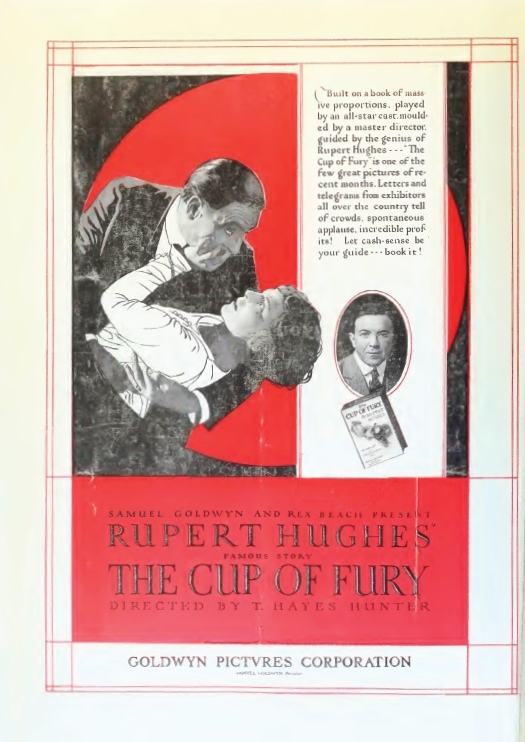
Few canvases of late-World-War-One cinema seethe with such bruised chromatics as The Cup of Fury. What could have ossified into a jingoist tract instead pulses—through tinting, through Clarissa Selwynne’s scleral tremors—with the ache of split belonging. Rupert Hughes, that indefatigable polymath, distills Europe’s trauma into a dockside parable where every rivet is a syllable of loyalty and every hiss of escaping steam a sigh for shattered homelands.
The picture’s prologue, scarcely three intertitles deep, detonates its emotional charge: two silhouettes gulp cyanide under Prussian chandeliers. Suicide as civic defiance—a motif that prefigures Hinterstoisser’s alpine self-immolation in Stolichnyi iad yet here is staged like a baroque pieta, all trembling lace and guttering tapers. This single coup de théâtre seeds every subsequent frame with the rot of inherited culpability.
Cut to Atlantic spray, a flotilla of hopeful bonnets, and the Statue of Liberty filmed from a low starboard angle so she looms like a judgmental schoolmarm. Marie-Louise’s shipboard anonymity lasts minutes; once ashore, her accent, her trunk of Heinecker porcelain, her very plaits become evidence. Hughes slyly undercuts nativist hysteria by letting the camera linger on a bakery window: “HOT DOGS 5¢” chalked beside “HUNS NOT WANTED.” The absurd hyphen of American consumerism and xenophobia gets a visual rim-shot.
Enter Davidge, played by Rockliffe Fellowes with the granite jaw of a civic monument yet eyes that swim with Melvillean self-doubt. Fellowes modulates between shipyard despot and reluctant confessor, gifting Selwynne reaction shots that feel almost anachronistic in their subtlety—eyebrows launch like skeptical gulls, then settle into paternal warmth. Their first walk among skeletal hulls is shot day-for-night, cobalt gels turning corrugated iron into cathedral buttresses; it’s here that Hughes sketches his central polarity: industry as salvation, industry as target.
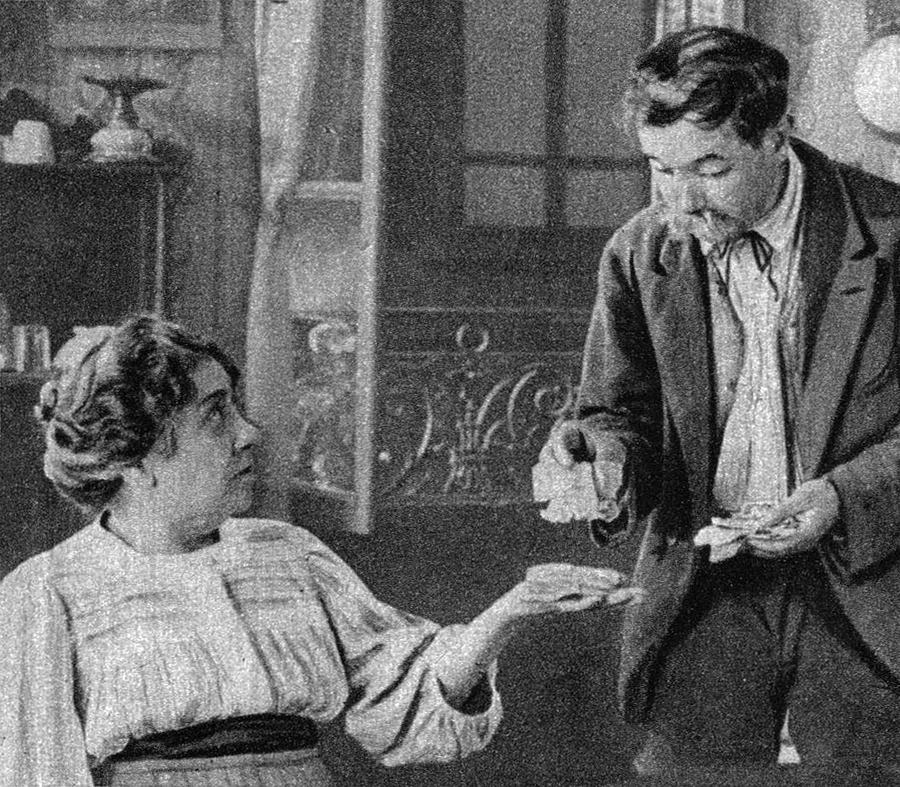
The script, co-sculpted by Richard Schayer, brandishes a muscular cynicism. When Marie pleads “Let me build what my people burn,” the line lands less patriotic than penitential—a gender-flipped Hephaestus forging shields for Athens after betraying Olympus. Hughes refuses to sand her Teutonic edges: she corrects English plurals, sings the aching lullaby Die Lorelei to a frightened riveter’s child, keeps a sketch of Bremen’s cathedral tucked beneath her boiler-suit. The film’s true tension is whether she’ll splice these shards into a hyphenated self or let Verrinder weaponise them.
T.D. Crittenden’s Verrinder arrives like a sulphuric whiff of cologne. His first appearance is a dolly-in through drifting boiler smoke: white carnation, ebony cane, grin that could slice burlap. Critics who compare him to The Scarlet Pimpernel’s Chauvelin miss the point—Verrinder is no monocled Hun caricature but a cosmopolitan predator who quotes Whitman while wiring detonators. In the shipyard mess he organises a poetry reading, collecting voices, memorising accents, mapping vulnerabilities.
The sabotage set-piece—an 11-minute sequence, probably trimmed by regional censors—uses Eisensteinian rhymes: a wrench dropped parallels a rivet gun’s stutter; a close-up of Marie’s dilated iris cross-cuts to a pressure gauge creeping red. When the boiler finally ruptures, the explosion is rendered through negative inversion: white becomes black, flame turns aqueous cobalt. The effect, startling even now, anticipates the expressionist nightmares of Das sterbende Modell by a full five years.
Selwynne’s acting in the aftermath deserves archival reappraisal. She staggers amid twisted derricks cradling a scorched doll—property of a child we never meet—her mouth a silent scream that loops into the viewer’s sensorium. It’s a primal image, equal parts Guernica and Gish, and it single-handedly rebuts charges that the picture is mere propaganda.
Hughes, a proto-feminist in cranked-up spats, threads a gender dialectic throughout. Marie’s workplace baptism is scored by male catcalls: “Hey Hamburg, show us your keel!” Her riposte—she hoists a 40-pound plate onto her shoulder without breaking stride—earns a grudging cheer, yet cinematographer Allen Siegler shoots her from a low angle that monumentalises, not objectifies, her exertion. Compare this to Lady Windermere’s Fan where Ophuls’ camera circles women like a jeweller inspecting flawed pearls; here, the camera genuflects to muscled resolve.
The film’s only weak link is a vestigial romantic subplot. Herbert Standing, as Davidge’s invalid uncle, keeps intoning “A woman’s heart is a compass without north,” a platitude that clangs amid surrounding subtlety. One suspects studio execs demanded insurance against too much Welthaftigkeit. Mercifully, Hughes truncates the courtship, returning narrative ownership to Marie’s ethical quandary.
Restorationists at EYE Filmmuseum have reinstated the original Baltic amber, sickly green, and bruised lavender tinting. Night scenes glow sodium-sepia, then hemorrhage into viridian when suspicion curdles. The tonal grammar is near-Kuleshovian: watch how a simple amber wash over Marie’s bunk predicts the flare of sabotage, a chromatic foreshadowing cheaper than any optical dissolve. Meanwhile, intertitles—letter-pressed on what looks like oxidised copper—flash with aphoristic bite: “Guilt is a passport stamped in the ink of others.”
Comparative note: whereas Hugon, the Mighty leans into Germanic chiaroscuro for mythic resonance, Cup of Fury weaponises colour as moral barometer. The result is a work that feels, paradoxically, both expressionist and journalistic.
Though silent, the film is sonically imagined. During a recent MoMA retrospective, a trio from Bang on a Can premiered a new score: prepared piano, ship’s chains, and a detuned zither mimicking torpedo thrum. When Verrinder whispers treason via intertitle, percussionists scraped steel cables across concrete, producing an atonal shriek that hurled the auditorium into sympathetic vibration. Such acts of resurrection remind us that celluloid ghosts crave fresh breath.
Shot mere weeks after the Armistice, the production negotiated a Berlin-to-Hollywood pipeline of exiled talent—cinematographer Siegler had lensed front-line newsreels; dialect coach Kate Lester had smuggled scripts in flour sacks. This émigré DNA seeps into the mise-en-scène: notice how the shipyard’s zig-zag gantries replicate the silhouette of Krupp factories along the Ruhr, an architectural confession that industry is transnational, that capital knows no flag.
Yet Hughes resists both Teutonic apologism and American jingo. His final tableau—Marie testifying before a Senate subcommittee—frames her against a vast star-spangled banner whose stripes dissolve into superimposed images of Bremen’s town square, suggesting identity as palimpsest rather than replacement. The last intertitle: “I came carrying guilt, I leave carrying steel,” offers no catharsis, only alloyed resolve.
Contemporary reviewers balked at the film’s ambivalence. Variety 1919 called it “a sabotage saga afraid to take sides,” while Moving Picture World praised its “muscular morality.” Both miss the dialectic. Modern spectators will recognise DNA strands that reappear in Without Hope’s refugee odyssey and even in Hitchcock’s Saboteur. The gendered shipyard anticipates Rosie the Riveter iconography by two decades, proving the film less an artefact than a seed bank.
Is it perfect? Hardly. A reel presumed lost forever truncates the espionage trial; continuity jumps like a faulty arc-weld. Wade Boteler’s comic-relief riveter, though briefly amusing, hails from the Just Pals school of bumpkin sidekicks—an indulgence that punctures the film’s otherwise ferocious focus. And yes, the climactic deus-ex-admiral feels contrived, though one suspects censorship pressure rather than narrative laziness.
Still, the flaws humanise the artifact. Like the imperfect bead of a novice welder, they attest to hand-made urgency. For cineastes fatigued on superhero monoculture, encountering The Cup of Fury is akin to sipping bootleg schnapps—raw, throat-scraping, but alive with ferment.
This is not a museum piece to be cordoned off with curatorial apologies; it is a living voltage converter between xenophobia and empathy, between wartime hysteria and cosmopolitan conscience. In an era when passports again dictate human worth, Hughes’ century-old intertitles murmur with unsettling currency. Seek it out—whether in 35 mm at Pordenone or a YouTube rip scored by some bedroom ambient artist—and let its cup scald your complacency.
Rating: 8.7/10 — A molten rivet of moral inquiry driven by Selwynne’s incandescent pathos and Hughes’ refusal to weld black to white.
IMDb 6.2
1927
Community
Log in to comment.