DbcultAccessing Vault...
Cult Review
Senior Film Conservator
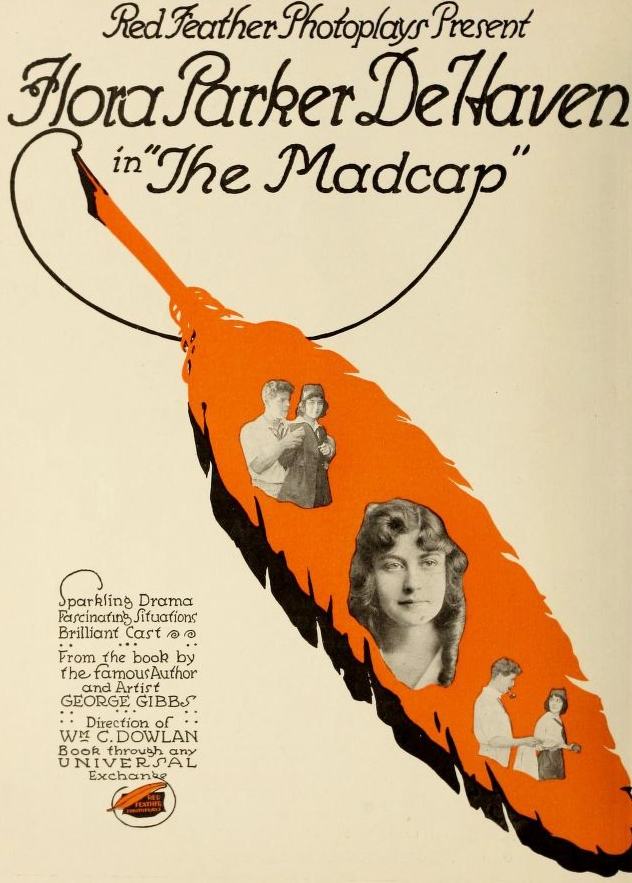
To witness The Madcap is to observe the cinematic birth of the modern woman, a figure who refuses to be merely a decorative element in the gilded frames of the early 20th century. Directed with a keen eye for both pastoral beauty and the claustrophobia of the elite, this 1916 silent feature serves as a seminal exploration of female agency and the performative nature of social class. Hermia Challoner, portrayed with a luminous, frenetic energy, is not simply a 'madcap' in the pejorative sense of being flighty; she is a revolutionary in silk, a woman whose boredom is a symptom of a systemic lack of intellectual and emotional challenge.
The film’s opening movements establish a dichotomy between the rigid expectations of the mainland and the untamed potential of the island. When Hermia deliberately sabotages her aircraft to force an encounter with John Markham, the act is less about romantic pursuit and more about an instinctive drive toward the 'danger' of the authentic. Markham, the portrait painter, represents a mirror in which Hermia cannot see her social reflection, but rather her human potential. Unlike the protagonists in The Caprices of Kitty, Hermia’s eccentricities are not merely for the viewer's amusement; they are a desperate language spoken by a soul seeking resonance in a vacuum of luxury.
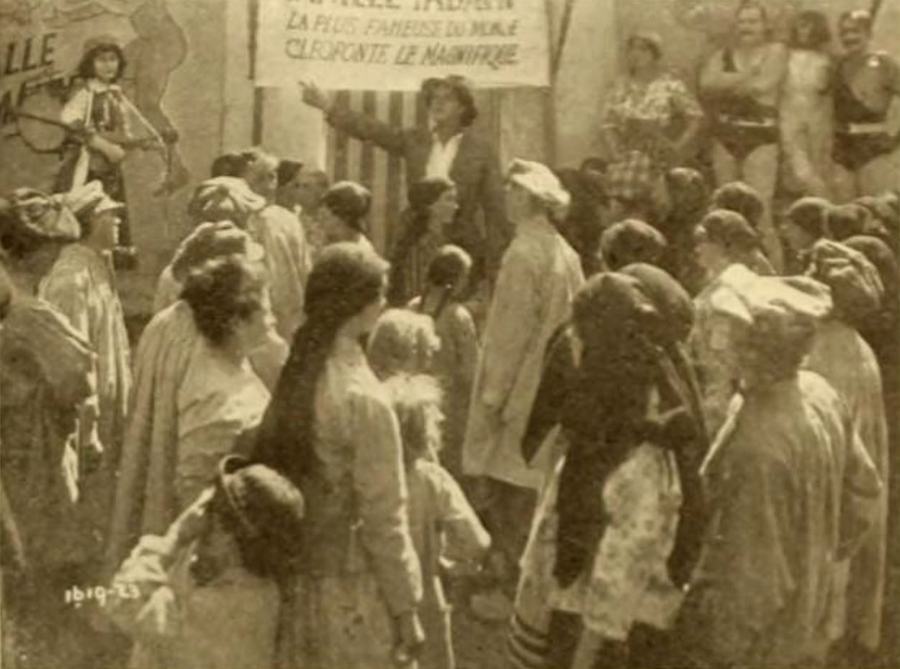
The transition to the French countryside marks a significant aesthetic and thematic pivot. As Hermia adopts the persona of Yvonne Deschamps, the film engages in a sophisticated play on identity. Here, the 'vagabond' is not a figure of tragedy, but of liberation. The cinematography captures the Alencon Fete with a documentary-like fervor, contrasting the vibrant, chaotic life of the itinerant performers with the sterile, voyeuristic gaze of the aristocracy. In this segment, The Madcap echoes the thematic depth found in The Painted Soul, where the external image of a woman is constantly at odds with her internal truth.
Markham’s role as 'Philadin,' the lightning artist, serves as a critique of the artistic establishment. By taking his art to the streets, he rejects the commodification of the portrait, much like Hermia rejects the commodification of the debutante. Their shared life in Normandy is a fleeting utopia, a rose-tinted rebellion against the impending shadow of social consequence. However, the presence of Countess Olga Tcherny serves as the serpent in this pastoral Eden. Olga represents the enforcer of the status quo, the woman who has traded her soul for social standing and cannot tolerate another who dares to reclaim hers.
"The struggle between Hermia and Olga is not a mere catfight; it is a clash of ideologies. One seeks the truth of the forest, the other the deception of the parlor."
The third act of the film shifts from the organic textures of Normandy to the sharp, unforgiving lines of New York high society. The sequence involving the private theatricals hosted by Mrs. Hammond is a masterclass in psychological tension. When Olga stages a play based on Hermia’s 'scandalous' summer, she is engaging in a form of social assassination that feels remarkably contemporary. This meta-theatrical device allows the film to comment on the cruelty of gossip and the fragility of a woman's reputation—themes also explored with varying degrees of intensity in The Shadow of Her Past and The Swagman's Story.
The brilliance of Leonora Ainsworth’s writing shines here. Hermia’s reaction to seeing her life parodied is not one of mere embarrassment, but of profound existential betrayal. The audience in the film laughs at what they perceive as a ribald comedy, oblivious to the fact that they are witnessing the dissection of a living spirit. It is only through Markham’s intervention—his refusal to let the narrative be dictated by the malicious—that the truth is restored. His defense of Hermia to Mrs. Hammond is a pivotal moment that underscores the film's moral core: that integrity is found in action, not in the preservation of a false image.
When compared to other films of the era, such as Nell of the Circus or From Broadway to a Throne, The Madcap distinguishes itself through its psychological nuance. While many silent films relied on broad archetypes, Hermia is a character of contradictions. She is both vulnerable and fiercely independent, a woman who finds her greatest strength in her willingness to be 'undone' by love and adventure. The film avoids the melodramatic pitfalls of works like The Buzzard's Shadow, opting instead for a more grounded, though still romanticized, exploration of human connection.
Furthermore, the use of the 'tiny bell' as a narrative motif is a stroke of symbolic genius. It harkens back to the sensory experience of the Alencon Fete, bridging the gap between the cold reality of New York and the warmth of the Vallecy rose garden. It is a silent message that transcends language, much like the subtle gestures found in La marcia nuziale or the evocative landscapes of Assisi, Italy. The bell represents the 'call of the wild'—not a savage wild, but a bohemian one where the only law is the authenticity of the heart.
The direction by the uncredited but clearly capable hand (often attributed to the collective vision of the era's masters) utilizes the frame to isolate and then integrate Hermia into her environments. The early scenes on the island use wide shots to emphasize her smallness against the vastness of the sea, mirroring her internal feeling of insignificance within her social circle. As the film progresses and she finds her footing in Normandy, the shots become tighter, more intimate, capturing the tactile joy of her vagabond costume and the shared glances with Markham. This visual evolution is as critical to the storytelling as the intertitles themselves, reminiscent of the visual storytelling in The Arab or The Half-Breed.
The pacing of the film is remarkably modern. It avoids the static, stage-bound feel of many early features, moving with a rhythm that mirrors Hermia’s own restless energy. The accident with the auto, the escape through the attic window, and the final rush to Vallecy are edited with a sense of urgency that keeps the viewer engaged. Even the more somber moments, such as Hermia's exile in New York, are handled with a dignity that prevents the film from descending into mere pathos. It shares a certain technological and social dynamism with Via Wireless, though its focus remains firmly on the human heart rather than the machine.
In the final analysis, The Madcap is a testament to the enduring power of the romantic spirit. It suggests that while society may attempt to script our lives—as Olga literally did in her play—the individual retains the power to rewrite the ending. The reconciliation in the rose garden at Vallecy is not a return to the domestic sphere, but a return to the place where the masks were first dropped. It is a triumph of the 'vagabondia' of the soul over the 'sham' of the world.
For the modern viewer, the film offers a fascinating glimpse into the pre-war anxieties regarding class fluidity and female liberation. It stands alongside Body and Soul as a study of the dualities we all carry. Hermia Challoner remains an icon of cinematic rebellion, a reminder that sometimes, to find oneself, one must first lose one's way in the most spectacular fashion possible. Whether she is flying an aeroplane into the unknown or playing her instruments outside a tent, she is a character who demands—and earns—our undivided attention.
Rating: ★★★★½
A luminous jewel of the silent era that sparkles with wit, heart, and a fierce sense of justice.
IMDb 7.6
1925
Community
Log in to comment.