DbcultAccessing Vault...
Cult Review
Senior Film Conservator
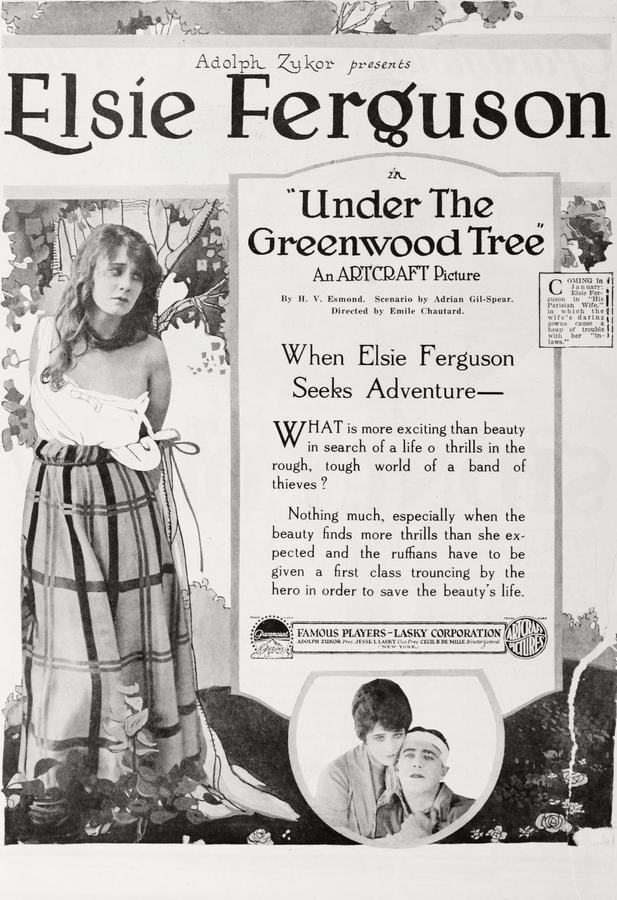
Ah, the silent era! A time when narratives often possessed a charming, almost fable-like quality, where grand gestures and stark thematic contrasts held sway. Under the Greenwood Tree, a 1918 cinematic offering, is a delightful exemplar of this period, a pastoral romance that, beneath its seemingly straightforward surface, unfurls a compelling critique of societal artifice and the enduring allure of authenticity. Directed with a keen eye for both natural beauty and human emotion, this film, penned by Adrian Gil-Spear and H.V. Esmond, delves into the age-old conflict between status and sincerity, offering a refreshingly spirited heroine at its core.
At the heart of this sylvan drama is Mary Hamilton, portrayed with an ethereal grace and spirited resolve by the luminous Elsie Ferguson. Mary is no ordinary heiress; she harbors a visceral disdain for the superficiality and mercenary intentions of the titled fortune hunters who perpetually orbit her wealth. Her spirit yearns for something genuine, something untainted by the rigid class structures of early 20th-century society. This yearning propels her to an extraordinary act of rebellion: she abandons her gilded cage, taking her loyal secretary, Peggy Ingledew (Mildred Havens), with her, to immerse herself in the unconstrained life of a band of roving gypsies. It’s a bold move, one that immediately sets her apart from the conventional heroines of her time, reminding one perhaps of the defiant spirit found in films like The Iron Woman, where female protagonists frequently challenged societal norms, albeit often within different contexts. Mary’s flight isn’t merely an escape; it’s an active pursuit of an idealized existence, one in harmony with nature and free from the suffocating expectations of her birthright.
The tranquility of Mary’s newfound freedom is, of course, destined to be disrupted. Her world, however, is not so easily shed. One of her more persistent suitors, Sir Kenneth Graham (Henry Warwick), a man whose intentions, while perhaps misguided, are rooted in a genuine, if possessive, affection, follows the two young women into the woods. His disguise as a fellow gypsy is a testament to the lengths some will go for love, or at least, for what they perceive as love. This trope of mistaken identity and class crossing is a rich vein in silent cinema, a narrative device explored in various forms, from the dramatic twists of The Tiger Man to the romantic entanglements of The Road to Love. Here, it serves to highlight the stark contrast between the natural world and the artificial constructs of society, even when those constructs attempt to infiltrate the wild.
The idyllic setting soon gives way to conflict. Jack Hutton (Eugene O'Brien), a local landowner, epitomizes the established order, a man determined to rid his forested domain of the perceived 'undesirables' – the gypsies. His actions lead to Sir Kenneth’s unjust imprisonment, a moment that underscores the arbitrary nature of justice when class and prejudice collide. Jack’s subsequent encounter with Mary is the film’s central transformative moment. Initially approaching her camp with the same eviction agenda, his resolve crumbles upon witnessing her ethereal beauty, illuminated by the moon as she swims in a secluded pond. It is a moment of pure cinematic romance, a visual poem that transcends dialogue, much like the unspoken desires in Sapho. In that instant, Jack’s preconceived notions and hardened stance evaporate, replaced by an immediate, profound infatuation. This sudden shift from antagonist to ardent suitor is a common, if charmingly abrupt, narrative turn in films of this period, yet O'Brien's earnest portrayal makes it surprisingly believable.
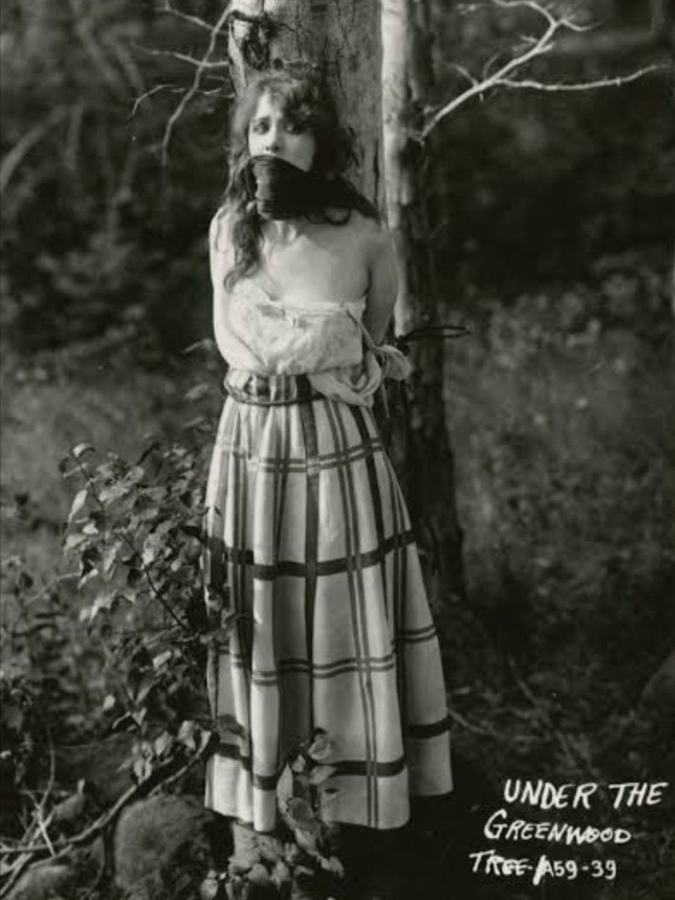
The mutual attraction between Mary and Jack blossoms rapidly. An invitation to dine leads to a burgeoning connection, a testament to the power of shared moments over societal divides. However, the transient life Mary has embraced is not without its perils. After Jack departs, a group of nefarious gypsies, perhaps a rogue element rather than representative of the entire community, rob her wagon and leave her tied to a tree. It’s a classic damsel-in-distress scenario, a narrative device used to propel action and showcase heroism, seen in countless films from The Menace of the Mute to After Sundown. Jack’s attempt at rescue is met with brutal resistance, leaving him unconscious. Just as hope seems lost, fate intervenes with the timely arrival of Sir Kenneth, now released from jail, accompanied by Peggy. This dramatic convergence of characters, each on their own journey, brings the various plot threads together in a satisfying, if slightly convenient, resolution. Sir Kenneth, having learned his lesson and perhaps realizing the futility of forcing affection, and Peggy, his loyal companion throughout this misadventure, depart to be married, a sweet, understated resolution to their subplot, allowing the primary romance to take center stage.
The final act of the film sees Mary diligently nursing Jack back to health, a period of quiet intimacy that allows their bond to deepen beyond the initial spark. It is during this time that Mary finally sheds her assumed identity, revealing her true aristocratic background. This revelation, rather than creating a chasm, solidifies their connection, proving that Jack’s love is for her, the woman, not her status. Their agreement to marry signifies a triumph of genuine affection over societal expectations, a theme beautifully echoed in films like What Money Can't Buy. The ending is a romantic ideal: a union forged in the crucible of nature, far from the madding crowd and the constraints of class.
The performances in Under the Greenwood Tree are, for the most part, commendably nuanced for the silent era. Elsie Ferguson, as Mary Hamilton, carries the film with an impressive blend of vulnerability and strength. Her expressive eyes and graceful movements convey a rich inner life that transcends the limitations of intertitles. She embodies the progressive spirit of a woman seeking self-determination, a precursor to the more overt feminist themes that would emerge in later decades. Eugene O'Brien’s Jack Hutton, initially stern and imposing, softens convincingly under Mary’s influence, his transformation from rigid landowner to devoted lover being one of the film’s most satisfying arcs. The supporting cast, including Henry Warwick as the persistent Sir Kenneth and Mildred Havens as the ever-faithful Peggy, provide solid foundations for the central romance, their roles often serving as foils or catalysts for the main characters' development. The chemistry between Ferguson and O'Brien is palpable, conveyed through lingering glances and subtle gestures, a hallmark of effective silent film acting.
From a directorial standpoint, the film makes excellent use of its sylvan setting. The 'greenwood tree' itself becomes almost a character, symbolizing freedom, natural beauty, and a refuge from the artificiality of society. The cinematography, while perhaps not groundbreaking for its time, effectively captures the serene beauty of the woods and the dramatic tension of the nighttime scenes. The moonlit pond sequence, in particular, is a masterclass in visual storytelling, using light and shadow to create an atmosphere of enchantment and revelation. The pacing, typical of silent films, allows moments to breathe, building emotional resonance through extended gazes and carefully composed tableaux. The intertitles, sparse but effective, guide the audience through the narrative without over-explaining, trusting in the actors' ability to convey emotion.
Thematic depth is another area where Under the Greenwood Tree shines. It's not just a love story; it’s a commentary on class, identity, and the pursuit of happiness beyond material wealth. Mary’s rejection of her aristocratic life for the perceived freedom of the gypsies speaks volumes about the societal anxieties of the era. This was a time of significant social upheaval, and films often reflected a yearning for simpler, more authentic lives. The film implicitly asks: what constitutes true nobility? Is it inherited title or inherent character? By having Mary find love and fulfillment with a landowner, albeit one initially prejudiced against her chosen lifestyle, the film navigates a middle ground, suggesting that true connection can bridge even the most entrenched social divides. This theme of transcending social barriers for love is a perennial favorite, seen in various forms from Vanity to Lyubov statskogo sovetnika, but here it's imbued with a particular naturalistic charm.
The writing by Adrian Gil-Spear and H.V. Esmond, while adhering to many silent film conventions, manages to imbue the characters with clear motivations and a sense of progression. The plot, though occasionally reliant on convenient coincidences, maintains a compelling flow, ensuring that the audience remains invested in Mary’s journey. Their narrative choices, such as the clear distinction between the 'good' gypsies and the 'bad' bandits, reflect the moralistic storytelling prevalent in early cinema, where clear heroes and villains often drove the plot. Yet, the core message of finding one’s true self and true love outside of societal confines resonates strongly, making the film feel surprisingly modern in its emotional core.
In comparing Under the Greenwood Tree to other films of its era, one can appreciate its unique blend of romantic escapism and social commentary. While films like The Day might have focused on broader societal issues and The Volunteer on wartime heroism, Under the Greenwood Tree grounds its narrative in a deeply personal quest for authenticity. It shares a certain adventurous spirit with The Smugglers, but its focus remains steadfastly on the inner world of its protagonist and the transformative power of nature and genuine affection. It doesn't possess the grand scale of something like Sequel to the Diamond from the Sky, but its intimate charm is its greatest strength. It’s a film that, despite its age, continues to speak to the timeless human desire for freedom, connection, and a life lived on one’s own terms, rather than dictated by external pressures. The performances, the evocative setting, and the heartfelt story combine to create a cinematic experience that remains captivating and relevant, a testament to the enduring power of classic storytelling. It’s a gentle reminder that sometimes, the greatest treasures are found not in gilded halls, but under the vast, open sky, beneath the sheltering embrace of the greenwood tree.
IMDb 6.7
1928
Community
Log in to comment.