DbcultAccessing Vault...
Cult Review
Senior Film Conservator
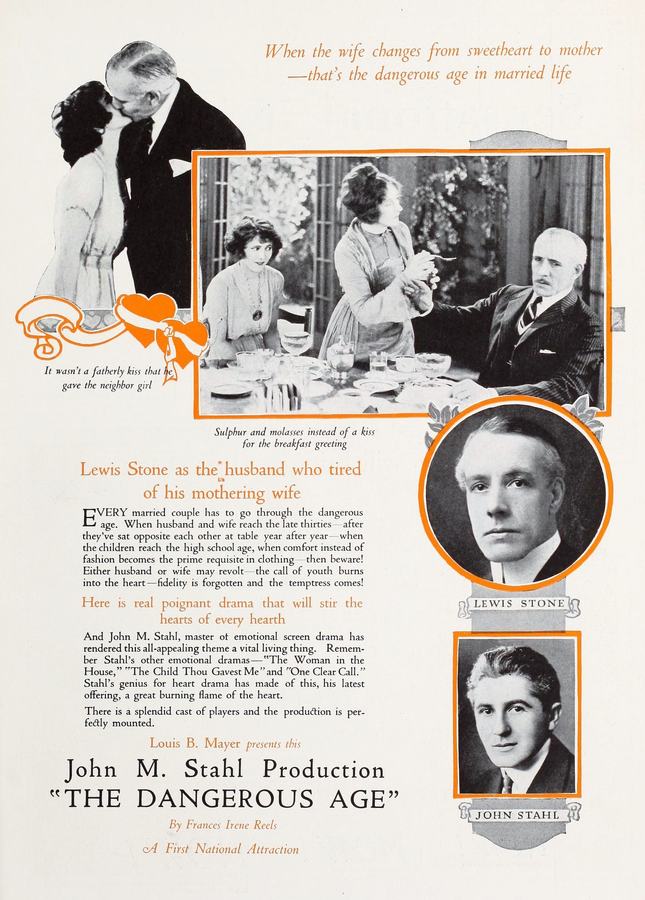
In the flickering penumbra of 1923, when Hollywood still flirted with Victorian mores before plunging headlong into jazz-soaked decadence, The Dangerous Age arrives like a tintype daguerreotype—sepia, frayed, yet incandescent. The film’s very title is a dare, a confession, a prophecy: no calendar date is specified, yet every frame quivers with the vertigo of mid-life, that precarious ledge where yesterday’s certainties ossify into tomorrow’s regrets.
Director-producer team Edmund Burns and Sidney Algier frame the Emerson household as a mausoleum upholstered in chintz. Observe the opening tableau: Mary (Helen Lynch) buttons John’s ascot with the perfunctory tenderness of a governess grooming a recalcitrant charge. The camera, stationary yet quietly predatory, lingers on John’s reflection in a hallway mirror—his visage doubled, suggesting a man split between the dutiful child his wife perceives and the virile individual he aches to reclaim. Lynch’s micro-gesture—a half-rolled eye, a sigh swallowed like castor oil—telegraphs volumes without title-card assistance.
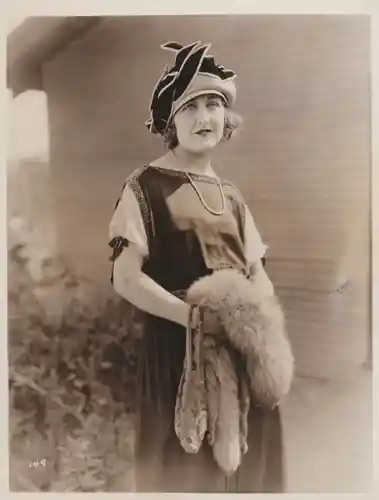
Enter Gloria Sanderson, essayed by Edith Roberts with a kineticism that feels almost technicolor against the film’s grayscale morality. She first appears in a montage superimposed over John’s train window—her silhouette flickers, a will-o’-the-wisp luring him toward the carnal unknown. Note the costuming: while Mary’s frocks cling to 1890s high-necked propriety, Gloria’s fringe dress shivers like liquid gold, each shimmy a manifesto of Roaring-Twenties sexual autonomy. Their flirtation unfolds in a hotel ballroom drenched in chiaroscuro; cigarette smoke curls around them like Morse code, spelling doom in aromatic dots and dashes.
Screenwriters Frances Irene Reels and Lenore J. Coffee weaponize a single sheet of stationery into a silent-era equivalent of Hitchcock’s Rear Window flashbulb. Once John posts his farewell letter, Burns inserts a bravura insert shot: the envelope sliding down a mail chute becomes a vertiginous plunge toward moral abyss. Intercutting achieves Eisensteinian tension—Gloria’s betrayal (discovered in a shadow-drenched alcove) parallels the letter’s inexorable postal journey. The locomotive that John chases is no mere machine; it is a gleaming serpent of industrial modernity, devouring the last crumbs of his patriarchal certainty.
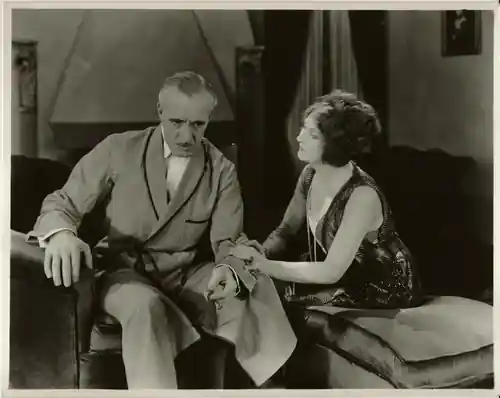
When Mary finally receives the damning epistle, Lynch’s face—captured in an aching close-up—undergoes a metamorphosis that would humble any talkie performer. A tremor passes through her left cheek; her pupils dilate as though swallowing a storm. Then, the sublime: she folds the letter into her sewing basket, the domestic equivalent of interring a corpse beneath floorboards. From this moment forward, every interaction with John is a danse macabre of courtesy, her smile a brittle china plate balanced on the seismic fault of heartbreak.
Cinephiles will detect tonal echoes with Germinal; or, The Toll of Labor, where coal dust and marital soot alike blacken the lungs of ambition. Conversely, Kilauea Volcano offers a geological metaphor: John’s eruptive infidelity and Mary’s subsequent lava dome of stoic forgiveness mirror the Pacific Ring of Fire—beauty born of tectonic rupture. Even As Ye Repent traffics in contrition symbology, though its religiosity lacks the secular, almost existential ache that permeates this narrative.
Restored prints reveal Myrtle Stedman’s tinting schema: amber for interiors (the sepia of memory), cobalt for exteriors (the bruise of possibility). Such chromatic dialectics, rare in 1923, anticipate the ideological color wars of Vertigo. Meanwhile, the recurring motif of windows—rain-lashed, frosted, cracked—serves as Brechtian alienation, reminding viewers that every marriage is a public spectacle viewed through private glass.
Richard Tucker’s John is no Valentino rake; rather, he embodies the middle-management drone, his masculinity measured in ledger columns. Watch the slump of his shoulders when Gloria’s betrothed—a broad-shouldered aviator—enters the frame. Tucker’s body seems to deflate, air hissing from a punctured balloon of male ego. His contrite return to Mary is less romantic epiphany than survivalist instinct, a turtle retracting into the shell of domestic predictability.
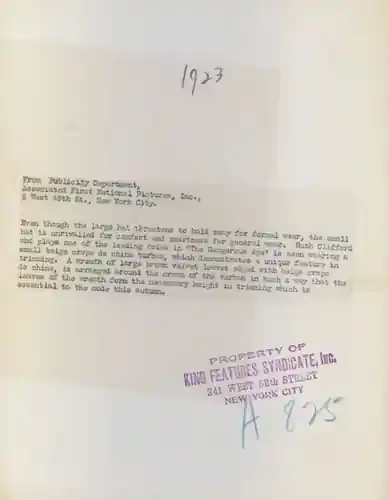
Though originally accompanied by live orchestras performing a pastiche of Tchaikovsky and Irving Berlin, modern festival screenings often commission new scores. The most haunting reinvention employs a solo viola da gamba, its gut strings rasping like unspoken resentments. During the letter-retrieval sequence, the musician scratches a repeated ostinato that crescendos into a shriek—audible analogue to John’s internal howl.
The closing shot is a masterpiece of mutual implication: husband and wife framed in a doorway, their figures backlit so that faces dissolve into silhouette—identity subsumed into marital institution. Who forgives whom? The ambiguity is radical for 1923, predating Bridges Burned and its feminist conflagrations by nearly a decade. Mary’s final blink, barely perceptible at 18fps, is a covenant sealed in salt tears rather than sacramental wine.
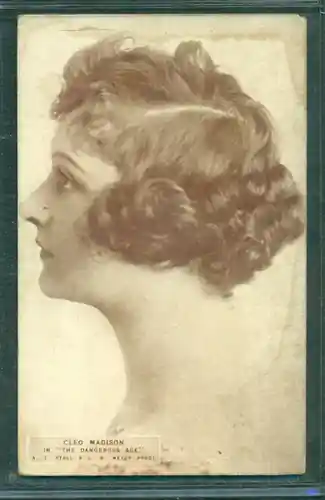
In an era swamped by algorithmic dating apps and polyamory handbooks, The Dangerous Age feels prophetic: intimacy still curdles under mismatched power vectors, and the most perilous rebellion may be choosing to stay, to forgive, to reweave frayed vows. Stream it on archival platforms, project it onto brick warehouse walls, let the celluloid ghosts remind you that every modern swipe-left carries the echo of John’s ink-stained confession.
This 78-minute poem indicts no villains, only casualties of temporal drift. It is a film to be sipped like mulled wine on a storm-cuffed night—its warmth deceptive, its aftertaste astringent with self-recognition. Seek it not for nostalgic curiosity but for the jagged mirror it holds against your own dangerous age, whatever calendar page you inhabit.
IMDb —
1918
Community
Log in to comment.