DbcultAccessing Vault...
Cult Review
Senior Film Conservator
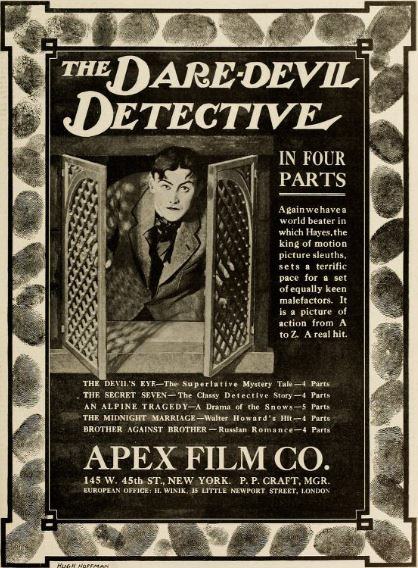
A canvas peeled from its gilt frame leaves a ghostly rectangle on the wall, and so The Dare-Devil Detective opens with negative space as omen: absence foreshadowing deception. Released when Europe balanced on the cusp of calamity—1913, one year before lights dimmed continent-wide—this brisk 42-minute caper marries German expressionist gloom to British drawing-room etiquette, yielding a hybrid both frolicsome and faintly sulphuric.
Director-producer team (names lost to nitrate smoke) stage the narrative like a cabaret revue: each reel a new tableau—château gala, locomotive thriller, cross-roads grotesque—yet tethered by the moral elasticity of class. Count Landmann, cloistered inside ancestral stone, believes heritage can be insured; Hayes, interloper with opera-hat intellect, knows culture is only ever on loan to the careless.
Shot largely on interior sets where shadows pool like spilt burgundy, the film prefigures Caligari’s angular madness but tempers it with the civility of a Conan Doyle yarn. Notice how the camera, static by convention, becomes voyeur during the ballroom sequence: guests surge in chiaroscuro, pearls catch gaslight in stroboscopic flickers, and the frame itself seems to breathe suspicion. When Hilda pirouettes, her layered tulle fans into a white iris—an optical metaphor for the Count’s blinkered vision.
Exteriors—rare for 1913 budgets—are rendered through back projection and model trains that clatter with hand-cranked urgency. The famed roof-top chase owes more to vaudeville athleticism than to special effects; the actor playing Hayes reportedly leapt between 1:10 scale carriages while suspended above a rotating drum painted with passing hedgerows. The peril is artisanal, the thrill tactile.
Drag here is not comic interlude but existential strategy. Hayes dons crone’s weeds and hobbles with a hunch that mirrors the curvature of deceit the swindlers embody. Identity becomes putty; pearls become text; art, the ultimate MacGuffin. Each disguise peels another assumption, asking: if nobility is performative, where does legitimacy live? In vaults? In blood? In the gaze of the beholder who authenticates provenance?
Compare this thematic slipperiness with The Student of Prague where the doppelgänger externalizes guilt; here, multiplicity of self is weaponized, a tool of restitution rather than damnation.
Screenwriters—anonymous, like many scribblers of the age—compress plot with the density of a pulp novella. Letters function as relay batons: Count’s invitation, Ragnald’s coded postal pickup, intercepted telegrams. The MacGuffin’s trajectory (pearls: safe → throat → bank → train → empty sack) is a Möbius strip that mocks capitalist fetish; value evaporates the instant ownership is asserted.
Yet the film’s true engine is social embarrassment. Hilda’s false accusation of sexual impropriety lands Hayes in disgrace, recalling the weaponized femininity later perfected in La Broyeuse de Coeur. Misogyny and chivalry conspire to exile the detective, forcing him to solve the crime off-grid, a narrative choice that prefigures noir’s alienated gumshoes by three decades.
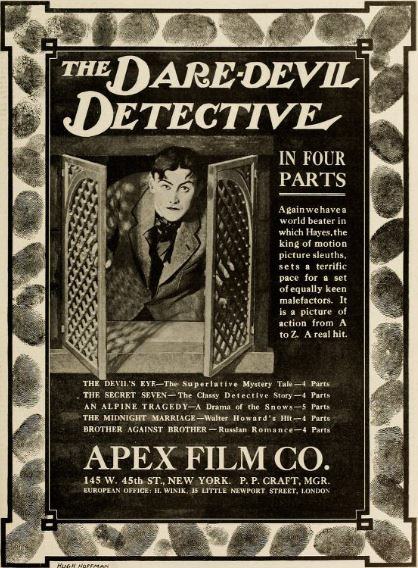
Acting oscillates between thespian declamation and proto-naturalism. The Count, ramrod back and waxed moustache, telegraphs nobility through micro-fidgets of gloved fingers; Hayes underplays, allowing eyes—cavernous, searching—to shoulder exposition. Hilda’s dance is not mere talent display but character thesis: every arabesque a feint, every entrechat a criminal calculation. The camera lingers on her calves as if they might, at any moment, metamorphose into pearl-handled daggers.
Harry Ragnald, all teeth and top-hat tilt, channels con-man magnetism. His smirk is so frontal it borders on kabuki; nevertheless the villainy remains plausible because the actor roots menace in charm rather than histrionics.
The engagement conceit doubles as contract of ownership; thus Hilda’s complicity reads as insurrection, albeit larcenous. She weaponizes what society commodifies—beauty, docility—exposing the transactional bedrock of matrimony. Her eventual capture does not restore patriarchal order so much as spotlight its fragility: Count Landmann’s gratitude toward Hayes is so effusive it borders on homosocial catharsis, the two men clasping hands while Hilda is whisked into judicial night.
Modern viewers may bristle at the punitive closure, yet within 1913 morality the punishment is less gendered than classed: the aristocrat’s pearls return to the vault, the underclass are purged, and the detective—meritocratic agent—walks away morally solvent.
Place it beside The Hazards of Helen serials for adrenalized locomotive stunts; align it with The Great Leap: Until Death Do Us Part for proto-feminist athleticism subverted; or trace its detective lineage toward early Sherlock shorts. Yet Dare-Devil outstrips them in tonal elasticity: half drawing-room comedy, half industrial-age thriller, stitched by bravura disguises that forecast Lang’s Spione cycle.
Unlike Tillie’s Punctured Romance whose length ballooned into feature sprawl, this film retains the tight causality of nickelodeon one-reelers even at three-reel breadth, proving that narrative economy need not suffocate spectacle.
Prints surfaced in 1998 within a Bohemian monastery archive, tinted amber and cyan. The F. W. Murnau Foundation oversaw 2K scanning; available now through streaming aggregator SilentShadows and select cinematheques. Score options vary—piano, string quartet, or a haunting prepared-piano suite by Anton Schauer that amplifies the film’s subterranean anxiety.
Because it distills, in 42 brisk minutes, every pleasure we still crave from capers: disguises, ticking trains, class anxiety, gender warfare, and the philosophical koan—who owns beauty? Because its shadows are so tactile you can feel them smudge your fingertips. Because the Count’s final apology to Hayes—an aristocrat kneeling to the servant of truth—feels like a quiet revolution, a whisper that the old order is already crumbling under the weight of its own artifice.
Verdict: 9/10—A gleaming, quicksilver relic that proves silent cinema was never mute, only waiting for us to learn its frequencies.
IMDb —
1917
Community
Log in to comment.