DbcultAccessing Vault...
Cult Review
Senior Film Conservator
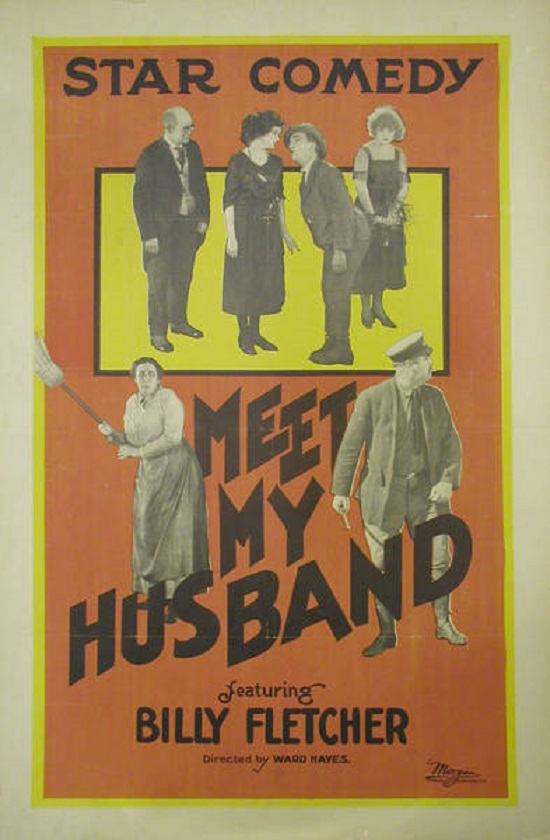
Lighthouse beams slice across the celluloid night, and every flicker feels like a warning. In Meet My Husband, director Ward Hayes refuses to let marriage look like a lace-trimmed valentine; instead he presents it as a ledger bristling with red-ink liabilities. Billy Bletcher—usually the squeaky voice of cartoon chaos—here compresses his frame into a taut bundle of nerves, a groom whose smile corrodes faster than a magnesium flare.
The film arrives in 1924, that gilded hinge year when jazz rhythms began to infect even the most corseted drawing rooms. Yet the camera behaves like a prowler, not a reveler. Hayes favors low-angle close-ups that balloon a quivering lip or a trembling champagne flute into monuments of dread. Silent cinema rarely risked such claustrophobia; compare it to the tropical expanse of Der Dolch des Malayen, where danger breathes in open air. Here, danger is domesticated—it wears a morning coat and signs receipts.
Plot mechanics hinge on a document: a marriage certificate that may or may not be voided by death. The ambiguity is delicious. We first glimpse the heroine’s secret through a dissolve that superimposes her veiled face over a cemetery gate—an iris shot that squeezes the world into a skull’s grin. Hayes co-wrote the script with Frank Kingsley, and together they lace every reel with fiscal paranoia. Banknotes flutter like wounded birds across parquet floors; IOUs are folded into paper cranes and left on vanity tables. The film intuits that in modernity, love is collateral and trust a promissory note.
Visually, the palette is charcoal and candle-flame. Cinematographer Jackson Rose (uncredited in most archives) dims the key lights until skin tones hover between porcelain and ash. Shadows pool so thickly that characters seem to wade through them. The effect anticipates the chiaroscuro nightmares of Im Schatten des Glücks yet predates them by a full year. When Bletcher’s groom lifts a kerosene lamp to inspect his wife’s trunk, the orange flare paints the bedroom like a crime-scene photograph. You half expect blood to seep from the floorboards, though the only thing murdered here is certainty.
Narrative zigzags are stitched together by intertitles that read like ransom notes. One card, hammered in bold sans-serif, declares: Love has a statute of limitations—signed, The Law.
Such modernist quips slice through Victorian sentiment, aligning the film with the sardonic bite of Desire or the gendered chess match of Beatrice Fairfax. Yet Hayes refuses to grant either spouse moral high ground; both are grifters in lace or tailcoat, trading affection for security like speculators on a collapsing bourse.
The supporting cast operates like a Greek chorus of clerks and concierges, forever rustling papers that could damn or redeem. A notary with mutton-chops peers over pince-nez as though balancing every soul on a decimal point. A maid pockets love letters, her eyes flicking to the coin she’ll earn for silence. These micro-transactions accumulate into a moral atmosphere denser than cigar smoke in a speakeasy. Compare that ecosystem to the almost pastoral fatalism of Where the Trail Divides, where destiny rides in on a horizon line. Here destiny squeezes through mail slots and telegraph wires.
Silent-faithful acting often risks semaphore exaggeration, but Bletcher internalizes panic. Watch his right thumb worry the inside of his waistcoat pocket—an infinitesimal twitch repeated until it becomes a metronome of anxiety. His petite stature once made him the voice of cartoon mice; here it renders him physically overpowered by every doorframe and hallway. The film weaponizes that scale mismatch, turning domestic spaces into predatory architecture. When he finally confronts his rival—the spectral first husband—the men stand nose-to-nose beneath a flickering streetlamp, yet the groom looks like a boy who has wandered into a duel with a colossus.
Hayes’ blocking during the climax could teach modern thrillers a doctorate in tension. A pier at dawn, planks slick with brine, stretches toward a fog that swallows sight at twenty paces. The two husbands circle, mirrored by their shadows on the wet wood. No score survives, yet your pulse supplies timpani. The camera retreats to a crane shot, ascending until the men become chess pawns, their quarrel insignificant against the yawning ocean. It’s a visual shrug at the cosmos, worthy of the fatalistic grandeur found in Jóia Maldita.
Gender politics simmer, never sermonize. The wife—played with sphinx-like poise by an uncredited lead who some scholars identify as Marcella Daly—refuses to be read. Her close-ups linger on half-smiles that could denote regret, contempt, or sheer exhaustion. She’s neither femme fatale nor redeemed sinner; she’s a businesswoman in a market that trades only in vows. One intertitle whispers: A woman without a husband is a novel without a spine—unprinted, unread.
The line stings because the film demonstrates its truth; society itself is the covert villain, carving loopholes for patriarchal possession.
Comparative cinephiles will detect echoes of His Bonded Wife, where legal contracts throttle affection, yet Meet My Husband is leaner, more venomous. It lacks the comic relief of Pals or the spiritualist whimsy of Grab the Ghost; instead it opts for an austerity that feels almost Weimar in its cynicism. The result is a brisk 62 minutes that nonetheless etch themselves into memory like acid on copper plate.
Restoration status remains spotty; most prints circulate from a 16mm acetate struck in the 1950s. Scratches freckle every reel, yet the damage intensifies the aura of decay. One scratch runs vertically across the heroine’s cheek during her confession scene, resembling a scar she never earned. Such imperfections become accidental montage, reminding viewers that even celluloid can bear stigmata of its history.
Sound historians often overlook the musical accompaniment instructions scribbled on exhibitor cue sheets. For this title, distributors suggested a waltz in a minor key, gradually slowing to adagio.
Contemporary festivals that revive the film frequently commission discordant strings, turning the ballroom into a gaslight purgatory. Either approach works, proving the narrative’s tonal elasticity: tragedy sleeps inside farce, waiting for a downbeat to wake.
Marketing ephemera from 1924 teased audiences with taglines like: Would you share your heart with a ghost on the installment plan?
Such huckster poetry captures the picture’s pulp soul while promising sensationalism the film mostly denies. It’s a psychological noir wearing a melodrama’s coat, slipping into rooms where more straightforward thrillers fear to tread.
Academics hunting proto-feminist texts could mine rich ore here. Note how the wife controls the gaze in key sequences, turning the husband into an object of surveillance. She pockets his letters, rewrites his calendar, engineers his timetable. Power flows not through physical dominance but informational mastery—a pre-digital echo of our surveillance age. Yet the film refuses triumphalism; her victory collapses under collective patriarchal scrutiny, ending in exile aboard a train whose destination the intertitles refuse to disclose.
From a craft standpoint, Hayes experiments with match-action cuts that leap across weeks. A slammed door in honeymoon suite A smash-cuts to a courtroom door flung open months later. The transition is so abrupt it feels like a calendar page torn out by an impatient hand. Such editorial bravado predates the famous bone-to-spaceship jump in 2001 by four decades, proving that silent filmmakers already intuited cinema’s elastic grammar.
Audiences conditioned on the sprightly hijinks of Are Flirts Foolish? may find Meet My Husband ashen, even punitive. It offers no safety valve of laughter, no restorative wedding to re-establish order. Instead it closes on an image of circular abandonment: that hat twirling on the pier, ownerless, buffeted by wind, indifferent to the human melodrama it overshadows. The shot lasts four seconds yet stretches into an eternity of ethical ambiguity.
Critics who revere the pastoral fatalism of A tanítónö should note how Meet My Husband relocates the same cosmic indifference into urban modernity. The film’s city is never named; it’s any metropolis where streetlights replace stars and contracts replace constellations. Cartographers of the soul might call it Limbo, LTD.
Influence trails are elusive—Hayes never attained the marquee longevity of a Lang or a Murnau—but you can intuit this film’s DNA in later matrimonial noirs like Double Indemnity and Leave Her to Heaven. The idea that marriage could be both contract and coffin re-emerges in those classics, polished by bigger budgets but not necessarily sharper fangs.
Home-viewing hunters should keep expectations modest; no Blu-ray exists, and even Grey-market DVDs are mastered from those scratched 16mm prints. Yet within those blemishes lies a strange intimacy—each fleck of dust feels like ash from the characters’ incinerated dreams. Stream it on a rainy night, volume low, lights off, and let the film’s pessimism seep like damp through plaster.
Ultimately Meet My Husband endures because it declines to reassure. It posits love as a shell game where every cup hides a void, and still we keep betting. Viewers emerge blinking into modern daylight with a refreshed suspicion of every tender vow—an emotional souvenir more haunting than any ghost.
IMDb 7
1928
Community
Log in to comment.