DbcultAccessing Vault...
Cult Review
Senior Film Conservator
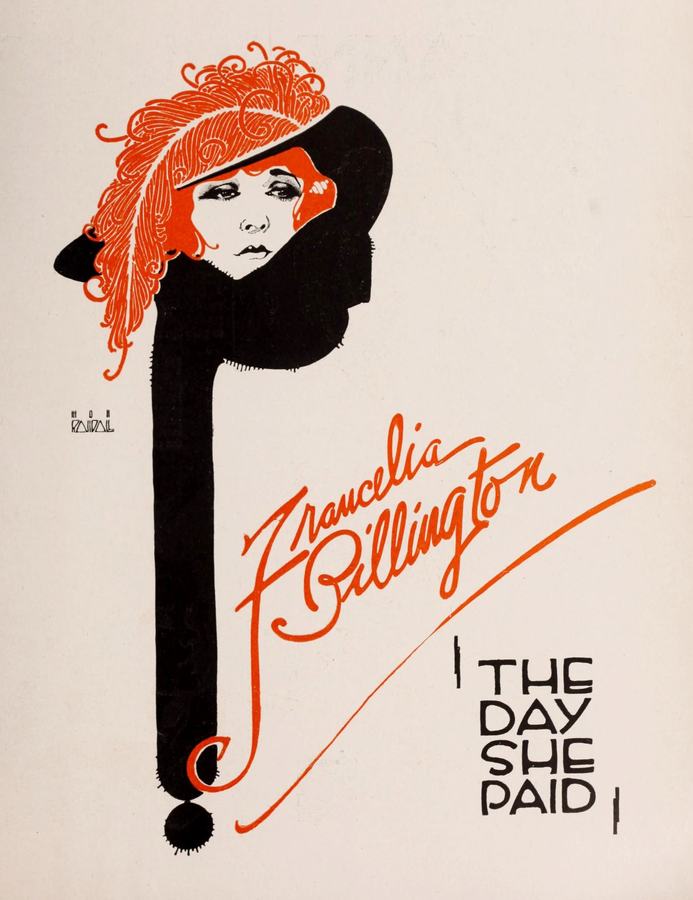
There’s a certain magic to silent cinema, a profound ability to communicate the most complex human emotions through gesture, expression, and the rhythmic interplay of light and shadow. In the annals of early Hollywood, some films stand out not just for their technical prowess, but for their unflinching gaze into the moral quandaries that define the human condition. 'The Day She Paid' (1919), a compelling drama penned by J. Clarkson Miller, Hal Hoadley, and the inimitable Fannie Hurst, is precisely such a film. It’s a narrative that, despite its century-old vintage, resonates with an astonishing contemporary relevance, exploring themes of past transgressions, societal judgment, and the often-unbearable burden of truth. Starring the luminous Alice Terry, this picture is far more than a period piece; it’s a timeless examination of the price exacted by secrets and the courage required to confront them.
From the moment the opening title cards flicker across the screen, we are drawn into the sophisticated, yet morally ambiguous, world of Manhattan society. Marion Buckley, portrayed with exquisite sensitivity by Alice Terry, is a model of striking beauty and an aura of quiet vulnerability. Her life, seemingly idyllic, is soon complicated by a marriage proposal from Warren Rogers (Charles Clary), a department store magnate whose wealth and social standing promise a life of comfort and security. It’s a proposition that, for many, would be a dream come true. Yet, Marion hesitates, her past casting a long, disquieting shadow over her present joy. This reluctance stems from a prior entanglement with her employer, Leon Kessler (Harry von Meter), a man who had promised her marriage, only to renege on his word. The film skillfully establishes this backstory, not through lengthy exposition, but through subtle visual cues and Terry’s nuanced performance, allowing the audience to intuit the emotional weight of Marion's dilemma.
Kessler, a character painted with shades of opportunistic charm and manipulative cunning, initially agrees to disappear from Marion's life, a silent pact of convenience designed to preserve her new-found happiness. This arrangement, however, proves to be as fragile as spun glass. The narrative tension ratchets up considerably when Kessler, with an almost theatrical audacity, reappears, not as a specter of Marion's past, but as a suitor for Ardath (Nancy Caswell), Warren Rogers' impressionable teenage daughter. This twist is a masterstroke of dramatic irony, placing Marion in an impossible predicament. Her carefully constructed façade of respectability threatens to crumble, not just under the weight of her own secret, but under the very real and present danger of Kessler’s insidious re-entry into her family’s life. The stakes are raised exponentially, transforming a personal secret into a potential familial catastrophe. The film, in this regard, shares thematic DNA with other dramas of the era that explored the destructive power of hidden pasts, such as Sins of Her Parent, where the legacy of past choices similarly haunts the present generation.
Alice Terry’s portrayal of Marion Buckley is, without hyperbole, the beating heart of 'The Day She Paid'. In an era where acting often leaned towards the theatrical and exaggerated, Terry’s performance is a revelation of restraint and profound emotional depth. Her eyes, often downcast or brimming with unshed tears, convey volumes of unspoken anguish and moral conflict. Every gesture, from the subtle clenching of her hands to the slight tremor in her posture, speaks to the inner turmoil that threatens to consume Marion. Terry doesn't just play a character; she embodies the very essence of a woman caught between duty, love, and a past that refuses to stay buried. Her ability to communicate such complex psychological states without uttering a single word is a testament to her mastery of silent acting. One could draw parallels to the expressive power of actresses in other emotionally charged silent dramas like Camille, where the lead's suffering is similarly etched onto her very being.
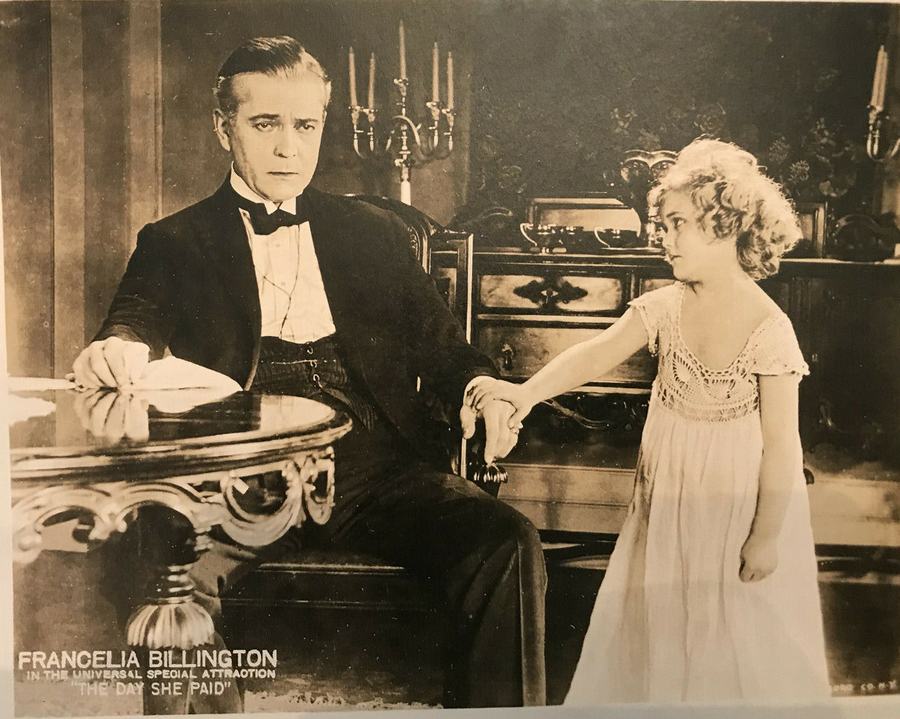
Charles Clary, as Warren Rogers, delivers a performance that, while perhaps less overtly dramatic, is crucial in establishing the emotional anchor of the film. His portrayal of a wealthy, trusting, and ultimately bewildered husband provides a poignant contrast to Marion's internal struggles. Nancy Caswell, as the innocent Ardath, effectively conveys youthful idealism, making Kessler’s pursuit of her all the more sinister. The supporting cast, including Francelia Billington, Miss DuPont, and Lillian Rich, contribute to the tapestry of societal judgment and observation that forms the backdrop of Marion’s ordeal. Harry von Meter, as the villainous Kessler, manages to be both charming and chilling, embodying the type of suave predator that would have been instantly recognizable and feared by audiences of the time.
The influence of Fannie Hurst, one of the most popular and highest-paid writers of her time, is palpable in the film's narrative structure and thematic richness. Hurst was renowned for her stories that often delved into the lives of working women, social class distinctions, and the moral dilemmas faced by individuals navigating a rapidly changing society. Her ability to craft compelling, emotionally resonant stories translated exceptionally well to the silent screen, where strong plotlines and clear character motivations were paramount. 'The Day She Paid' benefits immensely from this literary foundation, providing a framework that allows for deep character exploration despite the limitations of the medium. The themes of social judgment and the consequences of past actions are hallmarks of Hurst's work, echoing in other films of the era that grappled with similar moral complexities, such as Infidelity or Charity, which similarly explored the often-harsh societal reckoning for perceived moral failings.
The screenplay, adapted by J. Clarkson Miller and Hal Hoadley, manages to distill the essence of Hurst's storytelling, translating her prose into a visual language that is both impactful and easy to follow. They craft a narrative that builds tension incrementally, culminating in Marion’s agonizing decision to confess. This moment, the fulcrum of the entire film, is handled with a delicate touch, emphasizing the profound courage required for such an admission. The writers understand that the true drama lies not just in the revelation itself, but in the internal struggle leading up to it, and the immediate, devastating aftermath. This narrative structure, focusing on a pivotal confession, can be seen in other films that hinge on a character's moral reckoning, such as The Reed Case, where a single act of honesty irrevocably alters all relationships.
While the director is not explicitly credited in the provided details, the film exhibits a clear and effective directorial hand in its visual storytelling. The use of close-ups to capture Alice Terry’s expressions, the thoughtful framing of scenes to emphasize power dynamics, and the pacing of the narrative all contribute to its overall impact. The visual language of silent film relies heavily on these elements, and 'The Day She Paid' demonstrates a sophisticated understanding of how to convey complex emotional states and plot points without dialogue. The sets, though perhaps simple by today's standards, effectively establish the opulent world of the wealthy Rogers and the more utilitarian, yet still fashionable, environment of Marion's modeling career. The costuming, too, plays a crucial role, subtly reflecting the characters' social standing and emotional states.
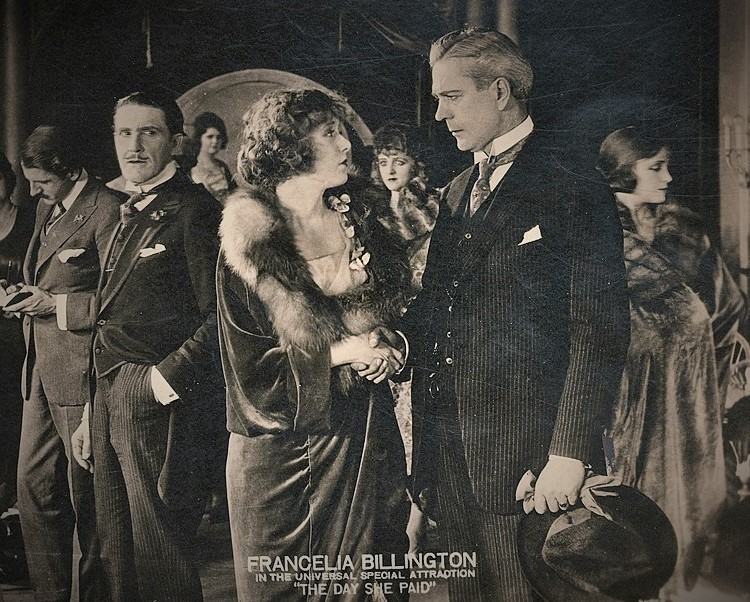
The film’s cinematography, typical of the era, focuses on clear, well-lit compositions that allow the actors' performances to shine. There's a particular artistry in how light and shadow are employed to underscore moments of tension or despair. When Marion is wrestling with her conscience, for instance, the lighting might become more somber, casting her face in deeper shadows, visually mirroring her internal anguish. This careful attention to visual detail elevates the film beyond a simple melodrama, imbuing it with a sense of artistic intention. Films like Queen of Spades, though from a different cinematic tradition, also masterfully used visual cues and atmospheric lighting to convey psychological states, demonstrating the universal power of such techniques.
What makes 'The Day She Paid' so compelling even today is its exploration of themes that remain deeply pertinent. The film tackles the double standards often applied to women regarding their pasts, particularly in matters of romance and reputation. Marion's fear of her past affair being exposed is not just a personal anxiety; it's a reflection of a societal judgment that could utterly destroy a woman's standing, especially if she aspired to marry into wealth and respectability. This societal pressure on women, and the harsh consequences of straying from prescribed norms, is a recurring motif in early 20th-century cinema, as seen in works like War and the Woman or The Spreading Dawn, which similarly depicted women grappling with their public and private lives.
Furthermore, the film delves into the complex dynamics of trust and deception within marriage. Marion’s confession, while born of desperation and a desire to protect Ardath, ultimately shatters the foundation of her relationship with Warren. It forces both characters, and by extension the audience, to confront uncomfortable questions: Is complete honesty always the best policy, regardless of the pain it inflicts? Or are some truths better left buried to preserve a fragile peace? The film doesn't offer easy answers, instead opting for a nuanced portrayal of the messy realities of human relationships. This morally ambiguous territory is fertile ground for drama, and 'The Day She Paid' navigates it with remarkable sophistication. One could argue that its exploration of marital strife and the fallout from hidden truths parallels the emotional intensity found in films like A Law Unto Himself, where personal codes clash with societal expectations.
In conclusion, 'The Day She Paid' stands as a powerful testament to the artistry and thematic depth achievable in silent cinema. It is a film that demands engagement, not merely passive viewing. Alice Terry's performance alone is worth the price of admission, offering a masterclass in non-verbal communication and emotional authenticity. The screenplay, rooted in Fannie Hurst's perceptive understanding of human nature, crafts a narrative that is both gripping and thought-provoking. While the film may not be as widely known as some of its contemporaries, it richly deserves rediscovery for its potent exploration of moral dilemmas, the enduring weight of the past, and the ultimate cost of truth. It reminds us that the human heart, with its capacity for both love and deception, remains an inexhaustible source of dramatic storytelling, transcending the limitations of time and technology. Whether viewed as a historical artifact or a timeless drama, 'The Day She Paid' leaves an indelible impression, echoing the profound truth that some debts, once incurred, must inevitably be paid, no matter how high the cost. This journey of reckoning and redemption, or perhaps simply consequence, is a powerful reminder of how early cinema grappled with profound human experiences, a tradition continued by films like Up from the Depths, which also explored the arduous path of personal accountability.
IMDb —
1934
Community
Log in to comment.