DbcultAccessing Vault...
Cult Review
Senior Film Conservator
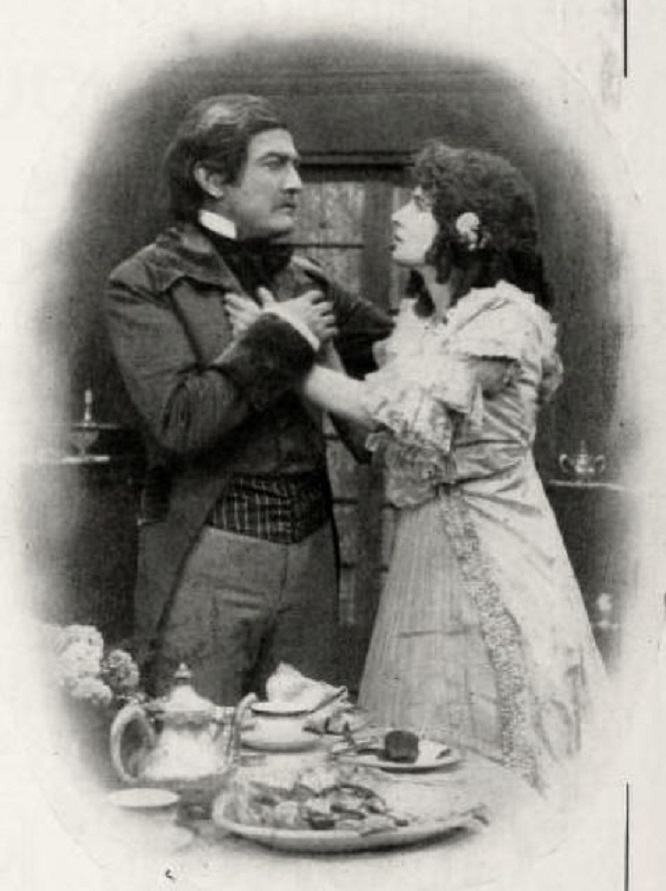
Mary Imlay Taylor’s screenplay treats the Old South like a cracked reliquary: every monologue spills ancestral bones, every ballroom waltz tiptoes across unmarked graves. Director Harry A. Davenport—never heralded among the Griffiths or Tourneurs—nevertheless marshals chiaroscuro like a man who has studied Goya by candle. Note the moment Jim first brushes Helena’s glove; the camera tilts a scant five degrees, enough to make the chandeliers shiver as though sensing an earthquake only the heart can register. That visual tremor foreshadows the seismic finale where reputations slide into the sea.
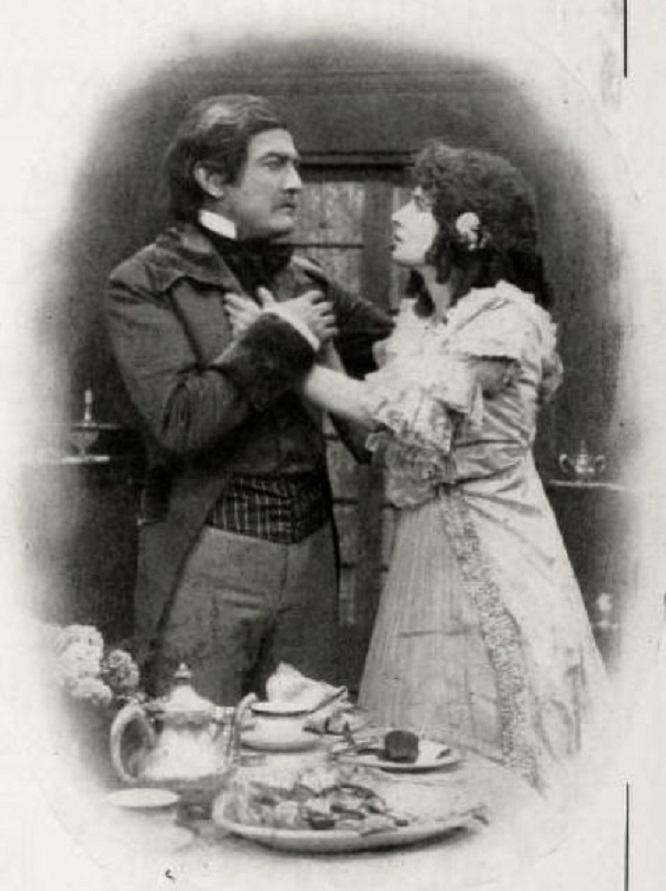
Henry Leone’s Jim Lawrence is a study in velvet sadism—his grin arrives a half-second before the rest of his face, a delay that leaves viewers perpetually wrong-footed. Watch how he fingers the ribbon of Helena’s fan: the gesture is both courtship and autopsy. Opposite him, Helen Strickland’s Helena pivots from porcelain doll to self-immolating Fury without a single intertitle to telegraph the turn; her eyes do the translational work, pale blue flicking to gunmetal in the space of a heartbeat.
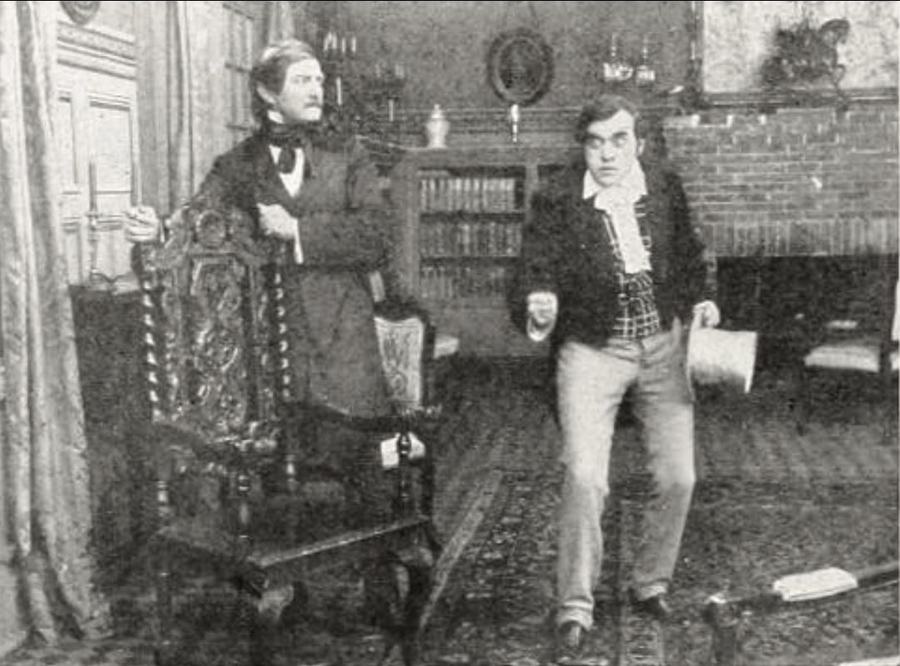
As the titular governor, Augustus Phillips carries the film’s moral tonnage with stooped shoulders and a voice only the audience can supply. His William is decent without sanctity, a man who believes spreadsheets of honor can balance the ledger of sin—until the numbers laugh back. In the resignation scene, Phillips lets his eyelids flutter like broken blinds; the effect is more harrowing than any gnashing of teeth.
Cinematographer Robert Conness (also playing the morally porous Curwood) drapes candlelit interiors with Gobelin gloom, then jolts us into magnesium-white exteriors where the Kentucky grass looks almost radioactive. The contrast is ideological: what festers indoors versus what can bleach itself clean under the sun. When Jim stalks Jenny through the smokehouse, the camera adopts her POV: we see only his disembodied hand parting hams like theater curtains—a fragment of man, a sliver of predator.
Equally audacious is the dissolve that bridges twenty narrative years: an extreme close-up of a rattling slave-shackle morphs into the governor’s polished brass seal. In one shimmering heartbeat, personal history transmutes into state power, implying the whole Commonwealth rests on forged metal originally intended for wrists.
Modern viewers will recoil at the plantation’s paternalistic tableau: enslaved extras beam as William inherits them like trinkets. Yet the film’s unconscious reveals itself when these same faces stare, unsmiling, during Jim’s final carriage exit. Their silence is a palimpsest—beneath the mandated gratitude, contempt etches itself in disappearing ink. Taylor’s script never grants them agency, but the camera, almost by accident, does.
Class anxiety permeates every ballroom. Note the Leighs’ parquet floor: so mirror-bright it reflects chandeliers upside-down, a crystal underworld. When Helena descends the staircase, her reflection arrives first, suggesting she has already split into two women—one who obeys daddy, one who elopes with ruin. The visual rhyme recurs at the dockside tavern where Jenny’s drowned body is laid on a bartop scarred by fish-knives: no reflective gloss here, only porous wood drinking up her last moisture. Birthright versus bastardy etched in surface sheen.
The Ploughshare loves twinning: two brothers, two horses, two bullets, two suicides (Jenny’s rope, Helena’s nearly poisoned chalice). Even the titular ploughshare—mentioned once in a biblical intertitle—has a double edge: it both tills and kills, turning soil and severing veins. Arthur Willet’s pre-duel target practice cross-cuts with Jim seducing Helena, making each gunshot a surrogate ejaculation, each bull’s-eye a ruptured hymen. The editing rhythm—two shots of Arthur, one of Jim—creates a 2:1 metronome that subconsciously primes the viewer for the eventual shift of blame: two men, one crime.
When Helena confesses in open court, the camera abandons its usual stately medium shots for a blistering close-up that isolates her veil against a void-black background. The effect is proto-noir, forecasting Anna Karenina’s train-lit despair by nearly two decades. Her speech—rendered only in intertitles—nonetheless vibrates because Strickland holds her breath between cards, cheeks ballooning as though trapping the words she cannot voice. It is a moment of feminine self-immolation that rivals La Dame aux Camélias in tragic voltage.
Yet Taylor complicates the martyr trope: Helena’s confession is also tactical, a gambit to force William’s hand. She gambles that her public ruin will compel him to reclaim her, proving love stronger than reputation. The calculus backfires—William resigns rather than pardon—but the audacity of staking gendered shame as currency feels almost contemporary.
Though released sans official score, surviving cue sheets suggest a motif hierarchy: Wagnerian leitmotifs for the Lawrences, folk airs for Jenny, discordant tone clusters for Jim’s nocturnal prowls. Contemporary exhibitors reported audiences gasping when the pianist shifted from legato nocturne to staccato rag during the duel—an auditory betrayal matching Arthur’s literal one. The absence of standardized sound makes each regional screening a variant text; some prints even splice in rebel Irish ballads to underscore anti-authoritarian readings.
The Ploughshare survives only in a 35mm nitrate dupe housed at the Cinémathèque de Toulouse, itself a victim of vinegar syndrome. Digital 4K scans—rumored to be underway via a crowdfunding alliance with Kador Labs—promise to reveal textures previously lost: the brocade on Helena’s riding habit, the half-moon sweat beads on Jim’s collar. Until then, gray-market DVD-Rs circulate among silent-film forums, their intertitles often French-translated back into clumsy English, producing a Baudrillardian simulacrum twice removed from Taylor’s original vitriol.
Stack it beside Her Shattered Idol and you see how 1915 pivoted from virginal innocence to moral scar-tissue in a single release season. Pair it with Samhällets dom and you uncover Nordic cinema’s concurrent fascination with fallen women, though Sweden prefers snowy purgatories to magnolia-scented ones. The film’s plantation iconography predates Twas Ever Thus by seven years, yet already interrogates the myth of benevolent mastery by showing rot beneath white paint.
Because The Ploughshare weaponizes the very nostalgia it pretends to celebrate, because Helena’s courtroom veil is the first cinematic image capable of making a modern feminist weep for 1915, because every time you re-watch Jim’s smile you catch an additional micro-expression—guilt, terror, or maybe the first shimmer of love he himself fails to recognize. In an era when algorithms flatten history into trivia nuggets, this film refuses comfort. It ends not with a kiss but with the governor and his wife silhouetted against a cliff, the Atlantic churn below, the knowledge that somewhere in the Andes a body rots for their sins. Love survives, yes, but only as scar tissue: fibrous, numb, forever pulling taut at the slightest tug of memory.
Seek it out before the last nitrate crumb turns to amber dust. Let its darkness lap at your edges. And when you finally glimpse Helena’s reflection arriving ahead of her body, remember: some staircases descend into mirrors, others into graves. This film, miraculously, manages both at once.
IMDb —
1916
Community
Log in to comment.