DbcultAccessing Vault...
Cult Review
Senior Film Conservator
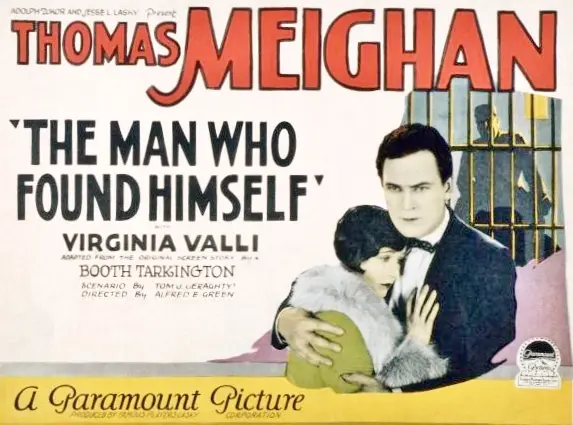
The year 1925 was a watershed moment for American cinema, a period where the visual language of the silent era reached a zenith of expressive power before the cacophony of the talkies altered the landscape forever. Amidst this creative ferment, The Man Who Found Himself emerged as a sophisticated exploration of the fragility of reputation and the arduous path toward self-actualization. Directed by Alfred E. Green and adapted from a story by the Pulitzer Prize-winning Booth Tarkington, the film transcends the simplistic tropes of the 'wronged man' subgenre, offering instead a nuanced meditation on the intersection of class, criminality, and character.
The film opens with an architectural precision that mirrors the structured world of the Macauley bank. We are introduced to Tom Macauley (Thomas Meighan), a man whose very silhouette exudes the stability required of a financial steward. In contrast to the gritty realism found in contemporaneous works like The Italian, Green’s film initially positions its protagonist within a sphere of upper-middle-class comfort. This comfort, however, is a veneer. The narrative engine is ignited by the reckless speculation of Tom’s brother, Edwin (Ralph Morgan), whose fiscal irresponsibility serves as the catalyst for the family’s downfall. The brilliance of Tarkington’s script—and Thomas J. Geraghty’s adaptation—lies in the character of Lon Morris (played with a chilling, oily charm by Frank Morgan). Morris is not merely a villain; he is a systemic opportunist who understands that in the world of high finance, perception is reality.
When Tom assumes the blame for the missing funds, the film pivots from a drawing-room drama to a starker, more claustrophobic register. The transition to the prison sequence is handled with a restraint that emphasizes the psychological toll of incarceration over mere physical hardship. Unlike the flamboyant escapades seen in The Wildcat, Tom’s time as a 'trusty' is depicted as a period of profound introspection. He is a man who has lost his name, his status, and his future, yet he maintains a core of dignity that the prison walls cannot erode. This section of the film benefits immensely from the cinematography, which utilizes shadows and tight framing to underscore Tom’s isolation.
One of the most fascinating aspects of The Man Who Found Himself is the introduction of 'The Optimist' (Victor Moore) and 'The Pessimist' (Hugh Cameron). These characters serve as a proto-Beckettian chorus, providing a philosophical counterpoint to Tom’s grim determination. Their inclusion injects a layer of dark humor and thematic depth that was rare for the period. In many ways, they represent the bifurcated nature of the human spirit when faced with systemic injustice. When Tom is released, only to find himself a pariah—even within his own family—it is this unlikely trio that orchestrates the film's final, exhilarating act.
The heist sequence is a masterclass in tension and moral ambiguity. Tom’s decision to break into the very bank he once managed is a symbolic act of reclaiming his territory. However, the film avoids the standard 'caper' mechanics seen in later films like Time Lock No. 776. Instead, the focus remains on the psychological stakes. Tom isn't stealing money for his own gain; he is planting evidence to expose the rot that has taken hold of the institution under Morris’s leadership. It is a sophisticated subversion of the crime genre, where the protagonist must become a criminal to prove his innocence. This thematic complexity is what elevates the film above standard melodramas like Always in the Way.
Thomas Meighan’s performance is nothing short of foundational. In an era often criticized for its histrionic acting styles, Meighan provides a masterclass in subtlety. His eyes convey the weight of a broken heart and the fire of a man seeking justice without ever resorting to the over-the-top gesticulations that mar other films of the era, such as Gefangene Seele. Meighan’s Tom Macauley is a man of few words (fittingly, for a silent film), but his presence dominates every frame. Virginia Valli, as Nora Brooks, provides a compelling counterpart. Her character is more than a mere damsel in distress; she is a woman trapped in a social and marital prison of her own, and her eventual reunion with Tom feels earned rather than forced.
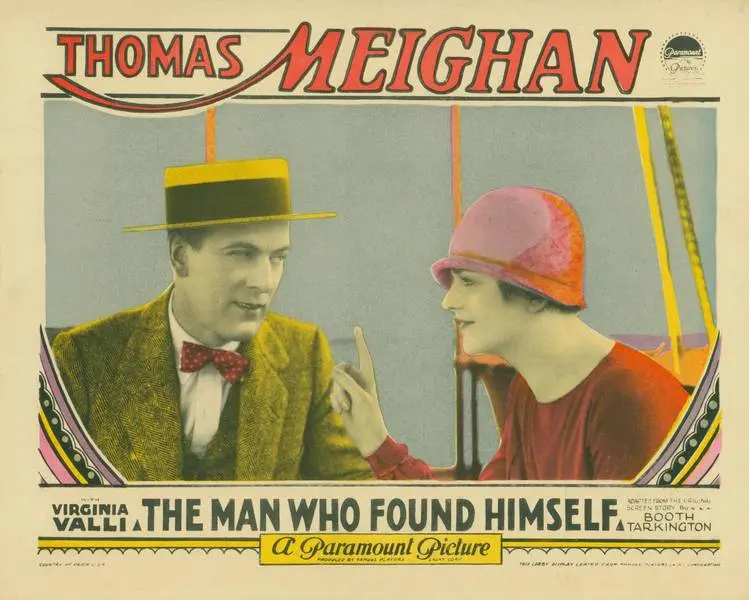
The supporting cast is equally impressive. Frank Morgan, who would later achieve immortality as the Wizard of Oz, is unrecognizable here as the predatory Morris. He brings a serpentine quality to the role that makes the final confrontation all the more satisfying. Victor Moore’s comedic timing as The Optimist provides much-needed levity, grounding the film’s higher philosophical ambitions in a relatable, human context. The chemistry between the three 'conspirators' is palpable, suggesting a level of ensemble acting that was quite advanced for 1925.
Technically, the film is a marvel of the late silent period. The lighting, particularly in the bank and the prison, utilizes a high-contrast style that presages the noir aesthetics of the 1940s. The shadows in the Macauley bank during the heist sequence are not just atmospheric; they are symbolic of the moral darkness that has infested the institution. The editing, too, is sharp, particularly during the sequence where Tom confronts Morris and Nora. The intercutting between the frantic preparations for the wedding and Tom’s desperate journey to stop it creates a sense of kinetic urgency that is truly modern.
When compared to the period-piece grandiosity of Dorothy Vernon of Haddon Hall, The Man Who Found Himself feels remarkably grounded. It doesn't rely on lavish costumes or sweeping historical vistas; instead, it finds its beauty in the geometry of a bank vault and the weary lines on a man’s face. It shares a certain grim fascination with the darker side of human nature found in The Unholy Three, but without that film’s penchant for the macabre. Green’s direction is invisible in the best way possible, allowing the characters and the narrative to breathe without the intrusion of directorial vanity.
Why does this film matter today? In an age where the 'redemption arc' has become a tired cliché, The Man Who Found Himself reminds us that true redemption is a messy, painful, and often illegal process. It suggests that the law and justice are not always synonymous, and that sometimes, to 'find oneself,' one must first lose everything society deems valuable. The film’s exploration of the stigma of a criminal record remains startlingly relevant, echoing themes found in The Girl and the Judge but with a more cynical, post-war edge.
The resolution—in which Morris is shot by a watchman while attempting to flee with his stolen loot—might seem like a convenient 'deus ex machina' to modern audiences, but within the context of 1920s cinema, it serves as a necessary moral realignment. The revelation that Nora has been a 'wife in name only' allows for a clean emotional resolution that satisfies the audience's desire for a happy ending without undermining the hardships Tom has endured. It is a film that balances the cynicism of the Jazz Age with the lingering Victorian sentimentality of its writers.
Ultimately, The Man Who Found Himself is a testament to the power of silent storytelling. It doesn't need dialogue to explain the pain of betrayal or the thrill of a successful ruse. It uses the camera as a scalpel, dissecting the social hierarchies of the 1920s and revealing the rot beneath. For fans of early cinema, or for those who simply appreciate a well-crafted thriller, this film is an essential watch. It stands alongside other character-driven dramas like Black Oxen as a pinnacle of silent-era sophistication. To watch it is to rediscover a time when cinema was discovering its own soul, and in doing so, we might just find something of ourselves in the process.
IMDb 6.4
1921
Community
Log in to comment.