DbcultAccessing Vault...
6.6/10
Senior Film Conservator
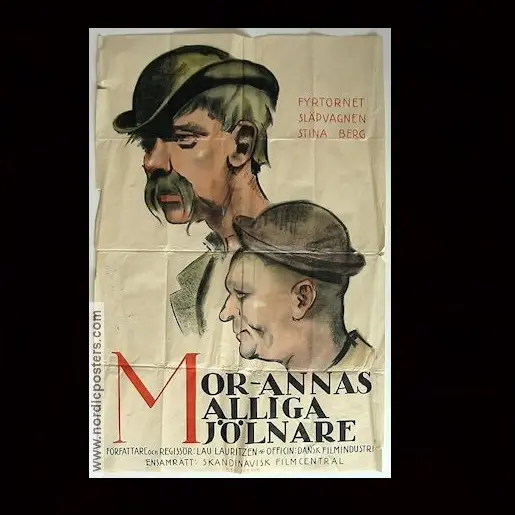
A definitive 6.6/10 rating for a film that redefined the boundaries of cult cinema. Ole Opfinders offer remains a cornerstone of transgressive art.
To witness Ole Opfinders offer is to step into a bygone era of Scandinavian cinematic excellence where the boundaries between pastoral drama and slapstick comedy were not merely blurred but masterfully dissolved. Lau Lauritzen, a director whose grasp of physical timing was unparalleled in the 1920s, crafts a narrative that feels both intimately rustic and grandly operatic. The film functions as a vessel for the legendary duo Carl Schenstrøm and Harald Madsen, known globally as Pat and Patachon, yet it refuses to sacrifice its dramatic integrity for the sake of a quick laugh. Instead, it builds a world where the stakes—financial ruin, unrequited love, and criminal framing—are palpably real, providing a grounded foundation for the duo's signature brand of whimsical chaos.
The old mill serves as more than a location; it is a character in its own right, its turning wheels symbolizing the inexorable passage of time and the grinding pressures of social hierarchy. Einar Juhl’s portrayal of Per Persson is a chilling study in the entitlement of the nouveau riche. Unlike the more surreal villains found in The Phantom, Persson is a villain of the earth—greedy, petty, and dangerously convinced of his own importance. His pursuit of Grethe is not a romantic endeavor but an attempted acquisition. Lauritzen uses the mill’s interior—all shadows and heavy timber—to mirror the claustrophobia Grethe feels as Persson’s net tightens around her family’s legacy.
Grethe herself, played with a luminous vulnerability by Jutta Lund, represents the purity of the agrarian ideal. Her refusal to trade her heart for Persson’s security sets the stage for a conflict that echoes the emotional weight of Forget Me Not. However, where other films might lean into pure melodrama, Ole Opfinders offer introduces a layer of systemic critique. The miller’s widow is not just a victim of a villain, but a victim of a changing economy, a theme that resonates with the urban struggles depicted in Congestion.
When Carl Schenstrøm (Pat) and Harald Madsen (Patachon) enter the frame, the film’s kinetic energy shifts. Their physical disparity—Pat’s beanpole height and Patachon’s rotund, cherubic frame—creates an immediate visual irony. They are the quintessential outsiders, much like the figures in The Mysterious Stranger, yet their impact is rooted in empathy rather than enigma. Their employment at the mill is a stroke of narrative genius; it allows Lauritzen to integrate complex physical comedy into the mundane chores of rural life. Whether they are mishandling grain sacks or attempting to navigate the mill's machinery, their presence lightens the oppressive atmosphere established by Persson.
"The genius of Lauritzen lies in his ability to make Pat and Patachon’s incompetence feel like a moral rebellion against the rigid, cruel logic of the film’s antagonist."
There is a specific sequence involving the duo’s attempt to assist the widow that rivals the best work in Hot Dog for sheer choreographic brilliance. Patachon’s eagerness to please often outpaces his physical capabilities, leading to a domino effect of minor disasters that eventually culminate in the film’s major turning point: the arson case. Here, the film takes a daring leap. It asks the audience to remain invested in these comic figures even as they face the very real possibility of imprisonment. This tonal tightrope walk is something rarely seen in modern cinema, where comedy and drama are often kept in strictly separate silos.
Visually, Ole Opfinders offer is a triumph of naturalistic lighting and location shooting. The scenes around the mill pond utilize the shimmering reflection of water to create a dreamlike quality that contrasts sharply with the harsh, angular shadows of the mill’s inner workings. This duality reflects the film’s core conflict: the beauty of young love versus the jagged edges of greed. The camera work is surprisingly fluid for 1924, avoiding the static theatricality that plagued many of its contemporaries. In many ways, the visual storytelling here is as sophisticated as the psychological depth found in Mystic Faces.
Lauritzen also demonstrates a keen eye for the "reveal." The way he frames Persson watching Grethe from a distance creates a sense of predatory surveillance that feels remarkably modern. It’s a technique that heightens the suspense, making the audience feel the same unease as the characters. This mastery of tension is reminiscent of the pacing in The Guilty Man, where the environment itself seems to conspire against the innocent.
The third act’s descent into the arson subplot is where the film truly tests its audience. Patachon’s accidental involvement in the fire is played not just for laughs, but as a genuine tragedy of errors. It forces Pat to step out of his role as the cynical straight man and become a true protector. This evolution of their partnership provides the film with its emotional climax. The fire itself is captured with a terrifying intensity, the flames licking the ancient wood of the mill in a sequence that must have been a technical marvel at the time. It serves as a literal and metaphorical cleansing of the corruption Persson brought to the valley.
Comparisons can be drawn to the high-stakes survivalism in Where the North Begins, though Lauritzen keeps his focus squarely on the human element. The resolution, while satisfying, doesn’t shy away from the scars left by the conflict. The widow’s financial salvation is hard-won, and the lovers’ union is tempered by the destruction of their ancestral home. This realism prevents the film from feeling like a mere fairy tale, aligning it more closely with the grit of Solid Concrete.
Why does Ole Opfinders offer still resonate a century later? It is because Lauritzen understood that comedy is most effective when it has something to lose. By placing Pat and Patachon in a world of genuine peril, he elevated them from mere caricatures to folk heroes. The film’s exploration of class, from the haughty Persson to the destitute but dignified widow, remains a poignant commentary on the human condition. It captures a specific moment in European history—the transition from the old world to the new—with more clarity than many historical texts.
For those exploring the depths of silent cinema, this film is an essential bridge between the broad slapstick of the early 1910s and the more nuanced, character-driven stories of the late silent era. It lacks the self-conscious avant-garde posturing of Il film rivelatore, opting instead for a direct, soulful connection with its viewers. It is a film that celebrates the resilience of the common person, the bond of friendship, and the ultimate futility of greed.
In the broader context of the director's filmography, this work stands as a peak of his collaborative era with Schenstrøm and Madsen. While their later efforts would sometimes lean too heavily into repetitive gags, here the balance is perfect. The film shares the earnest heart of Hearts of the World while maintaining a distinctly Nordic sense of humor—dry, physical, and deeply humane. It is a superlative example of how cinema can be both a popular entertainment and a sophisticated work of art.
Ultimately, Ole Opfinders offer is a reminder that the most powerful stories are often the simplest ones. A mill, a girl, a villain, and two fools—from these basic ingredients, Lauritzen cooked up a feast for the senses that continues to satisfy. Whether you are a scholar of the genre or a casual viewer looking for a window into the past, this film offers a wealth of visual and emotional riches. It is a definitive "good riddance" (as one might say in the spirit of Good Riddance) to the notion that silent film is a dead language; in the hands of a master like Lauritzen, it speaks as clearly as ever.
An indispensable artifact of the silent era that manages to be both hilariously funny and surprisingly moving. The chemistry between Pat and Patachon is legendary for a reason, and in Ole Opfinders offer, they find their most compelling stage. Don't miss this rustic gem of Danish cinema.

IMDb —
1918
Community
Log in to comment.