DbcultAccessing Vault...
Cult Review
Senior Film Conservator
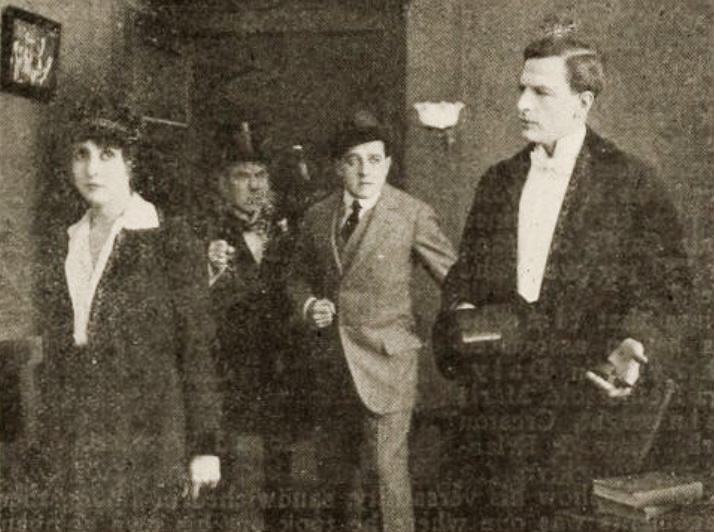
A country chapel exhales dust and devotion; into that wheeze slips a forged promise of celestial pipes—an offer too sweet for God-fearing wallets to refuse.
Wilson Mizner’s poison-pen letter, typed on fictitious letterhead, is the first note in a diabolical sonata: half swindle, half seduction, wholly irresistible to a congregation whose sonic horizon ends at a cracked pump-organ. Enter Harry Leland—Frederick Truesdell’s brimstone dandy—boots polished to mirror the heaven he plans to pickpocket. His dialogue cards arrive like calling cards from Beelzebub: courteous, cursive, corrosive.
Every frame crinkles with the nitrate perfume of 1915: sunlight drips through stained glass, shadows pool like ink in the margins of hymnals, and the camera—still shy of close-ups—nevertheless stalks Clara Kimball Young’s porcelain hesitations with proto-noir appetite.
Clara’s Doris is no lamb; she is parchment awaiting inscription. Raised on parables and parsimony, she has memorised Paul but never met a man whose pulse syncopates with the city’s electric throb. Leland’s courtship is a confidence trick staged as cosmology: he redraws her sky, names her constellations after shares and silk stockings. When she boards the eastbound train, the whistle shrieks like a page torn from a psalter.
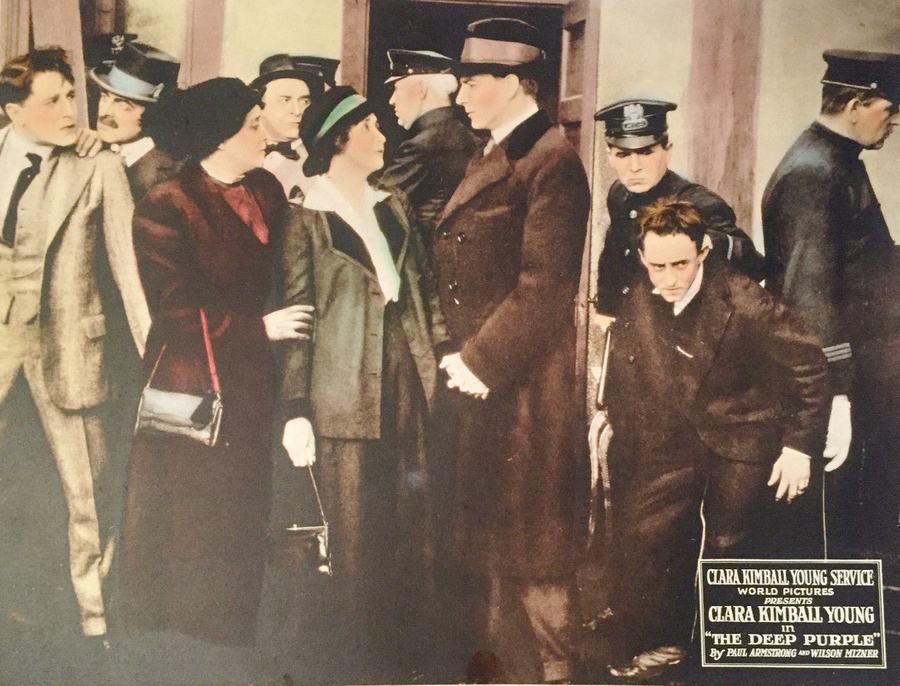
James Young and Paul Armstrong cede the second act to Gotham’s chiaroscuro: a boarding house where gas meters tick like conscience, and parlours fold into trapdoors. ‘Frisco Kate—May Hopkins in a role that should have spawned a franchise—swaggers through the set with a cigarette ember for a moral compass, yet it is she who will later lever open the plot’s rusted heart.
The blackmail schema against Will Lake plays like a secular Stations of the Cross: five sequences, each an escalation of dread, each lit by a single source—window, candle, revolver muzzle—until Doris, draped in borrowed finery, must counterfeit desire for a stranger. The flat’s décor—tasseled drapes, aspidistra, a phonograph that bleats syrupy marches—becomes a diorama of middle-class respectability weaponised.
Watch how cinematographer Walter Craven frames the extortion tableau: Lake and Doris share a two-shot bisected by a looming armoire; enter Leland, and the triangle completes—geometry of damnation. The cut to the close-up of Doris’s gloved hand clutching the settee arm is the film’s first admission that even saints perspire.
Leland’s gang demands ten thousand or Lake’s reputation will be shredded in the yellow press. Lake, played by Milton Sills with Ivy League swagger cracking into moral steel, refuses the Faustian receipt. Fisticuffs erupt—boots, chair legs, a kerosene lamp teetering like a moral balance—ending with Lake unconscious, cash gone, Doris renamed “wife” in a mimeographed affidavit.
Yet the narrative pivots on a whisper, not a blow. Laylock (Crauford Kent), lifeline gambler with a face like a cancelled stamp, overhears the gang’s plan to traffick Doris into white-slavery after the Lake score collapses. Alongside ‘Frisco Kate, he experiences the rare epiphany that even career sinners can countenance only so much perdition. Their midnight liberation of Lake—keys slid across a linoleum that glows like Styx under moonlight—triggers the raid, the arrests, the requisite comeuppance.
The police-station coda, all brass badges and biblical rain, rhymes with the earlier chapel scenes: authority figures now secular, pews replaced by iron benches, but absolution still dispensed by human gesture rather than liturgy.
Clara Kimball Young—already a luminary at 23—navigates Doris’s arc from ingenuousness to disillusion without the crutch of spoken word. Her eyes, wide as communion wafers in act one, acquire by the finale the flinty polish of someone who has read the small print on salvation. The transition is not telegraphed via histrionic gestures but through micro-movements: a shoulder that ceases to flinch, a gloved finger that taps once—impatience or cynicism?—on Leland’s forged contract.
Frederick Truesdell’s Leland predates the suave psychopaths of 1940s noir; he is instead Victorian rot in white spats, charm as combustion engine. When he declares love, his pupils dilate like a gambler spotting a rigged wheel—desire and larceny fused. Modern villains owe him royalties.
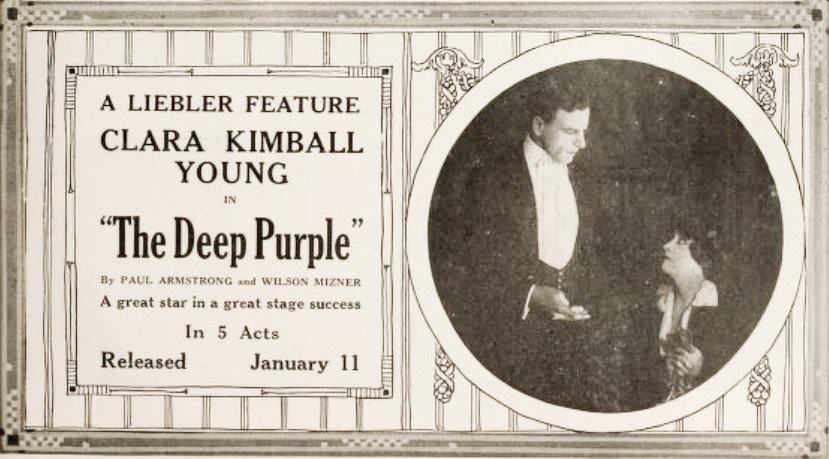
Milton Sills provides the film’s moral ballast. Studios often thrust him into cardboard hero roles; here he gets a shaded mensch—prospector, millionaire, yet vulnerable to the smear of scandal. His courtship of Doris in the final reel is performed with the bashful caution of a man who has almost been deleted by gossip.
Notice the chromatic motif hinted by the title. Purple—neither heaven’s blue nor hell’s red—seeps into costumes: the velvet trim on Leland’s traveling coat, the ribbon binding Doris’s counterfeit marriage licence, the bruise on Lake’s temple after the robbery. It is the colour of ambiguity, of twilight verdicts.
James Young’s direction alternates tableaux worthy of church windows with proto-expressionist angles: ceilings that lean like guilty thoughts, staircases spiraling into vertigo. The edit rhythm accelerates once the action transfers to Manhattan—intercutting Leland’s seduction of Doris with the gang’s telegram frenzy—until the viewer breathes in jump-cut gasps.
Art director DeWitt Jennings converts a modest backlot into rural Eden via corn-stalk flats and a painted sunrise so ethereal it could baptise an atheist. Contrast that with the New York interiors—cluttered, vertical, alive with the grime of ambition. Seldom in 1915 did a film stage such dialectics of space.
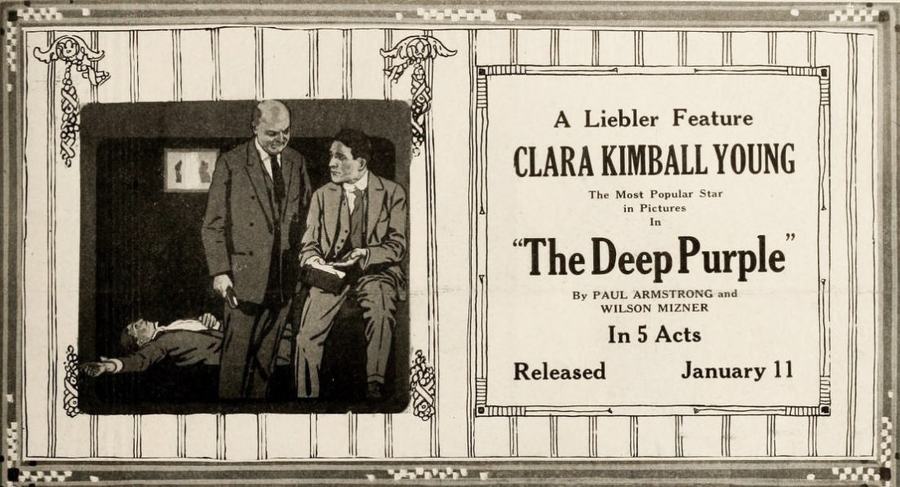
Read against contemporaries like The Black Chancellor or Chains of the Past, The Deep Purple foregrounds female agency without sanctimony. Doris’s choice to accompany Leland is framed not as damsel folly but as existential leap—an audition for a life larger than scripture margins. The film neither pardons nor punishes; it records the atmospheric pressure of limited options.
‘Frisco Kate’s eleventh-hour rectitude likewise complicates the angel/whore binary. She retains her rouge and profanity while performing grace, suggesting morality is behavior, not apparel—a radical thesis for an era that liked its virtue in white linen.
The promised pipe organ—first phantom, then tangible—functions as omnipresent chorus. Its absence in early reels hollows the chapel scenes; wheezes echo like asthmatic prayers. When the genuine article finally arrives, donated by Lake, the soundtrack (orchestral accompaniment in most 1915 exhibitions) swells to Handel-esque proportions. The congregation’s collective gasp is the closest silent cinema gets to surround sound.
Editors intercut the inaugural chords with flash-montages of the preceding sin: Leland’s arrest, Doris’s tears, Lake’s bruises. The organ’s timbre absolves not through denial but through acknowledgment—art as restitution.
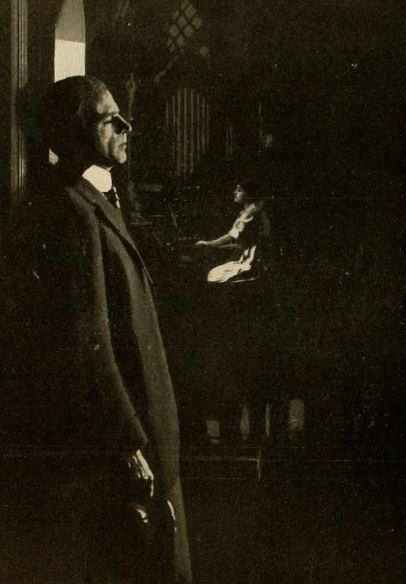
For decades The Deep Purple languished on the Library of Congress’s “7,000 Lost” list until a 35mm paper-print resurfaced at a Delaware estate sale in 2019. Digital restoration by EYE Filmmuseum removed emulsion rots but retained flickers—ghosts of 1915 light. The tinting—amber for interiors, viridian for exteriors—was reconstructed via chemist-spectrometer matching of surviving frames. Kino Lorber’s 2022 Blu-ray offers a 2K scan plus a new score by Guðnadóttir-inflected trio Chiaroscuro Assembly; their strings groan like old pews, percussion mimics telegram taps.
Archivists compare its survival to Lime Kiln Club Field Day—once mythical, now mandatory in any syllabus on American proto-noir.
Watch The Deep Purple back-to-back with The Mystery of the Fatal Pearl and you’ll trace the genome of the confidence-game film: the outsider who weaponises desire, the civic space invaded by metropolitan rot, the moral reclamation via intra-criminal mercy. Without Mizner’s screenplay, later entries like The Sting or House of Games might limp on fewer cylinders.
Yet the film’s deeper triumph is ethical, not generic. It posits that grace can sprout in compost, that a swindler’s mark can author her own epilogue, that redemption needs no pulpit—only someone willing to stand in the rain and wait for forgiveness to arrive wearing someone else’s overcoat.
Verdict: Seek it, screen it, let its purple shadows stain your retinae. You will exit humming righteousness, half-convinced the organ’s final chord is still vibrating somewhere inside your ribs.
IMDb 5.1
1930
Community
Log in to comment.