DbcultAccessing Vault...
Cult Review
Senior Film Conservator
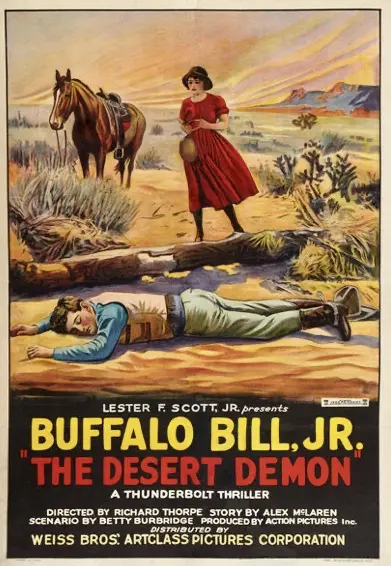
The Desert Demon, a cinematic gem from the silent era, unfolds as a rich tapestry of human emotion, set against the unforgiving backdrop of the desert. This gripping tale, penned by Alex McLaren and Betty Burbridge, masterfully navigates the complexities of the human condition, deftly balancing themes of love, loyalty, and redemption.
At the heart of this narrative lies Bill Davis, portrayed by Jay Wilsey, a rugged and resourceful individualist, whose fortunes are inextricably linked to those of Nita Randall, played by Margarita Martín. Their story commences with a dramatic rescue, as Bill saves Nita from the clutches of the nefarious Jim Slade, a character with a penchant for villainy, expertly crafted by Frank Ellis. As Bill's horse succumbs to the harsh desert conditions, he finds himself on the precipice of death, only to be saved by Nita's timely intervention.
The Randalls, a stalwart family with a deep connection to the land, welcome Bill into their fold, but their respite is short-lived. Slade, driven by a lust for power and riches, sets his sights on pilfering the Randall mine, leading to a tragic confrontation that ultimately claims the life of Nita's father. In a poignant display of selflessness, Bill assumes the culpability for the elder Randall's demise, incurring Nita's ire.
As the narrative hurtles towards its climax, Bill's fortunes appear to be at their nadir. However, his unwavering determination and unshakeable sense of justice ultimately lead him to confront Slade in a thrilling showdown. This cathartic confrontation serves as a turning point, as Nita's animosity gradually gives way to affection, illuminating a complex topography of love, loyalty, and exoneration.
The Desert Demon's thematic resonance is reminiscent of The Red Circle, a film that also explores the tensions between loyalty and deception. Similarly, the character dynamics in Sally of the Sawdust and The Dumb-Bell share a similar small-town charm, replete with complex characters and intricate relationships.
From a technical standpoint, The Desert Demon exhibits a mastery of cinematic storytelling, with a narrative that flows with the inevitability of a desert storm. The cinematography, though largely unremarkable, effectively captures the harsh beauty of the desert landscape, imbuing the film with a sense of verisimilitude. The performances, too, are noteworthy, with Wilsey and Martín delivering nuanced portrayals of their respective characters.
In comparison to contemporaneous films like Common Ground and Queen of the Sea, The Desert Demon stands out for its bold narrative choices and well-developed characters. Even films like Bobby Bumps and the Hypnotic Eye and Her Dangerous Path cannot help but draw comparisons to The Desert Demon's deft handling of complex themes and character arcs.
The Desert Demon is a film that rewards close attention, its layered narrative and nuanced characterizations repaying multiple viewings. For fans of classic cinema, this film is an essential viewing experience, offering a captivating blend of action, drama, and romance. Even in comparison to more modern films like Sumerki zhenskoy dushi and Why Divorce?, The Desert Demon holds its own, its timeless themes and memorable characters ensuring its continued relevance.
Ultimately, The Desert Demon is a triumph of cinematic storytelling, a film that continues to enthrall audiences with its richly detailed world and memorable characters. If you're a fan of classic cinema, or simply looking for a compelling film to watch, The Desert Demon is an excellent choice.
In conclusion, The Desert Demon is a masterful film that deserves to be recognized as a classic of the silent era. Its expertly crafted narrative, memorable characters, and timeless themes make it a must-see for film enthusiasts. With its gripping storyline and nuanced characterizations, The Desert Demon is a film that will continue to captivate audiences for generations to come.

IMDb 5.3
1926
Community
Log in to comment.