DbcultAccessing Vault...
Cult Review
Senior Film Conservator
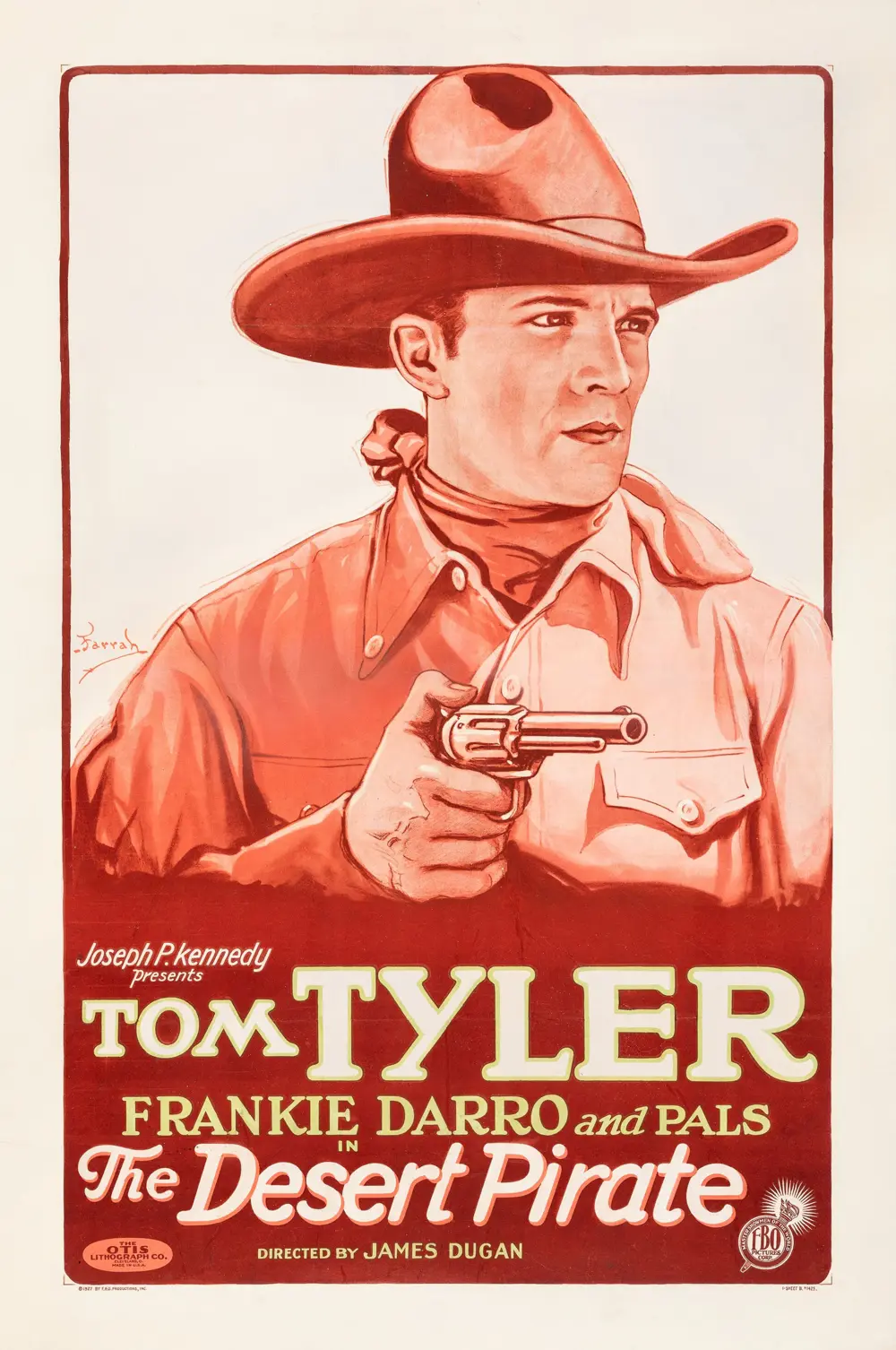
Is 'The Desert Pirate' worth watching today? Short answer: yes, but with significant caveats that demand a specific kind of viewership. This film isn't for everyone; it’s a dusty relic best appreciated by film historians, ardent fans of early Westerns, and those curious about the foundational elements of a genre still evolving. Conversely, viewers accustomed to modern pacing, complex character arcs, and high production values will likely find its charms elusive and its narrative conventions jarringly simplistic.
This film works because of its raw, unvarnished portrayal of frontier life and its surprisingly effective use of natural landscapes, which give it an authenticity often missing in more polished studio productions. It fails because its narrative predictability and often rudimentary acting techniques, typical of its era, prevent it from achieving genuine emotional depth or lasting dramatic tension. You should watch it if you're prepared to engage with a piece of cinematic history, willing to overlook its imperfections for a glimpse into the nascent stages of Hollywood storytelling.
To approach 'The Desert Pirate' without the proper historical lens is to do it a disservice. Released in an era when cinema was still finding its voice, this film stands as a testament to the enduring appeal of the Western genre, even in its most nascent forms. It’s not a film that attempts to reinvent the wheel; rather, it’s a sturdy, if somewhat predictable, example of early storytelling, relying on archetypes and straightforward conflict to drive its narrative.
The film, penned by Frank Howard Clark and Oliver Drake, leans heavily into classic tropes: the brave heroine, the villainous land grabber, and the mysterious hero who exists in the moral gray. It’s a formula that has been replicated countless times since, but seeing it in this early iteration offers a fascinating glimpse into the genre’s DNA. This isn't a 'masterpiece' in the modern sense, nor does it aim for the poetic grandeur of later Westerns. It’s a functional piece of entertainment, designed to thrill and engage a simpler audience, and in that, it largely succeeds.
The performances in 'The Desert Pirate' are, understandably, products of their time. Acting conventions were starkly different, often requiring broader gestures and less nuanced emotional expression. Yet, within these constraints, certain cast members manage to carve out memorable impressions.
Duane Thompson, as the film’s leading lady, brings a spirited energy to her role. While her character often finds herself in peril, Thompson avoids the damsel-in-distress cliché by imbuing her with a clear sense of agency and determination. In one particular sequence, where she attempts to reason with the antagonist about the dwindling water supply, her frustration feels genuinely palpable, a small but significant moment that elevates the character beyond mere plot device. It's a performance that, while not groundbreaking, is certainly earnest.
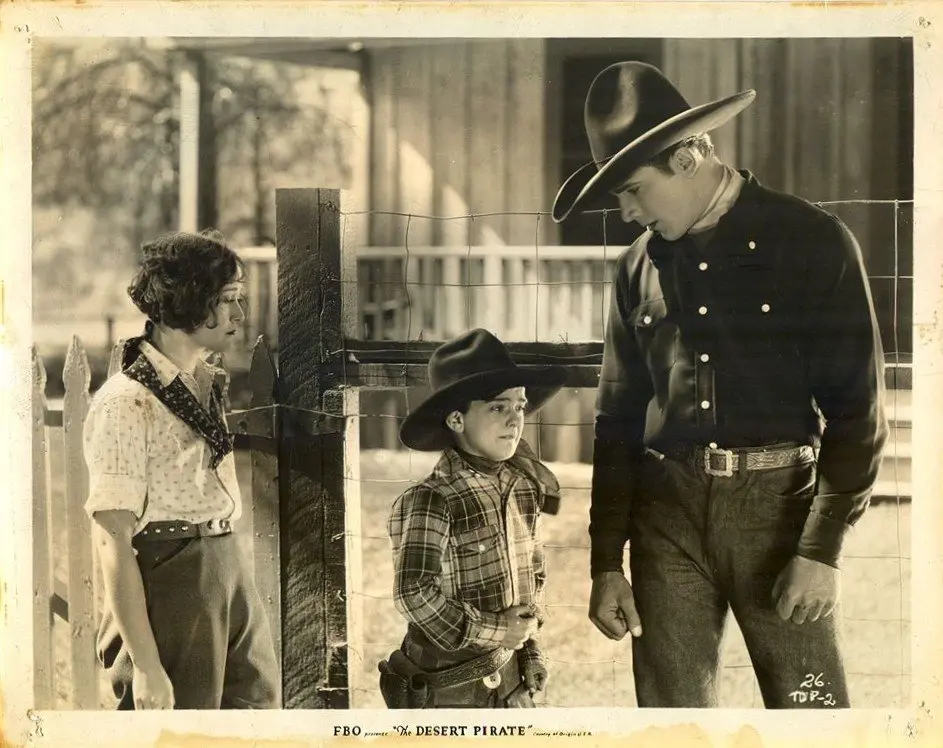
Tom Tyler, embodying the enigmatic 'desert pirate,' delivers a performance that relies more on his imposing physical presence than on dialogue or subtle expression. His character is a man of few words, his actions speaking volumes. When he silently appears to intervene in a dispute over a stolen horse, his quiet authority commands the scene, a stark contrast to the more theatrical villains of the period. Tyler’s stoicism is his strength, making his character feel like a force of nature rather than a mere human.
Frankie Darro, often known for his juvenile roles, adds a touch of youthful exuberance that, at times, feels slightly out of step with the grittier elements of the story. His character serves primarily as comic relief or a catalyst for minor plot points. Edward Hearn, as the primary antagonist, delivers a performance that is exactly what one would expect from an early Western villain: mustache-twirlingly evil, with little room for moral ambiguity. His sneer is practically a character in itself.
While the director isn't explicitly credited in many records, the visual storytelling of 'The Desert Pirate' owes much to its straightforward yet effective cinematography. The decision to shoot extensively on location, likely in the vast, arid landscapes of the American West, lends an undeniable authenticity to the proceedings. These aren't studio backlots; this is real dust, real sun, and real hardship.
The wide shots of the desolate landscape, particularly during the various horseback chases and the scenes around the parched riverbeds, are surprisingly effective. They emphasize the isolation and the immense scale of the challenges faced by the characters. One sequence, depicting a small group traversing a seemingly endless stretch of sand, manages to convey a genuine sense of struggle and vulnerability, a stark beauty that belies the film's modest budget and technical limitations. This early embrace of location shooting is, in my opinion, one of the film’s strongest assets, setting it apart from more stage-bound productions of the era like Hearts for Rent.
The pacing of 'The Desert Pirate' is a curious beast. It begins with a somewhat languid setup, establishing the various characters and the central conflict over land and water rights. This initial exposition can feel a bit slow for modern viewers, accustomed to immediate gratification and rapid-fire plot development. However, once the primary conflict is firmly established, the film shifts gears, accelerating into a series of action sequences that maintain a surprising level of engagement.
The tone is largely earnest and adventurous, with moments of mild peril punctuated by a clear heroic trajectory. There’s little in the way of deep psychological exploration or moral ambiguity, which is entirely consistent with the genre conventions of the time. It’s a straightforward tale of good versus evil, with the 'pirate' figure serving as an unconventional instrument of justice. The film doesn't attempt to complicate its emotional landscape, preferring instead to deliver clear-cut thrills and a satisfying resolution.
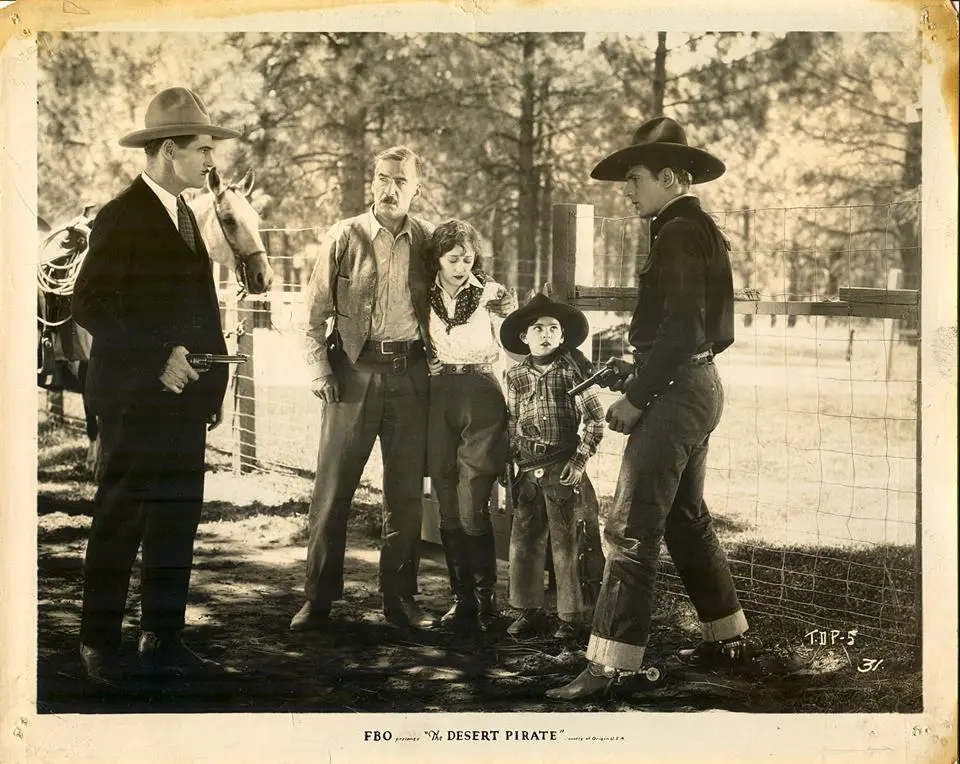
Beyond the surface-level adventure, 'The Desert Pirate' subtly explores themes that resonate even today. The struggle for water rights, for instance, is a timeless conflict, particularly in arid regions. The film highlights the fundamental importance of this resource and the lengths to which people will go to control it. This grounds the narrative in a very real, tangible problem, giving the fantastical elements of the 'pirate' a practical purpose.
The concept of justice is also central. The 'desert pirate' operates outside the law, yet his actions are consistently aimed at righting wrongs and protecting the vulnerable. This raises an interesting, if not deeply explored, question about where true justice lies: within the often-corrupt official system, or in the hands of an individual willing to defy it for the greater good? It’s a theme that would be revisited countless times in later Westerns, but its presence here is a foundational brick in that thematic wall.
Is 'The Desert Pirate' worth watching in today's crowded cinematic landscape? Absolutely, but with a specific mindset. This is not a film for casual viewing if your tastes lean towards contemporary blockbusters or intricate dramas. It is, however, an essential watch for anyone with a genuine interest in the history of American cinema and the evolution of the Western genre.
It offers a fascinating snapshot of early filmmaking, showcasing how compelling narratives could be crafted with limited resources and burgeoning techniques. The film is a valuable historical document, revealing the roots of storytelling conventions that still influence Hollywood today. It’s for those who appreciate the raw, unpolished charm of silent or early sound cinema, and who can forgive its occasional narrative simplicity and dated acting styles in favor of its historical significance and pioneering spirit. It works. But it’s flawed. This film is decidedly not for viewers seeking complex character studies or high-fidelity production values. If you demand modern pacing and sophisticated storytelling, you will find yourself restless.
What struck me most about 'The Desert Pirate' wasn't its gunfights or its heroics, but its quiet, almost prophetic focus on water. In an era where cinema was largely about escapism, this film, perhaps inadvertently, touches upon an ecological and socio-political issue that has only grown more critical over the decades. The villain isn't just evil; he's a precursor to modern corporate greed, seeking to control the most vital resource. This makes the film feel less like a simple adventure and more like a warning shot fired from the past, a surprisingly resonant undercurrent in a seemingly straightforward narrative. It's a testament to how even the simplest stories can stumble upon profound truths.
'The Desert Pirate' is not a film that will redefine your understanding of cinema, nor will it likely join the ranks of universally lauded classics. What it is, however, is a fascinating and valuable artifact of early Hollywood. It's a sturdy, well-intentioned Western that, despite its limitations, delivers on its promise of adventure and frontier justice. Its true worth lies not in its artistic grandeur, but in its historical significance and its ability to transport viewers back to a foundational period of filmmaking.
For those willing to engage with its particular charms and overlook its dated aspects, 'The Desert Pirate' offers a rewarding glimpse into a genre taking shape. It’s a testament to the raw energy and pioneering spirit of early cinema. While it won't appeal to everyone, its place in the lineage of the Western is undeniable, and for that alone, it deserves to be seen by the right audience. Dive in, but adjust your expectations accordingly. It’s a journey back in time, and sometimes, that’s precisely the adventure we need.
IMDb —
1925
Community
Log in to comment.