DbcultAccessing Vault...
Cult Review
Senior Film Conservator
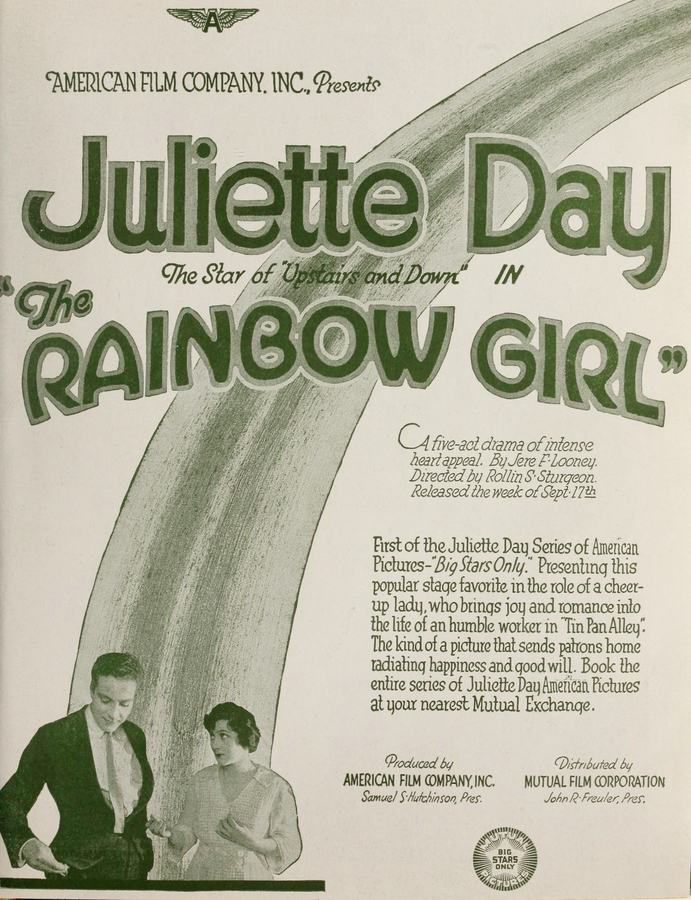
In the annals of early cinema, where sentiment often reigned supreme and narratives unfolded with a charming, if sometimes melodramatic, earnestness, a gem like The Rainbow Girl emerges as a particularly luminous example. Released in 1917, a pivotal year for both global events and the burgeoning film industry, this picture by Jere F. Looney and Julian La Mothe is more than just a quaint historical artifact; it's a testament to enduring human desires: the yearning for artistic recognition, the struggle against economic adversity, and the transcendent power of love. It speaks to a universal truth that resonates across decades, proving that even without spoken dialogue, the language of the heart is effortlessly understood.
The film introduces us to the Divine household, a microcosm of early 20th-century struggles, albeit one tinged with a dash of upper-class entitlement. Amos Divine, portrayed with a weary resignation by Louis Morrison, finds his golden years tarnished by a rather meager pension. This financial downturn, a common anxiety of the era, is met with starkly contrasting reactions from his family. His wife, Christina (Lillian Hayward), embodies a certain societal archetype of the period: the demanding spouse, accustomed to comfort and unwilling to compromise. Her castigations are not merely verbal; they paint a vivid picture of a woman whose identity is inextricably linked to her material possessions and social standing. This portrayal, while perhaps a caricature, effectively sets the stage for the domestic tension that permeates the early scenes, echoing similar dynamics seen in films like The Governor's Ghost, where familial expectations often clash with harsh realities.
Yet, from this crucible of discontent emerges Mary Beth (Juliette Day), the titular 'Rainbow Girl' long before the moniker is officially bestowed. Mary Beth is a beacon of unwavering optimism and resourceful spirit. Her character is a refreshing counterpoint to her mother's materialism and her father's despondency. She possesses not only an innate talent and longing for a musical career but also a pragmatic sensibility that drives her to find solutions where others see only obstacles. Her immediate response to the family's financial woes is not despair, but initiative: she seeks ways to economize, to make ends meet, and to lighten the burden. This proactive spirit, a hallmark of many resilient female characters of the silent era, distinguishes her from the more passive damsels in distress that sometimes populated contemporary cinema. Mary Beth's drive mirrors the quiet determination seen in characters facing hardship in films like The Miner's Daughter, where individual strength becomes the cornerstone of survival.
Into this domestic drama steps Richard Warner (Charles Bennett), a composer arriving from the serene landscapes of Vermont, carrying with him the fragile hopes of an artist. Richard's journey is one that many creative individuals, then and now, would find painfully familiar. He arrives in the bustling city with a portfolio of ballads, compositions crafted with sincerity and artistic integrity. However, the metropolitan publishing houses, driven by commercial imperatives, swiftly dash his aspirations. They are not interested in the nuanced beauty of his work; they crave cheap, ephemeral melodies, the 'trashy' tunes that promise quick profits rather than lasting artistic merit. This conflict between artistic purity and commercial viability is a timeless theme, powerfully articulated here through Richard's disillusionment. It’s a struggle that resonates with the broader societal shifts of the early 20th century, where mass production and popular appeal began to overshadow artisanal craftsmanship in many fields.
Richard's predicament highlights the precarious existence of artists, a subject explored in various forms across cinematic history. His struggle is not merely financial; it's an existential crisis, a threat to his very identity as a creator. The film uses his rejection by publishers to underscore the harsh realities of pursuing a passion in a world that often prioritizes profit over poetry. The stark contrast between his Vermont idealism and the urban pragmatism forms a compelling narrative thread, setting him up as a character in dire need of understanding and support, which he will, serendipitously, find.
The pragmatic Mary Beth, ever alert to opportunities, decides to rent out the family's attic room to supplement their income. This seemingly mundane decision becomes the lynchpin of the entire narrative, bringing together two souls destined for a profound connection. Richard, drawn by the enchanting melodies emanating from the Divine residence – melodies, we quickly learn, are Mary Beth's own compositions – is compelled to investigate. He finds not just a room, but a kindred spirit, a fellow musician whose artistic sensibility mirrors his own. The attic, often a symbol of hidden potential or forgotten dreams, here becomes a sanctuary where two artistic paths converge.
Their initial encounters are marked by a burgeoning mutual respect, fueled by their shared passion for music. It is during one of Richard's intense compositional sessions, a moment of profound creative absorption, that an accidental fire breaks out. This incident, minor in its physical damage but significant in its emotional impact, serves as a powerful catalyst. In the chaos and shared vulnerability, Mary Beth's nascent admiration for Richard blossoms into something deeper, a tender affection that transcends their initial acquaintance. The fire, a symbol of both danger and passion, effectively ignites the flames of love in Mary Beth's heart, a cinematic trope that, in skilled hands, still feels fresh and compelling. This moment of shared peril and emerging intimacy is reminiscent of the heightened emotional stakes found in romantic dramas like Where Love Is.
Richard's journey takes a darker turn as his financial situation becomes increasingly dire. Penniless and professionally rejected, he spirals into a profound despair, contemplating the ultimate act of self-annihilation through asphyxiation. This harrowing moment is depicted with a raw emotional intensity, characteristic of silent film's ability to convey profound internal states through visual storytelling. It's a stark reminder of the crushing weight of failure and the mental toll it can exact, a theme that, while perhaps melodramatic, carries genuine emotional heft.
It is at this critical juncture that Mary Beth, guided by an intuitive sense of his suffering, intervenes. Her simple act of bringing him biscuits – a gesture of practical kindness and sustenance – coupled with her unwavering encouragement, pulls him back from the brink. This scene is pivotal, showcasing Mary Beth's profound empathy and her remarkable ability to inspire hope even in the darkest of moments. Her belief in Richard's talent and worth becomes his lifeline, a testament to the power of human connection to overcome despair. This selfless act of support and encouragement is a recurring motif in stories of resilience, mirroring the quiet strength found in characters who lift others up, much like the thematic undertones in The Courage of the Common Place.
The narrative gains another layer of romantic complexity with Mary Beth's discovery of Richard's composition, "The Rainbow Girl." The song, dedicated to his enigmatic "Loved One," instantly sparks a pang of jealousy within Mary Beth. Richard, still burdened by his financial woes, explains that he cannot marry his sweetheart until he has achieved professional success. This noble, yet ultimately self-defeating, stance reveals his deep-seated pride and commitment to providing for his future spouse, a common expectation of men in that era. However, his explanation inadvertently fuels Mary Beth's insecurity, as she wrongly assumes the "Loved One" is someone else entirely.
In a moment of emotional turmoil and a desire to protect her burgeoning feelings, Mary Beth invents a fictional sweetheart, "Snookums," claiming they have recently quarreled. This charming, if slightly transparent, fabrication serves multiple purposes: it allows her to mask her jealousy, to create a sense of emotional parity with Richard, and perhaps, to subtly gauge his reaction. This playful deception, born out of affection and insecurity, adds a delightful touch of human foible to the unfolding romance, creating a dramatic irony that the audience is privy to.
The true depth of Mary Beth's devotion is revealed in her subsequent clandestine act. Without Richard's knowledge, she takes his rejected masterpiece, "The Rainbow Girl," and secretly sells it to a publisher. This act is a profound testament to her belief in his talent and her willingness to sacrifice her own potential recognition for his success. It's a selfless gesture, born of love and a desire to alleviate his suffering, and it stands as a powerful statement about her character. This kind of secret intervention, driven by love, echoes the intricate plots of films where characters take matters into their own hands, such as in Perils of the Secret Service, though in a much more tender, domestic context.
The narrative approaches its heartfelt climax as Richard, still oblivious to Mary Beth's selfless act, observes her quiet sorrow. Misinterpreting her tears as sadness over her fabricated quarrel with "Snookums," he sends her flowers, signing them from her imaginary suitor, hoping to effect a reconciliation. This unwitting gesture, a charming display of his kindness and concern, further highlights the layers of misunderstanding that have characterized their relationship thus far. It's a moment pregnant with dramatic irony, where the audience knows the truth behind the gesture, making Richard's well-intentioned act all the more poignant.
The moment of truth arrives when Mary Beth can no longer maintain the charade. She reveals that there is no "Snookums," confessing her playful deception. This confession, born of a need for honesty and the overwhelming weight of her feelings, paves the way for Richard's own revelation. With the truth laid bare, Richard finally articulates what has been silently growing between them. He confesses that Mary Beth herself is his "rainbow girl," the muse, the inspiration, the 'Loved One' to whom his song was always implicitly dedicated. The embrace that follows is not merely the resolution of a romantic plot; it is the culmination of shared struggles, mutual support, and a deep, unspoken understanding that transcends words. It's a moment of pure cinematic joy, a happy ending earned through trials and tribulations.
The success of The Rainbow Girl hinges significantly on the nuanced performances of its lead actors. Juliette Day, as Mary Beth, is particularly captivating. She imbues her character with a vibrant blend of optimism, vulnerability, and quiet strength that makes her instantly endearing. Her expressions, crucial in silent cinema, convey a wide range of emotions, from hopeful aspirations to jealous pangs and ultimately, profound love. She carries the emotional core of the film, making her transformation from supportive daughter to selfless lover utterly believable. Her portrayal provides a strong central anchor, reminiscent of other resilient female leads of the period, like those in Our Mutual Girl who navigate societal pressures with grace and determination.
Charles Bennett's Richard Warner is equally compelling. He masterfully portrays the composer's artistic integrity, his descent into despair, and his eventual redemption through love. His struggles feel authentic, and his eventual realization of Mary Beth's true significance is handled with a tender sincerity. The chemistry between Day and Bennett is palpable, conveyed through subtle glances, shared smiles, and expressive body language, which was the very essence of effective silent film acting. The supporting cast, including Lillian Hayward's formidable Christina and Louis Morrison's beleaguered Amos, provide solid foundations for the central romance, grounding the more fanciful elements of the plot in relatable domesticity.
Beyond the immediate romance, The Rainbow Girl explores several timeless themes. The struggle of the artist, caught between passion and commercial demand, remains as relevant today as it was a century ago. The film champions artistic integrity while acknowledging the harsh realities of making a living from one's craft. Furthermore, it extols the virtues of perseverance and the profound impact of compassionate support. Mary Beth's unwavering belief in Richard, even when he has lost faith in himself, is a powerful message about the strength derived from human connection.
The narrative also subtly examines gender roles and expectations of the era. While Richard feels the pressure to achieve financial success before marriage, Mary Beth's agency in secretly selling his song challenges conventional female roles, showcasing her as an active participant in her own destiny and that of her beloved. This quiet subversion of expectations gives her character added depth and modernity. The film's message of optimism, of finding light in the darkest of times, is universally appealing and contributes to its enduring charm. It's a reminder that even when faced with seemingly insurmountable obstacles, hope, fueled by love and selflessness, can ultimately prevail, a sentiment often echoed in the heartening narratives of films like Ill Starred Babbie.
Jere F. Looney and Julian La Mothe, as writers, crafted a narrative that, while adhering to certain melodramatic conventions of its time, manages to feel authentic and emotionally resonant. The pacing, direction, and visual storytelling effectively convey the emotional arcs without the need for dialogue, relying instead on the expressive power of the actors and the carefully constructed scenes. While some might dismiss early silent films as simplistic, The Rainbow Girl proves that even in its nascent form, cinema possessed the capacity to tell deeply human stories with grace and impact.
In conclusion, The Rainbow Girl is a delightful and poignant exploration of love, artistic ambition, and the strength of the human spirit. It is a testament to the power of silent cinema to capture complex emotions and universal themes, leaving a lasting impression on the viewer. It's a film that, despite its age, continues to shine brightly, much like the rainbow it celebrates, reminding us that true love often emerges from the most unexpected places and triumphs over the most daunting challenges. It is a cinematic embrace, warm and enduring, a true classic of its era.
IMDb 6.7
1922
Community
Log in to comment.