DbcultAccessing Vault...
6.6/10
Senior Film Conservator
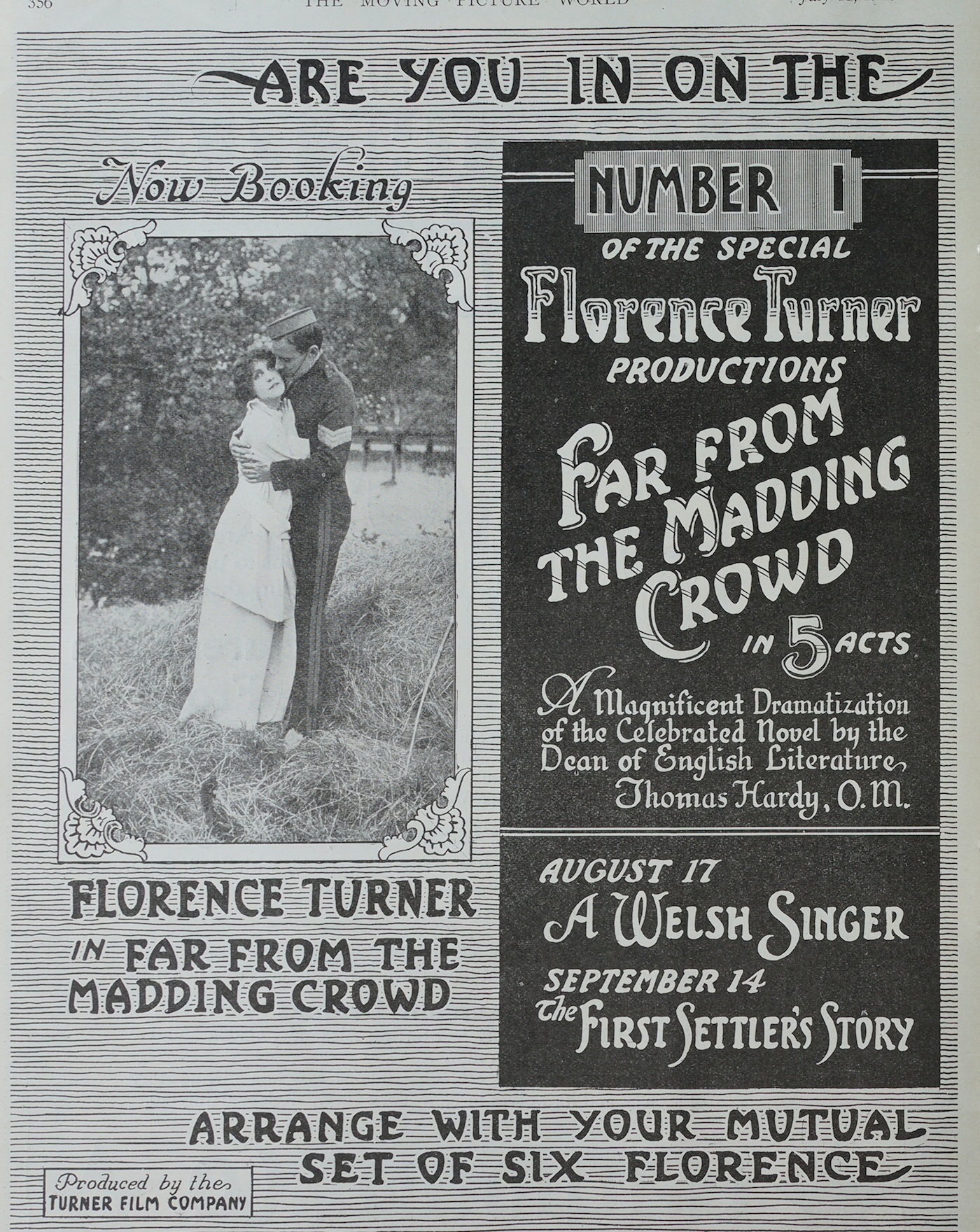
A definitive 6.6/10 rating for a film that redefined the boundaries of cult cinema. Far from the Madding Crowd remains a cornerstone of transgressive art.
Grainy beams of early amber stock flicker across the screen like lantern-light over barley, and suddenly Hardy’s earth is alive: sheep clatter through chalky lanes, thunderclouds bruise the sky, and Bathsheba’s silhouette—wide-brimmed hat, wind-whipped skirt—cuts a question mark against the horizon. Director Laurence Trimble trusts the pastoral hush; he lets the landscape speak first, allowing furrows, hedgerows, and the salty Channel wind to argue for the inevitability of human folly.
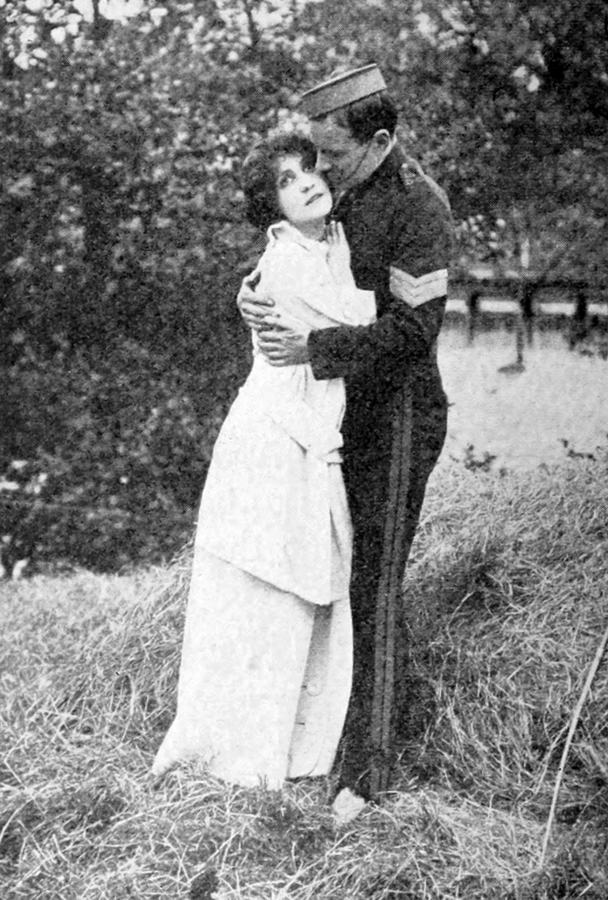
Florence Turner’s Bathsheba is no coquettish paper doll; her smile arrives like a sudden break in cloud, equal parts invitation and warning. When she mischievously posts the valentine that detonates Boldwood’s sanity, her gloved fingers tremble—half prank, half power-grab—revealing a proto-feminist streak light-years ahead of most 1915 damsels. Turner’s silent-shakespearean eyes do the heavy lifting: pride, doubt, hunger, regret ripple across her brows in single frames.
Henry Edwards, playing Oak, underplays magnificently; his stillness is a form of courtship. He leans against gates, watches flocks, endures Bathsheba’s rejections with a stoicism that feels carved from Wessex flint. Compare him to the arm-waving melancholics in Hamlet or the hieratic poses of Parsifal; Edwards roots morality in muscle and mud.
Campbell Gollan’s Sergeant Troy arrives like a spilled flag: crimson tunic, blade-twirling bravado, a moustache waxed to dagger points. His sword-exercise seduction— filmed in long shot so the steel glints like liquid mercury—remains one of silent cinema’s purest erotic metaphors. Unlike the virtuous stalwarts populating Joseph in the Land of Egypt, Troy embodies appetite without anchor, a man who treats promises like throwaway cartridges.
Malcolm Cherry’s Boldwood haunts parlours like a revenant, his face a chiaroscuro of repressed longing. Watch how Trimble frames him behind windowpanes, rain smearing the glass—an exterior man trapped in interior agony. The valentine sequence cross-cuts between Boldwood’s trembling fingers and Bathsheba’s careless laughter, foreshadowing doom with Eisensteinian economy a decade before Eisenstein. The performance stands shoulder-to-shoulder with the guilt-wracked matriarchs in The Sins of the Mothers.
Cinematographer John MacAndrews opts for orthochromatic stock that turns purple heather into rippling obsidian and renders the sheep’s bleat almost audible through contrast. For the harvest supper he bleaches the frame, letting candlelight pool yellow-orange—an early colour-tint reminiscent of hand-painted postcards. During the storm sequence (a tour-de-force of 1915 editing) rapid intercutting between panicked ewes, Oak’s flailing silhouette, and Bathsheba’s horrified gaze creates a proto-montage that rivals the night-time chaos of Les heures - Épisode 4: Le soir, la nuit.
Archival notes suggest original roadshow screenings hired village organists; many improvised sea-shanty medleys during Troy’s barracks scenes, then shifted to Bach chorales for Boldwood’s crack-up. Modern restorations favour sparse strings—pizzicato mirroring sheep-bells, legato underscoring doomed proposals. Either way, the silence between title cards swells with unheard thunder, a vacuum that invites the viewer’s internal orchestra to fill the void.
Hardy’s novel sowed proto-feminist seeds; Trimble’s adaptation amplifies them. Bathsheba inherits her uncle’s farm, rejects Oak’s marriage proposal because she “doesn’t need a husband,” and learns that property without emotional literacy is a brittle crown. Contrast that with the eponymous Jennico in The Pride of Jennico who barters agency for aristocratic romance, or the passive heroines of The Betrothed. Bathsheba’s arc argues that ownership of soil means little without ownership of self.
The film’s chaptered structure mirrors Hardy’s cyclical fatalism: spring’s bloom (bucolic courtship), summer’s blaze (ill-advised marriage), autumn rot (Troy’s gambling, Fanny’s death), winter implosion (Boldwood’s madness), and the thaw of second spring (Oak’s deferred love). The infamous valentine—five words “Marry me” signed with Bathsheba’s scrawl—acts as narrative fulcrum, the butterfly wing that births hurricane. It is the Edwardian equivalent of the poisoned letter in Aftermath, yet here the poison is unintentional, making the moral reckoning messier, truer.
While A Tale of the Australian Bush offers colonial vistas and A Princess of Bagdad flirts with orientalist fantasy, Far from the Madding Crowd stakes its claim in loamy realism. It lacks the Expressionist angularity of Az utolsó bohém yet predates the pictorial grandeur of later 1920s spectacles; it is transitional vertebrae in cinema’s evolutionary spine.
A 4K restoration by the BFI National Archive, completed in 2022, unearthed an extra 7 minutes previously believed lost—mainly sheep-wash sequences and a lingering close-up of Fanny Robin’s coffin. Streaming platforms Criterion Channel and Kanopy host the tinted version; Blu-ray includes an audio essay on Hardy’s influence on later rural tragedies such as The Colleen Bawn.
Picture this: dusk over a Dorset field, the projector’s carbon arc guttering, a farmhouse piano plinking a hesitant waltz. Bathsheba’s final acceptance of Oak isn’t a capitulation to patriarchy but recognition that autonomy flourishes alongside interdependence. Trimble’s 1915 adaptation—scarred by missing frames, flicker, and emulsion scratches—nonetheless endures as a testament to cinema’s primal power: to plough the psyche, seed it with images, and harvest empathy. Amid the CGI-saturated epics of today, the film’s elemental ache feels like wind whipping through unadorned rafters—raw, invigorating, alive.
Verdict: A cornerstone of pastoral fatalism and feminist self-interrogation, mandatory for devotees of Hardy, lovers of silents, or anyone convinced that CGI heather can never smell like rain.
IMDb —
1922
Community
Log in to comment.