DbcultAccessing Vault...
Cult Review
Senior Film Conservator
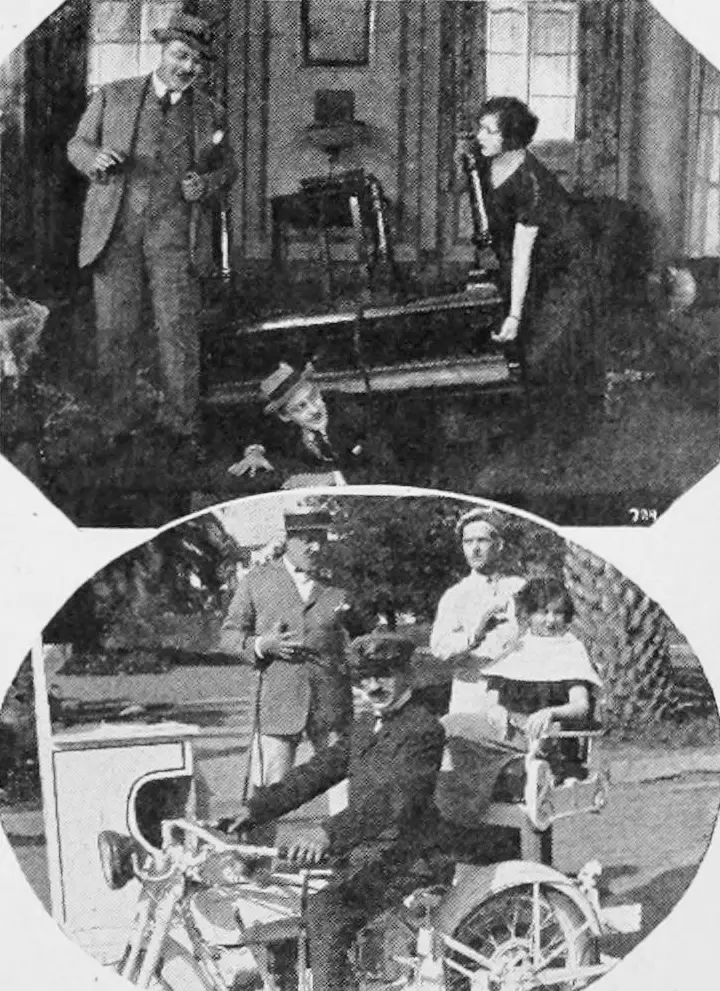
The film „You're Next“ (1924) is a delightful blend of romance, humor, and suspense, set in a world where the barbershop is not just a place for grooming but a tool for winning the heart of a fair lady. Directed with a keen eye for detail and featuring a cast that brings both gravitas and charm to each role, this silent film offers a rich cinematic experience.
Walter Irving, playing the central character, displays a nuanced performance that captures the essence of a man driven by the dual goals of love and business. His journey is complemented by a supporting cast that includes Bynunsky Hyman, Harry Sweet, Helen Stocking, Henry Murdock, Joe Bonner, Jack Earle, and others, each contributing to the film's layered narrative. The chemistry between the characters is palpable, enhancing the overall appeal of the story.
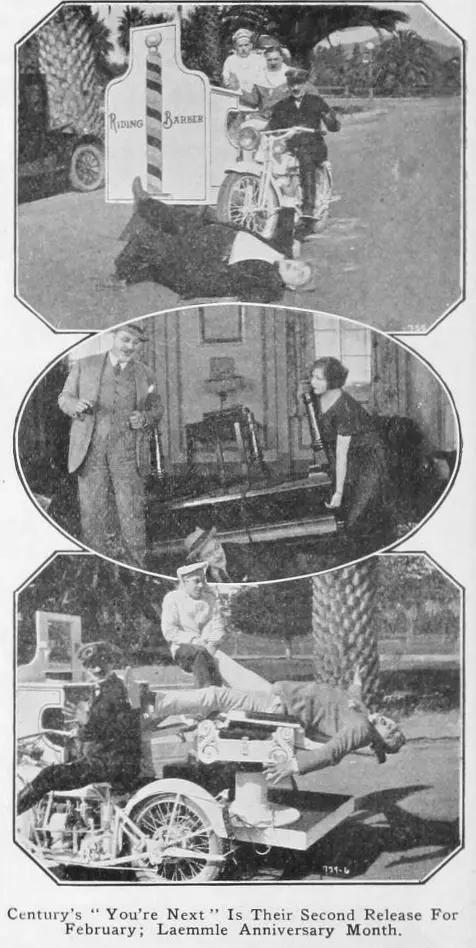
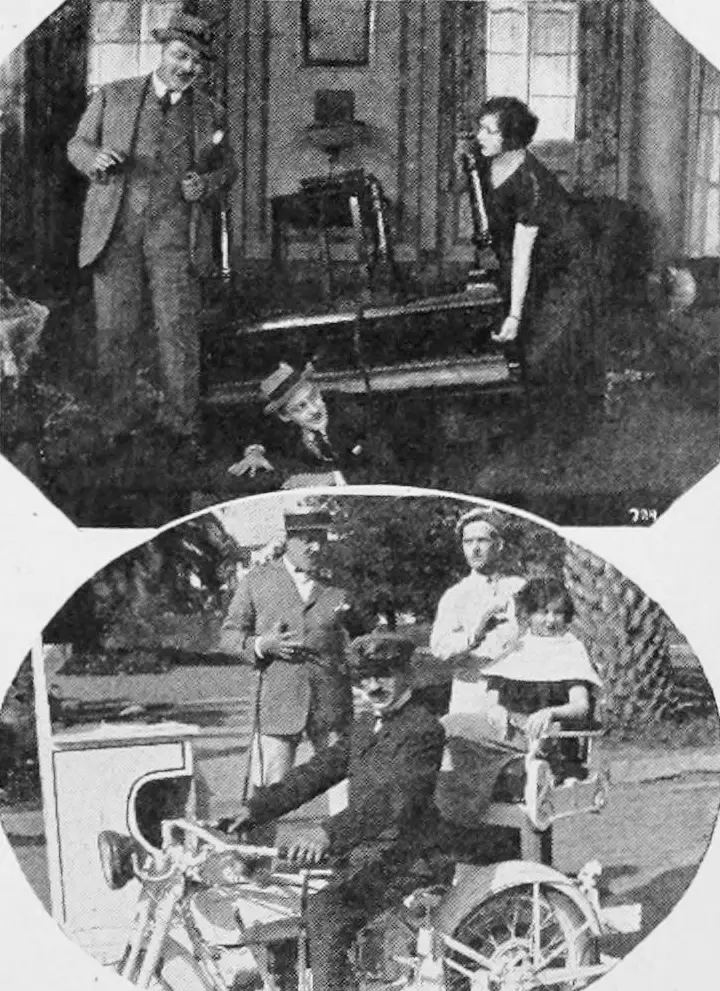
The plot revolves around a young man who, in his pursuit of a wealthy heiress, realizes that traditional methods are not enough. He devises an unconventional strategy by transforming his traveling barbershop into a motorcycle side-car, using it as a mobile platform to keep his rival, who controls the local barber shops, at bay. This ingenious approach not only highlights the protagonist's resourcefulness but also serves as a clever metaphor for the lengths to which one might go in the name of love.
The cinematography of „You're Next“ is a highlight, with its attention to detail and the use of expressive camera angles that enhance the storytelling. The visuals capture the bustling streets of the era, the opulence of the heiress's lifestyle, and the functional simplicity of the barbershop. These elements combine to create a vivid and immersive world that transports the audience back to the 1920s.
The humor in the film is both subtle and direct, often emerging from the juxtaposition of the mundane and the extraordinary. The character interactions are filled with witty banter and unexpected twists, making the narrative engaging and entertaining. The romantic subplots, while not the primary focus, add a layer of emotional depth that appeals to a broader audience.
Comparatively, films such as „Honor Among Men“ (1923) and „His Royal Highness“ (1925) offer similar themes of social conflict and personal triumph, but „You're Next“ stands out for its unique approach to blending romance and comedy with a practical business strategy. This film, much like its contemporary „Oath-Bound“ (1926), shows the versatility of the silent film genre in crafting narratives that are both culturally relevant and artistically rich.
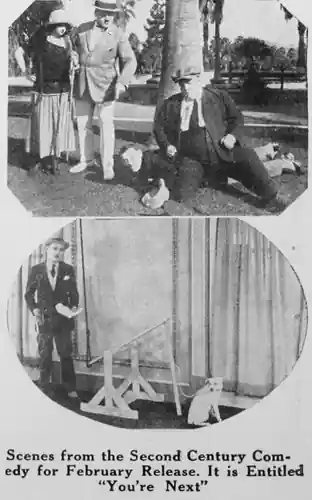
Technically, the film benefits from its silent nature, allowing for a more expressive use of gestures and facial expressions to convey emotions. The lack of spoken dialogue also heightens the visual storytelling, making it a testament to the artistry of earlier cinematic techniques.
For viewers interested in the evolution of early cinema, „You're Next“ is a must-watch. Its blend of romance, comedy, and practical business strategy provides a glimpse into the complex social dynamics of the Roaring Twenties. The film's enduring appeal lies not only in its entertaining storyline but also in its ability to resonate with contemporary audiences.
In conclusion, „You're Next“ is a captivating silent film that masterfully weaves together elements of romance, comedy, and business strategy. It serves as a reminder of the ingenuity and creativity that characterized the early days of cinema, making it a valuable addition to any film enthusiast's collection.
IMDb 6.7
1930
Community
Log in to comment.