DbcultAccessing Vault...
Cult Review
Senior Film Conservator
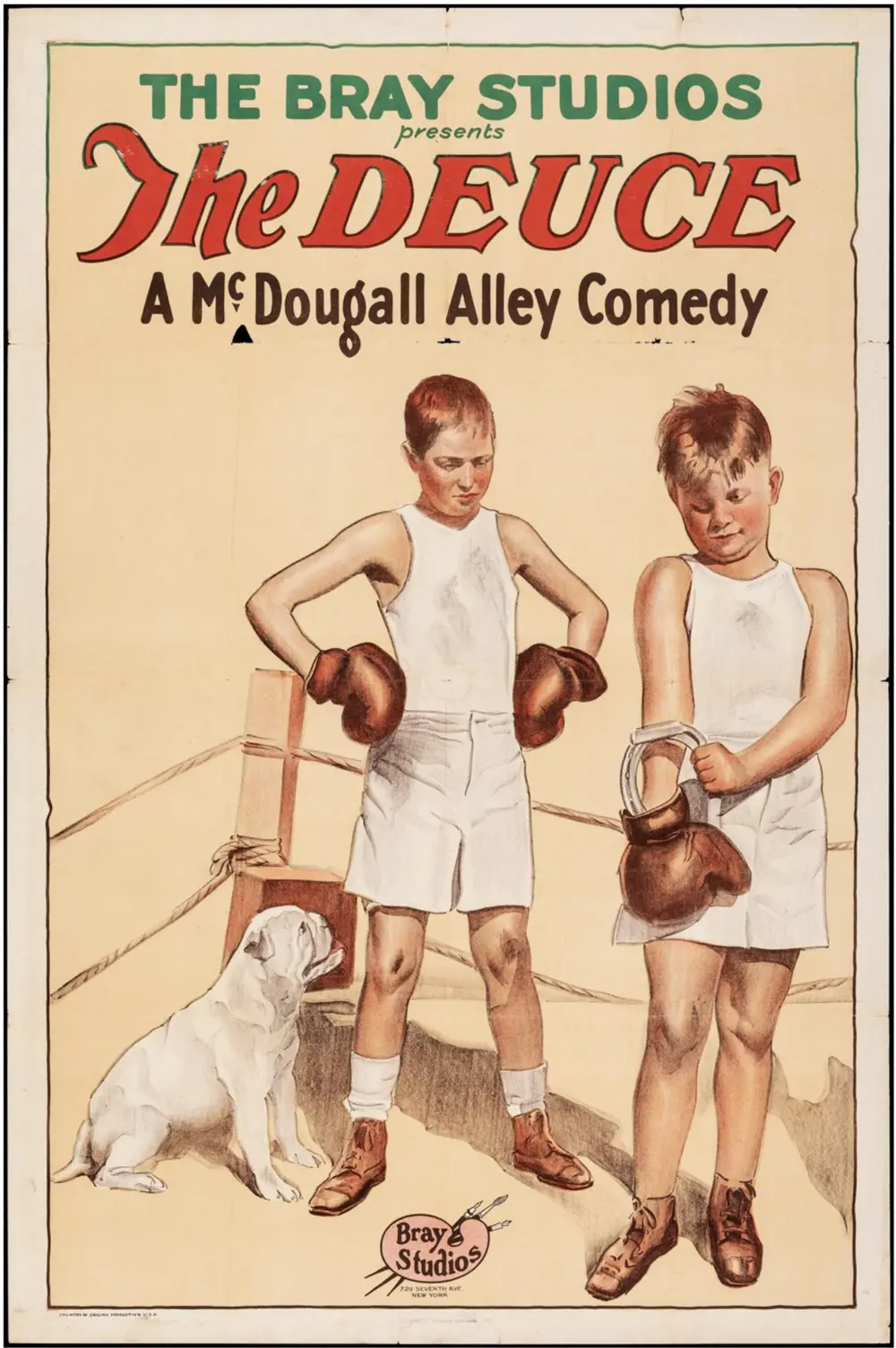
Is 'The Deuce' a film that warrants your attention in an age of endless streaming options? Short answer: yes, but with significant caveats. This often-overlooked urban drama, featuring Hannah Washington, Jean La Foe, and The McDougall Kids, offers a fascinating, albeit flawed, glimpse into early cinematic storytelling and societal anxieties.
It's a film for cinephiles interested in the evolution of character-driven narratives and the stark portrayal of metropolitan struggles. However, those seeking fast-paced plots or modern narrative sensibilities might find its deliberate pacing and period-specific melodramatic flourishes a challenging proposition.
Stepping into the world of 'The Deuce' is akin to unearthing a time capsule. It's a film that, despite its age, still pulsates with a raw energy, reflecting the anxieties and aspirations of an era grappling with rapid urbanization. While it may not boast the groundbreaking technical prowess of some of its contemporaries, its strength lies in its unflinching, if sometimes heavy-handed, human drama.
This film works because of its commitment to character, its willingness to explore the moral ambiguities of its setting, and the palpable tension it builds through human interaction. It fails because its narrative can, at times, succumb to the very melodramatic traps it attempts to critique, leading to moments that feel more manufactured than organic. You should watch it if you appreciate a deep dive into the human condition, presented through the lens of early cinema, and are willing to overlook some of its more dated conventions for the sake of its thematic resonance.
At its core, 'The Deuce' plunges us into the tumultuous journey of a young woman, Hannah, as she navigates the treacherous labyrinth of a city that promises both opportunity and ruin. Her initial optimism, a fragile shield against the city's relentless assault, slowly erodes under the weight of harsh realities. The film meticulously charts her transformation from an idealistic newcomer to a hardened survivor, forced to confront difficult choices that blur the lines between right and wrong.
The central dynamic with Jean La Foe is particularly compelling. La Foe's character, a shadowy figure of ambiguous morality, serves as both a potential savior and a dangerous temptress. Their relationship forms the emotional backbone of the narrative, highlighting the compromises one makes in the pursuit of security or affection. The McDougall Kids, often relegated to the periphery, offer a stark visual commentary on the city's forgotten, their innocence a painful contrast to the moral decay surrounding them.
It's a narrative that eschews grand, sweeping gestures for a more intimate, psychological exploration of its protagonist's inner turmoil. The 'deuce' itself isn't just a place, but a state of mind – a low point, a fateful decision, an urban purgatory where souls are tested and reshaped.
The performances in 'The Deuce' are, without question, the film's most potent asset. Hannah Washington delivers a portrayal of raw vulnerability and simmering resilience that anchors the entire production. Her ability to convey complex emotions through subtle shifts in expression – a flicker of hope in her eyes, a downturned mouth signaling defeat – is truly remarkable, especially considering the acting conventions of the era.
Jean La Foe, as the enigmatic figure, brings a compelling ambiguity to the screen. His character is a tightrope walk between charm and menace, and La Foe navigates it with a certain predatory grace. While some critics at the time found his performance overly theatrical, I argue it was a deliberate choice to reflect the performative nature of survival in the city. His sly smile in the dimly lit backroom, promising help while hinting at ulterior motives, is a standout moment, a perfect encapsulation of his character's duplicity.
The McDougall Kids, though not given extensive dialogue, inject a vital burst of anarchic energy. Their unpolished, naturalistic movements and expressions, particularly in a chaotic street market sequence, provide a stark contrast to the more stylized performances of the adults. They feel genuinely of the streets, adding a layer of gritty realism that grounds the film. Their unbridled laughter, even amidst squalor, is a surprising source of emotional depth.
The unnamed director of 'The Deuce' demonstrates a keen understanding of urban landscapes, transforming the city itself into a living, breathing character. The direction is purposeful, often utilizing deep focus to emphasize the overwhelming nature of the environment, placing characters not just in a scene, but *within* a sprawling, indifferent world.
Consider the sweeping establishing shots of the cityscape, often filmed from an elevated vantage point. These aren't just pretty pictures; they are visual declarations of scale, dwarfing the human figures below and setting a tone of existential struggle. The use of natural light, particularly in the grittier sequences set in tenements and back alleys, lends an almost documentary-like authenticity to the proceedings, a refreshing departure from the more artificial studio lighting prevalent in many films of the era.
The cinematography, while not overtly flashy, is incredibly effective. It's in the subtle choices: the low-angle shot of Hannah looking up at towering buildings, symbolizing her aspirations and the obstacles she faces; or the high-contrast lighting in a crucial confrontation scene, where shadows consume half of Jean La Foe's face, visually reinforcing his moral ambiguity. This isn't just point-and-shoot filmmaking; it's deliberate, thoughtful visual storytelling.
There’s a particularly memorable sequence involving a police chase through narrow streets, reminiscent in its kinetic energy, if not its scale, of later urban thrillers. The camera work here is surprisingly agile, tracking the fleeing figures with a sense of urgency that transcends the era's technical limitations. It feels immediate. It’s effective.
The pacing of 'The Deuce' is decidedly deliberate, a slow burn that allows the audience to fully immerse themselves in Hannah's escalating predicament. It eschews rapid-fire cuts for longer takes, allowing scenes to breathe and emotions to simmer. This measured approach, while potentially challenging for modern viewers accustomed to quicker narrative resolutions, is crucial for building the film's pervasive sense of dread and melancholic realism.
The film's tone is consistently somber, tinged with a pervasive sense of fatalism, yet it never fully succumbs to despair. There are fleeting moments of genuine human connection and resilience that act as crucial counterpoints to the overwhelming darkness. This balance is tricky to achieve, and the film largely succeeds, even if some of the more overtly melodramatic turns occasionally strain credibility. For instance, a sudden, almost deus ex machina moment of kindness towards Hannah by a stranger feels a tad unearned, disrupting the established gritty tone.
"The true stars here aren't the leads, but the city itself, a character more compelling than any human, demanding attention with its brutal beauty and unforgiving rhythm."
This deliberate pacing also allows for a deeper exploration of the film's thematic concerns: the erosion of innocence, the corrupting influence of power, and the enduring human spirit in the face of adversity. It's a film that asks you to sit with its characters, to feel their struggles, rather than merely observe them from a distance. This is a strength, not a weakness, though it demands patience.
The portrayal of female agency, or the lack thereof, is particularly poignant. Hannah's struggles highlight the limited options available to women in an era defined by patriarchal structures. Her journey is a testament to the quiet strength required to navigate a world not built for her. This film, alongside others like Why Girls Say No, offers a fascinating, if sometimes frustrating, look at the social pressures of the time.
Moreover, the film touches upon the nature of identity – how one's environment can shape, and sometimes distort, who they are. Hannah's constant negotiation with her surroundings forces her to shed layers of her former self, leading to a complex evolution that defies simple categorization. It's a surprisingly nuanced exploration for a film of its period, sidestepping easy moralizing in favor of a more complex, if bleak, psychological realism.
One might argue that Jean La Foe's performance, often praised as enigmatic, feels more like a missed opportunity for true character depth. His ambiguity, while intriguing, sometimes borders on a lack of clear motivation, making some of his actions feel less organic and more plot-driven. Was it a deliberate choice to reflect the unknowable nature of urban predators, or a limitation in character development? I lean towards the latter, believing a touch more internal conflict would have elevated his role beyond mere antagonist.
Furthermore, the film's reliance on melodrama, while period-appropriate, ultimately undermines its more profound social commentary. While films like God's Law and Man's embraced melodrama as its primary vehicle, 'The Deuce' often hints at something deeper, only to fall back on familiar emotional beats. It's a struggle between its artistic aspirations and the commercial demands of its time. It works. But it’s flawed.
An unconventional observation: the sound design, even in a silent or early talkie context, is surprisingly impactful. The bustling street noises, the distant train whistles, the mournful cries that punctuate the quieter scenes – all contribute significantly to the immersive quality of the urban environment. It’s a testament to the often-underappreciated artistry of foley and ambient soundscaping from that era, making the city feel truly alive, even when dialogue is sparse.
'The Deuce' is a film that demands a certain level of engagement and historical appreciation, but it richly rewards those who invest in its world. It's not a flawless picture, nor does it attempt to be. Instead, it offers a gritty, often melancholic, yet ultimately resonant portrait of humanity struggling against the indifferent forces of a rapidly changing world. Its strengths lie in its deeply felt performances, particularly that of Hannah Washington, and its evocative portrayal of an urban landscape that feels both menacing and alluring.
While its pacing might test the patience of some, and its narrative occasionally veers into predictable melodrama, these are minor quibbles in the face of its larger achievements. 'The Deuce' remains a valuable piece of cinematic history, a testament to the enduring power of human drama, and a film that continues to spark conversation about the complexities of urban life and the indomitable spirit required to navigate its challenges. It’s a compelling, if imperfect, journey worth taking for those willing to look beyond the veneer of age.
IMDb —
1919
Community
Log in to comment.