DbcultAccessing Vault...
Cult Review
Senior Film Conservator
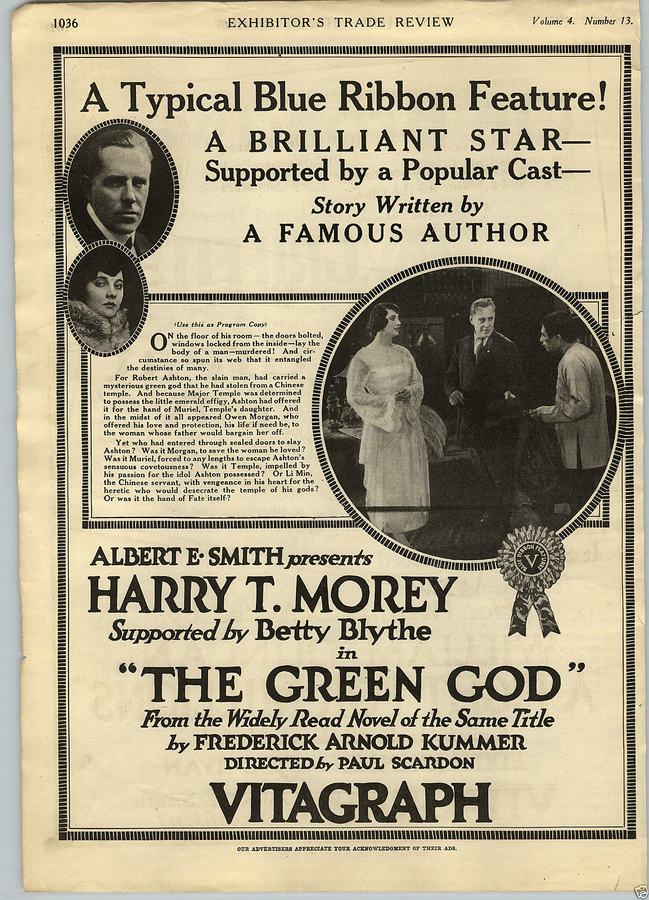
The silent era of cinema, often romanticized and sometimes misunderstood, was a crucible of narrative experimentation, a period where visual storytelling reached an unprecedented zenith. It was a time when grand gestures, expressive physiognomy, and the evocative power of light and shadow carried the weight of dialogue, crafting intricate tales that transcended linguistic barriers. Within this vibrant tapestry, films often ventured into realms of exoticism, moral quandary, and psychological intrigue, reflecting both the aspirations and anxieties of a rapidly modernizing world. Among these compelling cinematic artifacts stands The Green God, a film that, even a century later, continues to captivate with its potent blend of colonial ambition, romantic entanglement, and a meticulously crafted murder mystery. It serves as a stark reminder of the era's capacity for sophisticated plotting and character-driven drama, proving that the absence of spoken words merely amplified the universal language of human desire and its often-fatal consequences.
At its core, The Green God unfurls a narrative steeped in the corrosive power of greed, an insatiable hunger for possessions that propels its characters towards a tragic destiny. The story commences with Major Temple, portrayed with a compelling mix of aristocratic entitlement and fervent obsession by Harry T. Morey, whose travels in China lead him to covet a sacred artifact, the titular Green God. His initial, rather audacious attempts to purchase this revered idol from its priestly guardians are met with an understandable refusal, highlighting a clash of cultures and values that underpins much of the film's tension. Temple, however, is not a man to be deterred by ethical boundaries or local customs. His desire morphs into an unyielding fixation, prompting him to commission Robert Ashton, a character brought to life with a captivating blend of opportunism and menace by Robert Gaillard, for its illicit procurement. The stakes are raised considerably when Temple offers Ashton not merely monetary reward, but the hand of his own daughter, Muriel, in marriage – a patriarchal transaction that immediately casts a shadow over the film’s romantic undertones.
Ashton, a man evidently unburdened by scruples, successfully executes the theft, bringing the coveted idol back to the Morgan family estate. Yet, his mercenary nature surfaces once more as he demands not only the promised bride but also a substantial cash bonus. This audacious gambit precipitates a critical turning point. Major Temple, whose avarice now finds itself challenged by Ashton's own, vehemently refuses the additional demand, escalating the confrontation into a deadly impasse. His chilling vow – that Ashton will not leave the house alive without surrendering the god – sets the stage for the inevitable tragedy. The subsequent night sees Muriel, played with exquisite vulnerability and burgeoning resolve by Betty Blythe, seeking out Ashton. Her plea is not for love, but for liberation from the forced marital promise, a desperate appeal for agency in a world where women were often commodities in patriarchal arrangements. Ashton, however, remains obdurate, his grip on his ill-gotten gains and his claim on Muriel unyielding. The dawn then reveals the grim discovery: Ashton, lifeless, within a seemingly hermetically sealed room. The only palpable clue in this classic locked-room mystery is Muriel's handkerchief, an innocent item transformed into a damning piece of evidence, casting suspicion upon her and, by extension, her father. The narrative skillfully weaves a web of suspicion, leaving the audience to ponder the true culprit in a house where desire and desperation have reached their boiling point. This complex interplay of characters and motives, reminiscent of the emotional entanglements found in films like The Heart of a Girl or The Heart of a Child, where innocent women often become entangled in the machinations of others, gives The Green God a timeless resonance.
In the realm of silent cinema, the actor’s craft transcends spoken dialogue, relying instead on a nuanced symphony of facial expressions, body language, and physical presence to convey the full spectrum of human emotion. In The Green God, the principal cast delivers performances that are both compelling and remarkably expressive, breathing life into characters whose motivations are often dark and complex. Betty Blythe, as Muriel, stands out with a portrayal that is at once delicate and resilient. Her initial vulnerability, trapped by her father's promise and Ashton's demands, is palpable. Blythe masterfully uses her eyes and subtle gestures to communicate Muriel's internal turmoil – her fear, her desperation, and later, her growing determination to clear her name. Her performance offers a powerful insight into the limited agency afforded to women during the period, making her struggle for freedom all the more poignant. It evokes the plight of many heroines in silent dramas, whose purity and innocence are constantly under threat, much like the protagonists we might encounter in other melodramas of the era.
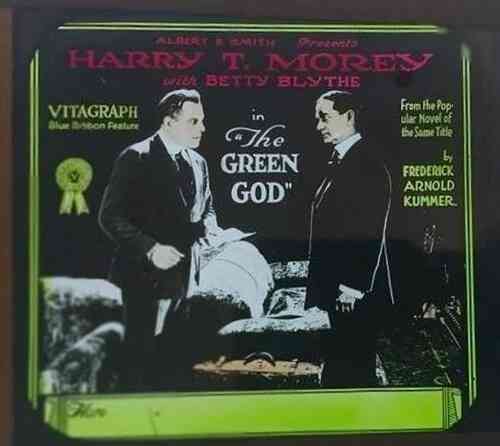
Harry T. Morey, inhabiting the role of Major Temple, is equally captivating. His character is a study in unchecked colonial ambition and aristocratic arrogance. Morey's imposing stature and commanding presence imbue Temple with an almost villainous gravitas, making his obsessive pursuit of the Green God utterly believable. He conveys the major's simmering rage and unyielding will with a powerful, almost theatrical intensity that is perfectly suited to the silent screen. Robert Gaillard, as the ill-fated Robert Ashton, brings a fascinating duality to his role. He is charismatic enough to be a plausible suitor, yet his underlying mercenary nature is always evident. Gaillard’s performance subtly hints at the character’s dangerous opportunism, making his eventual demise feel like a consequence rather than a mere plot device. The supporting cast, including Joseph Burke, Arthur Donaldson, Bernard Siegel, and George Majeroni, contributes significantly to the film's atmosphere, each actor sketching their characters with distinct clarity despite their limited screen time. Their collective efforts ensure that even the minor roles serve to enhance the narrative's tension and emotional depth, creating a rich ensemble that bolsters the central mystery.
The effectiveness of The Green God as a mystery thriller owes much to its astute direction and evocative cinematography. The filmmakers, working within the technical limitations of their time, demonstrate a sophisticated understanding of visual storytelling, employing various techniques to build suspense and convey the narrative’s intricate twists. The use of mise-en-scène is particularly noteworthy; the opulent yet increasingly claustrophobic confines of the Morgan home serve as a perfect backdrop for the unfolding drama, mirroring the characters’ entrapment by their own desires and circumstances. Shadows are expertly utilized to heighten mood and suggest hidden dangers, a common but powerfully executed trope in silent thrillers. The camera work, while perhaps not groundbreaking by modern standards, is remarkably effective in guiding the viewer’s eye, focusing on key details – like Muriel’s dropped handkerchief – that become crucial to the plot. The pacing, too, is meticulously controlled; the initial exposition is measured, allowing the audience to grasp the motivations and relationships, before gradually accelerating into a relentless build-up of tension following Ashton’s murder.
The depiction of the "exotic" Chinese locales, while likely studio-bound and reflecting early 20th-century Western perceptions, nevertheless contributes to the film’s adventurous spirit. These scenes, though potentially problematic through a contemporary lens, were designed to transport the audience to a distant, mysterious world where ancient traditions clashed with Western ambition. The climax, set within a clandestine Chinese temple, is particularly memorable for its atmospheric intensity, a masterclass in silent film suspense where the visual drama speaks louder than any dialogue could. The director skillfully manipulates the audience’s perception, playing with their expectations and suspicions, much like other gripping mysteries such as The Vampires: The Thunder Master, which also relied heavily on visual intrigue and a sense of the unknown to enthrall its viewers. The visual narrative ensures that even without spoken words, the audience is fully immersed in the high stakes and moral ambiguities presented on screen.
The strength of any compelling narrative lies in its foundation, and The Green God benefits immensely from the well-crafted script by Frederic Arnold Kummer and Garfield Thompson. Their collaboration yields a plot that is both intricate and surprisingly coherent, a testament to their ability to construct a complex mystery within the storytelling conventions of the silent era. The narrative structure adheres to a classical three-act framework, yet it manages to inject enough twists and turns to keep the audience thoroughly engaged. The initial act meticulously establishes Major Temple’s obsessive desire and the morally dubious bargain struck with Robert Ashton, laying the groundwork for the ensuing conflict. The second act plunges into the heart of the drama – Ashton's return, his escalating demands, Muriel's desperate plea, and the shocking discovery of his murder. This segment excels in building suspense, with the locked-room scenario adding a layer of classic detective fiction to the proceedings.
The writers skillfully employ the dropped handkerchief as a singular, potent piece of evidence, which not only implicates Muriel but also heightens the dramatic tension, forcing the audience to question her innocence. The final act, centered around the investigation and eventual resolution, culminates in a dramatic sequence within the Chinese temple, where the truth is finally revealed. While some might argue that Morton’s intervention feels somewhat like a deus ex machina, it provides a satisfying, albeit sudden, exoneration for Muriel, aligning with the narrative desire for justice to prevail. The pacing is deliberate, allowing characters' motivations to simmer and conflicts to escalate organically, a narrative rhythm that distinguishes it from more frenetic contemporary thrillers. Compared to other films that delve into the complexities of justice and moral ambiguity, such as The Tempting of Justice or The Outsider, The Green God maintains a clear moral compass, even while exploring the darker aspects of human nature. The intertitles are used judiciously, providing necessary exposition and dialogue without overwhelming the visual narrative, a crucial balance in silent filmmaking.
A century after its initial release, The Green God retains a surprising degree of relevance, transcending its historical context to speak to enduring human concerns. Its exploration of unchecked avarice, the objectification of cultural artifacts, and the plight of individuals caught in webs of deceit offers a timeless commentary on the darker facets of human ambition. The film serves as a valuable document of early 20th-century cinema, showcasing the sophisticated narrative techniques and expressive acting styles that defined the silent era. It reminds us that compelling storytelling does not require elaborate special effects or constant dialogue; rather, it thrives on strong characters, a well-structured plot, and the universal language of emotion.
While aspects of its portrayal of Eastern cultures might be viewed critically through a modern lens, reflecting the prevailing exoticism of the period, these elements also provide a fascinating insight into the cultural perceptions of the time. The film's central mystery, a classic locked-room scenario, continues to engage audiences, demonstrating the enduring appeal of a well-executed whodunit. Its themes of justice, fate, and the consequences of moral compromise resonate deeply, making it more than just a historical curiosity. For cinephiles and historians alike, The Green God offers a window into the artistic achievements of a bygone era, proving that the silent screen was anything but silent in its impact. Its legacy lies not just in its entertainment value but in its ability to provoke thought about the forces that drive human action, both then and now. It stands as a testament to the power of early cinema to craft narratives that are both thrilling and thought-provoking, securing its place in the annals of film history.
In conclusion, The Green God is a film that richly rewards rediscovery. It is far more than a mere relic of the silent era; it is a vibrant, engaging mystery that expertly blends suspense, drama, and a keen observation of human nature. The film’s strengths lie in its tightly constructed plot, the compelling performances of its cast—particularly Betty Blythe’s nuanced portrayal of Muriel and Harry T. Morey’s formidable Major Temple—and its effective visual storytelling. The directorial choices, from the atmospheric lighting to the precise pacing, all contribute to a heightened sense of intrigue that keeps the audience guessing until the very end. While the resolution might strike some as a touch too convenient, it nevertheless provides a satisfying closure to a narrative fraught with moral ambiguities and dangerous desires.
For those eager to delve into the rich heritage of early cinema, The Green God offers an excellent entry point. It stands as a testament to the fact that silent films, far from being simplistic, were capable of profound emotional depth and sophisticated narrative complexity. It is a film that speaks volumes without uttering a single word, inviting viewers to engage with its visual language and interpret its powerful themes. So, if you have an opportunity to experience this captivating piece of cinematic history, seize it. You will find yourself transported to an era where the flicker of light on screen held an undeniable magic, weaving tales of greed, betrayal, and redemption with an artistry that continues to resonate today. The Green God is a silent gem, polished by time, and absolutely worth revisiting.
IMDb 5.8
1913
Community
Log in to comment.