DbcultAccessing Vault...
Cult Review
Senior Film Conservator
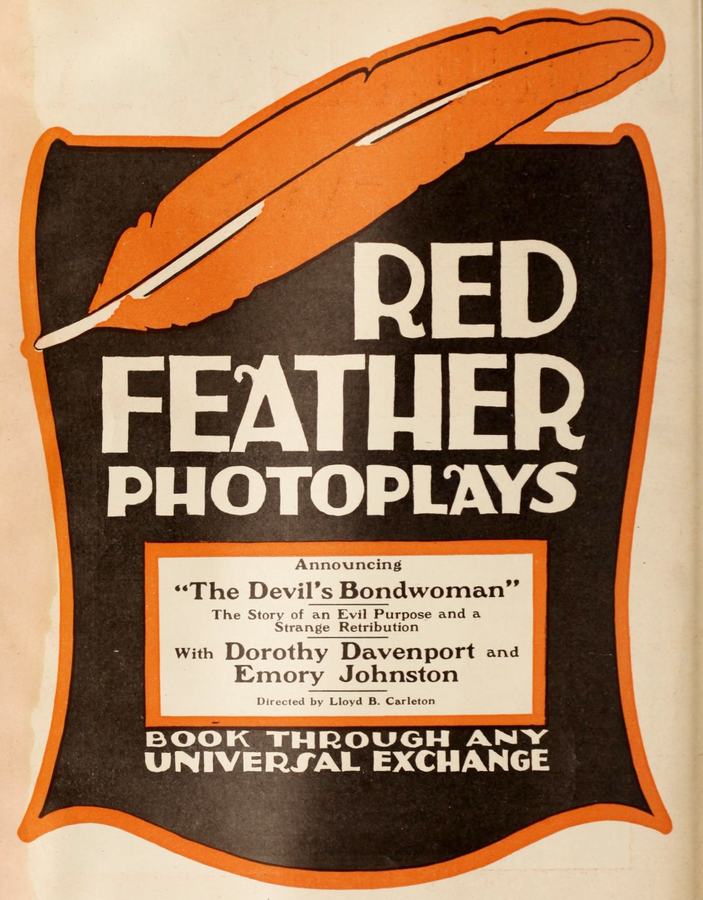
A sulphurous prologue unfurls beneath a sky bruised by twilight.
Satan, artisan of flesh, steps back from his clay-born Man—an assemblage of sinew, vanity, and half-lit ambition—and, satisfied that the creature can stagger through the mortal maze without further demonic supervision, descends once more into the chasm of perpetual furnace. Yet Hell’s population has been busy; in his absence they have sculpted a second figure—smaller, curved, eyes like obsidian moons. The Prince of Darkness names her Woman, and with that utterance the film’s crucible ignites.
What follows is no garden-variety morality play but a fever-dance of temptation, retribution, and erotic economics, staged in drawing-rooms that drip with gilt despair and on shorelines where waves gnash like envious teeth.
The narrative corkscrews through a tangle of engagements: an heiress shackled by her father’s railroad millions; a self-made banker whose ledgers conceal abysses deeper than any abyss in Hades; a Japanese valet who speaks little yet sees every clandestine ledger entry; a society wife whose pearls weigh like manacles. Each soul is a filament in Satan’s web, tugged by invisible wire toward a wedding that promises to be both merger and funeral.
When the bride—our Bondwoman—discovers that her betrothed has mortgaged his integrity to the same devil who signed her own birth certificate, the film tilts from drawing-room melodrama into expressionist nightmare: chandeliers morph into dangling nooses, waltz tempos slow to heart-beat dirge, and a child’s porcelain doll cracks open to spill sand like squandered time.
The climax arrives inside a bankrupt ballroom where creditors in domino masks demand payment in flesh. One by one, masks fall; faces are revealed as mirrors; Satan, now in white tie, presides over a last waltz whose final chord is a gunshot.
The Bondwoman lives, but freedom tastes of ash; the Man staggers into fog, clutching a contract whose ink still smokes. Hell’s gate does not clang shut—it yawns wider, patient, certain.
Shot through with the stingy shimmer of early Universal budgets, The Devil’s Bondwoman nonetheless invents its own visual lexicon. Cinematographer William Beckway (unheralded, as so many of the era) floods parlors with sickly top-lighting that carves cheekbones into crags; he tilts the camera during the séance sequence so that the medium’s turban scrapes the ceiling like a malignant halo. The result feels closer to The Vampires: Hypnotic Eyes than to polite society pictures such as Lady Windermere’s Fan.
Intertitles—penned by a triad of writers including the ferociously witty F. McGrew Willis—flash like switchblades: “Satan laughed—and Wall Street echoed.” The typography itself curls into horns, a typographic detail I have spotted in only one other 1916 title, Extravagance.
Dorothy Davenport essays the Bondwoman with the brittle hauteur of a porcelain doll who has read Schopenhauer. Watch her pupils dilate when she fondles the marriage contract—it's a micro-gesture that betrays both lust and loathing. As Satan, C. Norman Hammond refuses mustache-twirling villainy; instead he exudes the weary charisma of a tycoon who has already short-sold the world. His final smirk, half-shadowed by a top-hat brim, deserves to be freeze-framed and hung in the Louvre of Lost Silent Expressions.
Comic relief arrives via Frank Tokunaga’s valet, a part that could have slid into racist caricature yet instead becomes the film’s moral gyroscope—his sidelong glances at the audience implicate us as co-conspirators. The moment he snaps a ledger shut on the word “soul” is both gag and accusation.
Beneath the brimstone plot lies a sly treatise on commodified womanhood. The Bondwoman’s dowry is denominated in railroad stock that evaporates overnight; her body becomes the collateral currency. In a scene excised by many provincial censors, she tears a stock certificate into confetti and let the scraps cascade down her décolletage—a visual merger of erotic and economic exposure.
Compare this to The Banker’s Daughter, where the heroine is merely passed from father to husband like a gilt bond. Here, the heroine weaponizes her own liquidity, if only for a heartbeat. The film dares to ask: what if Eve refuses to return the apple, preferring to hold it hostage on the futures market?
Surviving prints retain the original cue sheets calling for “dramatic agitato” and “misterioso” passages from Chopin and Liszt. In the 2019 Pordenone restoration, the Mont Alto Motion Picture Orchestra interpolated a tango motif that slithers under Satan’s on-screen appearances—an anachronism that somehow deepens the moral rot. For home viewing, I recommend pairing the film with Claude Vivier’s spectral compositions; the dissonant choral clusters evoke the same abyssal chill.
Released mere months after The Taint, this picture makes that already grim tale look like a Sunday-school picnic. Both trade in moral contagion, yet Bondwoman interrogates the very gendered scaffolding of sin rather than simply splashing around in it. Its DNA also snakes through later works: the bridal nightmare anticipates The Fatal Wedding, while its board-room brimstone prefigures the corporate damnation of The Price of Silence.
Curiously, the film also rhymes with Les Amours de la Reine Élisabeth in its use of historical drag to smuggle subversion past censors—both movies cloak modern sexual politics in period lace.
Chicago’s board hacked out 456 feet, including the hallucination where serpents coil from the bride’s wedding train. A Swedish exhibitor reported that the final reel once ran an extra four minutes, revealing Satan escorting the bankrupt groom through a Times Square of the damned—neon devils, flicker-picture marquees advertising “Eternal Fire, Continuous Shows.” No copy of this epilogue has surfaced; perhaps it was never printed. Yet its ghost lingers, like the whiff of sulfur on an old strip of nitrate.
Because your algorithmic feed is clogged with comfort-scrolling pablum. Because this film reminds us that sin, like interest, compounds nightly. Because when the Bondwoman finally lifts her veil, the face underneath might be your own—framed by the flicker of smartphone light instead of chandeliers, but equally damned.
Stream the 4K restoration on criterionchannel.com during their “Silent Satanism” retrospective, or risk the 480p rip on the Internet Archive if you like your pixels chunky as brimstone. Pair with a rye old-fashioned; sip each time a character signs a contract. By the end you’ll taste smoke.
The Devil’s Bondwoman is not merely a curio for completists of the silent era—it is a molotov cocktail lobbed at the citadels of gendered capital, wrapped in lace, lit with a hellish grin. Ninety-six years after its premiere, its fires have not dimmed; they wait, banked, ready to scorch fresh retinas. Enter freely, leave irrevocably altered.
IMDb —
1917
Community
Log in to comment.