DbcultAccessing Vault...
7/10
Senior Film Conservator
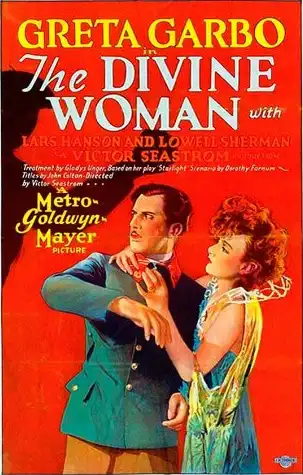
A definitive 7/10 rating for a film that redefined the boundaries of cult cinema. The Divine Woman remains a cornerstone of transgressive art.
To talk about The Divine Woman is to talk about a ghost. For decades, this Victor Sjöström-directed vehicle for Greta Garbo was considered entirely lost—a casualty of nitrate decomposition and studio neglect. Today, we only have about nine minutes of footage to judge, specifically the pivotal 'midnight' sequence where Lucian (Lars Hanson) misses his military transport to stay with Marianne (Garbo). If you are looking for a complete narrative experience, you won't find it here. However, if you are a student of performance and visual texture, these surviving minutes are more essential than most completed films from 1928.
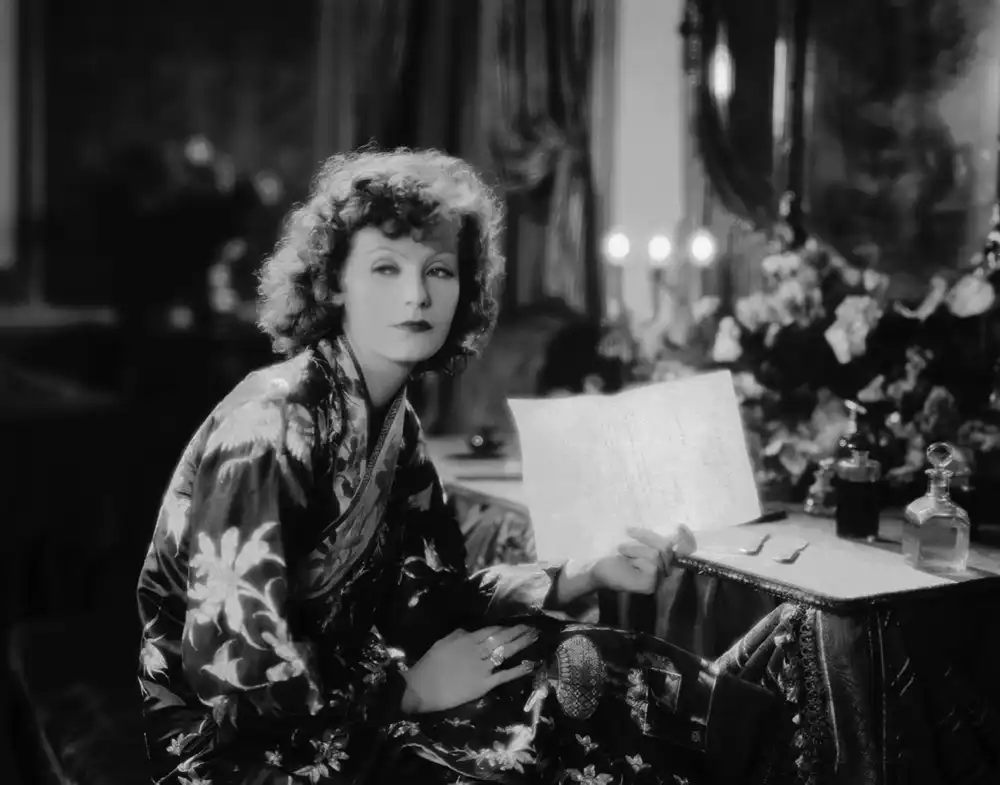
Is it worth watching today? For the casual viewer, probably not. But for anyone interested in why Garbo became a global obsession, or how Sjöström managed to bring a Swedish sense of psychological weight to the Hollywood machine, it is a mandatory viewing. It is for the patient viewer who can find a whole world in the way a woman looks at a ticking clock. It is definitely not for those who need a fast-paced plot or high-resolution clarity.
What is immediately striking about Garbo’s performance in the surviving footage is how grounded she feels. We are used to the 'Sphinx' of her later talkies—the untouchable, ethereal goddess. Here, as Marianne, she is earthy and almost frantic. There is a specific moment where she is preparing a meager meal for Lucian; the way she handles the bread and the wine isn't theatrical. It’s the work of someone who knows what it means to be hungry. When she looks at Hanson, there is a desperation that feels uncomfortably private.
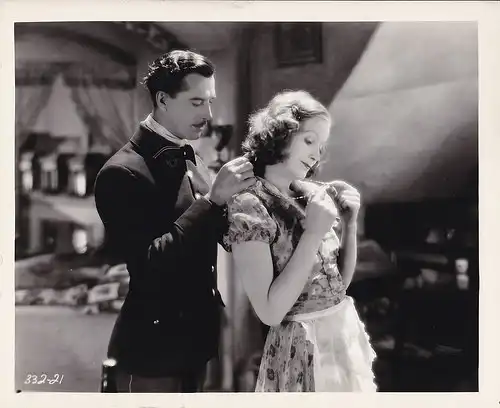
Lars Hanson, who previously starred with Garbo in The Flesh and the Devil, brings a frantic, sweaty energy to Lucian. Unlike the stiff leading men often found in lesser silents like The Snob, Hanson moves with a heavy, muscular uncertainty. You can see the weight of the uniform on his shoulders. He isn't just a romantic lead; he’s a man who knows he is throwing his life away for a few extra hours in a small room. The chemistry between the two isn't just 'movie romance'; it’s a shared panic.
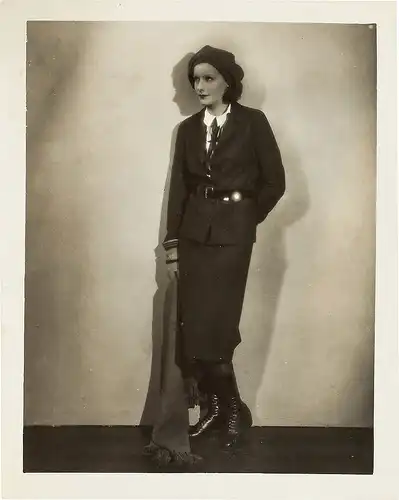
Sjöström’s direction is remarkably modern in its focus on domestic details. The apartment doesn't feel like a movie set; it feels cramped and lived-in. The lighting is low and directional, casting long shadows that seem to swallow the characters as the night progresses. The most effective 'character' in the room is the clock. Sjöström cuts back to it repeatedly, but it never feels like a cheap suspense tactic. Instead, it’s a rhythmic pulse that underscores the dialogue-less tension.
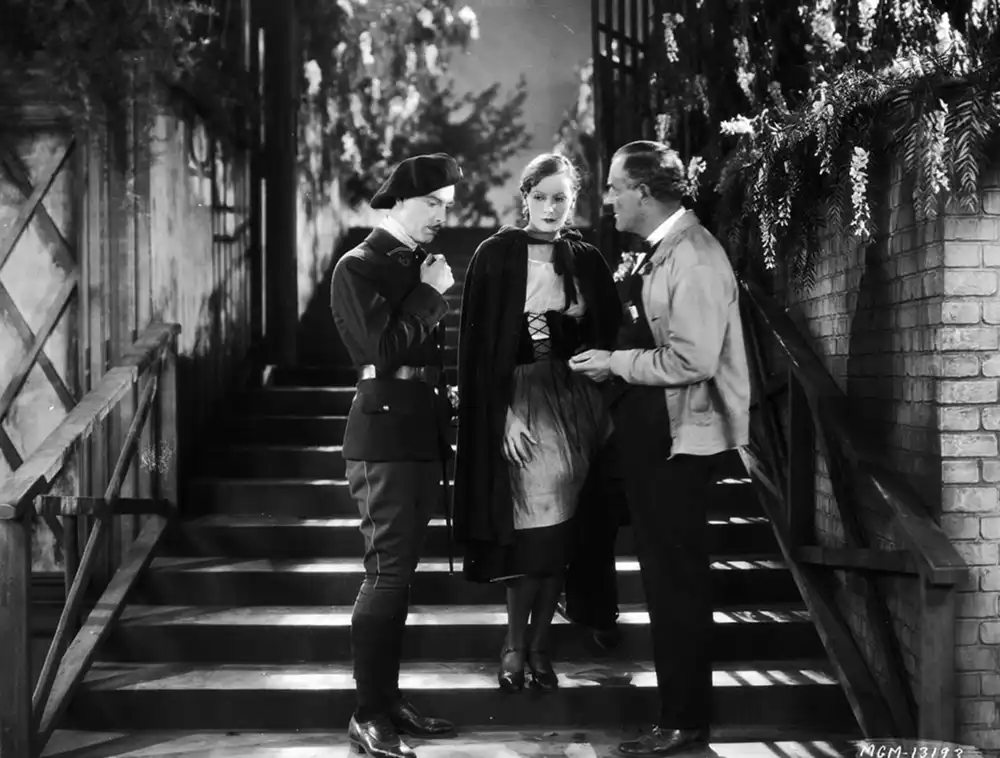
There is a specific shot where the light from the window hits the side of Garbo’s face as she realizes the time has passed 9:00 PM. The shift in her expression—from a forced cheerfulness to a hollow, wide-eyed realization—is a masterclass in silent acting. She doesn't need to scream or clutch her pearls; her jaw simply sets, and you see the future vanishing. It lacks the melodrama found in films like Hungry Eyes, opting instead for a quiet, crushing realism.
Because we only have the fragment, the pacing feels breathless. However, historians and the original screenplay suggest a much slower build-up. The film was loosely based on the life of Sarah Bernhardt, and much of the middle act apparently dealt with Marianne’s rise to fame and her conflict with a wealthy manager played by Lowell Sherman. Without those scenes, the soldier’s desertion feels like an isolated incident of madness. With them, it is the tragic climax of a woman trying to find something real in a world of artifice.
One awkward element that survives even in the fragments is the somewhat heavy-handed symbolism of the 'Divine' versus the 'Human.' The titles (and the lost scenes) lean hard into the idea that Marianne is a goddess on stage but a mere mortal in love. It’s a bit of a cliché, even for 1928, and you can tell the writers were trying to force a thematic depth that the actors had already achieved more naturally through their eyes and gestures.
The Divine Woman is a ghost story. We are looking at the remnants of a masterpiece that was likely Sjöström’s best American work. The surviving nine minutes are a visceral reminder of how much can be communicated through shadow and silence. While the plot—a soldier choosing love over duty—is a standard trope of the era, the execution here elevates it into something far more haunting.
Final Verdict: Watch it for the nine minutes of lightning in a bottle. It’s a glimpse of a Garbo that was more human, more vulnerable, and more dangerous than the icon she eventually became. It’s a tragedy that the rest of the film is gone, but what remains is enough to prove that Sjöström and Garbo were a match made in cinematic heaven.
IMDb 7
1930
Community
Log in to comment.