DbcultAccessing Vault...
Cult Review
Senior Film Conservator
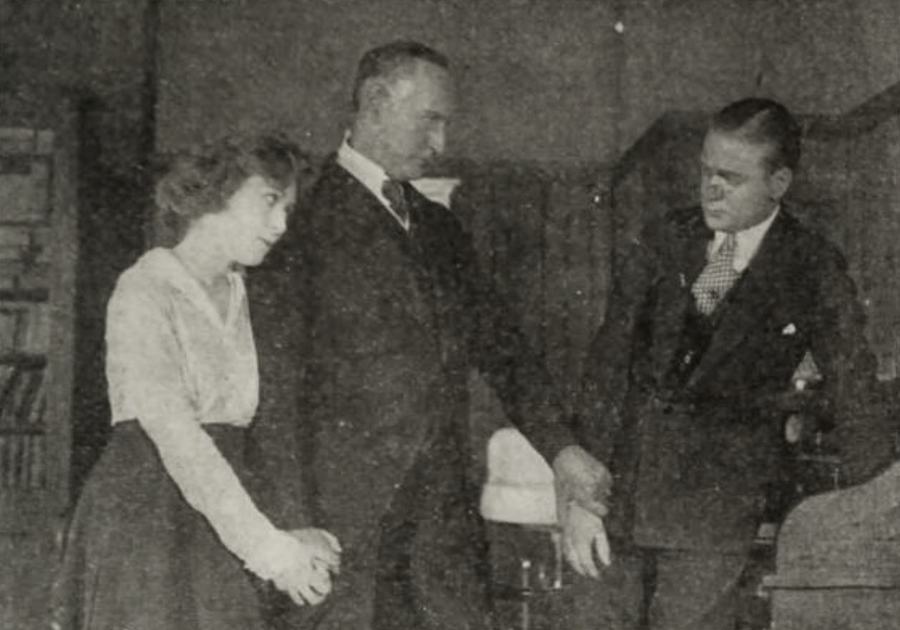
Step back into an era where grand gestures, stark moral dilemmas, and the eloquent silence of the screen conveyed narratives of profound human experience. His Wife's Good Name, a cinematic offering from a time when film was still discovering its voice, stands as a poignant testament to the enduring power of melodrama, class commentary, and the arduous path to redemption. Directed with a keen eye for emotional impact, this film, penned by Edward J. Montagne and Josephine Lovett, weaves a tapestry of innocence betrayed, familial machination, and the transformative power of compassion.
At its heart lies Mary Ellen McKay, portrayed with compelling vulnerability by Lucille Lee Stewart. Her arrival in New York City is a familiar trope: the wide-eyed country girl, brimming with aspirations, only to find the urban labyrinth far more treacherous than anticipated. Her dreams of a singing career, built on a voice described as merely 'mediocre,' quickly dissipate, mirroring the rapid expenditure of her hard-earned savings. This early narrative establishes a crucial vulnerability, setting the stage for the trials to come. Stewart masterfully conveys Mary Ellen's initial naiveté, her burgeoning hope, and the subsequent crushing weight of disillusionment through expressions that speak volumes without uttering a single word—a hallmark of great silent film acting.
Her fateful encounter with Harry Weatherby, brought to life by Huntley Gordon, introduces the central romantic conflict. Harry is not merely a rich man's son; he is a 'ne'er-do-well,' a profound disappointment to his formidable millionaire father, whose vision for him is one of industrial prowess. Gordon portrays Harry's initial idleness and charming superficiality with a believable touch, making his later transformation all the more impactful. Their flirtation, blossoming into a clandestine marriage, immediately foregrounds the stark class divide and the societal expectations that will become the narrative's primary antagonist. The pressure Harry feels to conceal his union from his 'stern father' is palpable, a silent testament to the patriarchal power structures of the era.
The elder Weatherby, embodied by Frank Currier, is a fascinating study in villainy. His rage upon learning of the marriage is not simply that of a disapproving parent; it's the fury of a man whose carefully constructed world order is threatened. His initial attempt to buy off Mary Ellen, met with her indignant refusal, showcases her inherent dignity and sets him on a far more insidious path. The subsequent plot to publicly humiliate her, enlisting the unsavory Silk Harrington and his 'tenderloin friends,' is a masterstroke of dramatic cruelty. This orchestrated deception, where false society figures influence Mary Ellen to drink until she acts 'foolish,' is a chilling depiction of how easily innocence can be weaponized against itself. Currier's performance as the calculating patriarch is nuanced, portraying not just outright malice but perhaps a misguided, ruthless protection of his dynastic legacy.
The scene where Harry arrives, witnesses Mary Ellen's compromised state, and 'denounces her, thinking this is her true self,' is the emotional apex of the betrayal. It's a moment of profound misjudgment, highlighting Harry's immaturity and the devastating effectiveness of his father's scheme. The leaving of the $10,000 check, contingent on Mary Ellen never seeing Harry again, is a final, cynical flourish. Her act of crumpling the check, understanding the depth of the treachery, speaks volumes about her character. The subsequent discovery of the check by Silk Harrington adds a layer of suspense and ensures the father's machinations will eventually come to light, rather than remaining a secret injustice.
Mary Ellen's subsequent descent into suicidal despair is handled with a delicate yet powerful touch, emphasizing the profound psychological toll of public humiliation and shattered trust. The intervention of Kate Weld, a trained nurse and neighbor, along with Dr. Cameron (Wilfred Lytell), marks a pivotal shift in the narrative. Dr. Cameron emerges as the film's moral compass, a beacon of wisdom and compassion. His decision to take Mary Ellen to his country home for recuperation is not just an act of kindness but a symbolic removal from the corrupting influence of the city and its false pretenses. Lytell imbues Dr. Cameron with a quiet authority and profound empathy, making him an anchor in Mary Ellen's storm-tossed existence.
The film then delves into the parallel journeys of Harry and Mary Ellen. Harry, consumed by guilt and a desperate need for absolution, 'plunges into business to forget,' a transformation that, ironically, pleases his father. This depicts a complex dynamic: the father's cruelty inadvertently pushes Harry towards the very path he desired, but at a tremendous emotional cost. Mary Ellen, recovering physically but with a 'shattered faith,' initially seeks solace in hedonism – a natural, if self-destructive, reaction to profound trauma. Dr. Cameron's patient, unwavering guidance becomes crucial here. His 'sightseeing' tour is not one of leisure, but of grim education. Taking her to places like Cherry's and the Haymarket, he confronts her with the harsh realities of 'broken-down men and women,' illustrating the 'price that must be paid' for a life of abandon. This sequence serves as a powerful moral lesson, typical of the era's didactic approach to cinema, yet delivered with a profound humanism.
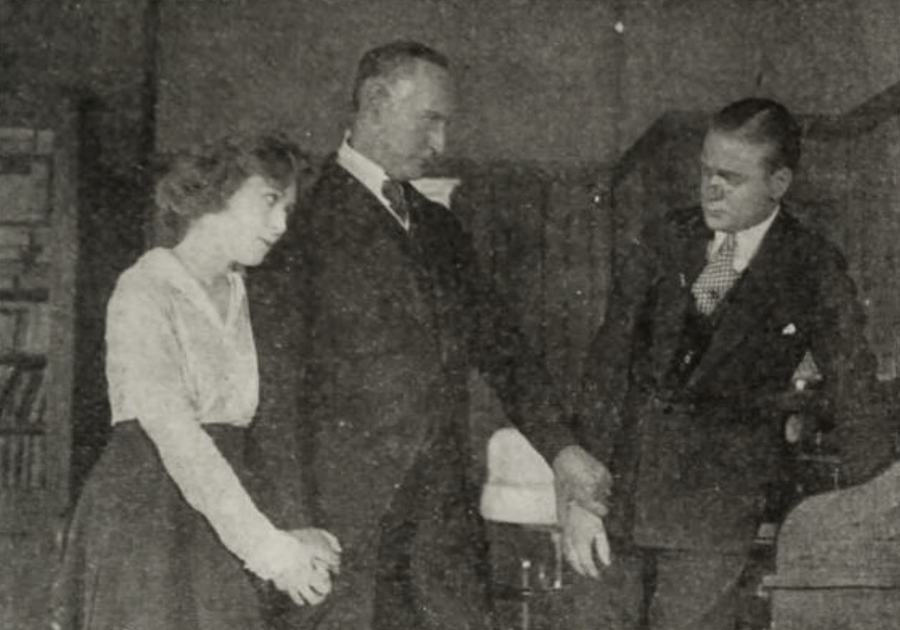
The climax of Dr. Cameron's mentorship occurs at his East Side mission. Here, he reveals his own past heartbreak and his discovery of 'solace for his sorrow in brightening the lives of others.' This personal confession is a pivotal moment, providing Mary Ellen with a relatable blueprint for healing and purpose. Her declaration, 'she, too, wants to do this work,' signifies her complete spiritual and emotional rehabilitation. This narrative arc, from innocent victim to empowered altruist, is exceptionally well-developed by writers Montagne and Lovett, demonstrating a sophisticated understanding of human psychology, especially for a film of its time.
Concurrently, the lingering thread of Silk Harrington's possession of the $10,000 check meticulously unravels the father's deceit. When Harrington attempts to pass the check, Harry is summoned to the bank, and 'learns the truth through Harrington.' This revelation triggers a dramatic confrontation between Harry and his father, a moment of catharsis where Harry finally asserts his moral independence. Gordon's portrayal of Harry's fury and subsequent determination to find Mary Ellen completes his character arc, transforming him from a passive participant in his father's schemes to an active agent of justice and love.
The final reconciliation between Harry and Mary Ellen is hard-won, reflecting the depth of her initial pain and the gravity of his previous misjudgment. Her initial reluctance to forgive him is entirely understandable, lending authenticity to their eventual capitulation. This ending, rather than being a simplistic 'happily ever after,' suggests a bond forged in adversity, built on a deeper understanding and mutual respect. The film, in its entirety, is a masterful exploration of how societal pressures, personal ambition, and the pursuit of truth can shape and reshape human lives.
Comparing His Wife's Good Name to other films of its era, one can draw parallels in its thematic ambition. The harsh realities faced by its protagonists, and the moral struggles they endure, echo the gravitas found in works like Prestuplenie i nakazanie, though in vastly different cultural contexts. Both films delve into the consequences of actions and the arduous journey towards moral clarity. The theme of an innocent individual caught in a web of deceit, much like Mary Ellen, resonates with the plight of characters in films such as The Little Gray Lady or The Innocent Lie, where reputation and truth are constantly under siege. The melodramatic flourishes and the exploration of societal hypocrisy also find common ground with films like Garden of Lies, which similarly dissected the intricate deceptions within the upper echelons of society.
The screenplay by Edward J. Montagne and Josephine Lovett is remarkably intricate, balancing multiple plot threads—the romance, the father's scheme, Harrington's opportunism, Mary Ellen's recovery, Harry's awakening, and Dr. Cameron's mentorship—without losing narrative cohesion. The pacing, crucial for silent films that relied on visual storytelling and intertitles, maintains a compelling rhythm, building suspense and emotional intensity with precision. The inclusion of John S. Robertson and Jessie Miller in the supporting cast further enriches the tapestry, adding depth to the world Mary Ellen inhabits.
What makes His Wife's Good Name particularly resonant is its unflinching look at societal judgment and the redemptive power of empathy. It critiques the superficiality of wealth and the dangers of unchecked power, while simultaneously championing the virtues of compassion and selflessness. The film's message, delivered through the powerful medium of silent cinema, transcends its historical context. It reminds us that true character is forged not in prosperity, but in adversity, and that the path to a meaningful life often involves uplifting others, as exemplified by Dr. Cameron's profound influence on Mary Ellen.
In a cinematic landscape often dominated by spectacle, His Wife's Good Name reminds us of the profound impact of intimate human drama. It’s a compelling narrative of a woman's journey through the crucible of injustice to find her true purpose, and a man's awakening to integrity. The film's enduring legacy lies in its ability to provoke thought on themes that remain timeless: the corrupting influence of power, the resilience of the human spirit, and the ultimate triumph of truth and compassion over deception. It’s a silent film that speaks volumes, a historical artifact that continues to resonate with contemporary audiences seeking stories of profound emotional depth and moral clarity.
IMDb 5.7
1913
Community
Log in to comment.